


More news on this day
Birmingham Airport has published updated guidance for passengers after a national air traffic control problem caused widespread delays and cancellations across the UK network, with travellers urged to arrive prepared, monitor flight status closely and expect knock-on disruption beyond the initial outage.
Get the latest news straight to your inbox!
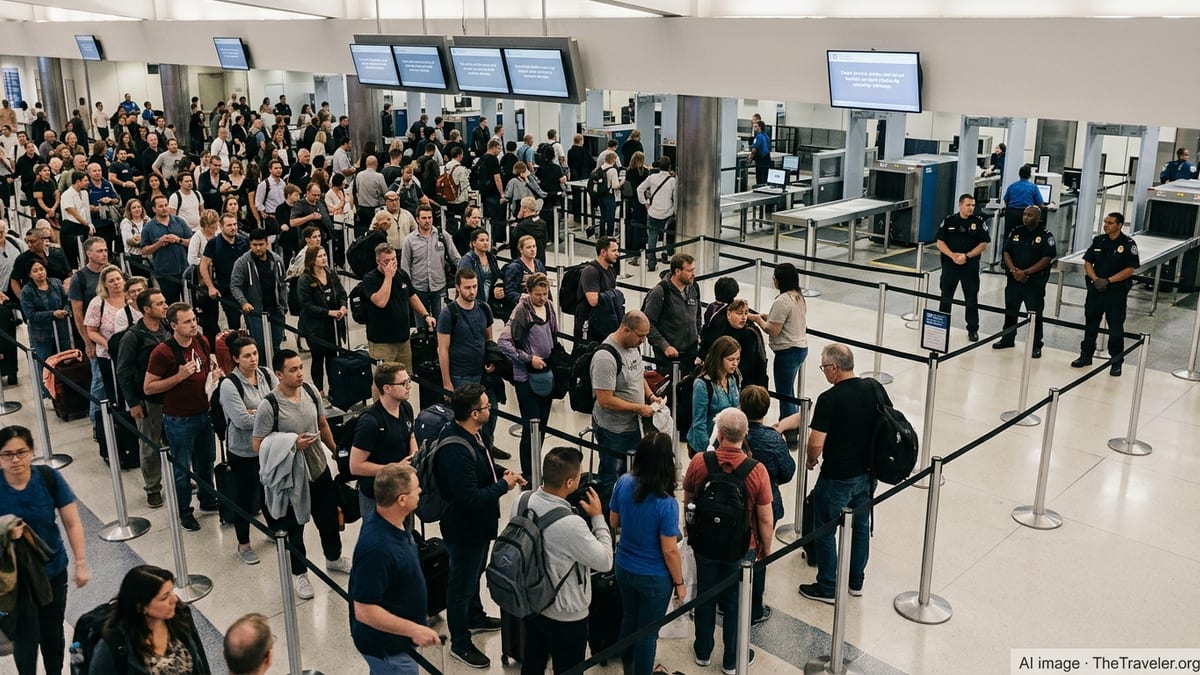
National air traffic control issue disrupts UK network
Reports from flight tracking services and national media on 8 September 2026 indicate that a technical failure in Britain’s air traffic control systems led to hundreds of delays and cancellations across the country, affecting major hubs including Birmingham, Manchester and several London airports.
The disruption originated in a fault affecting the processing of flight data, reducing the rate at which aircraft could be safely handled and forcing temporary restrictions on departures and arrivals. Although the underlying technical problem was identified and work began swiftly to restore normal operations, residual delays continued to ripple through schedules into the afternoon and evening.
Birmingham Airport is among the airports experiencing the impact of those national controls, with departure boards showing a mix of delayed services and aircraft waiting for new slots once the air traffic flow is gradually released. Publicly available information suggests that even where flights continue to operate, passengers may face extended waiting times at terminals as schedules are reset.
Industry guidance notes that when airspace capacity is constrained in this way, airlines must work within strict safety margins imposed at national level, which means individual airports and carriers have limited flexibility to recover services until central restrictions ease.
Birmingham Airport urges early arrival and security readiness
In response to the knock-on disruption, Birmingham Airport has been directing passengers to updated travel and security advice on its website, emphasising the importance of arriving in good time and being fully prepared for screening in order to keep queues moving.
The airport’s security guidance explains that passengers are directed to either Zone A or Zone B security areas depending on operational demand, and that there may be no access to the paid Express Lane when Zone A is in use. Zone B, located on the first floor, remains the primary security route, with a dedicated Express Lane entrance nearby for those who have purchased fast-track access.
Current instructions highlight that liquids, pastes and gels in containers up to two litres can remain inside hand luggage during the security search, along with electronic items, reflecting the rollout of next-generation screening equipment at the airport. Travellers are asked to remove belts and empty pockets of keys, phones and coins, while packing food and powders in checked baggage where possible to reduce the need for additional bag checks.
The airport also reminds passengers that anyone returning landside after entering the departure lounge will be required to pass through security again, which may add considerable time if queues are long during periods of disruption.
Key advice: check with airlines and monitor live departures
Publicly available UK government and Civil Aviation Authority guidance stresses that during major network disruption passengers should always confirm the status of their flight with their airline before travelling to the airport, and continue checking for updates until boarding. This advice is being widely echoed for those travelling through Birmingham while national flow restrictions are in place.
Birmingham Airport hosts live departure and arrival pages showing real-time status for upcoming flights, including estimated departure times, gate information and any cancellations. With national air traffic control measures changing throughout the day, these pages can update frequently as airlines secure revised take-off slots or reshuffle aircraft and crews.
Travel regulators also underline the importance of monitoring broader travel advisories, particularly where longer-haul or connecting itineraries are involved. Guidance from the Civil Aviation Authority notes that rerouting may take longer than usual when multiple airports experience simultaneous disruption, and that passengers should factor in the possibility of overnight stays or rebooked connections when planning onward journeys.
For those heading to Birmingham from other parts of the UK, the official air travel checklist produced by the government recommends leaving additional journey time, keeping essential documents handy and being ready to follow airport-specific instructions that can help speed the flow of people through security and border controls once they reach the terminal.
Understanding passenger rights during widespread delays
While the root cause of today’s disruption lies in national air traffic control systems, rather than individual airlines or airports, UK consumer protections still provide a baseline of support for affected travellers. The Civil Aviation Authority’s summer 2026 advice explains that airlines are required to offer passengers on cancelled flights a choice between a refund, rerouting at the earliest opportunity or rerouting at a later date that suits the traveller, subject to seat availability.
The same guidance makes clear that air traffic control restrictions are typically classified as an “extraordinary circumstance” outside an airline’s control. In those situations, fixed-sum compensation for delays or cancellations is unlikely to be payable, even though duty-of-care obligations such as refreshments, reasonable accommodation and assistance with rebooking can still apply.
Government resources on air passenger rights add that protection generally covers flights departing from a UK airport, regardless of the airline, and certain flights arriving into the UK on UK or EU carriers. Travellers are encouraged to retain receipts for hotels, meals and alternative transport, and to familiarise themselves with their carrier’s specific policies on reimbursement and support during major disruption.
Upcoming changes proposed in the Civil Aviation Bill, currently progressing through Parliament, are expected to strengthen enforcement powers for regulators, including the ability to fine airlines and airports that fail to meet their obligations. Published commentary from the Department for Transport suggests that the reforms are intended to improve how passengers are treated when widespread disruption occurs, whether due to system failures, weather or other unexpected events.
How Birmingham passengers can minimise disruption
As the national air traffic system recovers, travellers flying from or into Birmingham are being encouraged to combine official rights-based information with practical on-the-day preparation. This includes registering for airline alerts, checking live flight pages shortly before leaving home and considering flexible ground transport options in case of late-evening arrivals or diversions.
National travel guides advise that passengers with specific assistance needs, such as reduced mobility or medical equipment, should contact their airline or tour operator well in advance of departure so that support can be arranged at the airport. This can be particularly important when congestion or schedule changes place additional pressure on ground services.
Broader government checklists for UK air travel also highlight simple measures such as ensuring travel documents are valid and easily accessible, keeping essential items including medications and a change of clothes in hand luggage, and staying alert to any foreign travel advisories affecting the destination.
With Birmingham Airport continuing to play a key role in the UK’s national network, forecasts for 2025 and beyond anticipate strong demand for its 100-plus route network. Aviation planners note that future infrastructure upgrades and regulatory reforms are being designed with resilience in mind, aiming to reduce the passenger impact of large-scale system failures while maintaining strict safety margins across UK airspace.
Associated Press coverage of UK air traffic control disruption
Birmingham Airport security and travel advice
UK Civil Aviation Authority consumer travel advice summer 2026