


Oslo has a reputation for being one of Europe’s pricier capitals, but with a bit of planning you can see a lot for less. The Oslo Pass, the city’s official sightseeing and transport card, bundles free museum entry, unlimited public transport and targeted discounts into one product. Used smartly, it can turn an expensive long weekend into a good-value city break. This guide explains, in concrete terms, how to use the Oslo Pass for museums, transport and genuine savings on the ground.
Get the latest updates straight to your inbox!
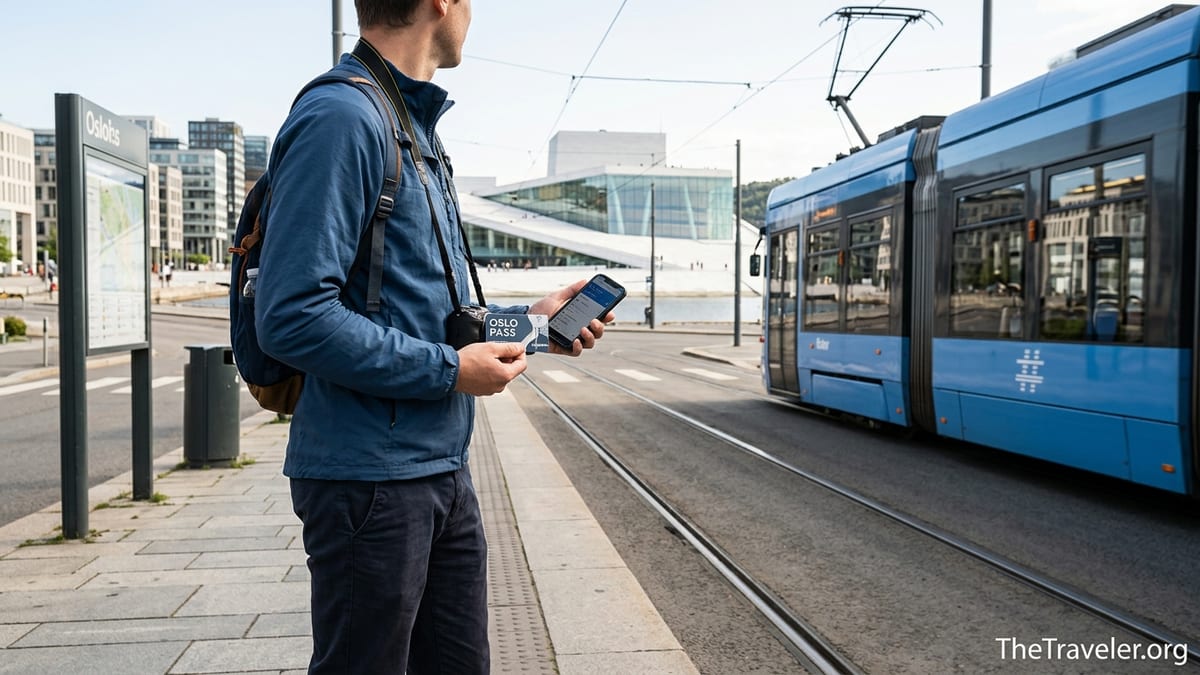
What the Oslo Pass Actually Includes
The Oslo Pass is the city’s official tourist card and combines cultural access with transport. It is sold for 24, 48 or 72 hours and is available as either a digital pass in the official Oslo Pass app or as a physical plastic card. During its validity period, the pass offers free entry to more than 30 museums and attractions in Oslo, unlimited travel on local public transport in the main urban area, and a selection of discounts on sightseeing tours, restaurants and leisure activities.
On the museum side, the pass typically covers some of Oslo’s most visited cultural institutions. These commonly include the MUNCH museum on the Bjørvika waterfront, the National Museum of art and design at Vestbanen, the Norsk Folkemuseum open-air museum at Bygdøy, the Holmenkollen Ski Museum and tower overlooking the city, and historic sites such as Akershus Fortress and various city history museums. Exact lineups can change, but in practice it is straightforward to fill a day with high-profile attractions that are fully covered by the pass.
For transport, the Oslo Pass works on the city’s integrated public transport system operated by Ruter, including metro, trams, city buses, local trains within the covered zones and many scheduled ferries in the inner Oslofjord. That means a single pass can take you from your hotel near Oslo Central Station out to Bygdøy’s museums by bus, up to the Holmenkollen ski jump by metro, and back to the city center by tram without any extra ticket purchases.
In addition, the pass includes various discounts such as reduced prices on certain fjord cruises, guided city tours, bike rental or selected restaurants. These benefits are nice extras, but where most travelers see the biggest financial gain is in the combination of museum entry and included transport.
How Transport Works with the Oslo Pass
Understanding how transport is integrated is crucial to getting full value from the Oslo Pass. Within its validity, the pass functions as a Ruter ticket for the zones it covers, which at the time of writing generally include central Oslo and surrounding areas frequently used by visitors. In practice, this covers almost all journeys you are likely to make to major museums, viewpoints and neighborhoods inside the metropolitan area.
In concrete terms, you can tap into the metro at Jernbanetorget, ride to Majorstuen to change to a tram, then continue to the ferry pier at Aker Brygge, all on the Oslo Pass. Likewise, you can board local trains from Oslo Central Station to reach nearby suburbs or trailheads within the included zones without buying an additional ticket. This is particularly useful if you are staying slightly outside the very center or planning short hikes starting from suburban stations.
One important nuance is trips to and from Oslo Airport Gardermoen. The Oslo Pass does not cover the high-speed airport express train, and any airport journey that passes through zones beyond those included in the pass usually requires a supplementary ticket. However, local Vy trains between the airport and Oslo may be combined with zone tickets to extend coverage, so budget travelers often compare the cost of a regular Ruter ticket plus any supplement with the separate airport express service to see which is cheaper for their specific route and time.
Ferries are another area where the pass simplifies decisions. The small commuter ferries that link the city center to the islands of the inner Oslofjord, such as Hovedøya and Lindøya, are integrated into the same ticketing system as buses and trams. With a valid Oslo Pass you can hop on and off these ferries during your pass period, turning a museum-heavy day into one that also includes a picnic or quick swim on an island beach at no extra transport cost.
Using the Oslo Pass for Museums and Sights
The real strength of the Oslo Pass is how it turns museum hopping into a simple, ticket-free experience. Once your pass is activated, you can walk into any participating museum, show your digital or physical pass at the entrance, and enter without paying the regular admission charge. This is particularly attractive in Oslo, where single adult tickets for major museums often sit at a relatively high price point compared with many other European capitals.
Consider a typical cultural day. You might start at the MUNCH museum in Bjørvika in the morning, where a standard adult ticket alone can be a significant outlay. From there, you stroll across to the National Opera and Ballet area, then take the tram or bus up to the National Museum at Vestbanen for another major collection. In the afternoon, you ride the metro up to Holmenkollen to visit the Ski Museum and climb the tower for panoramic views. With the Oslo Pass, each of these museum admissions is covered and every ride between them is included.
Another concrete example is a Bygdøy peninsula day. Many visitors want to see the Fram Museum, which houses the polar exploration ship, the Kon-Tiki Museum dedicated to Thor Heyerdahl’s raft, and the Norsk Folkemuseum open-air complex. Walking between these museums is easy, but you will need transport to reach the peninsula itself. With the pass, you can either take a bus from the city center or use the regular public ferries that depart near the City Hall area, visit multiple museums back to back, then return on whichever mode suits your schedule without thinking about separate bus or ferry tickets.
In practice, this flexibility encourages more spontaneous sightseeing. If you discover halfway through the day that the weather has turned sunny, you can pivot from an indoor museum plan to include an island visit or a stroll through Vigeland Sculpture Park, using the metro and tram networks freely. You are not locked into a sequence of pre-purchased single tickets with fixed time slots or zones.
Mobile App, Physical Card and Activation
Travelers can choose between a digital Oslo Pass in the official app or a physical plastic card purchased at sales points such as the Oslo Visitor Centre near Oslo Central Station and selected hotels or attractions. The digital pass is generally more convenient for most visitors who are comfortable using smartphones, as it can be bought in advance, stored on your device and activated on the day you need it.
When using the app, you typically purchase one or more passes for your group with an international credit card, then keep them dormant until your trip. On the morning you want to start using the pass, you open the app and tap “Activate.” The pass then starts counting down in real time for 24, 48 or 72 hours according to the product you purchased. This activation moment is the same for both transport and museum entry, so plan it carefully, especially if you arrive in Oslo in the evening and do not intend to start sightseeing until the next morning.
With the physical card, activation is simpler but more rigid. You manually write the start date and time on the card before your first use. Inspectors and museum staff will then check that your written time window is still valid. Because the validity runs continuously from the time you specify, there is no way to pause it once started. As a result, many travelers choose to wait until just before boarding their first tram or entering their first museum before filling in the details.
Ticket inspections on public transport in Oslo are common and often unannounced, so always make sure your pass is activated and valid before boarding. On a busy tram from Jernbanetorget to Majorstuen at rush hour, inspectors may move through the carriage asking to see tickets. Showing your active Oslo Pass in the app or your correctly filled physical card is all that is required. If you have not yet activated a digital pass or have written the wrong time on a physical card, you could be treated as traveling without a valid ticket and face a fine, so treating activation seriously is important.
Real-World Savings: Example Itineraries
Whether the Oslo Pass is worth it depends on how many museums and paid attractions you plan to visit, and how often you use public transport. To judge it fairly, it helps to compare real-world scenarios with and without the pass rather than relying on abstract claims. Prices for individual tickets and passes can change, so think in relative terms: a single museum ticket plus a few transport rides can quickly add up to a significant fraction of a day pass cost.
Imagine a 24-hour stay focused on central highlights. On day one you visit the MUNCH museum in the morning, the National Museum after lunch and the Holmenkollen Ski Museum in the late afternoon. You use public transport for at least four journeys: hotel to MUNCH, MUNCH to National Museum, National Museum to Holmenkollen, and Holmenkollen back to your accommodation. Buying individual museum tickets and four separate public transport rides would often approach, and sometimes exceed, the cost of a 24-hour Oslo Pass, especially once you add the convenience of not queueing at each ticket desk.
Now consider a two-day 48-hour pass focused on families. On day one, you head to Bygdøy to visit the Fram Museum and Kon-Tiki Museum, then spend the afternoon at the Norsk Folkemuseum. On day two, you explore the city center, stopping at the Oslo City Hall, taking a ferry to an inner Oslofjord island for a picnic, and finishing at the Ski Museum and tower at Holmenkollen. A family with two adults and two children using regular transport tickets and paying at each museum could face a substantial outlay. With the Oslo Pass, children often enjoy free or discounted entry at participating museums while the adults’ passes cover both admissions and transport, creating considerable savings over two busy sightseeing days.
For a longer 72-hour trip, it helps to cluster attractions geographically. You might devote one day to Bygdøy, another to the Bjørvika and Aker Brygge waterfronts plus city museums, and a third to Holmenkollen and green spaces. Because the Oslo Pass also covers journey time out to some trailheads at the edge of the urban area, you can add a short hike into Nordmarka forest or a lakeside walk without worrying about separate suburban train tickets. In these cases, the pass functions almost like a short unlimited travel card layered with museum access, which is particularly valuable in a high-cost city.
Strategic Tips for Getting the Most Value
To maximize the value of the Oslo Pass, timing and planning matter more than rigid schedules. One of the simplest strategies is to align the pass period with your museum-heavy days. If you are in Oslo for four nights, for example, you might choose a 48-hour pass covering the two middle days, when you plan to visit most attractions, and pay for a simple Ruter ticket or walk on your arrival and departure days when you are mainly handling flights and checking into accommodation.
Another practical tip is to start your pass in the late morning rather than first thing at dawn if your sightseeing will naturally extend into the following afternoon or evening. For instance, activating a 24-hour pass at 10:30 means it will remain valid through 10:29 the next morning, which can cover an early trip to a viewpoint or museum just before you leave the city. This kind of timing can be useful if you are catching an afternoon train or flight and want to use public transport to reach the station while still covered by the pass.
It is also worth grouping distant or transport-intensive attractions together on days when your pass is active and saving walkable experiences for non-pass days. The compact center from the Opera House through Karl Johans gate to the Royal Palace can easily be explored on foot without much need for trams or buses. By contrast, Bygdøy, Holmenkollen and certain island excursions all require dedicated transport, making them ideal targets for Oslo Pass days when every bus, metro and ferry ride is included.
Finally, keep an eye on opening hours and seasonal schedules. Some museums shorten hours in winter or close on certain weekdays, while island ferries and outdoor attractions operate more frequently in summer. A 24-hour pass used on a day when your top-choice museums are closed or when ferry services are limited will feel less valuable. Cross-checking your intended itinerary with current opening information before purchasing the pass helps avoid disappointments and ensures that your pass period aligns with the days when the city’s cultural life is fully accessible.
Common Pitfalls and How to Avoid Them
Most complaints about the Oslo Pass stem not from the product itself but from misunderstandings about where and when it is valid. One frequent issue is travelers assuming the pass includes the high-speed airport express train to and from Oslo Airport Gardermoen. It does not. Boarding that train without a separate ticket on the assumption that your Oslo Pass covers it can lead to expensive fines. If you plan to use local Vy trains instead, always check that the zones your journey crosses are covered by your pass, and buy any necessary supplements before boarding.
Another pitfall is activating the pass at the wrong time. For example, some visitors activate a 24-hour pass as soon as they land in the evening just to cover a single ride into the city, then find themselves with the pass expiring the next evening before they have finished their main day of sightseeing. In most cases, it is more cost effective to buy a one-off transport ticket for the arrival journey and activate the Oslo Pass the next morning when you can immediately start using it for both museums and transport.
Travelers also sometimes underestimate how quickly museum visits add up. Deciding to visit only one major museum per day and leaving long gaps can make the pass less compelling, especially if you are staying in a hotel that is already within walking distance of many sights. On the other hand, trying to cram too many museums into a single day can lead to burnout and rushed experiences. The sweet spot usually lies in planning two or three substantial attractions per day, with time for coffee breaks, waterfront walks or a detour to Vigeland Sculpture Park, using public transport to shorten the distances between them.
Finally, carrying a dead phone battery can turn a digital pass into a headache. If you rely on the app, bring a portable charger or ensure your phone is charged before setting out, as ticket inspectors will expect to see an active pass on your screen. If you are worried about this or traveling in a group where not everyone has a smartphone, consider a mix of physical and digital passes so that at least one person always has a visible, valid ticket ready for inspection.
The Takeaway
The Oslo Pass is not a magic solution that makes Oslo cheap, but it is a powerful tool for bringing the city’s museums, viewpoints and public transport within easier financial reach. By combining unlimited travel on the local network with free entry to many of the capital’s headline attractions, it offers especially strong value for visitors who plan to explore intensively over one, two or three days.
The key to making the pass work in your favor is thoughtful planning: align your activation time with your busiest sightseeing days, cluster transport-heavy excursions like Bygdøy and Holmenkollen together, and remember that the pass is strongest when you use both its museum and transport benefits. Treat it as your all-access key to buses, trams, metros, trains, ferries and galleries rather than just a discount coupon.
In a city where individual museum tickets and transport fares add up quickly, the Oslo Pass can easily pay for itself with just a handful of attractions and rides, while also simplifying the practicalities of getting around. With the right itinerary and a clear understanding of what is included, it transforms Oslo from a destination you cautiously sample into one you can explore with confidence and curiosity.
FAQ
Q1. Does the Oslo Pass include public transport to Oslo Airport Gardermoen?
The Oslo Pass does not include the high-speed airport express train and typically does not fully cover journeys beyond its designated zones, which include central Oslo and nearby areas. You may be able to combine the pass with a separate ticket on local Vy trains, but you should always check current zone coverage and buy any required supplements before traveling to or from the airport.
Q2. Can I use the Oslo Pass on all buses, trams and metros in the city?
Within the zones covered by the pass, you can use it on almost all regular Ruter services, including city buses, trams and the metro. For most visitors staying and sightseeing in central Oslo, this effectively means that every standard bus, tram and metro ride they need will be included during the pass’s validity period.
Q3. How do I activate the digital Oslo Pass in the app?
After purchasing the pass in the official Oslo Pass app, it will sit inactive on your phone until you choose to start it. On the day you are ready, you open the app and tap the activation button. The pass then becomes valid immediately for 24, 48 or 72 consecutive hours, depending on the option you bought.
Q4. Is the physical Oslo Pass card used differently from the app version?
Yes. With the physical card, you activate it by writing the date and time of first use on the card with a pen. From that moment, the validity runs continuously for 24, 48 or 72 hours. There is no scanning or tapping; inspectors and museum staff simply check the written time window and the type of pass.
Q5. Which major museums are usually included in the Oslo Pass?
The pass typically includes many of Oslo’s flagship attractions, such as the MUNCH museum, the National Museum, the Holmenkollen Ski Museum and tower, the Fram Museum, Kon-Tiki Museum, the Norsk Folkemuseum and various city history museums. The exact list can change, so it is wise to review the current lineup shortly before your trip.
Q6. Is the Oslo Pass worth it if I only plan to visit one museum per day?
If you are visiting only one paid attraction per day and walking most places, the pass may offer less financial advantage compared with buying individual tickets. It becomes more attractive when you combine two or more included museums in a single day and make frequent use of public transport between them.
Q7. Can I share an Oslo Pass with someone else if we do not use it at the same time?
No. Each Oslo Pass is personal and intended for use by one person only during its validity period. Sharing a pass or passing it around a group is not allowed and could lead to problems during ticket inspections or at museum entrances.
Q8. What happens if my phone battery dies and I have a digital Oslo Pass?
If your phone battery dies, you will not be able to show your digital pass to inspectors or at museum entrances until you recharge it. To avoid issues, carry a power bank, charge your phone before heading out, or consider buying a physical Oslo Pass card as a backup if you are worried about battery life.
Q9. Do children need their own Oslo Pass?
Children generally need their own pass if you want them to receive the same combination of free museum entry and transport benefits as adults, although child passes are usually cheaper. Some museums and transport services offer free or reduced entry for younger children even without a pass, so families should compare the cost of separate child passes with individual child tickets for their planned itinerary.
Q10. Can I buy the Oslo Pass before I arrive in Oslo?
Yes. You can purchase the digital Oslo Pass in advance through the official app and activate it later, as long as you do so within the allowed time window after purchase. If you prefer a physical card, you can buy a voucher online and redeem it at the Oslo Visitor Centre or purchase the card directly at selected sales points once you arrive in the city.