


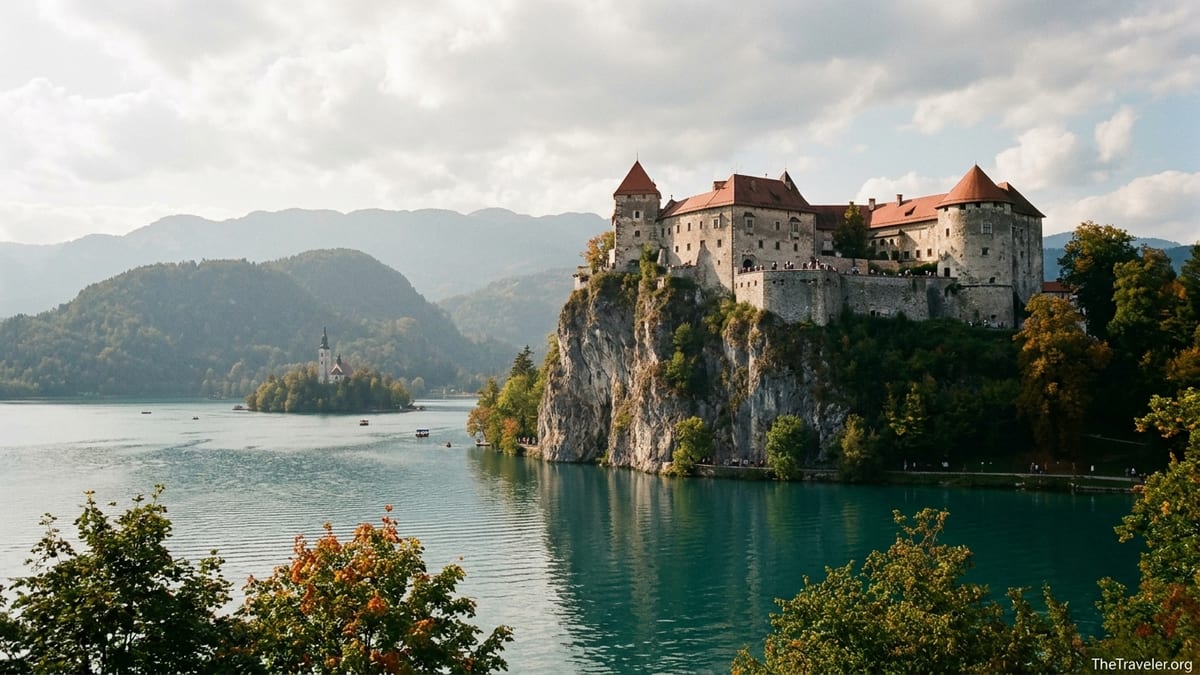
Perched on a sheer limestone cliff high above Lake Bled, Bled Castle does something rare in European tourism: it feels both undeniably real and quietly magical. The stone courtyards, views of the Julian Alps, and scent of woodsmoke from the blacksmith’s forge could belong to a film set, yet this is a working heritage site with a millennium of history. Step through its gate and you are not just looking at Slovenia’s past; you are walking into it.
Get the latest updates straight to your inbox!
A Castle That Has Watched Slovenia for a Thousand Years
Bled Castle is often introduced with a simple fact: it is considered the oldest castle in Slovenia, first mentioned in a donation deed from the year 1011. That one detail alone already gives it an almost mythic weight. As you stand in the upper courtyard looking out over the lake and the tiny island church below, it is easy to imagine monks, nobles, and soldiers gazing at the same scene centuries ago, long before tourism brochures and Instagram sunsets.
The architecture adds to that feeling of a layered story. The stout Romanesque walls and towers speak of defense, while later Renaissance touches, such as arcaded terraces and more refined windows, reflect a time when the castle became a seat of bishops and administrators. None of it is grand in the Versailles sense. Instead, it feels compact and human scaled, as if the whole place was designed to be lived in rather than just admired.
History here is not locked inside a single exhibit hall. As you move from the drawbridge into the lower courtyard and then climb to the upper level, panels and small displays quietly sketch out how Bled evolved from a medieval stronghold into a health resort frequented by aristocrats in the 19th and early 20th centuries. It is the continuity that makes it feel like a storybook: the same cliff-top vantage point simply keeps absorbing new chapters.
Because the castle is small enough to explore in two to three hours, there is no sense of museum fatigue. Instead, you drift from viewpoint to viewpoint, always with the feeling that the setting itself is the main exhibit and the history is simply a lens that sharpens what you are seeing.
The View that Turns a Fortress into a Fairytale
Part of the reason Bled Castle feels like a storybook scene is that it has an almost impossibly cinematic view served up as your constant backdrop. From the parapet, the lake stretches out below like polished glass, often a deep turquoise in summer and a silvery grey in winter. In the middle, the island with its baroque church floats like a painted prop, and beyond it, the snow-dusted Karawanks and Julian Alps rise on the horizon.
In autumn, the forests that cloak the surrounding hills shift through oranges and deep reds, framing the castle in fiery color. On certain winter mornings, a blanket of fog fills the valley so that only the castle and the island church poke above a white sea. For visiting photographers, this is the sort of scene that normally requires a full day of hiking; here, it is purchased with a 15 to 20 minute uphill walk or a short drive and a ticket at the gate.
It is worth timing your visit. Arrive early on a clear summer morning and the light is soft, with the lake still calm and pletna boats just beginning to cross toward the island. Late afternoon in shoulder season is equally evocative, when long shadows fall across the courtyards and the village of Bled below begins to glow with warm lights. Many travelers plan around bus timetables from Ljubljana or Bohinj, but if you can adjust your schedule slightly, those golden hours are when the castle feels least crowded and most like a private lookout over Slovenia’s alpine storybook.
Even the small details contribute to the fairytale effect: vines creeping along stone walls, wooden shutters weathered by alpine winters, and the occasional swirl of incense drifting from the chapel. Looking down at the lakefront promenade, with tiny figures cycling or strolling along the shore, you feel suspended between real life and a painted panorama.
Living History: Blacksmiths, Printing Presses, and Medieval Days
What turns Bled Castle from a static monument into an immersive story is the way it leans into living history. On many days from spring through autumn, you will hear the rhythmic clang of a hammer from the castle forge. A costumed blacksmith shapes red-hot metal into nails, decorative hooks, or simple souvenirs, explaining his craft to visitors. Children crowd close, eyes wide, while parents quietly enjoy the unmistakable smell of coal and hot iron that makes the whole scene feel convincingly medieval.
Nearby, a tiny 16th century-style printing workshop invites visitors to step back into the age when books were precious. A printer in period dress demonstrates an old press, inking woodblocks and pressing them into thick paper to create keepsake prints featuring Bled motifs. For a few euros, you can have your name hand-set and printed, an experience that connects touch, sound, and sight in a way screens never can. Travelers who usually breeze through museum labels often linger here, curious about how slow and deliberate early printing really was.
If you time your trip for late May or early June, the entire site transforms during Medieval Days. For about a week, the courtyards and the park below fill with reenactors, from armored knights and archers to herbalists and candle makers. Families can try archery, watch mock sword fights, or see coins minted on the spot. Food stalls offer rustic dishes and local wine, and the usual hum of sightseeing shifts into something more like a village fair. While the program changes slightly each year, the essence remains the same: making the Middle Ages tangible for modern visitors without feeling like a theme park.
These experiences are woven into a working heritage site rather than pasted on top. The blacksmith works beside walls that once needed real weapons. The period printer operates in a space where written orders and letters were once essential power tools. That alignment between activity and setting is why Bled Castle feels like a storybook that is still being read aloud, not a closed volume in a display case.
Everyday Details that Make the Past Feel Close
The storybook feeling at Bled Castle does not come only from grand gestures. It is also embedded in quiet, almost domestic details scattered through the complex. In the museum rooms, you find modest displays of farm tools, local dress, and tableware that show how people in the region lived, worked, and celebrated. A carved wooden chest with simple iron fittings tells as much about past lives as any grand portrait.
In the small chapel, soft light filters through stained glass onto painted walls and worn pews. Many visitors step in out of curiosity and find themselves hushed by the intimacy of the space. There are no elaborate audio effects here, just the creak of the door and perhaps the distant call of a bird from the cliff outside. If you happen to visit during a quiet weekday, you may have it almost to yourself, making it easier to imagine the baptisms, weddings, and prayers that once filled it with voices.
Even the castle restaurant leans into the sense of continuity rather than novelty. Menus often feature hearty Slovenian staples like mushroom soup, venison stews in season, or traditional potica cake with walnut or tarragon filling. Prices are in line with the prime location: expect to pay a premium compared with cafés in the town below, but you are also buying some of the finest dining views in the country. Many travelers opt for a mid-morning coffee or dessert instead of a full meal, which still grants unhurried time on the terrace as tour groups flow past more quickly.
Small interpretive notes around the site highlight elements that could easily be overlooked: how water was collected, how the steep rock face shaped the castle’s layout, why certain rooms are lower or higher. Taken together, they build a sense of an inhabited place where everyday logistics were as important as noble titles. This gentle focus on how people actually lived is what grounds the fantasy atmosphere in something believable.
Reaching the Castle: The Journey is Part of the Story
Getting to Bled Castle adds its own narrative beat, especially if you choose to walk. One of the most popular approaches begins near St. Martin’s Church, a striking white church at the foot of the cliff. From there, a signed path heads up through mixed forest, climbing steadily with a series of steps and switchbacks. Locals and recent visitors report that the walk typically takes around 15 to 20 minutes at a moderate pace, with a few benches along the way for short breathers.
For many travelers, that uphill stretch is where anticipation sets in. As you climb, the sounds of traffic and lakefront chatter fade, replaced by birdsong and the crunch of gravel underfoot. Gaps in the trees offer teasing glimpses of the lake and the island, nudging you upward. By the time you reach the entrance gate, your legs have done just enough work that the first panoramic view from the courtyard feels like a reward rather than just another lookout.
Those arriving by car follow a narrow road that winds up from the town to a small parking lot close to the castle entrance. The lot is convenient but limited, and in peak summer it can fill early in the day. Many visitors now aim for morning slots before the busiest bus tours arrive or choose late afternoon, when day-trippers begin to leave. If you are staying overnight in Bled, walking up at least one way often proves more pleasant than circling for a parking space.
Opening hours shift slightly by season, generally stretching from morning through late afternoon or early evening, with last entry set about half an hour before closing. Entry tickets are among the higher-priced attractions in Slovenia, reflecting both the setting and the range of things to see: courtyards, museum spaces, chapel, forge, printing workshop, wine cellar, and panoramic terraces. Many travelers find it worthwhile to allow a separate budget line for the castle when planning a Lake Bled stay, treating it more like a full experience than a quick viewpoint stop.
Modern Touches that Respect an Old Soul
Although Bled Castle trades on its medieval silhouette, it is not stuck in the past. Exhibitions are updated periodically, seasonal programs fill the calendar, and audio-visual elements are used sparingly to add context. During the festive period from late November into early February, for example, the castle is often adorned with lights and decorations that create a winter fairy-tale effect, with temporary exhibitions focusing on local traditions such as baking potica, ceramic art, or regional crafts. Evening events around this time can feel especially atmospheric, with lanterns and subtle lighting picking out the stonework.
Some of the most thoughtful modern touches are almost invisible. Pathways have been improved and railings added without overwhelming the original structures, making the site more accessible for a wider range of visitors while keeping steep drops safely separated from strolling families. Discreet signage appears in multiple languages, but panels are kept relatively compact so that the courtyards never feel cluttered with information boards.
Even the way the castle connects to the broader town is evolving. Plans for nearby cultural spaces and improvements in sustainable transport options around Bled aim to spread visitor flows and ease pressure on the lakefront. The castle, in turn, benefits by attracting travelers who are more likely to seek out its cultural offerings alongside the classic rowing trip to the island and the lakeside promenade.
Throughout these changes, the core mood remains remarkably consistent. You still enter through a gatehouse, walk across a small drawbridge, and step into cobbled courtyards largely free of modern distractions. Staff at the ticket booth may carry tablets and card readers, but once you pass them, your experience is dominated by stone, wood, water, and sky.
Planning Your Visit: Making the Most of the Storybook Atmosphere
To feel Bled Castle at its most evocative, it helps to make a few simple plans. Time of day is the biggest factor. Early morning visits, especially outside high summer, are quieter, with a softer light and fewer tour groups. If you arrive from Ljubljana on one of the morning buses and head straight up, you may catch the courtyards before they fill. Late afternoon, particularly in spring and autumn, offers equally beautiful light with a slower, more reflective atmosphere as day visitors drift away.
Weather also shapes the mood. A blue-sky summer day will give you classic postcard images, but a misty autumn morning or a crisp winter afternoon wraps the castle in something closer to a Central European fairy tale. Light rain dampens the stone and deepens colors; as long as you have good footwear and a jacket, it can be a surprisingly rewarding time to visit. Many photographers actually hope for low clouds that cling to the mountains and add drama to the view.
Budgeting a bit of extra time inside the walls pays off. Instead of racing through to the viewpoints and back down to the lake, consider spending two to three hours exploring slowly. Watch the blacksmith demonstration rather than just snapping a quick photo, step inside the printing room and handle a freshly pressed sheet, pause for a coffee or glass of local wine in the restaurant while you soak in the view. These small pauses give the castle space to feel lived in again.
If you are traveling with children, look out for scheduled family programs, craft workshops, or medieval-themed events listed in local tourist information materials for the dates of your stay. Hands-on elements such as archery practice, candle-making, or simple games in the courtyard can turn what might have been “just another castle” into a highlight of the trip. For couples, an evening visit wrapped around a dinner reservation or a stroll back down to the lakeshore lights can lend the place a quietly romantic tone.
The Takeaway
Many European castles impress with size or opulence; Bled Castle’s magic lies instead in how complete and coherent it feels. The cliff-top setting, the compact courtyards, the hands-on crafts, the seasonal events, and the everyday details of past lives all align to create the sense that you have stepped into Slovenia’s own illustrated story of itself.
What you remember afterward is rarely a single exhibit piece. It might be the first glimpse of the lake from the terrace after the uphill walk, the sound of the blacksmith’s hammer echoing off stone, or the moment you lean on the ramparts and watch a pletna boat glide across the water like a toy in a child’s picture book. Bled Castle succeeds because it does not try to separate history from experience. Instead, it invites you to inhabit the setting for a while, to follow the winding paths of its courtyards and corridors, and to let Slovenia’s storybook past feel, for an afternoon, like your own.
FAQ
Q1. How long should I plan to spend at Bled Castle?
Most visitors find that two to three hours is enough to walk up, explore the courtyards and museum rooms, enjoy the views, and pause for a drink or snack. If you visit during events such as Medieval Days or festive winter programs, you may want to allow longer.
Q2. Is the walk up to Bled Castle difficult?
The most common walking path from near St. Martin’s Church is short but steep, with steps and paved sections. It typically takes 15 to 20 minutes for reasonably fit visitors. Those with mobility issues may prefer to arrive by car or taxi to the parking area near the entrance.
Q3. What is the best time of day to visit for views and fewer crowds?
Early morning and late afternoon generally offer the best combination of softer light and thinner crowds. Midday in high summer can be busier and hotter, though still rewarding for clear views of the lake and mountains.
Q4. Are there food and drink options inside the castle?
Yes. There is a restaurant and café inside the castle where you can order full meals, coffee, desserts, or local wine. Prices reflect the premium location but many visitors feel the terrace views justify the cost, especially for a leisurely drink or shared dessert.
Q5. Do I need to book tickets to Bled Castle in advance?
For a typical visit, tickets can usually be purchased on arrival at the entrance. During peak summer days, weekends, or special events, advance purchase via official channels is recommended to avoid queuing and to secure your preferred time.
Q6. Is Bled Castle suitable for children?
Yes. Children often enjoy the short hike, the dramatic views, and especially the hands-on elements such as the blacksmith’s forge, printing workshop, and occasional medieval-themed activities. Parents should keep an eye on youngsters near walls and steps, but safety railings and paths are well maintained.
Q7. Can I visit Bled Castle as a day trip from Ljubljana?
Very easily. Buses and tours from Ljubljana reach Bled in about an hour, and from the town you can walk or take a short taxi ride up to the castle. Many travelers combine a castle visit with a stroll around the lake or a boat trip to the island on the same day.
Q8. Are there guided tours available at Bled Castle?
Guided tours are often available through local agencies and sometimes directly on-site, especially for groups. Independent travelers typically explore with the help of information panels and printed materials, but arranging a guide in advance can add depth if you are particularly interested in history or architecture.
Q9. What should I wear and bring for a visit?
Comfortable walking shoes are essential, as surfaces are uneven and paths can be steep. In cooler months, bring a warm layer and possibly a hat and gloves, since the clifftop can be breezy. In summer, carry water, sunscreen, and a light jacket for sudden changes in mountain weather.
Q10. Is Bled Castle accessible in winter?
Yes, Bled Castle is open for visitors in winter, though opening hours are shorter than in summer and conditions can be icy or snowy. On clear winter days, views over the lake and surrounding mountains can be spectacular, and festive decorations or seasonal exhibitions often enhance the fairy-tale atmosphere.