


Few travel experiences prepare you for the moment the Hornblower boat noses into the mist at the base of Niagara Falls. One second you are gliding calmly along the Niagara River, the next you are wrapped in spray, staring up at a wall of water that seems far closer and more powerful than you imagined from the viewing platforms above. For many visitors, this Canadian-side boat tour, now operated as Niagara City Cruises, is where Niagara stops being a postcard and becomes a visceral, unforgettable encounter.
What Exactly Is the Hornblower Tour Today?
The boat ride many travelers still call the Hornblower cruise is officially operated as Niagara City Cruises, the licensed boat tour provider on the Canadian side of Niagara Falls. The core experience is the "Voyage to the Falls" boat tour, a roughly 20-minute trip that sails from the base of the gorge in Niagara Falls, Ontario, past the American and Bridal Veil Falls and directly into the spray of the Canadian Horseshoe Falls. Tickets for the 2026 season are on sale and departures typically run from spring through late fall, with exact opening and closing dates varying by year and weather.
Standard adult tickets for the Voyage to the Falls boat tour are currently listed at about 48 Canadian dollars before tax, with children’s tickets somewhat lower and infants riding free. Prices can shift by season and demand, and many visitors book as part of passes or packages that bundle the cruise with attractions such as Journey Behind the Falls or the Butterfly Conservatory. While that might look like a premium add-on at first glance, most travelers describe the cost as excellent value given how central this ride is to the Niagara experience.
Boats depart from the Lower Landing in the Niagara Gorge, accessed via the Niagara City Cruises Main Ticket Plaza on Niagara Parkway, not far from the base of Clifton Hill. Look for the distinctive white tensile canopy structure above the plaza and signage for Niagara City Cruises. From there you follow a series of ramps, stairs, or the seasonal funicular down into the gorge to board. The process is streamlined with timed ticketing, so your boarding slot is tied to a specific window rather than a free-for-all queue.
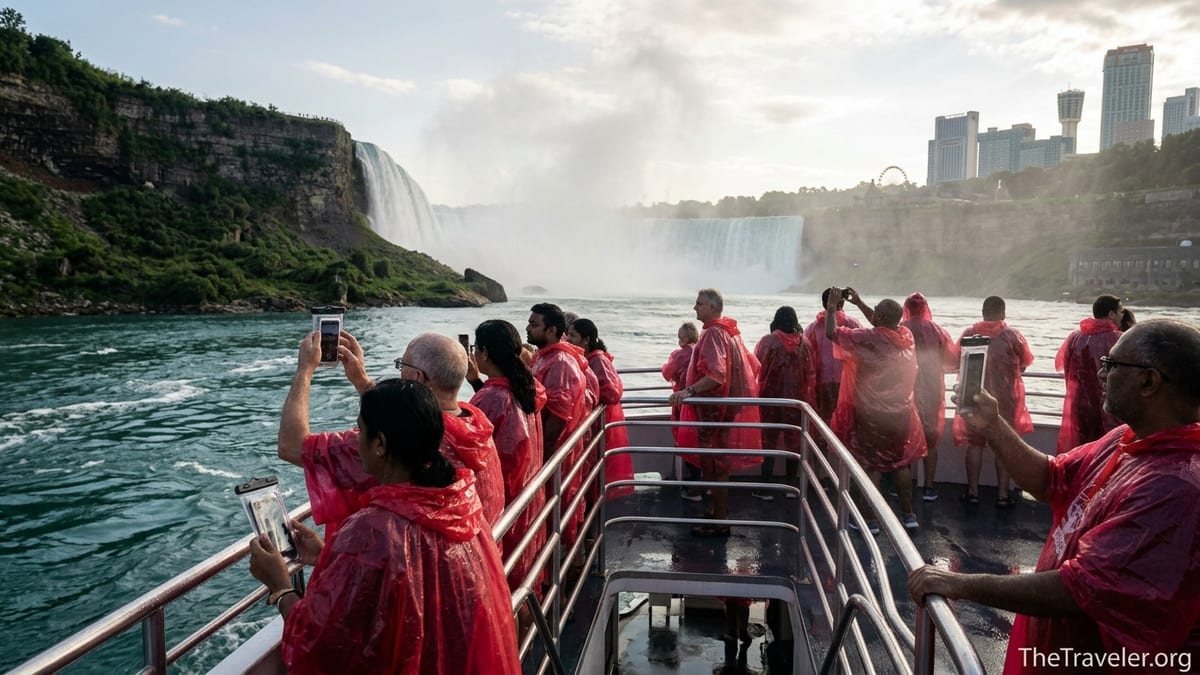
Despite the corporate rebranding under the City Experiences umbrella, the essence of the Hornblower tour remains the same. This is the iconic Niagara boat ride: you stand on open decks, don a bright recyclable poncho, feel the wind and water on your face, and ride right into the heart of the mist. On busy summer days the decks fill with a mix of day-trippers from Toronto, road-trippers from the United States, and international travelers ticking a lifelong bucket-list item.
How Close Do You Really Get to Niagara Falls?
From the railings along Niagara Parkway or the platforms at Table Rock, the Horseshoe Falls can seem almost distant, framed like scenery across a gorge. The Hornblower tour completely changes that perspective. As the boat glides past the American and Bridal Veil Falls, you already feel the temperature drop and the spray thicken. Then the captain eases the vessel forward toward the boiling white churn at the base of Horseshoe Falls, and the world narrows to water, noise, and a shifting haze of mist.
Regulations keep all tour boats within a controlled navigational zone, but visitors are often surprised by how close “as close as possible” feels in real life. On a calm summer afternoon the Hornblower may hold its position within the mist curtain long enough for you to feel streams of water running off your poncho and shoes, lenses fogging over as you raise a camera toward the 57-meter-high curtain of water above. Many first-timers instinctively step back from the railings, even though the boat is stable, simply because the sense of scale and power is overwhelming.
One common reaction from repeat visitors is that photographs from the shore do not prepare you for this proximity. Standing on deck, you hear the individual thuds of water hitting the river, feel the vibration in the hull, and smell the mineral tang of the spray. Those on the bow deck tend to get the wettest, especially along the front corners, while passengers choosing the upper rear deck trade some of the soaking for wider panoramic views up and down the gorge. Either way, expect your poncho to earn its keep.
Compared with the American-side Maid of the Mist, the experience is remarkably similar in terms of how close boats approach the falls, but the vantage points differ. From the Canadian Hornblower boats you face directly into the curve of the Horseshoe Falls, which many travelers describe as the most immersive angle. On particularly windy days the mist can blow sideways, drenching one side of the deck more than the other. Crew members often point this out with a grin as passengers decide whether they are in the “dry” zone or volunteering for the full Niagara soak.
Experiencing the Voyage to the Falls Step by Step
Your Hornblower experience begins well before you reach the waterline. After entering the ticket plaza, you proceed through security, ticket scanning, and a series of switchback ramps or elevator access points, depending on operational needs and accessibility requirements. At peak summer times, these ramps can hold substantial queues, but the system generally keeps passengers moving. Overhead speakers provide occasional announcements and safety reminders, while signage highlights key facts about the falls and the boats themselves.
Just before you reach the boarding area, staff distribute the signature red recyclable ponchos. They are intentionally oversized, designed to pull over backpacks and day bags, with a loose hood that can be cinched tight. Many visitors underestimate how wet they will get and initially leave the hood down or sides open, only to adjust them halfway through the cruise. It helps to put your phone in a basic waterproof sleeve or keep a microfiber cloth handy to wipe off droplets between photos.
Once on board, you can choose between the main lower deck, which offers great eye-level views and faster disembarkation, and the upper deck, reached by stairs, which gives a sweeping, elevated perspective. Families with small children often claim a spot along the rail on the lower deck near the middle of the boat, where the spray is slightly less intense but the view remains unobstructed. Couples and photographers gravitate toward the bow and upper corners. The boat then eases away from the dock, and within moments you are in the shadow of the American Falls.
The full loop typically lasts about 20 minutes from departure to return. The first third of the trip focuses on the American and Bridal Veil Falls, with commentary over speakers pointing out landmarks such as the Rainbow Bridge and the U.S. observation tower. The middle segment is the heart-pounding approach into the Horseshoe Falls mist, where conversation becomes nearly impossible over the roar of the water. The final segment is a short retreat downriver, giving you a chance to catch your breath, wring out ponchos, and snap the classic shot back toward the falls with the Canadian skyline in the background as you return to the dock.
When to Go, How Long It Takes, and What It Really Costs
Niagara City Cruises typically operates the Hornblower-style Voyage to the Falls boat tour from around early May through late fall, with the exact schedule adjusting each year based on river conditions and ice clearance. In recent seasons, sailings have extended into November and even weather-permitting December windows, but early spring and late autumn departures are often fewer per day and may be more susceptible to weather cancellations. The 2025 media announcements, for example, highlighted a May 8 launch date for that year’s season, giving a good sense of the usual spring start.
The cruise itself takes roughly 20 minutes on the water, but you should budget at least 60 to 90 minutes from the moment you join the queue to the moment you exit back at street level, especially in July and August. On busy holiday weekends, travelers arriving midday have reported spending closer to two hours total once they factor in security, poncho distribution, and boarding. Those visiting in shoulder seasons such as late May, early June, or late September often find queues noticeably shorter and temperatures more comfortable in the mist.
At the time of writing, an adult Voyage to the Falls ticket is posted around the high-40s in Canadian dollars, with children’s tickets in the low-30s and taxes added at checkout. Packages from Toronto or Niagara-on-the-Lake that include bus transportation, the Hornblower cruise, and other attractions commonly range from roughly 110 to 150 Canadian dollars per adult, with frequent promotions bringing that price down during off-peak months. Some travelers opt for these bundled tours because they eliminate parking hassles and typically secure timed cruise slots in advance.
On-board spending is limited. There is a small snack bar on many sailings where you can purchase drinks and simple refreshments, but you will not find a full restaurant or bar service on the short Voyage to the Falls. The main additional costs to consider are parking near the falls, which can range from municipal lots to hotel garages, and any lockers or waterproof phone cases you decide to rent or buy from shops along Niagara Parkway or Clifton Hill. Bringing your own simple dry bag or zip-top bags for electronics can easily save you unnecessary last-minute purchases.
Practical Tips to Handle the Mist, Crowds, and Weather
To make the most of your Hornblower tour, timing is crucial. Morning sailings, particularly those before 11 a.m., tend to be less crowded than midday departures, especially on weekends. Travelers driving from Toronto who arrive around opening time often report walking directly onto an early sailing, while those arriving after lunch can face longer queues and more crowded decks. Evening voyages can also be quieter on non-fireworks nights, with softer light over the gorge and a more relaxed atmosphere.
Weather at Niagara Falls is famously changeable. Even on clear summer days, the combination of river wind and mist means temperatures on the boat can feel several degrees cooler than on the promenade above. Wear quick-drying clothing, avoid heavy cotton fabrics that stay damp, and choose footwear with good grip that you are willing to get wet. Lightweight sneakers or sport sandals with straps work well; slick-soled dress shoes and flip-flops can be risky on wet decks. In cooler months, a thin waterproof shell under your poncho and a beanie or headband can make the difference between exhilaration and discomfort.
Plan ahead for your electronics. While the poncho provides a basic shield, mist can still reach inside when the wind shifts. Many frequent travelers swear by inexpensive transparent phone pouches worn on a lanyard, which protect against spray while still allowing you to shoot photos and video. Cameras with weather-sealed bodies and lenses fare well, but if you are traveling with standard non-sealed gear, consider using a simple rain cover or plastic sleeve and keep an absorbent cloth handy.
Crowd management is another part of the experience. When you board, it can be tempting to rush to the bow rail, but keep in mind that views shift throughout the cruise. Sometimes a position slightly back from the rail or on the upper deck along the sides offers clearer sightlines with less jostling. Families might designate a meeting point on the deck in case members get separated in the throng. Staff are generally visible and available to answer questions, and safety announcements remind passengers to use handrails and watch their footing on wet surfaces.
Daytime vs Evening: Fireworks, Illumination, and Special Cruises
Most visitors experience the Hornblower-style tour in daylight, which offers the sharpest views of the rock face, gorge, and surrounding landscape. However, Niagara City Cruises also runs evening sailings, including Falls Fireworks Cruises on nights when fireworks are scheduled above the falls. These extended evening cruises are typically about 40 minutes long and time their approach so passengers can watch the illuminated waterfalls and fireworks show from the water. Tickets for these specialty sailings are more limited and often sell out on peak summer nights.
Travelers who have tried both day and night cruises often describe them as distinct experiences rather than interchangeable options. Daytime voyages maximize the sense of scale and natural drama; you can see individual rivulets pouring over the lip of the falls and watch rainbows appear in the mist. Evening cruises lean into atmosphere: the falls lit in shifting colors, the skyline glowing, and bursts of fireworks reflected in the churning river. On clear nights, the contrast between the dark gorge and the lit curtain of water can be striking, though the mist can sometimes soften the view.
Schedules for illumination and fireworks change seasonally and are subject to weather or operational adjustments. In recent years, nightly illumination of the falls has been standard, while fireworks have often been concentrated on weekends or specific festival periods, with expanded schedules in mid-summer. If an evening cruise is a priority, it pays to check current schedules just before your trip and, where possible, reserve for your preferred night rather than waiting to buy on the day.
Special themed experiences occasionally appear on the calendar, particularly during holiday periods, though the core offering remains the straightforward sightseeing cruise. For many travelers, the perfect combination is a late afternoon Voyage to the Falls followed by dinner at a nearby restaurant with views over the gorge, then a stroll back to the promenade for the free land-based view of the illuminated falls and any fireworks. This sequencing lets you enjoy the boat ride when temperatures and visibility are at their best, while still capturing the night-time spectacle from shore.
Accessibility, Safety, and Traveling With Kids or Older Adults
The Hornblower tour is designed to be accessible to a wide range of visitors, though conditions on board remain inherently wet and sometimes windy. Access from the Main Ticket Plaza down to the Lower Landing typically involves ramps and, in-season, the historic Niagara funicular railway, which was refurbished to move passengers efficiently between the bluff and the gorge. The funicular’s use depends on operational needs and weather, and in some scenarios alternate transport such as elevators and walkway systems are used instead. Visitors with mobility concerns should plan a bit of extra time and ask staff at the plaza about the day’s specific access arrangements.
On the boats themselves, there are designated zones and rail heights designed with safety in mind. Life jackets and safety equipment are stored in clearly marked areas, and crew members are trained to manage boarding, disembarkation, and any emergencies. Before departure, you will hear brief safety announcements explaining how to move around the deck, where to find life-saving devices, and what to do if you feel unwell. Despite the intensity of the experience, incidents are rare, and operators work closely with local authorities to adhere to regulations covering passenger limits, navigation, and emergency procedures.
Families with young children generally find the tour manageable and memorable, provided they prepare for the wet conditions. Small children can wear the standard ponchos over their own jackets, and many parents bring a dry change of clothes or at least extra socks in a backpack. Strollers can be an issue on crowded decks; lightweight, foldable models are more practical, and some families choose to leave strollers at the hotel and carry infants in soft carriers, keeping hands free to hold railings.
Older adults and travelers with balance or sensory sensitivities may want to avoid the very front of the boat, where the motion and spray are strongest. Standing closer to the center line or near interior stairwells can provide a sense of shelter while still offering good views. Ear-sensitive travelers might appreciate simple foam earplugs or noise-dampening earbuds to soften the roar without blocking it entirely. For many multi-generational groups, the Hornblower tour becomes the shared highlight that everyone can enjoy at their own comfort level, from the adventurous teens at the bow to grandparents taking in the view from a calmer spot aft.
Fitting the Hornblower Tour Into a Wider Niagara Itinerary
Given its relatively short duration, the Hornblower-style Voyage to the Falls is easy to slot into most Niagara itineraries, but its popularity means it should sit near the center of your planning. Many experts recommend anchoring your day around a confirmed cruise time, then weaving in attractions that sit nearby. One common pattern is to begin with the Hornblower in the morning, followed by Journey Behind the Falls at Table Rock, then a stroll along the promenade and a ride up the Skylon Tower for panoramic views.
Travelers arriving from Toronto on organized day tours often have the Hornblower cruise bundled into their schedule, with guides timing the visit to avoid the worst of midday congestion. These packages, typically in the 120- to 150-dollar range per adult depending on inclusions and season, can be especially convenient for first-time visitors who do not want to navigate parking, cross-border traffic, and separate ticket lines. For independent travelers, purchasing a Niagara Parks attraction pass that includes the cruise, bus transport along the river, and several key sites can simplify logistics and sometimes reduce overall costs.
If you only have a half day in Niagara, prioritizing the Hornblower tour is a smart choice. In four or five hours, you can feasibly ride the boat, walk the key viewpoints along Niagara Parkway, grab a quick bite near Clifton Hill or in the Fallsview district, and still be back on the road by early evening. Those with a full day or overnight stay can add experiences such as the White Water Walk, Niagara’s Power Station exhibits, or wine tastings in nearby Niagara-on-the-Lake, using the boat tour as the emotional centerpiece of a broader visit.
No matter how you structure your time, it is helpful to think of the Hornblower tour as the moment where you step inside the landscape instead of looking at it from afar. By planning your day around that immersive twenty minutes, you give yourself space to dry off, warm up, and let the experience settle, whether that means a leisurely lunch with a view or a quiet walk along the gorge watching the next boat vanish into the mist.
The Takeaway
The Hornblower tour at Niagara Falls, now operated by Niagara City Cruises, is not just another sightseeing boat ride. It is the defining Niagara experience, the one that transforms distant thundering water into something you can feel in your bones. Standing on the deck in your poncho, with mist in your face and the Horseshoe Falls towering above, you realize just how close you have come to one of the world’s most powerful waterfalls.
For many travelers, this closeness is a surprise. From the safety of online photos or observation decks, the falls can seem contained, almost orderly. A few minutes aboard the Hornblower dispels that illusion. The roar is louder, the spray heavier, and the scale more immense than most visitors anticipate. Yet it remains a carefully managed, accessible experience, one that families, older travelers, and solo adventurers can all enjoy with sensible preparation.
If you are planning a trip to Niagara Falls from anywhere in North America or beyond, build your itinerary around this boat tour rather than treating it as an optional extra. Book your time slot, dress for the mist, protect your electronics, and give yourself a buffer in your schedule. Then step aboard with the knowledge that you are about to see, feel, and hear Niagara Falls from a vantage point that few people imagine until they are right there in the spray.
FAQ
Q1. Is the Hornblower tour the same as Niagara City Cruises?
Yes. The boat ride many people still call the Hornblower cruise is operated as Niagara City Cruises on the Canadian side, offering the Voyage to the Falls and related tours.
Q2. How long does the Hornblower Niagara City Cruises tour take?
The Voyage to the Falls boat tour lasts about 20 minutes on the water, but you should allow 60 to 90 minutes in total for queuing, boarding, and exiting.
Q3. How much does the Hornblower tour cost?
Standard adult tickets are currently in the high-40s in Canadian dollars before tax, with lower prices for children and infants riding free. Exact prices vary by season and promotions.
Q4. How wet will I get on the Hornblower boat?
You should expect to get significantly misted, and in some spots quite wet, especially near the bow and along the sides when the boat is closest to the Horseshoe Falls, even with a poncho.
Q5. What is the best time of day to take the Hornblower tour?
Early morning and some evening departures are typically less crowded and can offer more comfortable temperatures, while midday sailings are busiest but often have the strongest sunlight and rainbows.
Q6. Is the Hornblower tour suitable for young children and older adults?
Yes. Many families and older travelers enjoy the cruise. It is short, carefully managed, and accessible, though the decks can be wet and noisy, so some extra care is helpful.
Q7. Do I need to book the Hornblower tour in advance?
Advance booking is strongly recommended in peak season, weekends, and holidays to secure your preferred time slot and reduce waiting, though same-day tickets are sometimes available in quieter periods.
Q8. What should I wear and bring on the Hornblower cruise?
Wear quick-drying layers and shoes with good grip that you do not mind getting wet, and bring minimal valuables, plus simple protection for phones or cameras from the mist.
Q9. What happens if the weather is bad on the day of my cruise?
Operations are weather dependent. Light rain and normal mist usually do not affect sailings, but high winds, lightning, or unsafe river conditions can lead to delays or cancellations with options to reschedule.
Q10. How does the Hornblower tour compare with Maid of the Mist?
Both offer very similar close-up experiences of the falls, but Hornblower, operated as Niagara City Cruises, departs from the Canadian side with prime views into the curve of the Horseshoe Falls.