


More news on this day
A Republic Airways-operated American Eagle service from Boston to Columbus diverted to Hebron, Kentucky, on August 9 after an in-flight issue prompted the crew to route the aircraft to Cincinnati/Northern Kentucky International Airport, according to publicly available flight-tracking and schedule data.
Get the latest news straight to your inbox!
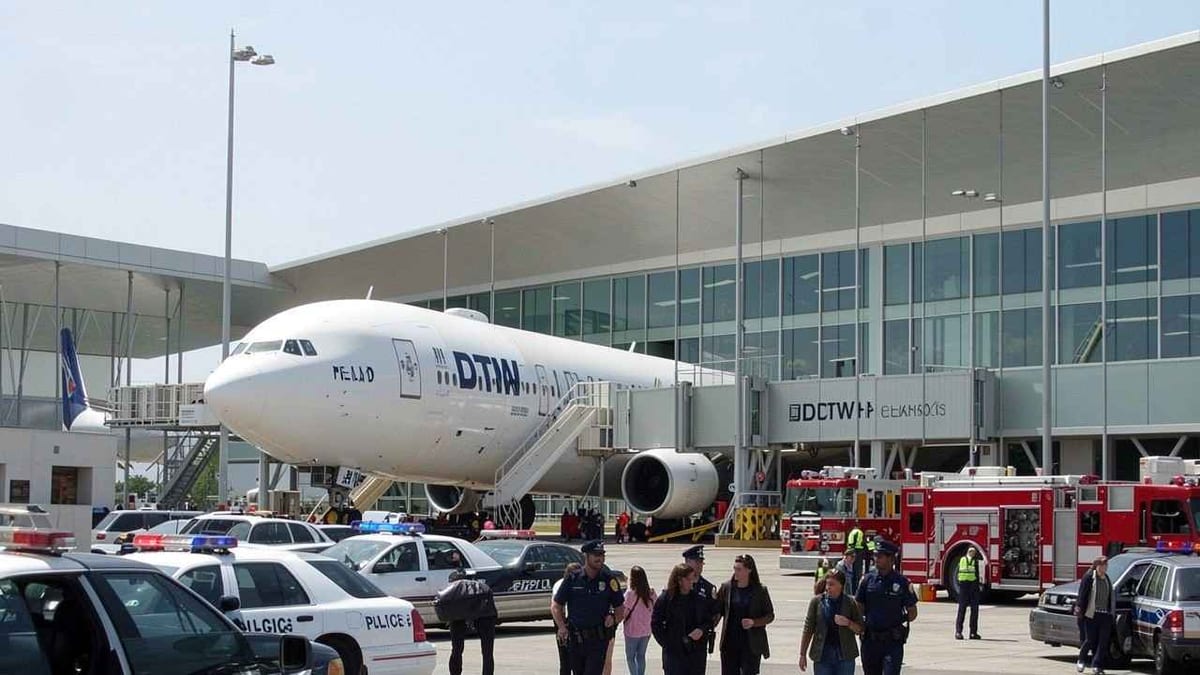
Regional American Eagle Flight Alters Course En Route to Ohio
Flight information shows that the aircraft operating as American Eagle flight RPA4641 departed from Boston Logan International Airport on August 9 on a scheduled service to John Glenn Columbus International Airport. Midway through the journey, the aircraft changed course and headed toward Hebron, Kentucky, where Cincinnati/Northern Kentucky International Airport serves as a major diversion and reliever field for traffic in the region.
Publicly available tracking data for the flight indicates that the diversion occurred while the aircraft was already en route over the eastern United States, rather than being a return to the origin airport. The aircraft subsequently landed safely in Hebron, where passengers disembarked after the unscheduled stop. The available operational records examined for this report do not indicate any injuries related to the event.
American Eagle services on this route are typically flown by Embraer regional jets under contract to American Airlines. Republic Airways, one of the largest regional operators in the United States, provides crew and aircraft under the American Eagle brand, while the service is marketed under an American Airlines flight number in booking systems.
Reason for Diversion Not Immediately Detailed
As of August 11, publicly accessible sources do not provide a detailed technical explanation for why flight RPA4641 diverted to Hebron instead of continuing to Columbus. Operational disruptions of this type are generally associated with a range of potential causes, including weather conditions along the route, mechanical concerns reported by the crew, air traffic control constraints, or medical situations involving passengers or crew members.
Reports referencing flight status for RPA4641 on August 9 point to the diversion and rescheduling of onward travel but stop short of describing a specific triggering factor. In cases where aircraft land safely and the underlying issue is resolved quickly, formal public summaries may be limited to schedule notations showing a diversion, delay, or equipment change.
Industry practice in such situations prioritizes getting an aircraft on the ground at a suitable airport with the necessary runway length, maintenance access, and passenger-handling capacity. Cincinnati/Northern Kentucky International Airport fulfills that role for a large portion of traffic in the Ohio Valley, which explains why it frequently appears as a diversion field for flights serving nearby cities.
Cincinnati/Northern Kentucky Airport’s Role as a Diversion Hub
Cincinnati/Northern Kentucky International Airport, technically located in Hebron, Kentucky, functions as a key regional hub, with infrastructure that can absorb unexpected arrivals from carriers operating throughout the Midwest and East Coast. The airport’s runway layout, terminal capacity, and access to ground services make it a preferred option when flights encounter difficulties reaching their original destination.
Federal transportation data and historical air travel reports highlight that airlines regularly use Cincinnati/Northern Kentucky as a destination for diversions arising from weather systems affecting Ohio airports, congestion near major hubs, or operational incidents on individual flights. These events typically appear in official statistics as diverted flights, often with limited public detail on the exact cause unless a significant safety issue is involved.
For passengers, a diversion to Hebron can mean anything from a relatively brief wait in the terminal before continuing on the same aircraft to an extended delay requiring rebooking on later services. The outcome often depends on crew duty-time limits, aircraft maintenance requirements, and the availability of open seats on subsequent flights to the original destination.
Impact on Passengers Traveling Between Boston and Columbus
Flight schedule records for the Boston to Columbus route show that American Airlines and its American Eagle partners maintain multiple daily frequencies connecting the two cities, reflecting steady demand from business and leisure travelers. When one of these services is disrupted by a diversion, the resulting backlog can affect not only passengers on the diverted aircraft but also those connecting through Boston and other hubs.
In the case of flight RPA4641, travelers bound for Columbus from Boston faced an unplanned arrival in Kentucky, followed by the need for alternative arrangements to reach central Ohio. Publicly available schedule information suggests that later services and partner flights from Cincinnati and other nearby airports typically provide the main options for rebooking.
Industry guidelines and consumer information published by transportation authorities outline that, during such irregular operations, airlines generally focus first on safely completing the flight, then on reaccommodating travelers on the next available services. Accommodation, meal vouchers, or additional assistance can vary depending on whether the disruption is categorized as within the airline’s control or driven by external factors such as severe weather or airspace restrictions.
Regional Airline Operations Under the American Eagle Brand
Republic Airways operates a large share of American Eagle branded services on behalf of American Airlines, including numerous regional routes out of Boston Logan International Airport. Federal aviation documentation lists Republic under the three-letter designator RPA, which appears in operational records for flights such as RPA4641, while the traveling public typically sees only the mainline American Airlines flight number on itineraries and boarding passes.
Performance statistics compiled by the U.S. Department of Transportation show that Republic Airways, like other regional carriers, handles a significant volume of short- and medium-haul flights connecting smaller cities to major hubs. These carriers routinely manage diversions, delays, and cancellations that arise from rapidly changing weather and traffic conditions in some of the country’s busiest airspace.
The diversion of flight RPA4641 on August 9 fits into a broader pattern of irregular operations that, while disruptive for those onboard, remain a routine aspect of modern commercial aviation. Publicly accessible records emphasize that diversions of this kind are typically resolved without incident, with airlines and airports working to restore normal schedules as quickly as operating conditions allow.