


El Dorado International Airport is the main gateway to Colombia and almost always the first contact travelers have with Bogotá. If you are landing here for the first time, the mix of Spanish signs, busy traffic, and unfamiliar transport options can feel overwhelming. This guide walks you through the airport step by step, from arrivals and connections to getting safely into the city, with concrete examples so you know what to expect and what things roughly cost.
Get the latest updates straight to your inbox!
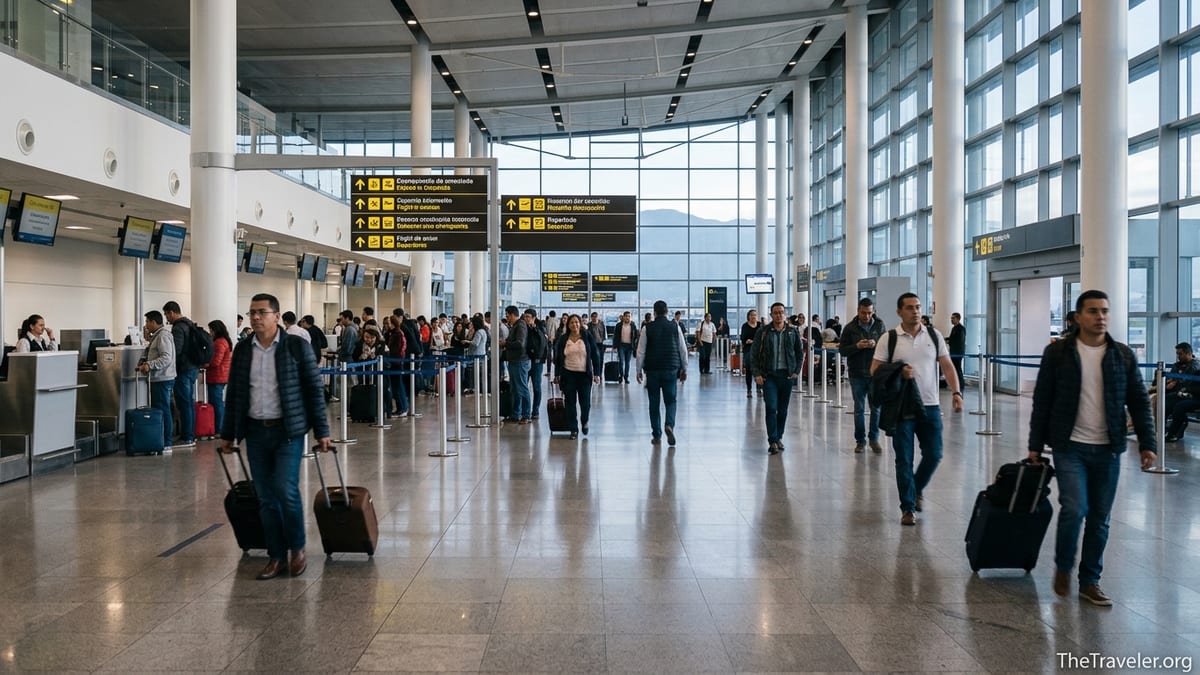
Understanding El Dorado’s Terminals and Layout
El Dorado International Airport sits on the western edge of Bogotá and has two passenger terminals that matter for most travelers: Terminal 1 and Terminal 2, also known locally as Puente Aéreo. Terminal 1 is the big, modern building where nearly all international and many domestic flights arrive and depart, including major carriers like Avianca and LATAM. Terminal 2 is smaller and used mainly by some domestic airlines and regional flights, so most first-time international visitors will only ever see Terminal 1.
Terminal 1 is a long, linear building with international operations on the north side and domestic operations on the south side. Arrivals and baggage claim are on the lower level, while departures check-in and security are on the upper level. You will move between zones via escalators, elevators, and clearly marked corridors. Inside security, international gates extend out along a long concourse, so walking times can be 10 to 15 minutes from passport control to the most distant gates. Give yourself extra time if you are traveling with children, luggage, or mobility constraints.
Terminal 2 sits a short distance away on the same airport complex and is connected to Terminal 1 by a free shuttle bus. The ride usually takes around 10 minutes, but you should budget at least 30 to 40 minutes total when you include waiting time and walking between shuttle stops and check-in areas. If you have a tight domestic connection involving Terminal 2, it is safer to have at least 2.5 hours between flights.
Information desks and roaming staff with visible vests are scattered through both terminals, particularly in the arrivals hall and near check-in islands. If you get turned around, ask specifically for “Terminal 2 shuttle” or “TransMilenio station” rather than only saying “bus,” because there are several types of buses and shuttles operating around El Dorado.
Arrivals: From Plane Door to Baggage Claim
After your aircraft parks, follow the “Llegadas / Arrivals” and “Migración / Immigration” signs. International passengers are funneled through passport control first. Wait times vary significantly: at off-peak hours you might clear in 15 to 20 minutes, but during busy evening banks of flights it can stretch to 45 minutes or longer. Have your passport ready and your accommodation address handy; immigration officers sometimes ask where in Bogotá you are staying.
Once through immigration, you will enter the baggage claim area. Baggage carousels are numbered and show airline and flight numbers on overhead screens, similar to major airports in North America and Europe. Carts are usually available, and many travelers use them because some hotels and hostels in districts like Chapinero and La Candelaria have stairs or uneven streets nearby. If your bag does not appear, go directly to your airline’s baggage office in the claim hall while you are still airside instead of waiting too long at the belt.
Customs comes next. You pass through with your luggage and may be asked to put bags through an X-ray scanner. Travelers with obvious large electronics or many new items in original packaging may get more questions, but tourists with normal luggage typically pass quickly. Keep any receipts handy for high-value items such as professional camera gear or drones, as rules can be stricter for equipment that looks commercial.
Immediately after customs you will step into the public arrivals hall. Here is where you will find official airport taxis, ATM machines from major Colombian banks, currency exchange counters, mobile phone providers selling local SIM cards or eSIM activation, and a few 24-hour cafés. If you arrive at 4:30 in the morning from Europe or at 23:30 from the United States, you will still find at least some services open, but selection is better during the daytime and evening.
Departures and Security: Leaving Bogotá via El Dorado
For international departures from Terminal 1, most airlines recommend arriving at least three hours before your flight. This is especially useful if you need to check bags, claim tax refunds on purchases, or sort out any seat issues. Domestic departures generally work with a two-hour cushion, though many seasoned travelers who are flying without checked luggage and already have a boarding pass will cut it slightly closer.
The departure level of Terminal 1 is on the upper floor. Taxis and private cars drop you at curbside, while some hotel shuttles and rideshare drivers will prefer the parking structures. When you walk into the terminal, airline check-in counters are arranged by island, with overhead boards listing flight numbers and airlines. Staff usually speak at least basic English on international routes. Weigh your bags before you get to the counter if possible; some airlines flying to and from Bogotá are strict on both checked and carry-on weights.
Security for international and domestic flights starts after check-in. Liquids and electronics rules are similar to those in other major airports. Lines move at a reasonable pace, but they can increase in late afternoon and late evening when many long-haul departures leave. After security, international passengers go through exit immigration; have your boarding pass and passport ready. Many travelers notice that queues for immigration on departure are shorter than on arrival, but do not count on that, particularly around holidays and long weekends in Colombia.
Once you are airside, dining and shopping options expand. You will find Colombian coffee chains, bakeries, international fast-food brands, and duty-free shops selling local rum and coffee alongside global cosmetics and perfumes. If you have a long layover, airport lounges run by airlines and independent operators can provide showers, quieter seating, and better Wi-Fi. They are usually accessible with business-class tickets, lounge memberships, or paid day passes charged in Colombian pesos or via major credit cards.
Ground Transport: Taxis, Rideshare Apps, and Private Transfers
The most common way for first-time visitors to leave El Dorado is by taxi. Inside the arrivals hall in Terminal 1 you will find an official taxi kiosk where you tell the attendant your hotel or neighborhood, such as “La Candelaria” or “Zona T.” The attendant prints a ticket with an approximate fare in Colombian pesos, and you take this ticket to the taxi line outside. For a typical ride from El Dorado to La Candelaria during the day, travelers often report paying in the range of 40,000 to 55,000 Colombian pesos depending on traffic and surcharges, which at recent exchange rates is roughly 10 to 15 US dollars.
Rideshare apps such as Uber, DiDi, Cabify, and inDrive operate in Bogotá, but the legal environment remains sensitive and pickup at the airport can be slightly more complicated than in other cities. Many locals simply walk to the main parking areas or a slightly less congested point outside the terminal, request a ride in the app, and then message the driver with a description of their exact location and clothing. This is common practice but can involve a short wait while your driver navigates traffic and local enforcement checks.
If you prefer a more straightforward option, several hotels in business districts like Salitre and the airport corridor offer their own shuttle services, and numerous private transfer companies sell pre-booked pickups with a driver holding a sign in the arrivals hall. These private transfers usually cost more than a taxi or rideshare but can be a good choice if you are arriving late at night, traveling with young children, or carrying bulky sports equipment. Prices vary widely, but a typical one-way private car transfer into central Bogotá might start around the equivalent of 25 to 40 US dollars depending on vehicle type and destination.
Whatever transport you choose, keep your luggage close and your phone stowed when you are curbside. Bogotá’s airport is better policed than many parts of the city, but standard urban precautions still apply. Confirm the driver and vehicle plate match what your app or taxi ticket shows before getting in, and avoid accepting unsolicited offers from people approaching you in the arrivals hall.
Using TransMilenio and Airport Buses
Budget-minded and adventurous travelers often use Bogotá’s bus rapid transit system, TransMilenio, to travel to and from the airport. The most straightforward service that directly enters the airport is the K86 line, which runs between the airport and the northeastern part of the city. This dual service uses the busway for part of the route and regular streets for other stretches, making it useful if your accommodation is near its stops, especially around north Bogotá and business areas.
Another popular option involves the Portal El Dorado TransMilenio station. From Terminal 1 and Terminal 2, green feeder buses known locally as “alimentadores” provide a free shuttle from the terminals to Portal El Dorado. From there, you transfer to main red TransMilenio buses such as routes into the city center. Travelers staying near downtown or the historic La Candelaria area often take a main line from Portal El Dorado to stations closer to the old town, then finish by taxi or rideshare for the last short stretch.
To use TransMilenio, you need a rechargeable smart card, often called a TuLlave card. You can buy and top up this card at official kiosks in the stations. As of recent years, a typical TransMilenio fare sits in the low thousands of Colombian pesos per ride, which is only a couple of US dollars or less. This makes it much cheaper than taxis, but you trade comfort and directness for savings. During weekday rush hours, especially in the morning between about 7:00 and 9:00 and late afternoon between about 16:30 and 19:00, buses can become extremely crowded.
For a first-time visitor with large luggage arriving in the middle of the day, TransMilenio can be a viable choice if you are comfortable in busy public transport environments and speak some Spanish. If you are landing very late at night or very early in the morning, most travelers prefer a taxi, rideshare, or hotel shuttle, since some bus services run less frequently or feel less convenient in the dark.
Connections and Layovers at El Dorado
While El Dorado is not as enormous as some global mega-hubs, making a connection still requires planning. For international to domestic connections within Terminal 1, you will usually clear immigration and customs on arrival, then exit into the public area and re-check any luggage for your domestic flight if it is not checked through. Many travelers with through tickets on carriers like Avianca find their bags transferred automatically, but if you are combining tickets from different airlines, assume you will have to collect and re-check.
For connections where both flights are in Terminal 1 and on the same ticket, a layover of 2.5 to 3 hours is usually comfortable. This gives you time to clear immigration, reclaim bags if necessary, re-check them, and go back through security. In busy holiday periods such as Christmas and Easter, adding extra time is wise, especially during peak evening waves of traffic at the airport.
Connections involving Terminal 2 add complexity. After arriving at Terminal 1, you will clear immigration and customs, then follow signs or ask staff for the shuttle to Terminal 2. The shuttle is free and circulates frequently, but traffic and boarding can add delays. It is realistic to expect the entire transfer, from walking out of customs to arriving at your new check-in counter in Terminal 2, to take around 40 minutes or more. Build at least three hours into your connection window if your itinerary requires a terminal change.
If you have an overnight layover, several hotels cluster within a 10-minute drive of the airport, including business-oriented properties in the Ciudad Salitre and airport corridor areas. Many offer free or low-cost shuttles. For long daytime layovers of six hours or more, some travelers venture into the city to see the Gold Museum or the historic center, but you must factor Bogotá’s heavy traffic into your plans. A taxi into La Candelaria in the middle of the day can take 30 to 60 minutes one way, and more during rush hours, so build in generous buffers to avoid missing your onward flight.
Money, SIM Cards, Safety, and First-Time Bogotá Tips
As soon as you exit customs in Terminal 1, you will see ATMs from major Colombian banks. Withdrawing cash from these machines usually gets you a better rate than airport currency exchange counters, though your home bank’s fees will vary. Many taxis, rideshare drivers, restaurants, and hotels in Bogotá accept credit cards, but small neighborhood eateries, street vendors, and local markets often prefer cash. It is practical to take out a moderate amount of pesos on arrival rather than carrying large sums.
Several mobile operators and electronics shops inside the terminal sell prepaid SIM cards and help configure your phone. Travelers who stay longer than a few days often choose a Colombian SIM with a data-heavy package to use rideshare apps and navigation without worrying about roaming charges. If you prefer eSIM, some providers can activate it on the spot, while others will direct you to purchase online and then assist with setup. Having mobile data from the moment you leave the terminal makes it much easier to coordinate rides and check maps.
In terms of safety, El Dorado itself feels similar to a typical large Latin American hub: busy but well monitored. The larger safety adjustments start once you are in the city. Avoid displaying expensive watches, jewelry, or phones in crowded spaces like TransMilenio or busy commercial streets. When leaving bars or restaurants late at night, use an app-based ride or call a taxi from a reputable company rather than hailing one randomly on the street. In neighborhoods like La Candelaria, parts of Chapinero, or around bus terminals, stay on well-lit streets and keep your bag across your body instead of hanging loosely from one shoulder.
Bogotá sits high in the Andes at about 2,600 meters above sea level, so some visitors feel mild altitude effects on their first day, such as light headaches, shortness of breath on stairs, or poor sleep. Drink water, go easy on alcohol the first night, and avoid intense exercise immediately on arrival. Even if Bogotá is close to the equator, temperatures are mild to cool rather than tropical. Daytime highs often feel like a mild spring day, while evenings can be chilly. Bring a light jacket and a small umbrella, since showers can roll in quickly.
The Takeaway
El Dorado International Airport is busy, modern, and, with a bit of preparation, relatively straightforward for first-time travelers. Understanding which terminal you use, how arrivals and departures flow, and what your ground transport choices actually look like in practice will take most of the stress out of landing in Bogotá. Whether you choose an official taxi, rideshare app, hotel shuttle, or TransMilenio, there is an option to match nearly every comfort level and budget.
Plan generous layover times for connections, especially if you need to change terminals or enter the city between flights. Use the arrivals hall to sort out cash and mobile data so you can use navigation and transport apps with confidence. Once you leave the airport bubble, Bogotá rewards prepared visitors with excellent museums, a dynamic food scene, and neighborhoods that feel very different from one another.
If you treat El Dorado as your first introduction to how Bogotá works, you will quickly see the patterns: busy but friendly, sometimes chaotic but rarely unmanageable. With realistic expectations and the practical tips in this guide, your first steps in Colombia’s capital should feel like the start of an adventure, not an obstacle course.
FAQ
Q1. How long does it usually take to get from El Dorado Airport to central Bogotá?
Typical taxi rides from the airport to central areas like La Candelaria take around 30 to 60 minutes, depending mainly on traffic and time of day.
Q2. What is a normal taxi fare from the airport to popular neighborhoods?
Recent travelers report fares roughly in the 40,000 to 60,000 Colombian peso range to central or popular areas, with exact amounts varying by distance, traffic, and surcharges.
Q3. Are Uber and other rideshare apps allowed at El Dorado Airport?
Rideshare apps operate in Bogotá, and many locals use them from the airport, but pickups can be sensitive. Drivers often prefer meeting in parking areas or slightly away from the main arrival curb.
Q4. Is it safe to take TransMilenio from the airport as a first-time visitor?
Many visitors safely use TransMilenio, especially during the day. It is crowded at rush hours and requires more awareness, so some first-timers with big luggage prefer taxis or rideshares.
Q5. Do I need cash immediately after landing, or can I pay everything by card?
You can pay many airport taxis, restaurants, and shops by card, but withdrawing some pesos on arrival is wise for smaller purchases, tips, and situations where cards are not accepted.
Q6. How early should I arrive at El Dorado for my departing flight?
For international flights, aim to arrive about three hours before departure. For domestic flights, two hours is usually sufficient, though busy holidays may justify more.
Q7. Can I walk between Terminal 1 and Terminal 2 at El Dorado?
The terminals are separate buildings on the same airport grounds. Most travelers use the free shuttle bus between them instead of walking, as traffic and distance make walking inconvenient.
Q8. Where can I buy a SIM card at the airport?
In Terminal 1’s arrivals and departures areas you will find mobile operator stands and electronics shops that sell prepaid SIM cards and can help set up data on your phone.
Q9. Is English widely spoken at El Dorado Airport?
English is commonly spoken at airline counters, immigration booths, and some shops, especially around international flights, though a few basic Spanish phrases are still very helpful.
Q10. Is it realistic to visit Bogotá’s city center during a long layover?
If your layover is six hours or longer, many travelers do a quick visit to areas like La Candelaria or the Gold Museum, but heavy traffic means you must build in generous time to return.