


More news on this day
Boral is coordinating with police and rail regulators after a freight train carrying cement derailed near the company’s major cement works at New Berrima in New South Wales, disrupting local road traffic but resulting in no reported injuries, according to regional media coverage and company statements cited in that reporting.
Get the latest news straight to your inbox!
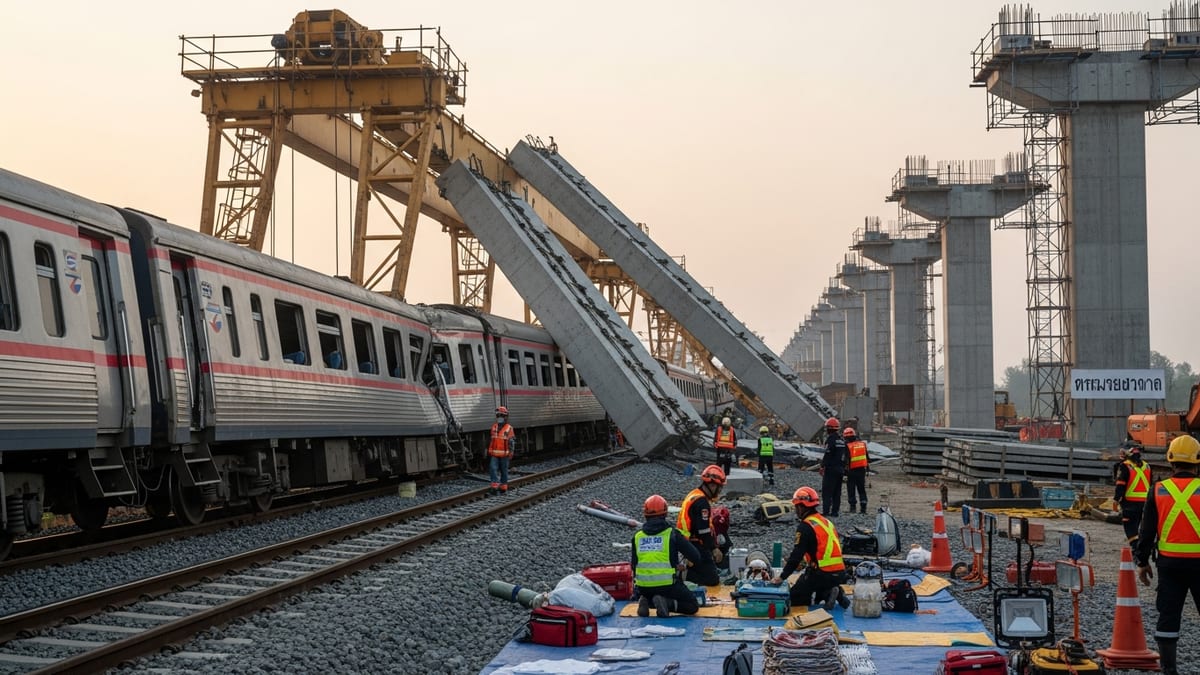
Freight service disrupted near key New South Wales cement hub
Regional reports indicate that the derailment occurred on the rail crossing on Berrima Road, close to the entrance of Boral’s New Berrima cement plant in the Southern Highlands. The incident took place on the afternoon of 4 July, when a freight train failed to negotiate the tracks while en route to the facility with a load of cement.
Coverage from local outlet The Southern Wire describes several wagons leaving the rails at the level crossing, blocking Berrima Road near the plant and forcing traffic diversions through nearby Douglas Road and Lackey Road back toward Moss Vale. The scene rapidly drew an emergency response and prompted authorities to limit access while rail and safety specialists assessed the damage.
Publicly available information indicates that the train was hauling cement for Boral but operated by Southern Shorthaul Railroad, a private rail services partner that runs freight services to industrial customers across New South Wales. The derailment has temporarily disrupted a key supply route serving a plant that supplies a substantial share of the state’s cement demand.
Initial reports from the scene indicate that there were no hazardous material leaks associated with the derailment, easing concerns that the incident could escalate into a broader environmental or public health emergency. Local coverage notes that the primary impacts have been confined to transport delays and operational disruption at the crossing.
Boral’s role and cooperation with investigators
According to published coverage, Boral has indicated that the derailed train was operated with rolling stock and crew supplied by its rail partner rather than by the company directly. Even so, Boral is described as taking an active role in the response, liaising with investigators and transport authorities while the site remains under formal control of New South Wales Police and rail regulators.
Media reports summarising Boral’s public comments state that the company is committed to working closely with all relevant authorities to address the derailment, assist with the technical investigation and support the safe recovery of the line. This includes providing information about train movements, cargo and on-site conditions at the cement works.
The company has also been reported as emphasising that no injuries occurred and that it is mindful of the disruption to motorists and local residents caused by the closure of Berrima Road. Statements cited in news coverage note that Boral has expressed sympathy to the community for the inconvenience caused, while efforts continue to clear the crossing and restore normal traffic patterns.
While detailed technical findings on the cause of the derailment have not yet been published, established practice in similar incidents suggests that regulators will review track conditions, train handling, wagon integrity and signalling or operational procedures. Boral’s cooperation is likely to extend over an extended period as investigators compile a full timeline of events.
Impact on regional travel and freight movements
The derailment has had an immediate effect on local travel, with Berrima Road temporarily blocked at a critical crossing point. Traffic management measures have redirected vehicles along alternative routes, adding distance and time to journeys between New Berrima, Moss Vale and surrounding communities. For visitors and travellers in the Southern Highlands, this has meant detours and occasional congestion on smaller rural roads.
Freight movements in the region are also expected to experience short term disruption. The siding and rail access serving the New Berrima plant form part of a logistical chain that moves bulk cement and related materials across New South Wales. Any extended closure of the line would likely require additional truck movements or alternative rail routings to keep construction supply chains running.
Recent rail incidents in other regions, including a freight derailment in Colorado that prompted operators there to work with local authorities to reroute services, have shown how quickly a single event can ripple through passenger and freight timetables. In the Southern Highlands, rail managers will be seeking to minimise knock on effects by restoring the crossing as soon as safety assessments allow.
For leisure travellers exploring the Southern Highlands by car, the main consequences are likely to be slower journeys and short notice detours around New Berrima while recovery work is in progress. Local tourism businesses generally remain accessible, but visitors are being advised through regional traffic updates to allow extra time and follow diversion signs.
Safety focus and broader context of rail incidents
The New Berrima derailment comes at a time of heightened public attention to rail safety internationally, following several high profile freight incidents involving hazardous materials in recent years. In those cases, regulatory investigations and settlements have highlighted the importance of close coordination between rail operators, industrial customers and government agencies when accidents occur.
Although the New Berrima incident involves cement rather than more sensitive cargo, the response pattern mirrors other recent derailments in its focus on immediate containment, community information and technical investigation. Publicly available information from previous Australian and overseas cases indicates that investigators typically examine infrastructure maintenance, rolling stock condition and operational decisions in the minutes leading up to a derailment.
In this context, Boral’s collaborative stance, as reflected in media reports, aligns with a broader industry trend in which major industrial users of rail infrastructure seek to demonstrate transparency and cooperation. This approach is intended to support public confidence, reassure nearby communities and reduce the risk of prolonged disruption to both freight and local travel.
Rail industry analysts frequently note that incidents at industrial sidings or level crossings can be especially challenging because of their proximity to public roads, workplaces and residential areas. Effective coordination among companies and regulators is seen as essential to restoring normal conditions quickly and safely.
Next steps for cleanup and reopening of the route
Once regulators complete initial site documentation and authorise recovery, attention is expected to shift to rerailing or removing damaged wagons, inspecting track and ballast, and repairing any infrastructure damage at the Berrima Road crossing. Recovery contractors and rail technicians typically work in phases that prioritise reopening at least one track to limited traffic before full restoration.
In similar derailments, the sequence has often involved heavy lifting equipment to move railcars, followed by detailed inspection of sleepers, rails and signalling equipment. Any required renewals are generally installed before testing train movements at low speed under close supervision. Only after those steps are completed are speed restrictions lifted and regular timetables resumed.
For Boral, the focus will be on re-establishing reliable access to its New Berrima plant, which plays a central role in supplying cement to construction markets around New South Wales. The company’s cooperation with authorities, as described in regional coverage, suggests an interest in both quick restoration and longer term safety assurance on the approaches to the facility.
Travellers in the Southern Highlands can expect periodic updates from regional news outlets and transport channels as cleanup progresses and Berrima Road reopens in stages. While the derailment has caused visible disruption at a key industrial gateway, the absence of reported injuries and hazardous leaks has allowed efforts to concentrate on infrastructure repair, traffic management and lessons for future rail operations into one of New South Wales’s most significant cement hubs.