


More news on this day
Boston Logan International Airport saw widespread delays and cancellations after a telecommunications problem in New Jersey disrupted air traffic control systems serving the Northeast corridor, setting off a ripple effect that stretched well beyond the New York area.
Get the latest news straight to your inbox!
What happened: A primary failure, then a backup line cut
Published coverage describes a chain reaction that began Monday, September 21, 2026, at an FAA facility in Philadelphia that manages high-volume approach and departure traffic for parts of the region. Reports indicate a primary communications circuit failed, and when the system attempted to shift to a backup connection, the backup fiber line was found to be cut.
Multiple outlets tied the cut to construction activity in New Jersey near an Amtrak rail corridor, with later reporting describing differing accounts over whether the work involved an Amtrak-related crew, a New Jersey Transit contractor, or railroad construction workers operating in the same area between Newark and New Brunswick.
The immediate operational impact was most visible at Newark Liberty International Airport, where flight-tracking coverage showed commercial arrivals were effectively paused for much of the day, with landings resuming later in the afternoon. As traffic managers worked to meter aircraft into crowded Northeast airspace, delays propagated to other airports that rely on the same flow patterns.
Why Boston was hit: Diversions, congestion, and knock-on delays
Even though the equipment issue was centered outside Massachusetts, Boston is tightly connected to the New York and Philadelphia airspace complex, with frequent shuttle-style service and dense schedules. When major airports in the New York City area slowed or stopped inbound traffic, flights already airborne needed alternates, and other flights were held on the ground to keep the system from overwhelming controllers and airport ramps.
Local reporting cited Logan taking in diversions from affected airports, a factor that can consume gates, ground staff, and runway capacity. That, in turn, can slow down scheduled departures and arrivals that have nothing to do with the original disruption, especially during peak afternoon and evening travel periods.
On Monday, widely circulated tallies based on flight-tracking services showed significant disruption at Logan, including hundreds of delays and dozens of cancellations. While counts can shift throughout the day as airlines consolidate schedules, the scale reflected how quickly a Northeast airspace constraint can cascade across carriers and airports.
What travelers saw at Logan: Delays, cancellations, and recovery into Tuesday
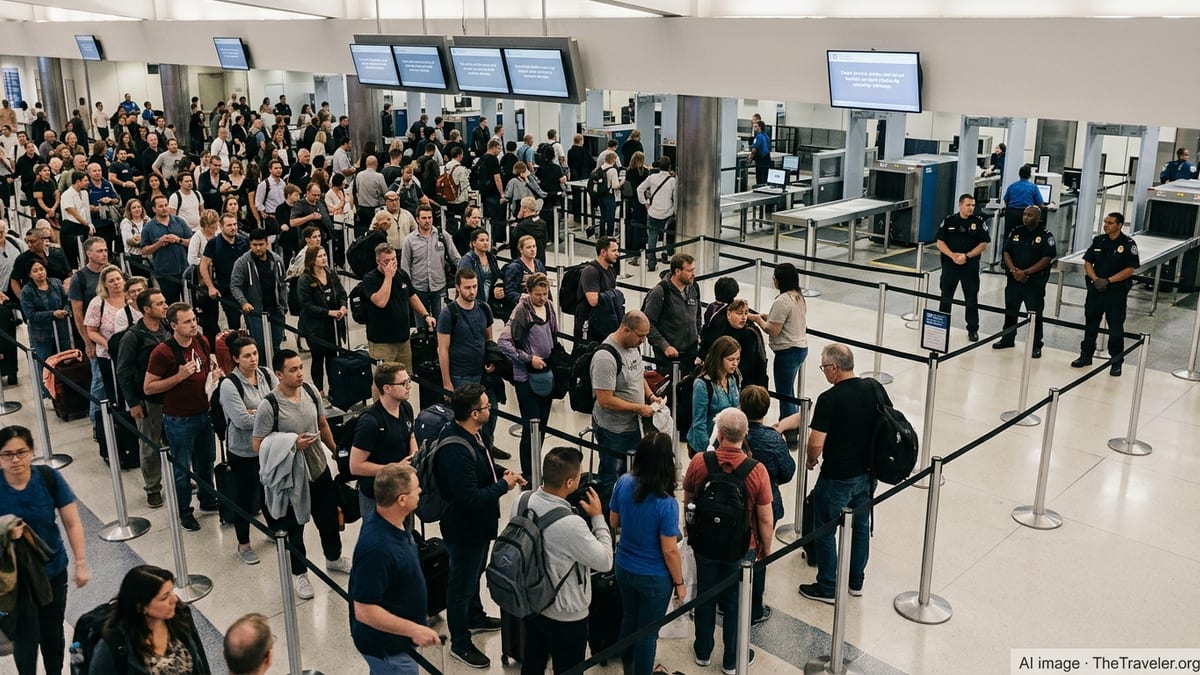
For passengers, the disruption was often experienced as a mix of late departures, missed connections, and short-notice cancellations as airlines repositioned aircraft and crews. When an airport like Newark experiences a prolonged arrival pause, aircraft and crews can end up out of place, which can linger even after air traffic restrictions ease.
By Monday evening, published coverage indicated repairs were completed and flights in the region were resuming, but the return to normal operations was not immediate. Early Tuesday, September 22, 2026, flight-tracking sites continued to show residual delays and cancellations at impacted Northeast airports, consistent with the well-known “recovery day” pattern after major systemwide interruptions.
At Logan, travelers checking their flight status Tuesday morning could still see delays logged for the day as airlines worked through backlogs. Passengers with early departures were still urged by airline and airport messaging cited in coverage to verify status before traveling to the terminal.
What to do if your Boston flight was affected
When delays are attributed to air traffic control constraints, traveler options can vary by airline and fare type, but most major carriers publish flexible rebooking policies during large-scale events and display them prominently in their apps during disruptions. Travelers booked out of Boston were best positioned when they relied on app alerts and airport departure boards rather than assuming a previously posted departure time would hold.
If your flight was canceled, the practical priority was to secure a confirmed new itinerary first, then address lodging or ground transport if an overnight stay became unavoidable. Keeping itemized receipts for meals, hotels, and transportation can matter later, because reimbursement rules depend on the cause of disruption and the airline’s contract of carriage, and documentation is often required for any claim.
For those deciding whether to go to the airport, the key factor was whether the flight was still operating and whether bag drop and security timing would still make sense if the schedule shifted again. During regional airspace constraints, flights can move from “delayed” to “canceled” or back to “on time” as the traffic picture evolves, so frequent status checks remained essential.
A broader spotlight on Northeast infrastructure and redundancy
The incident also renewed attention on how dependent busy air corridors can be on telecommunications links between air traffic facilities and the systems that provide radar and voice communications. Coverage described how the failure of a primary circuit combined with an unusable backup line left controllers without normal tools for managing aircraft until fixes and workarounds could be implemented.
In the Northeast, where airports are closely spaced and airspace is shared, that kind of failure can create network-wide disruption quickly. Even when weather is benign, a communications outage can force traffic managers to slow the flow of arrivals and departures to maintain safety margins, producing long ground holds and widespread cancellations that reach as far as Boston.