


More news on this day
British Airways has postponed the restart of several key Middle East routes to 1 August 2026, extending a months long suspension that continues to unsettle travel plans between London and major Gulf and Levant hubs.
Get the latest news straight to your inbox!
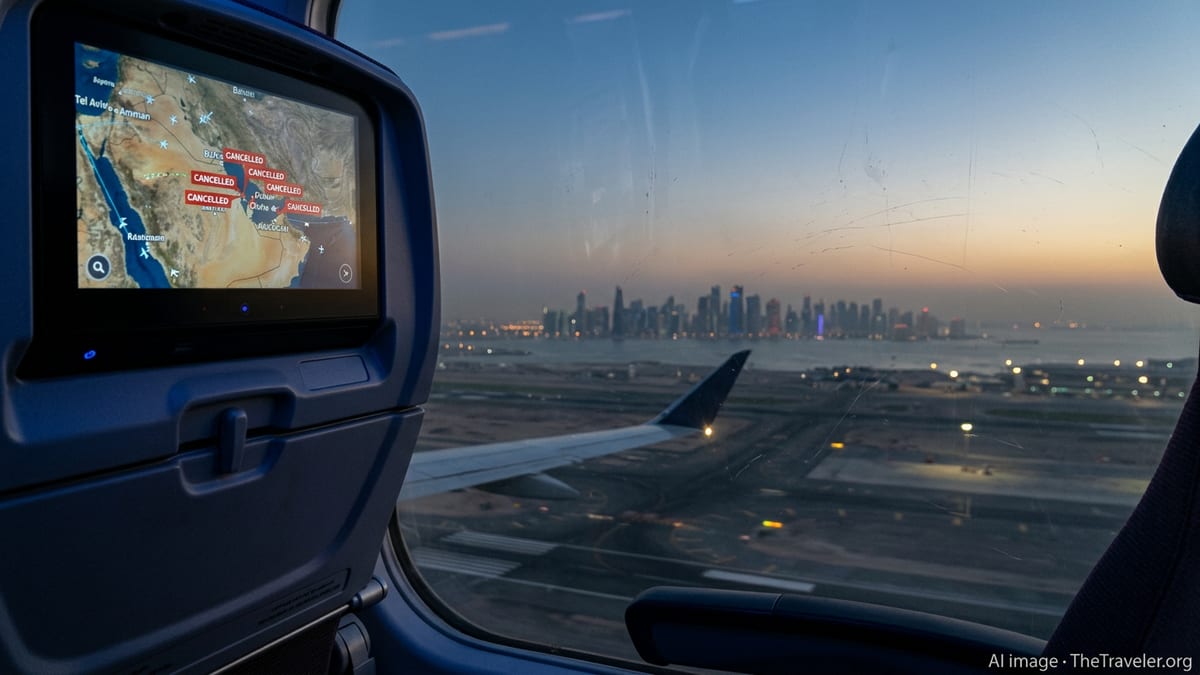
Restart Date Slips As Regional Risks Persist
Public schedules and published coverage indicate that British Airways has moved the planned resumption of flights to Dubai, Doha and Tel Aviv from July to 1 August 2026. The decision comes after the airline had already suspended most Middle East operations in response to escalating conflict and airspace restrictions across the region earlier this year.
The latest shift means the carrier will have kept large parts of its Middle East network offline for the bulk of the high season, including the busy July school holiday period in the United Kingdom. Travel industry reports note that the updated timetable is reflected in the airline’s online booking engine, where services on the affected routes only reappear from the start of August.
According to information shared by Reuters and other business outlets, the airline’s parent company, IAG, has been monitoring security assessments, insurance costs and fuel price volatility linked to the wider Middle East crisis. The decision to hold off until August is being interpreted as a cautious response to a conflict that has repeatedly spilled over into commercial aviation corridors.
While the 1 August date provides a clearer target for passengers and tour operators, analysts point out that any further deterioration in the regional security picture could still prompt additional revisions. For now, however, the new timeline offers the first concrete indication of when a scaled back British Airways presence in the Middle East may return.
Reduced Network Focuses On Four Core Cities
When flights do resume, British Airways plans to operate a trimmed network focused on Dubai, Doha, Riyadh and Tel Aviv, according to airline schedule data and specialist aviation publications. Earlier announcements signalled that Bahrain and Amman will remain suspended for the entire summer season, with tentative restart dates pushed into late October 2026.
Industry reporting indicates that services to Dubai and Doha will initially return as single daily flights from London Heathrow, a sharp reduction from the multiple daily rotations that were common before the latest crisis. Tel Aviv is expected to come back on a once daily basis as well, reflecting both demand uncertainty and ongoing operational constraints around Israeli airspace.
Riyadh, which British Airways relaunched in recent years as part of a broader push into Saudi Arabia, is set to remain on the map but with limited frequencies. Capacity reductions on these trunk routes are being framed by analysts as a way for the airline to preserve a strategic footprint in the region while limiting exposure to sudden route closures and diversion costs.
The streamlined network also reflects the impact of alternative one stop options now available to passengers through rival carriers in Europe and the Gulf. With many travellers prioritising perceived stability and schedule reliability, the British flag carrier is returning to the market in a more defensive posture than before.
Jeddah Axed As Competitive Landscape Shifts
One of the most significant structural changes in the airline’s Middle East strategy is the permanent withdrawal from Jeddah. Reports from financial and aviation news outlets state that British Airways confirmed in April that it would not bring back the long standing Heathrow to Jeddah route when Middle East flying resumes.
The move ends decades of direct service to western Saudi Arabia and leaves the Red Sea gateway to be served from the UK primarily by Saudi and Gulf carriers. Travel analysts note that this decision follows Virgin Atlantic’s earlier retreat from Riyadh, suggesting a broader reassessment by UK airlines of how they compete in Saudi Arabia against state backed rivals with extensive local networks.
By dropping Jeddah, British Airways frees aircraft to reinforce stronger performing markets in South Asia and other long haul regions, where demand has rebounded more predictably. However, it also narrows options for passengers who previously relied on the carrier for direct access to the Red Sea corridor for business, religious travel and tourism.
Specialist commentary points out that the airline’s loyalty base in Saudi Arabia may now gravitate toward competitors that continue to add capacity into the kingdom. For British Airways, the decision underscores a pivot toward markets where it can maintain pricing power and operational resilience in the face of geopolitical shocks.
Passengers Confront Cancellations, Refunds And Rerouting
The extended suspension and delayed restart have left thousands of customers rearranging summer itineraries. British Airways’ travel news pages and industry advisories outline options for affected passengers, including refunds, date changes and rerouting on alternative services, particularly for those booked to travel before operations resume in August.
Consumer advocates note that UK and European air passenger rights regulations continue to apply, requiring airlines to provide assistance and, in some cases, compensation when flights are cancelled at short notice. In practice, however, the combination of tight capacity and high seasonal demand has made it more challenging for travellers to secure like for like alternatives on preferred dates and cabins.
Reports on frequent flyer forums describe a patchwork of outcomes, with some passengers successfully rebooked on partner airlines via alternative hubs outside the Middle East, while others face longer journeys or shifts to later travel dates. Travel agents say the uncertainty has prompted many customers to favour routings that avoid the region entirely for the time being.
Publicly available information from the airline indicates that flexible policies for affected Middle East itineraries remain in place, allowing changes without additional fees for eligible tickets. Nonetheless, the delayed restart to 1 August means that disruption will continue to ripple through corporate travel programmes and holiday plans well into the peak season.
Strategic Caution Highlights Ongoing Volatility
The decision to push the Middle East restart to August is being widely read as a sign of how carefully major European carriers are calibrating exposure to the region. Aviation analysts point out that the current conflict has combined traditional security concerns with elevated fuel costs and complex overflight restrictions, creating a risk profile that is difficult to manage on thin margins.
For British Airways and its parent IAG, prioritising network stability and financial discipline appears to outweigh the short term benefits of returning to suspended markets as quickly as possible. The airline is instead concentrating on consolidating performance in routes where demand is strong and operational risks are more predictable.
Travel industry observers expect that any future expansion of the carrier’s Middle East presence will depend on a sustained improvement in geopolitical conditions and a clearer outlook for insurance and fuel costs. Until then, the reduced schedule and August restart date signal that one of Europe’s largest long haul operators is prepared to sit out a significant portion of peak season flying in a traditionally important region.
For passengers, the message is that flexibility and contingency planning remain essential when booking itineraries that rely on routes through or to the Middle East. Even with a new date on the calendar, the shape of British Airways’ regional network is likely to stay lean and closely managed for some time.