


More news on this day
Dubai’s position as a global aviation crossroads is under mounting pressure as a growing list of international airlines, including British Airways, Lufthansa and Singapore Airlines, suspend or sharply scale back flights to the emirate amid capacity limits and regional security concerns.
Get the latest news straight to your inbox!
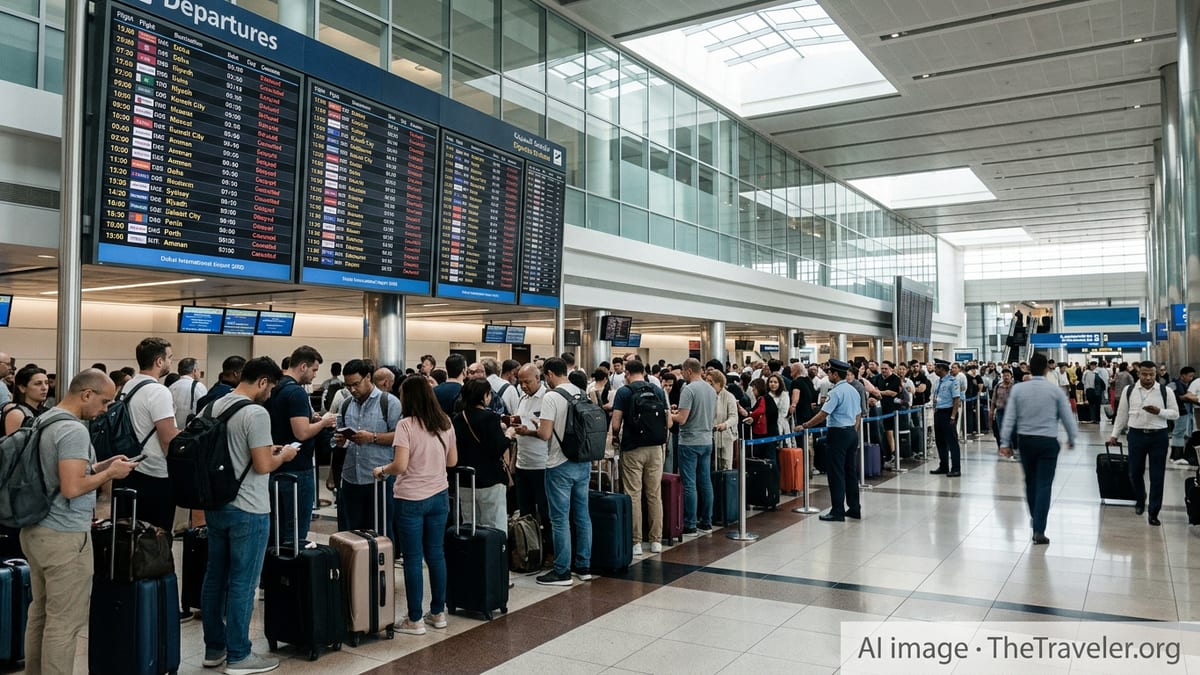
Foreign carriers pull back from Dubai hub
Publicly available information indicates that at least a dozen major international airlines have halted or significantly reduced scheduled services to Dubai International Airport in recent weeks. Among the most prominent are British Airways, Lufthansa and Singapore Airlines, alongside several European and Asian carriers that traditionally funnel long haul traffic through the city.
Industry summaries report that the pullback has been driven by a combination of airspace restrictions linked to the ongoing conflict involving Iran and its neighbors, as well as temporary caps on foreign airline capacity at Dubai’s main hub. A widely cited analysis of flight schedules notes that many non Gulf carriers are now restricted to a single daily round trip, making some routes commercially unviable and prompting full suspensions instead of limited operations.
The result is that Dubai, long marketed as the world’s busiest international airport, is currently relying more heavily on home based airlines such as Emirates and flydubai to sustain connectivity, while many foreign carriers redeploy aircraft to alternative hubs in Europe and Asia.
Travel data providers suggest that passenger volumes remain substantial, but the mix of airlines serving the city has shifted abruptly, with international brands that once operated multiple daily flights now absent from departure boards.
British Airways delays Middle East relaunch
British Airways has emerged as one of the most visible examples of the current disruption. According to recent schedule updates reported in financial and aviation trade coverage, the carrier has suspended its London Heathrow services to Dubai, Doha and Tel Aviv, with the restart now pushed back to 1 August 2026 after an earlier target of July.
Separate travel advisories on the airline’s information pages indicate that flights to and from Dubai, Abu Dhabi, Amman, Bahrain, Doha, Riyadh and Tel Aviv are either cancelled or operating on a reduced basis. Customers booked to or from these destinations through the end of October are being offered options such as refunds or rebooking on alternative dates, reflecting the expectation that normal schedules will not return quickly.
Analysts quoted in recent media coverage describe British Airways’ stance as emblematic of a more cautious approach among European carriers toward the broader Middle East market, with planners weighing higher insurance and fuel costs on diverted routes against uncertain demand. The decision to consolidate to a single daily Dubai service from August, before gradually rebuilding frequency later in the year, illustrates how airlines are testing demand while keeping flexibility to respond to further geopolitical shocks.
For UK based travelers, the suspension means fewer nonstop options to Dubai and a heavier reliance on connections via partner hubs in cities such as Istanbul, Doha and Singapore, which have absorbed some of the displaced traffic.
Lufthansa Group and Singapore Airlines extend suspensions
Lufthansa and its sister airline SWISS have also prolonged flight suspensions to Dubai. Current notices on their travel information pages state that services to and from Dubai will remain halted until at least 13 September 2026, citing operational and security related constraints. Passengers on affected flights are being offered rebooking on later dates or full refunds.
This extended pause positions Lufthansa Group among the most conservative of the large European airline conglomerates in its approach to Gulf routes, effectively sidelining Dubai from its long haul network through the key summer travel months. Aviation observers note that the decision also reflects limited airspace options for European carriers seeking to avoid overflight of certain conflict areas, which can lengthen routes and complicate crew scheduling.
In Asia, Singapore Airlines has maintained its own suspension of Dubai services. Recent operational advisories outline ongoing cancellations of flights between Singapore and Dubai, with a provisional resumption date in early August. The airline continues to update customers via online flight status tools and is encouraging those with bookings to work through official channels or travel agents to adjust itineraries.
Together, the actions of Lufthansa Group and Singapore Airlines highlight how carriers from different regions are arriving at similar conclusions about the risks and economics of flying into Dubai under current conditions, even as Gulf based airlines keep most of their own services running.
Capacity caps and regional tensions reshape routes
Underlying many of the cancellations is a temporary cap on foreign airline capacity at Dubai International Airport. Aviation industry summaries report that regulators have limited non Emirati carriers to a single daily round trip in and out of the hub, a measure initially introduced alongside broader airspace restrictions as conflict in the wider region intensified.
While local airlines are not subject to the same limits, international operators have faced difficult choices. For airlines that once scheduled multiple daily frequencies to capture business and premium leisure demand, cutting back to just one round trip can undermine connectivity and revenue. Several have therefore opted to suspend services entirely until they can restore economically viable schedules.
At the same time, regional tensions have forced intricate rerouting of long haul flights to avoid sensitive airspace, lengthening flight times and increasing fuel burn. According to route tracking data and airline statements referenced in recent coverage, this has had a knock on effect not only for services to Dubai but also for flights passing through surrounding air corridors, compounding pressure on timetables and crews.
Airports in other hubs, including Istanbul and Doha, appear to be absorbing some of the diverted traffic as airlines reposition capacity. Analysts suggest that if the current pattern endures through the summer, competitive dynamics in long haul markets between Europe, Asia and Africa could be reshaped, with rival hubs temporarily gaining an advantage over Dubai.
What stranded and future passengers should expect
For travelers, the wave of suspensions means greater uncertainty and a higher likelihood of last minute changes. Passenger rights organizations and travel advisors are urging those booked on British Airways, Lufthansa Group, Singapore Airlines and other affected carriers to monitor their reservations closely through airline websites and mobile apps rather than relying solely on airport departure boards.
Consumer guidance widely circulated online emphasizes that customers whose flights are cancelled are generally entitled to options such as rebooking or refunds under applicable regulations, including UK and European passenger protection rules for journeys originating in those jurisdictions. However, compensation payments may not apply where airlines can demonstrate that security related airspace closures were beyond their control.
Travel experts recommend that passengers holding tickets for Dubai through at least late summer 2026 build additional flexibility into plans, including longer connection times and willingness to route via alternative hubs if necessary. Those with essential travel may find more options on Gulf based carriers, which are still operating the bulk of services into Dubai despite trimmed schedules.
With capacity caps currently scheduled to remain in place at least through the end of May and several major airlines signaling suspensions well into August and September, the disruption to Dubai flights appears set to continue for months rather than weeks. Industry observers note that a sustained easing of regional tensions and clearer guidance on long term airspace access will likely be required before many international carriers commit to fully restoring their pre crisis Dubai networks.