


More news on this day
Air travel across Europe is facing another difficult day today as tracking data indicates 1,334 flights delayed and 46 cancelled across Spain, England, Italy, Germany, Scotland, Sweden and other countries, disrupting schedules for Iberia, Lufthansa, British Airways, Ryanair and several other carriers at key hubs including London, Barcelona and Rome.
Get the latest news straight to your inbox!
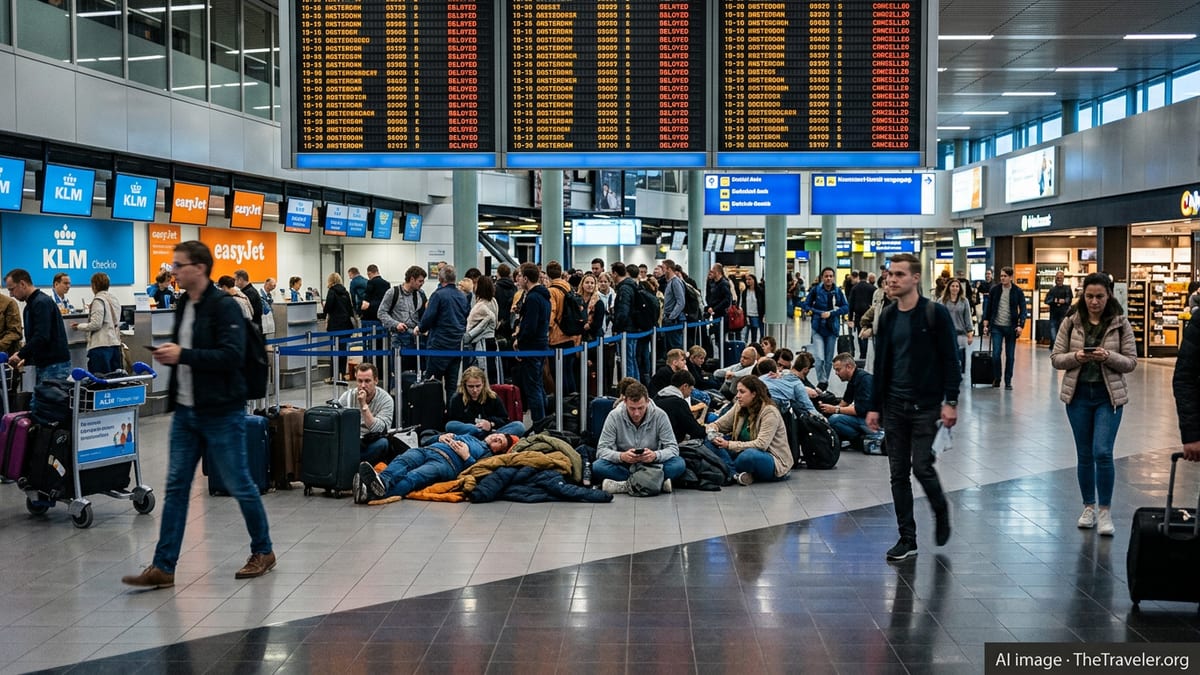
Delays Mount Across Key European Hubs
Publicly available statistics from live disruption trackers show that Europe’s main aviation corridors are seeing widespread knock-on delays, with more than a thousand flights running behind schedule and several dozen cancelled outright. The pattern spans both short haul and longer European services, affecting morning departures as well as peak afternoon and evening waves.
London area airports, including Heathrow, Gatwick and Stansted, are among the most affected, reflecting their role as gateways for British Airways, Ryanair and a range of European and transatlantic operators. Flight status boards show a growing list of services operating late or withdrawn from the schedule, particularly on routes linking London with major European capitals.
In southern Europe, Barcelona and Rome are reporting clusters of delayed and cancelled flights that are impacting services for both local and connecting passengers. Data compiled by flight tracking platforms highlights disruptions on routes between Spain and Italy, as well as services connecting these hubs with Germany, Scandinavia and the UK.
Germany’s main hubs, particularly Frankfurt and Munich, are also seeing elevated levels of disruption. These airports function as critical connection points for Lufthansa and partner airlines, meaning delays and cancellations there are quickly rippling outward to secondary airports in countries such as Sweden and Scotland.
Major Carriers From Full Service To Low Cost Affected
Information compiled from airline status pages and passenger rights platforms indicates that both full service carriers and low cost operators are heavily represented in today’s disruption figures. Iberia, Lufthansa and British Airways feature prominently among delayed and cancelled services, especially on trunk routes between London, Madrid, Barcelona, Frankfurt and Rome.
Ryanair and other budget airlines are also experiencing schedule disruption as congested airspace, local weather variations and airport capacity constraints slow the movement of aircraft around the network. Because low cost models depend on tight turnaround times, even modest delays early in the day can lead to more significant schedule changes later, including cancellations when operating windows close.
Several flights connecting London and Rome, as well as services between major Spanish and German airports, have recorded notable delays according to real time trackers. While some aircraft are able to make up part of the lost time en route, many are arriving significantly behind schedule, narrowing connection windows for onward travel.
Published performance data from recent months shows that most of the affected airlines normally maintain relatively low cancellation rates, underscoring how regional or network-wide disruptions can temporarily push even well performing carriers into more challenging territory on specific days.
Passengers Face Missed Connections And Rebookings
The immediate impact for travellers is being felt in longer waits at departure gates, missed connections and short notice rebookings. With delays concentrated at major hubs, passengers relying on one or two tight connections to reach their final destinations are particularly exposed when early flights in their itinerary run late.
Reports shared by passenger advocacy services describe travellers in Europe arriving at transfer airports to find their onward flights already departed or reassigned. In some cases, itineraries are being restructured to route passengers through alternative hubs or to move journeys to the following day when no same day options remain.
Airports such as Barcelona, Rome Fiumicino, Frankfurt and the London hubs are seeing busy transfer desks as travellers seek revised boarding passes, meal vouchers and accommodation arrangements. Queues can lengthen quickly when several flights in the same bank are disrupted, especially at peak travel times.
These operational challenges are further complicated when disruptions cross multiple jurisdictions. A single itinerary can involve airports in the European Union, the United Kingdom and non EU countries, each with slightly different regulatory frameworks and practical arrangements for dealing with delays and cancellations.
What Today’s Disruption Reveals About Europe’s Fragile Air Network
Today’s figures highlight how quickly routine pressure on airspace and airports can escalate into widespread disruption across Europe’s integrated aviation network. Even when no single, dramatic incident is reported, a mix of local weather, air traffic control constraints and high seasonal traffic can combine to slow operations in several countries at once.
Analysts who track historical disruption patterns note that large hubs in Spain, Germany, Italy and the UK play an outsized role in determining the overall stability of European schedules. When airports such as London Heathrow, Barcelona El Prat, Frankfurt and Rome Fiumicino experience congested departure or arrival banks, secondary airports from Scotland to Sweden can soon feel the knock on effects.
The experience also underlines the importance of real time information for passengers. Airlines and airports increasingly urge travellers to monitor official apps and status pages on the day of travel, while independent tracking services and passenger rights platforms provide additional visibility on evolving delay and cancellation numbers.
For the wider industry, repeated days with triple digit cancellation and four figure delay totals pose questions about resilience as traffic continues to recover and grow. Balancing capacity, staffing and infrastructure investment against rising demand remains a central challenge for carriers and airports, particularly on popular city pairs linking London, Barcelona, Rome and other major European destinations.