


More news on this day
American Airlines is moving ahead with a sweeping cabin upgrade program that adds more premium seating and enhanced in-flight connectivity across its fleet, sharpening the carrier’s focus on higher-yield travelers as demand for upscale cabins continues to grow.
Get the latest news straight to your inbox!
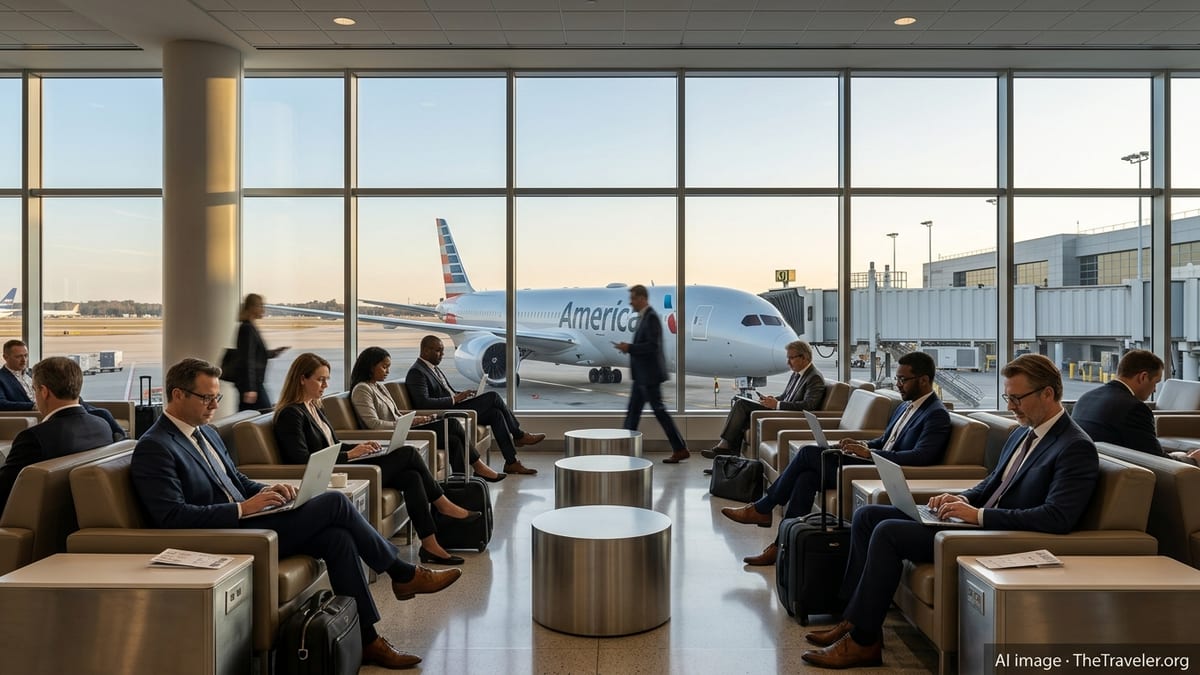
Cabin Retrofits Bring More Premium Seats to Narrowbody Fleet
American Airlines is in the midst of a multiyear project to reconfigure its Airbus A319 and A320 fleets with larger premium cabins and refreshed interiors. Publicly available information shows that the A319s are being refitted with 12 domestic first class seats, up from eight, while the A320s will carry 16 first class seats instead of 12. The revised layouts also include updated trim, larger overhead bins and new powered seats aimed at creating a more consistent experience with the airline’s latest long-haul aircraft.
The retrofitted cabins introduce a design language that mirrors the look of American’s Boeing 787-9 and Airbus A321XLR jets, where premium products have been a key selling point. Reports indicate that first class seats on the upgraded A320 family feature styling and finishes similar to the carrier’s premium economy chairs on widebody aircraft, underlining the strategy of making short- and medium-haul cabins feel more upscale.
Industry coverage notes that the additional premium seating comes with tighter layouts for standard economy passengers, as American increases the number of Main Cabin Extra seats and slightly reduces pitch in parts of the cabin. The airline is betting that higher overall revenue from extra-legroom and first class sales will offset any discomfort among travelers sensitive to space in the back of the plane.
American has signaled that these Airbus upgrades are just one part of a broader push to boost premium capacity across its narrowbody fleet, with similar design cues and onboard amenities expected to spread to other single-aisle aircraft in the coming years.
Widebody Strategy Centers on Flagship Suite and Lie-Flat Growth
Alongside changes on domestic routes, American is expanding premium seating on long-haul jets through new deliveries and widebody retrofits. Company investor materials and fleet presentations describe a plan to grow lie-flat and premium economy seating by roughly half by the end of the decade, anchored by the Flagship Suite business class product on Boeing 787-9 and Airbus A321XLR aircraft.
The 787-9s entering service with the new configuration feature an enlarged business class cabin fitted with privacy-focused suites, plus an expanded premium economy section. Analysts note that this configuration reduces the number of standard economy seats in favor of higher-yield cabins, reflecting strong corporate and premium leisure demand on long-haul routes.
American is also in the early stages of a retrofit program for its Boeing 777-300ER fleet, a project widely reported under the internal name “Olympus.” Public information suggests the layouts will increase the number of business class seats while removing international first class, aligning the aircraft with the Flagship Suite strategy and giving the airline a more uniform premium product across major international gateways.
Taken together, these widebody moves support an overarching aim to position American as a carrier with significantly more premium inventory on transcontinental and intercontinental flights, targeting customers prepared to pay more for privacy, space and amenities.
High-Speed Wi-Fi and Connectivity Upgrades Across the Fleet
Alongside the physical seat changes, American is investing in faster and more widely available onboard connectivity. Publicly available data and recent statements from the airline indicate that high-speed satellite Wi-Fi has already been installed on the vast majority of the mainline fleet, covering both narrowbody and dual-class aircraft.
In early 2026, American began offering complimentary high-speed Wi-Fi to members of its AAdvantage loyalty program on most domestic and short-haul flights, supported by a sponsorship arrangement with a major telecommunications partner. Industry reports highlight this move as a significant point of differentiation in the U.S. market, where many competitors still charge per-flight or per-hour access fees for comparable speeds.
The airline has also outlined plans to further upgrade connectivity technology from 2027, including the introduction of new satellite-based systems on additional aircraft types. These enhancements are expected to support activities such as video streaming, real-time collaboration tools and more robust inflight e-commerce, as airlines increasingly treat onboard internet access as a core part of the product rather than an optional add-on.
For travelers, the combination of more premium seats and improved Wi-Fi means that cabins at the front of the plane are being designed around a heavily digital experience, where passengers can work, communicate and stream content with fewer compromises compared with ground-based connections.
Competitive Pressures and Passenger Trade-Offs
American’s premium expansion comes amid intense competition among major U.S. carriers to capture high-spending travelers on key domestic and international routes. Market coverage describes a race among large airlines to introduce next-generation business class suites, expand premium economy and enhance Wi-Fi in order to stand out to corporate buyers and affluent leisure passengers.
By adding more first class seats to narrowbody aircraft and rebalancing widebody cabins toward lie-flat and premium economy products, American is seeking to increase the share of seats that generate higher average fares. At the same time, these changes often mean denser configurations in standard economy, smaller galley spaces and tighter layouts that may be less popular with some travelers.
Travel industry analysts suggest that the success of this strategy will depend on how well American can maintain comfort levels for economy passengers while persuading more customers to pay for upgrades or book premium cabins outright. Strong Wi-Fi performance, modern cabin aesthetics and consistent seat design across the fleet are seen as key factors in encouraging those upsells.
As the retrofit program accelerates and more upgraded aircraft enter service, travelers on American Airlines can expect to see a growing number of flights where the front of the cabin feels markedly more spacious and tech-forward, even as the competition for room in standard economy continues to intensify.