


More news on this day
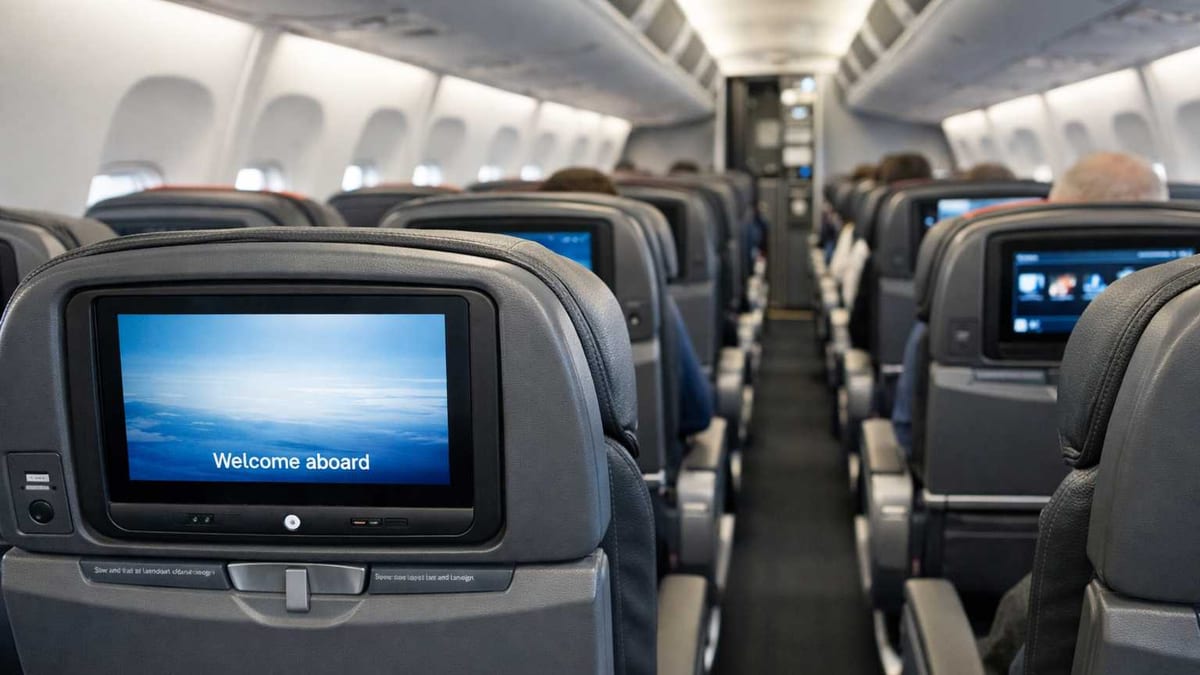
American Airlines is set to restore seatback entertainment screens across more than 800 narrowbody aircraft from 2028, marking a significant shift in strategy as the carrier moves away from its previous emphasis on streaming content to passengers’ personal devices.
Get the latest news straight to your inbox!
Major Reversal in American’s Cabin Strategy
According to recent corporate disclosures and media coverage, the decision will see American equip both newly delivered and retrofitted Airbus and Boeing single-aisle jets with individual screens at every seat. The move represents a notable reversal from policies introduced over the past decade, when the airline removed many built-in systems in favor of in-flight streaming to phones, tablets, and laptops.
Reports indicate that the updated interiors will be rolled out as part of a broader narrowbody cabin redesign focused on improving the overall passenger experience. The initiative will cover the majority of American’s domestic mainline fleet and is expected to exclude regional affiliates operating under the American Eagle banner, keeping the focus on larger, mainline-operated aircraft.
Industry analyses describe the shift as an effort to better align American’s product with that of key rivals on high-volume U.S. routes. Delta Air Lines and United Airlines have both invested heavily in modern, screen-equipped cabins in recent years, creating pressure on American to respond as competition for premium and loyalty-focused travelers intensifies.
New Screens to Anchor Upgraded Narrowbody Cabins
Publicly available information about the program suggests the new seatback systems will be part of a comprehensive interior refresh that includes redesigned seating, additional charging options, and refined premium cabins. The screens are expected to offer high-definition video, a large catalog of films and television programming, and an updated user interface that integrates with in-flight connectivity.
Analysts note that the airline is planning the installations alongside changes in cabin density and layout, including adjustments to first class and extra-legroom seating. By coordinating entertainment upgrades with broader interior work, American can minimize aircraft downtime while bringing a more consistent look and feel to its narrowbody fleet.
While detailed technical specifications have not been widely released, commentary in aviation trade publications suggests the airline is targeting lighter, more energy-efficient hardware than earlier generations of in-flight entertainment. This approach is intended to manage weight and fuel impacts, long viewed as key reasons some carriers moved away from embedded systems in the first place.
Timeline and Fleet Scope From 2028 Onward
Based on recent financial news coverage, installations are scheduled to begin in 2028, with a multi-year rollout that will extend across more than 800 aircraft. The program is expected to cover both new deliveries from Airbus and Boeing and a substantial retrofitting effort for existing jets already in service.
Market reports indicate that American’s narrowbody fleet accounts for the vast majority of its daily departures in North America. By eventually standardizing seatback entertainment across this segment, the airline is positioning itself to offer a more predictable onboard product, regardless of route or aircraft subtype, once the rollout is substantially complete.
Exact completion dates have not been detailed, and implementation will likely depend on manufacturer production schedules, maintenance planning, and broader fleet renewal decisions. However, the scale of the announced program suggests that travelers can expect to see an increasing number of refreshed interiors appearing in the latter part of this decade and into the early 2030s.
Passenger Expectations and Competitive Pressures
For years, U.S. airlines have debated whether travelers prefer traditional seatback screens or streaming-only service. Industry commentary has often highlighted that many passengers value having both options, particularly on longer domestic flights where phone batteries and device storage can become limiting factors.
Consumer reaction on travel forums and social media to American’s shift has tended to emphasize convenience and perceived value, with many frequent flyers viewing seatback entertainment as a hallmark of a modern mainline product. Travel analysts point out that younger travelers in particular may expect a screen in front of them, mirroring their experiences on newer widebody jets and competing carriers.
From a competitive standpoint, the move is widely interpreted as part of a broader effort by American to close what some commentators have described as a product gap with other large U.S. network airlines. On key business and leisure corridors, having comparable onboard amenities can influence booking decisions, especially among status-conscious travelers comparing aircraft types and cabin features.
Financial and Operational Implications
Financial reporting on the airline’s strategy links the entertainment revamp to a wider push to enhance revenue performance, particularly from premium and extra-legroom seating. By pairing upgraded cabins and enhanced amenities with additional higher-yield seats, American is aiming to improve the economics of its narrowbody operations over the long term.
At the same time, outfitting more than 800 aircraft with new entertainment hardware represents a sizable capital investment. Aviation analysts suggest that American will seek to balance these upfront costs with the potential for higher fares, stronger customer loyalty, and greater differentiation on competitive routes, while also taking advantage of newer, lighter technology to contain operating expenses.
Operationally, the installation program will need to be carefully sequenced with regular maintenance checks and interior refurbishment cycles. Industry observers expect the airline to phase in the upgraded cabins gradually, allowing it to keep most of its schedule intact while still advancing toward a more uniform in-flight product across the narrowbody fleet.