


More news on this day
American Airlines is preparing a wave of upgrades across its fleet and lounge network that are expected to reshape the carrier’s onboard and airport experience over the next several years, with new premium seats, refreshed cabins and expanded club facilities rolling out in phases through the end of the decade.
Get the latest news straight to your inbox!
Premium cabins set for rapid expansion
Public filings and investor presentations indicate that American Airlines is pursuing an aggressive expansion of premium seating, targeting roughly 50 percent growth in lie-flat business and premium economy seats by the end of the decade. The strategy centers on the airline’s newest long-haul aircraft and a broad retrofit program that will touch key widebody and narrowbody fleets.
On long-haul international routes, American is introducing its Flagship Suite business-class product on Boeing 787-9 Dreamliners and Airbus A321XLR aircraft, featuring fully flat beds, direct aisle access and privacy doors. Industry coverage shows that the first 787-9s with the new suites have already entered service, with additional deliveries planned over the next several years. The A321XLR, configured with business, premium economy and main cabin, is positioned to serve both transatlantic and high-value domestic markets.
The airline has also committed to retrofitting its existing Boeing 777-300ER fleet with new premium interiors. Company materials describe a plan to increase the number of business-class seats on these aircraft, reducing or removing traditional first class in favor of a larger, more consistent Flagship Suite cabin. This move is intended to align American’s long-haul offering with broader industry trends that favor expansive business-class cabins over small first-class sections.
Beyond the widebodies, American’s narrowbody fleet upgrades will include additional domestic first-class seats and refreshed interiors on select Airbus A319 and A320 jets. According to fleet documentation, these aircraft will receive new seats with in-seat power and updated cabin finishes, supporting the carrier’s goal of offering a more premium experience even on shorter routes.
Cabin refreshes and connectivity upgrades across the fleet
American’s multi-year plan extends well beyond the front cabin. Fleet planning documents outline extensive retrofit work designed to create a more consistent look and feel across aircraft types, while bolstering the availability of modern amenities such as seatback or streaming entertainment, larger overhead bins and in-seat power.
The airline’s Airbus A320-family aircraft are scheduled to see sustained investment through the latter half of the decade, with dozens of additional deliveries and retrofits planned. Updated cabins are expected to include redesigned sidewalls and lighting, newer slimline seating with power at every seat, and improved storage to accommodate more carry-on bags. Similar updates are planned for portions of the Boeing 737 fleet, helping to standardize the customer experience across key domestic workhorse aircraft.
Connectivity also remains central to the upgrade roadmap. American’s public-facing travel experience pages emphasize high-speed Wi-Fi availability and streaming entertainment across most of the mainline fleet, with the airline working to expand coverage and reliability. Company reports describe ongoing work to bring consistent connectivity and digital services, including improved disruption-management tools, to more flights by the mid-2020s.
Regional jets operated by partner carriers under American Eagle branding are also slated for change. Delivery schedules for new Embraer 175 aircraft over the next several years, combined with retirements of older regional types, point to a gradual shift toward cabins that offer power outlets, refreshed interiors and in some cases larger overhead bins, narrowing the comfort gap between regional and mainline services.
Lounge network expansion focuses on key hubs
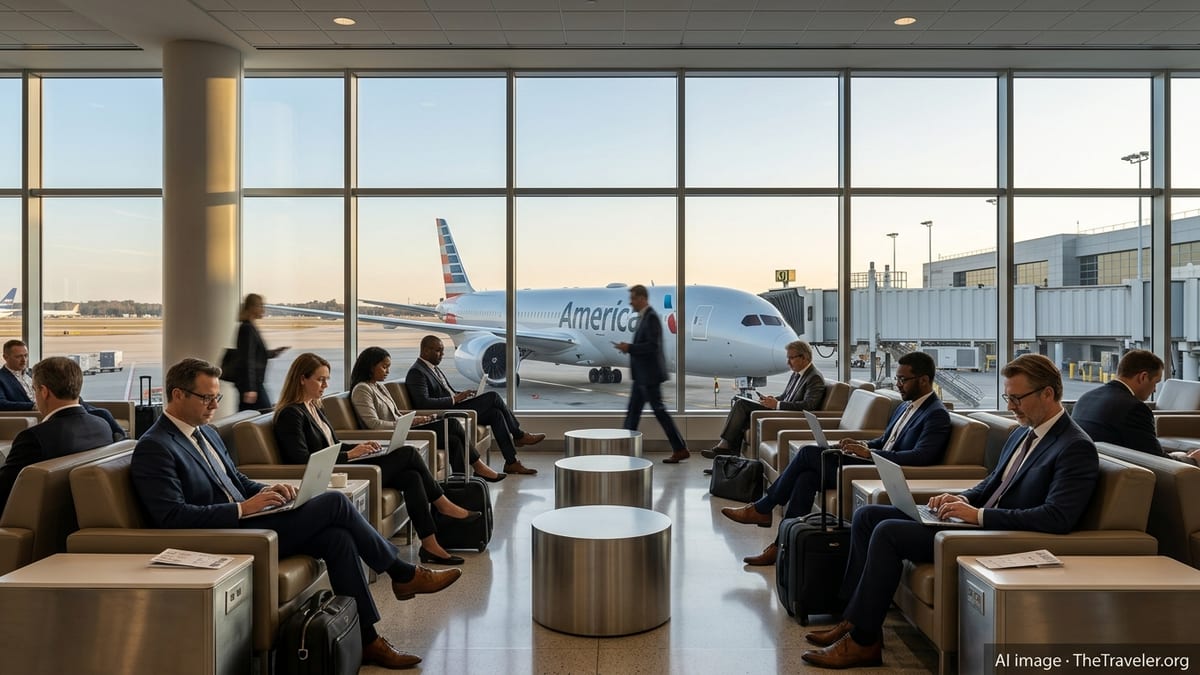
Alongside the cabin upgrades, American is investing heavily in its lounge network, with new clubs and redesigns planned at several major airports. The airline’s latest annual report highlights recent openings of premium Flagship lounges and indicates further expansion at key hubs, including new premium facilities in Miami and Charlotte and upgrades at existing Admirals Club locations.
In Philadelphia, local media coverage has detailed plans for both a new Flagship Lounge and an updated Admirals Club in Terminal A-West, expected to open in the near term. These lounges are aimed at serving growing transatlantic demand and reinforcing American’s position at the airport. Renderings show expanded seating areas, dedicated dining spaces and updated design that aligns with the carrier’s newer clubs elsewhere in the network.
Additional lounge projects are planned in Nashville and Washington, D.C. At Nashville International Airport, travel industry reports describe an enlarged Admirals Club with more square footage and upgraded amenities, scheduled to open later this decade. In Washington National’s Concourse D, American has signaled plans for a renovation and expansion of its Admirals Club, with construction expected to begin in early 2026 and a focus on more space, refreshed interiors and enhanced food and beverage offerings.
American’s lounge website emphasizes that redesigned Admirals Clubs across the United States now feature updated decor, new seating layouts and expanded workspaces. The broader lounge strategy is to provide a more consistent premium feel throughout the network, while selectively adding Flagship-branded locations at long-haul gateways where premium demand is strongest.
Fleet modernization underpins long-term upgrade plan
The scale of American’s upgrade program is closely tied to its broader fleet modernization efforts. A fleet fact sheet updated in late 2025 shows that the airline operated more than one thousand mainline aircraft, with significant outstanding orders for Airbus A321neo and A321XLR jets, Boeing 737 MAX 8s and additional Boeing 787 Dreamliners to be delivered through and beyond 2028.
As new aircraft arrive, older models are gradually retired or refurbished, supporting a transition toward a younger, more fuel-efficient fleet. Recent financing documents describe an order book approaching 400 aircraft across the mainline and regional fleets, underscoring the long horizon of the investment. Many of these deliveries are earmarked for configurations that increase the share of premium seats while maintaining or slightly trimming overall seat counts, in line with the airline’s stated goal of “premiumizing” its network.
American’s retrofit timelines, as outlined in regulatory filings, suggest that updates to the Boeing 777-300ERs and portions of the Airbus and Boeing narrowbody fleets will continue through the mid to late 2020s. The airline has indicated that its retrofit programs are currently on schedule and are expected to support both revenue growth and an enhanced customer experience as more aircraft are converted.
At the same time, incremental efficiency improvements such as advanced taxiing procedures and optimized flight operations are being rolled out across the fleet. Company disclosures point to measurable fuel savings from these initiatives, which complement the comfort-focused upgrades by reducing operating costs and environmental impact.
What travelers can expect in the coming years
For travelers, the upgrades will be most visible in the steady appearance of new cabins and lounges rather than in a single, sweeping change. On long-haul routes, more Boeing 787-9s and Airbus A321XLRs equipped with Flagship Suite business class and the latest premium economy seats are expected to enter service each year, gradually expanding the number of routes offering the airline’s newest products.
On domestic and short-haul international flights, passengers are likely to notice refreshed interiors on a growing share of Airbus A319, A320 and A321 aircraft, as well as on select Boeing 737s. These aircraft will feature updated seating, additional in-seat power and improved overhead storage, along with the airline’s established Wi-Fi and streaming entertainment options. As retrofits progress, the odds of encountering an older interior on major routes should steadily diminish.
At airports, the lounge experience is set to change as new and renovated Admirals Clubs and Flagship lounges open at key hubs and focus cities. Travelers passing through Philadelphia, Miami, Charlotte, Nashville and Washington National, among others, can expect expanded footprints, updated design and additional amenities as these projects come online over the next few years.
While exact timelines vary by project and aircraft type, publicly available information from the airline’s financial filings, fleet guides and travel-industry reporting points to a sustained effort that will continue well into the late 2020s. For American Airlines, the upgrades represent a bid to compete more aggressively at the premium end of the market, while giving everyday travelers a more consistent and modern experience across its vast domestic and international network.