


More news on this day
A wheelchair user who missed his flight after arriving late at the gate has sparked a fierce public debate over who bears responsibility, with some criticizing the airline’s handling of disability accommodations and others insisting the traveler “should be embarrassed” for cutting it too close.
Get the latest news straight to your inbox!
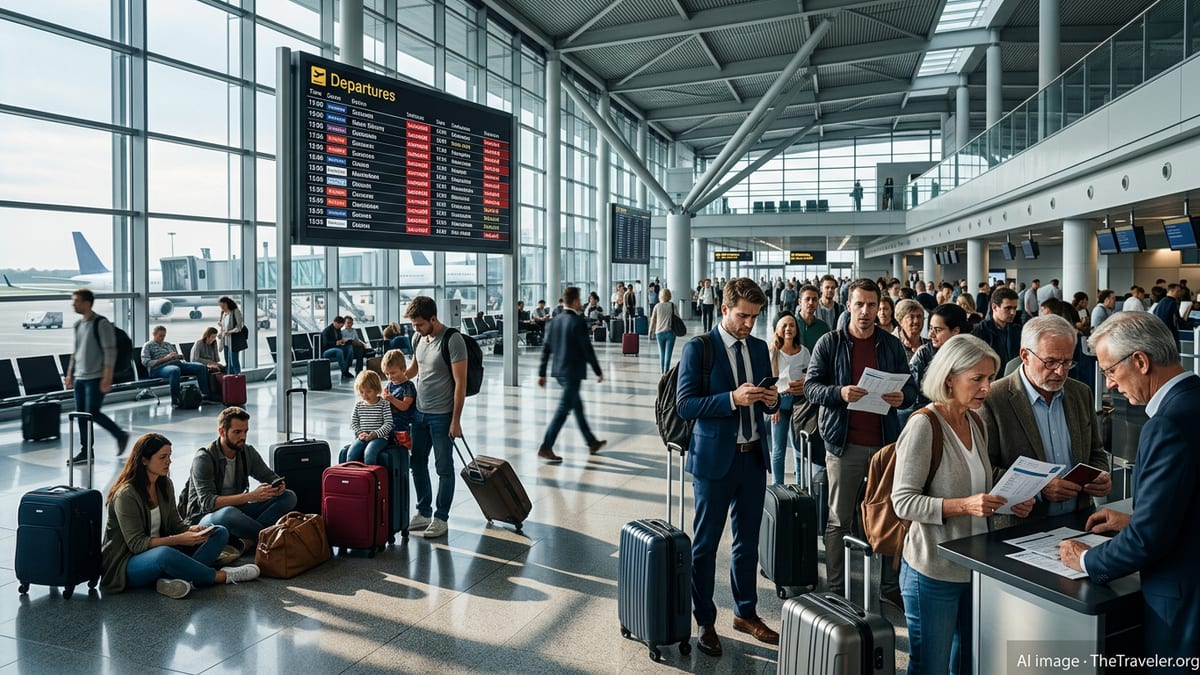
Viral dispute over missed flight divides public opinion
According to recent online coverage and social media discussion, the dispute began when a well-known wheelchair user and disability advocate documented how he missed a flight after a series of delays and miscommunications at the airport. The traveler, who relies on wheelchair assistance for boarding, said staff were slow to provide help and that the carrier refused to reopen the aircraft door once he reached the gate.
Publicly available posts show that the advocate accused the airline of failing to honor pre-arranged assistance, arguing that wheelchair users often need additional time to board and should receive consistent support throughout the journey. He framed the missed flight as part of a wider pattern of barriers for disabled travelers, from long waits for aisle chairs to inconsistent handling of personal mobility devices.
But reaction across comment sections, forums and opinion columns has been sharply divided. While many travelers expressed sympathy and pointed to their own difficult experiences with airport assistance, others argued that the passenger arrived after the cutoff time and that last-minute boarding is risky for anyone, including those needing extra help. One widely shared response declared that he “should be embarrassed,” capturing a broader sentiment that personal planning still matters, even when accommodations are required.
The clash has quickly become a flashpoint in a long-running conversation about how much responsibility lies with airlines, which control staffing, equipment and schedules, and how much rests with passengers, who must navigate complex airport environments and tight connection times.
Airline policies and disability rules under scrutiny
The incident has renewed attention on federal rules designed to protect air travelers with disabilities, including the U.S. Air Carrier Access Act and related regulations. Publicly available guidance from regulators describes detailed obligations for carriers, such as timely assistance with boarding and deplaning, appropriate stowage of wheelchairs and prompt communication when mobility devices are delayed or damaged.
Advocacy reports and legal filings show that airlines are expected to provide aisle chairs, trained personnel and priority handling of assistive devices, particularly when a traveler has given advance notice of their needs. These standards are intended to ensure that passengers who use wheelchairs can board and exit aircraft with dignity and without unreasonable delay, even when flights are running behind schedule or aircraft are being turned around quickly.
In practice, however, disability advocates say enforcement and consistency remain uneven. Testimony submitted to transportation authorities describes cases in which wheelchair users have been left waiting at the gate, forced to drag themselves down aircraft aisles, or stranded while staff search for missing chairs. Consumer advocacy sites routinely highlight situations where delayed assistance caused passengers to miss connections or arrive at gates after final boarding, with airlines then treating them as no-shows.
The latest dispute fits squarely into that landscape. Supporters of the wheelchair user argue that when airlines accept responsibility for a disabled traveler’s boarding and mobility support, they should build in sufficient time and staffing so that a single bottleneck does not cause a missed flight. Critics counter that safety and schedule constraints limit how long doors can remain open and that once a flight is closed, agents have little flexibility, regardless of circumstances.
Personal responsibility, timing and the “cutoff culture”
Beyond the legal questions, the controversy is tapping into a broader debate about timing and personal responsibility in modern air travel. Many airlines encourage passengers to arrive at the airport two hours before domestic departures and even earlier for international flights, while also setting strict boarding cutoffs that can leave travelers behind if they reach the gate only minutes before departure.
In comment threads and opinion pieces about the case, some travelers with disabilities said they routinely build in extra time, including longer layovers and earlier airport arrivals, to account for potential delays in wheelchair assistance or security screening. They described this as an unfortunate but necessary reality, given past experiences with understaffed assistance teams or misplaced equipment.
Others argued that placing the burden on disabled passengers to “pad the schedule” is inherently unfair. They pointed out that assistance services are often controlled by airlines or airport contractors, and that travelers who depend on them may have little control over how quickly they are escorted through check-in, security or boarding. In that view, expecting wheelchair users to arrive far earlier than non-disabled passengers simply shifts the consequences of systemic shortcomings onto individuals.
In the current dispute, critics of the advocate have focused on the reported timeline, asserting that he approached the gate too close to departure to reasonably expect boarding. Supporters respond that without reliable assistance and clear communication about cutoff times, wheelchair users can easily be placed in a no-win situation, blamed for delays that stem from gaps in service.
Air travel accessibility problems extend beyond a single case
Disability organizations and consumer advocates say the uproar over this missed flight is emblematic of larger accessibility failures in commercial aviation. Public reports compiled from passenger complaints describe wheelchairs returned damaged or not at all, long waits for aisle chairs after landing and confusion among crew about how to transfer or secure disabled travelers safely.
Recent submissions to transportation regulators outline how the loss or mishandling of a wheelchair can be life-altering, since many devices are custom-built and function as an extension of the user’s body. When flights run late or ground staff are stretched thin, wheelchair users may be kept on board until all other passengers have disembarked, then told that assistance equipment is not yet available, further compounding delays and discomfort.
These issues have prompted renewed calls from disability advocates for stronger enforcement, better training and clearer accountability when assistance breaks down. Some suggest that airlines should be required to track and publicly report detailed statistics on wheelchair-related delays and missed connections, similar to how they already report lost baggage or on-time performance.
Within this broader context, the dispute involving the wheelchair advocate and the missed flight becomes less an isolated argument and more a test case of how airlines interpret their responsibilities. Observers note that public reaction often splits along lines of familiarity with disability: those who have relied on airport assistance tend to highlight systemic barriers, while others may focus primarily on individual decisions.
What this means for future travelers
For travelers planning trips that involve wheelchair assistance, the episode is emerging as a cautionary tale. Consumer advocates generally recommend reconfirming assistance requests before travel, allowing additional time at the airport and documenting any delays or missteps in real time through photos, timestamps and written notes.
Travel advisers also point out that when miscommunications or service failures occur, passengers can file formal complaints with the airline and, when applicable, with transportation regulators. Written records, they note, can be important if a dispute later arises over whether a passenger was properly assisted or unfairly classified as a no-show.
At the same time, the intensity of the backlash against the wheelchair user has raised concerns among disability advocates that public shaming may discourage others from sharing their experiences. Some commentators worry that if disabled travelers fear being blamed for operational failures beyond their control, they may be less likely to report problems that could otherwise drive policy changes.
As the discussion continues, the case is serving as a stark reminder that accessible travel is about more than ramps and equipment. It also depends on timing, communication and a shared understanding of responsibility between airlines and the passengers who rely on them most.