


More news on this day
Rail networks are emerging as critical pressure valves for global trade as wars, climate shocks and maritime chokepoints disrupt established shipping routes, forcing governments and logistics providers to rethink how resilient their supply chains really are.
Get the latest news straight to your inbox!
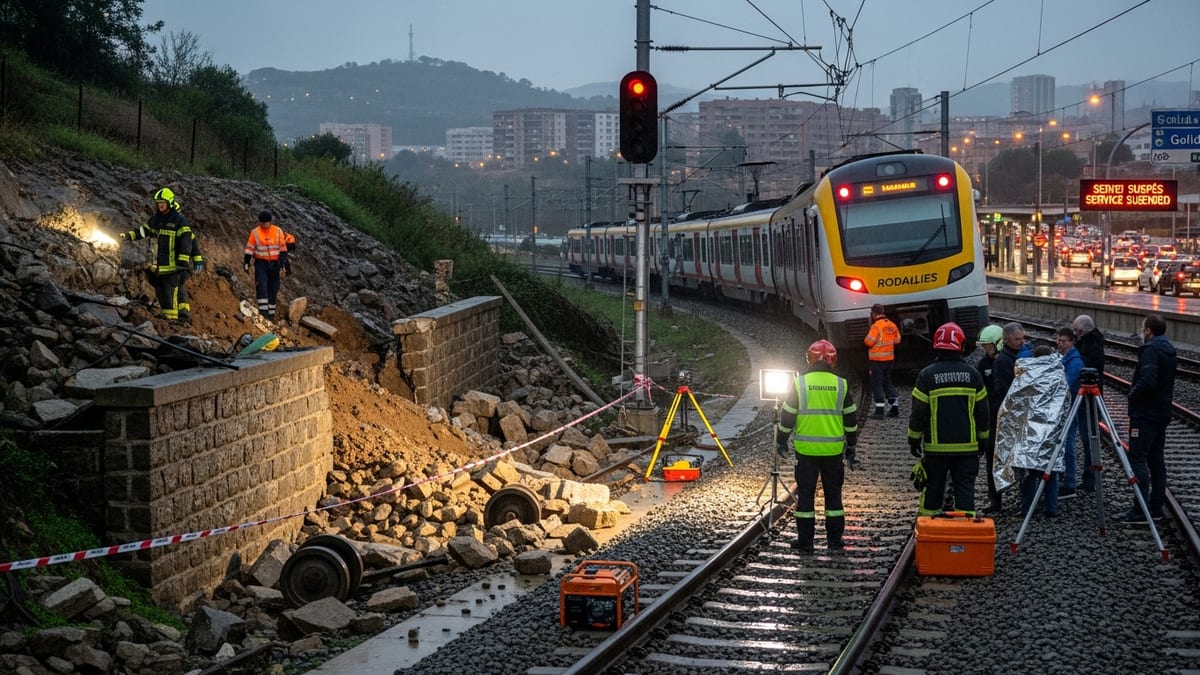
Rail Steps In As Sea Routes Face Repeated Shocks
Recent disruptions affecting the Red Sea, Black Sea and Panama Canal have highlighted the vulnerability of sea-dependent trade corridors and drawn renewed attention to the role of rail as a stabilising alternative. Publicly available assessments from international organisations describe how attacks on commercial shipping in the Red Sea, conflict in Ukraine and drought-related constraints at the Panama Canal have combined to push up freight rates and lengthen transit times on some of the world’s busiest routes.
Analysis from trade and transport bodies indicates that shippers are increasingly looking to diversify away from single maritime chokepoints when possible, including by routing cargo through ports where rail links can offer inland alternatives to congested or disrupted ocean paths. In North America, for example, container flows arriving on the Pacific coast can be shifted inland by intermodal rail, allowing some importers to avoid the most volatile long-haul sea legs.
Rail is not a complete substitute for ocean shipping, particularly for bulk commodities over intercontinental distances, but recent events have demonstrated its function as a complementary backbone. Where rail corridors are reliable and well connected to ports and logistics hubs, they can absorb part of the shock when sea lanes are constrained, keeping at least a portion of trade volumes moving.
Policy-focused research from organisations such as the OECD and national governments underscores that this modal flexibility is increasingly seen as a core element of supply chain resilience strategies. Diversifying route options across rail, road, inland waterways and sea, rather than relying on a small number of maritime passages, is becoming a planning priority for both public and private sector actors.
Europe’s War-Tested Rail Corridors Offer Lessons
The war in Ukraine has created one of the clearest real-world tests of rail resilience in recent years. With key Black Sea ports periodically blocked or operating under severe constraints, large volumes of Ukrainian exports and imports have been redirected overland. Public information on the EU’s so-called Solidarity Lanes describes how rail, road and inland waterways were rapidly mobilised to keep agricultural products and other goods flowing through neighbouring countries.
These emergency arrangements have spurred investment in border infrastructure, transhipment facilities and gauge-change points between Ukraine’s network and the standard-gauge railways of the European Union. Reports indicate that improved traffic management systems and streamlined border procedures have been central to raising capacity on these alternative routes, even as they continue to operate in a high-risk environment.
The Ukraine experience has also underlined the importance of redundancy within national rail systems themselves. Despite repeated strikes on infrastructure, publicly available accounts show that Ukraine’s railways were able to restore damaged lines, reroute services and prioritise critical freight. For planners elsewhere, this has reinforced the value of multiple routing options, robust maintenance regimes and the ability to operate under degraded conditions.
At the same time, the conflict has complicated earlier efforts to expand transcontinental rail freight via northern Eurasian corridors. Industry and policy analyses now point to a more diversified outlook, with some traffic shifting to southern and central routes and others moving back to maritime lanes. This fluid picture has strengthened arguments that resilient rail supply chains must be capable of adapting quickly to geopolitical shifts, not just short-term disruptions.
North American Rail Networks Confront Capacity And Climate Risks
In North America, the focus on resilience has centred less on direct war-related disruption and more on how rail systems cope with cyclical demand shocks, extreme weather and shifting trade patterns. Academic work comparing the impacts of the 2007 to 2009 Great Recession and the 2020 pandemic on United States rail freight suggests that volumes rebounded relatively quickly after the pandemic downturn, illustrating the sector’s underlying robustness.
However, logistics surveys and government foresight reports highlight persistent vulnerabilities. Concentration in certain corridors, limited redundancy around major hubs and bottlenecks in intermodal terminals can all amplify the effects of localised disruptions. When wildfires, floods or heatwaves hit key sections of track, consequences can ripple across supply chains that depend on just-in-time deliveries of components and commodities.
Rail operators and public agencies are responding with programmes to harden infrastructure against climate-related stress, from reinforcing bridges and culverts to upgrading signalling and monitoring. There is also growing attention on better data sharing and end-to-end visibility, with the aim of enabling shippers to react more quickly when service interruptions occur. According to recent industry risk surveys, companies increasingly view such digital tools as essential complements to physical redundancy.
Cross-border trade with Canada and Mexico adds another layer of complexity. Policy debates around nearshoring and regional manufacturing integration have raised expectations that rail corridors linking North American production clusters will need additional capacity and resilience investments. Ensuring that customs procedures, security protocols and infrastructure upgrades are aligned across borders is emerging as a critical task for maintaining reliable flows.
Planning For Redundancy, Not Just Efficiency
Across regions, a consistent theme in current research and policy discussion is the trade-off between efficiency and resilience in rail-dependent supply chains. For decades, many logistics strategies prioritised lean inventories, minimal slack capacity and the lowest-cost single routes. Recent crises have exposed the costs of that approach when several shocks arrive at once.
Government foresight reports and analytical studies of supply chain risk argue that diversification of suppliers, routes and modes can mitigate these vulnerabilities, even if it introduces higher baseline costs. For rail, that can mean maintaining secondary lines that may not always run at full capacity, investing in terminals that support flexible transfers between rail and road, and preserving competition among operators where markets allow.
Strategic stockpiles for critical materials, pre-negotiated access agreements for alternative corridors and scenario-based exercises are also entering the toolkit for rail-linked sectors such as energy, agriculture and automotive manufacturing. Publicly available information from recent international transport forums indicates that policymakers are increasingly willing to accept some inefficiency in exchange for a greater ability to absorb shocks.
At the firm level, logistics managers are re-evaluating route choices in light of travel-time variability and disruption risk, not just average transit times. Some are balancing longer but more predictable rail paths against shorter routes exposed to acute geopolitical or climate hazards. This recalibration suggests that resilience considerations are becoming embedded in day-to-day commercial decisions rather than treated as a temporary response to crisis.
Digitalisation And Governance Shape Future Rail Resilience
Looking ahead, analysts point to digitalisation and governance as two decisive factors in how rail supply chains perform under stress. Advanced analytics, real-time tracking and predictive maintenance promise more accurate understanding of network conditions, which can support dynamic re-routing and reduce unplanned outages. Several recent studies on transport system resilience emphasise that data-sharing frameworks across operators, ports and shippers are crucial if these tools are to deliver system-wide benefits.
Cybersecurity is the parallel concern. As signalling, scheduling and customer interfaces move online, the risk of disruption from cyber incidents grows. Discussions at international transport and trade forums increasingly frame cyber resilience as part of critical infrastructure protection, on a par with physical security of tracks, bridges and tunnels.
Governance structures will also influence outcomes. Where multiple private and public actors share infrastructure, clear rules for capacity allocation during crises, transparent investment planning and mechanisms for compensating disrupted users can help maintain trust in the system. National strategies on critical infrastructure and supply chain risk, published in several major economies over the past two years, generally recognise rail as a core asset in this context.
For travellers and shippers alike, the practical implication is that rail’s role in global supply chains is likely to expand, but not in a simple, linear fashion. As shocks accumulate, rail networks that combine robust physical assets, redundant routing options and modern governance are expected to become central nodes in an increasingly complex and uncertain trade landscape.