


More news on this day
In the Caribbean, the hottest real estate for cruise lines is no longer on the open ocean but on the sand, as major brands pour billions into private islands and exclusive beach clubs designed to keep passengers in their ecosystems from gangway to sunset.
Get the latest news straight to your inbox!
Carnival Bets Big on Celebration Key in Grand Bahama
Carnival Cruise Line has rapidly turned Celebration Key on Grand Bahama into a centerpiece of its Caribbean strategy, highlighting how aggressively the industry is investing in branded beach destinations. Public information indicates the purpose-built port and resort, which opened in July 2025 after a reported 600 million dollar build, was designed from the outset to handle multiple large ships and high passenger volumes.
Recent coverage from regional tourism outlets reports that Celebration Key welcomed about 2.4 million visitors in its first year of operation, underscoring the scale of traffic now funneled through the complex. The destination features expansive lagoon-style pools, a towering signature sandcastle structure and curated retail and cultural spaces that aim to showcase Bahamian art and crafts while keeping spending within Carnival’s orbit.
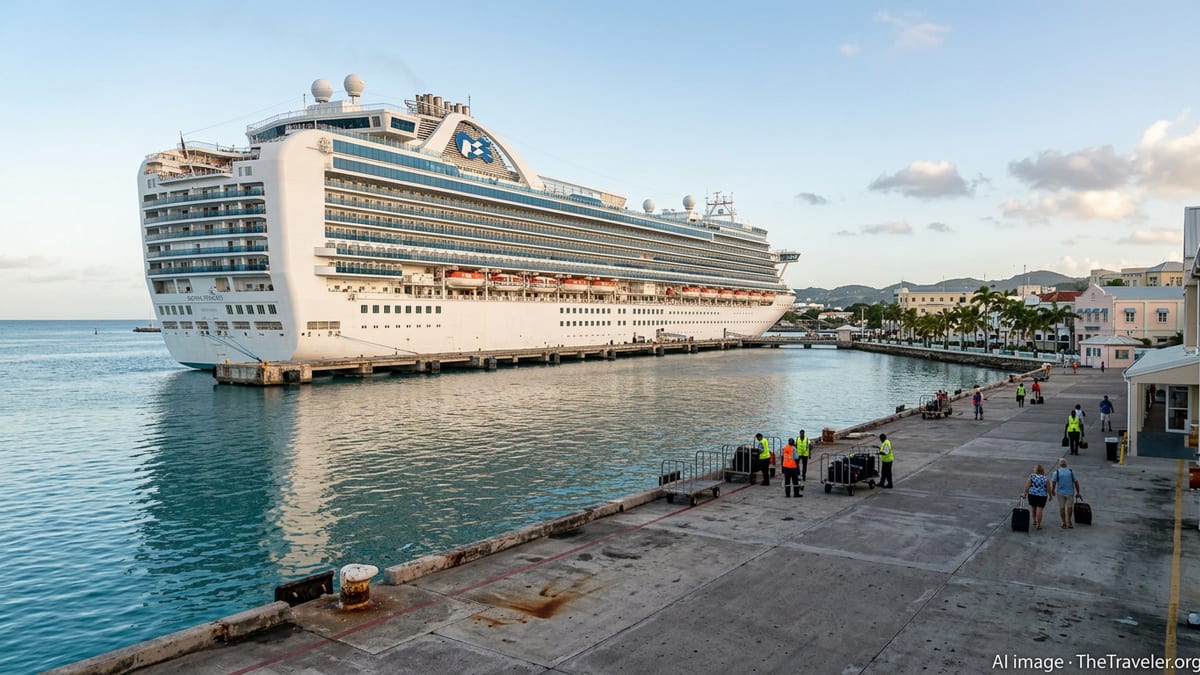
Carnival Corporation has just completed an extension of the island’s pier infrastructure, clearing the way for more three and four ship days starting in late 2026. Company statements indicate that additional brands in the wider Carnival portfolio, including Princess Cruises and AIDA, are scheduled to add calls, turning Celebration Key from a single line playground into a shared corporate hub in The Bahamas.
Government budget documents from The Bahamas and local press reporting suggest the project is already influencing visitor counts to Grand Bahama and supporting hundreds of on island jobs. The scale signals how private destinations have become central to cruise deployment decisions, not just optional stopovers.
Royal Caribbean Expands Its Beach Club Collection
Royal Caribbean Group, long known for its flagship Perfect Day at CocoCay in the Berry Islands, is advancing a parallel strategy built around a branded beach club portfolio. The line’s first dedicated Royal Beach Club on Paradise Island near Nassau quietly opened to paying guests at the end of 2025, with its full public debut following in early 2026, according to trade and consumer cruise reports.
The Paradise Island club, carved out on a stretch of shoreline just across the harbor from Nassau’s main cruise piers, is marketed as a more curated, capacity controlled alternative to both traditional port calls and the large scale waterpark model at CocoCay. Travel industry coverage describes tiered access pricing, an emphasis on upgraded food and beverage options and cabana packages positioned squarely at passengers willing to pay extra for a quieter, resort style day.
Royal Caribbean is also pressing ahead with an expansion of the concept beyond The Bahamas. Industry analysis pieces note that Royal Beach Club Cozumel on the Mexican island’s western coast is expected to debut in late 2026, extending the company’s branded beach footprint deeper into the Western Caribbean. Separate from the beach clubs, the group has pursued additional private destination concepts in Mexico, though some environmental permitting efforts have faced recent headwinds.
For Royal Caribbean, the move deepens a shift toward experiences that can be tightly controlled, branded and monetized. The beach club model allows the line to add premium pricing layers, while still delivering access to sun and sand that many cruise passengers already expect from a Caribbean itinerary.
Norwegian Reinvents Great Stirrup Cay
Norwegian Cruise Line is responding to the intensifying competition by reimagining Great Stirrup Cay, its long held 270 acre private island in The Bahamas. The company has framed current works as a transformation of the island into what it calls an expanded, resort style environment, with new pools, upgraded transportation and additional paid experiences.
Company announcements early in 2026 detailed the first phase of enhancements, including a heated main pool complex, a family oriented splash zone and an adults focused shore club area. A multi ship pier is being added to improve reliability and reduce tendering, along with an island wide tram system designed to move guests more easily between beaches, lagoons and activity zones.
Further additions are scheduled into 2026, including the Great Tides waterpark and the Great Life Lagoon, a sizable pool and cabana area positioned as a centerpiece for both family groups and adults. Norwegian has indicated through its public materials that it expects to host more than one million guests at Great Stirrup Cay across its fleet in 2026, a significant volume for a destination that was once a relatively simple beach stop.
At the same time, Norwegian has begun to recalibrate on island policies. Travel trade notices and guest communications show that shipboard beverage packages will no longer apply on Great Stirrup Cay starting in 2026, a move that underscores how central on island revenue has become to the business case for these upgraded private destinations.
Economic Stakes Rise for Bahamas and Regional Ports
The escalating battle of the beaches is not only changing cruise itineraries but also reshaping the economic geography of the northern Caribbean. Government budget and tourism documents from The Bahamas highlight the role of new cruise facilities in Grand Bahama and the Nassau area in driving visitor arrivals and associated tax receipts for 2025 and early 2026.
In Grand Bahama, Celebration Key is emerging as a major gateway, channeling millions of passengers through a single controlled environment that interfaces with local vendors and excursion providers in structured ways. In Nassau, the coexistence of the historic downtown waterfront, newly upgraded public cruise piers and a members style beach club on Paradise Island illustrates how multiple models of cruise visitation are now operating side by side within the same harbor.
For local communities, the trend brings both opportunity and scrutiny. Job creation tied to construction, operations and shore excursions has been widely reported, alongside questions from environmental groups and some residents about shoreline development, access for non cruise visitors and the share of spending that remains in local hands versus flowing back to cruise operators.
Regional tourism analysts note that as more days are devoted to private island stops, traditional ports without exclusive arrangements may see pressure to differentiate or invest in their own infrastructure. The result is a more competitive landscape in which branded beaches can anchor entire deployment strategies across multiple homeports.
Private Destinations Shift Passenger Expectations
For travelers, the surge in cruise line controlled beaches and islands is changing what a typical Caribbean itinerary looks and feels like. Where once a weeklong cruise might have centered on a mix of independent ports and sea days, it is increasingly common for passengers to spend at least one, and sometimes two, days at branded destinations such as Celebration Key, CocoCay, Great Stirrup Cay or a Royal Beach Club.
Consumer reviews and member choice awards compiled by cruise review platforms in 2026 show these private destinations ranking among the most popular ports in the region, often outscoring traditional city stops. Travelers frequently cite clear signage, modern infrastructure, abundant loungers, waterparks and cashless purchases linked to onboard accounts as key advantages.
The tradeoff is a more curated day ashore in which nearly every element, from cabanas and daybeds to specialty dining and recreational activities, can carry an add on fee. As cruise lines expand their beach portfolios, observers suggest that expectations around what constitutes a standard cruise vacation are shifting toward a model where all inclusive base fares are supplemented by an array of premiumized, controlled shore experiences.
With major projects still under construction or in early operation across The Bahamas and Mexico, the battle of the beaches is likely to intensify. For now, the competition is delivering an unprecedented choice of polished, cruise built Caribbean playgrounds, even as the industry and host destinations weigh how to balance profit, access and environmental stewardship along some of the world’s most visited shores.