


More news on this day
Berlin’s InnoTrans trade fair is preparing for what reports describe as its most international edition yet, with record participation from exhibitors, national delegations and rail technology providers worldwide.
Get the latest news straight to your inbox!
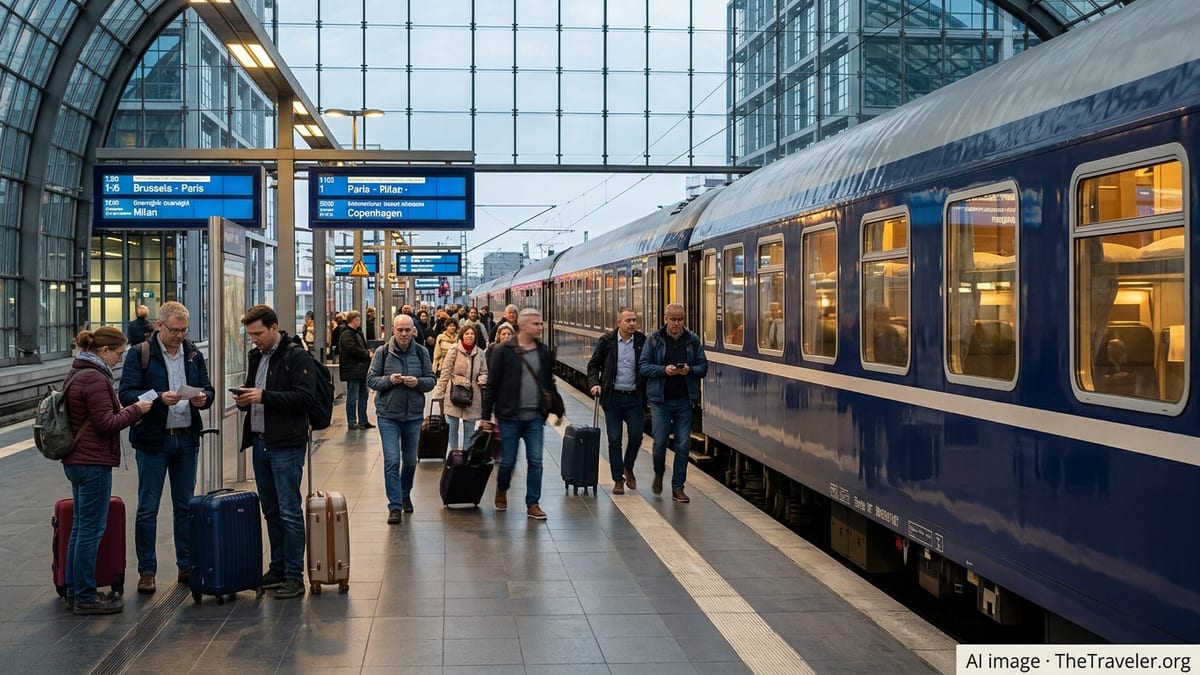
Record international participation in Berlin
According to publicly available information from organisers and industry outlets, InnoTrans 2026 is expected to host around 3,000 exhibitors representing approximately 60 countries, underscoring its status as one of the rail industry’s most globally diverse trade shows. Early figures suggest that this year’s event will surpass the already high levels of internationality seen in 2024, when close to 3,000 companies from nearly 60 nations filled the entire Messe Berlin grounds.
Reports indicate that this year’s edition coincides with the 30th anniversary of InnoTrans, a milestone that has helped attract additional national and regional pavilions, as well as first-time exhibitors from emerging rail markets. Industry coverage highlights new or expanded participation from parts of Africa, the Middle East and Southeast Asia, reflecting how rail and public transport investment is spreading beyond traditional strongholds in Europe and East Asia.
Publicly available briefings also point to a strong presence of institutional delegations and industry associations. Trade and investment agencies, export promotion bodies and regional cluster organisations are using the fair to showcase complete value chains, from rolling stock builders and component suppliers to software firms and mobility startups, further reinforcing the fair’s international profile.
In this context, statements featured in recent trade press that InnoTrans has “never been as international” as this year capture a broader trend rather than a single statistic. Measured by exhibitor numbers, country representation and the breadth of global rail topics covered, InnoTrans 2026 appears positioned as the most internationally oriented edition in the event’s three-decade history.
From European platform to global rail marketplace
When InnoTrans was launched in the mid-1990s, it primarily served as a European marketplace for rail technology and infrastructure, with a heavy focus on German and neighbouring manufacturers. Over successive editions, publicly available data show steady growth in overseas participation, with each fair adding new countries, more national pavilions and larger outdoor rolling stock displays.
By the early 2010s, the event had already become a key meeting point for the global rail supply industry. However, reports on more recent editions, especially 2024, suggest that post-pandemic recovery and renewed emphasis on decarbonisation have accelerated this internationalisation. New rail investment programmes in regions such as the Gulf, North Africa and parts of Asia have pushed more project sponsors, operators and engineering firms to use InnoTrans as a central marketplace.
Industry analyses note that InnoTrans now functions not only as a European procurement fair but also as a neutral venue where companies from competing regions present side by side. Suppliers from China, Korea and Japan exhibit alongside European heavyweights and a rising number of firms from India, Turkey and Latin America. This mix is one of the main reasons trade media describe the 2026 edition as more international than any of its predecessors.
The long-running outdoor and trackside displays also mirror this shift. Rolling stock premieres increasingly come from cross-border consortia, export projects or multi-country fleet families rather than strictly domestic programmes, reinforcing the fair’s role as a global showcase rather than a regional exhibition.
Global themes: decarbonisation, digitalisation and new mobility
Published previews of InnoTrans 2026 point to a strong focus on themes that resonate across rail systems worldwide, particularly decarbonisation and digital transformation. Exhibitors are expected to present battery and hydrogen multiple units, low-emission locomotives, energy-optimised metro and tram fleets, and infrastructure solutions designed to support higher line capacity with lower environmental impact.
Digital rail technology remains another central topic. Reports highlight growing space dedicated to signalling and train control, including ETCS, CBTC and country-specific systems, as well as traffic management, asset monitoring and predictive maintenance platforms. Many of these solutions are marketed as export-ready and adaptable to both high-density European corridors and fast-growing networks in other regions, which contributes to the fair’s appeal for international delegations.
New mobility concepts, from on-demand feeder services to integrated ticketing platforms, are also expected to feature prominently. Industry coverage indicates that InnoTrans 2026 will further develop dedicated areas for startup firms and data-driven mobility services, giving smaller international players a visible platform beside established manufacturers. This mix of traditional rolling stock with software-driven services underlines why observers increasingly describe InnoTrans as a comprehensive mobility ecosystem event rather than a pure rail hardware show.
Safety, cybersecurity and resilience are further cross-border concerns that will shape conference sessions and product launches. With railway operators in many regions digitalising operations at speed, there is rising interest in solutions that can protect signalling, ticketing and operational data infrastructures on a global scale.
National pavilions and regional rail ambitions
One of the clearest indicators of InnoTrans’ growing internationality is the expansion of national and regional pavilions. Trade media report that in 2026, countries from Europe, Asia, the Americas and the Middle East are organising collective stands that bring together manufacturers, engineering firms and service providers under a single national brand.
For export-oriented rail industries, particularly in Europe and East Asia, these pavilions act as a shop window for turnkey metro systems, high-speed lines and signalling packages aimed at international tenders. For newer rail markets, they offer a way to present infrastructure plans, financing models and localisation strategies to potential partners and suppliers, using the fair as a neutral ground for early-stage project discussions.
Regional economic blocs and corridor initiatives are also set to feature more prominently. According to published coverage, delegations linked to transcontinental freight routes and regional integration projects are using the event to coordinate standards, rolling stock interoperability and cross-border services. This development further strengthens the perception of InnoTrans as a convening point for international rail policy and strategy, not only for technology transactions.
Observers note that the presence of so many national and regional platforms within one fair creates opportunities for matchmaking that would be difficult to replicate elsewhere. Exhibitors and visitors can compare different procurement approaches, regulatory frameworks and financing schemes within a single visit, contributing to the event’s reputation as a uniquely international marketplace.
What record internationality means for the rail sector
The claim that InnoTrans has never been as international as this year carries several implications for the global rail and public transport industry. First, it signals that investment cycles in rail infrastructure and rolling stock are increasingly synchronised across regions, with project sponsors seeking exposure to a world market for ideas and suppliers rather than relying on isolated national events.
Second, the concentration of such a broad mix of exhibitors and delegations in Berlin underlines how rail has become a strategic industry in the context of climate policy, urbanisation and energy security. Publicly available information suggests that many participants are not only marketing products but also exploring partnerships for research, manufacturing localisation and skills development to support long-term rail expansion.
Third, record international participation can influence technical standards and interoperability. With infrastructure managers, operators and suppliers from dozens of countries meeting in one place, discussions on signalling harmonisation, data interfaces and maintenance practices gain practical urgency. Over time, these contacts may help reduce fragmentation in international rail operations and lower barriers for cross-border services.
Finally, the heightened international profile of InnoTrans reinforces Berlin’s role as a recurring global meeting point for the mobility sector. For four days every two years, the exhibition grounds become a hub where established rail powers and emerging markets take stock of each other’s progress. In 2026, that exchange appears set to reach a new peak, underlining why observers describe this edition as the most international InnoTrans to date.