


More news on this day
Travelers across the United States faced mounting disruption this weekend as operational constraints and weather-related air-traffic measures at Baltimore/Washington International Thurgood Marshall Airport led to a wave of delays and cancellations, snarling schedules on Southwest, United and American Airlines and intensifying pressure on an already fragile summer travel network.
Get the latest news straight to your inbox!
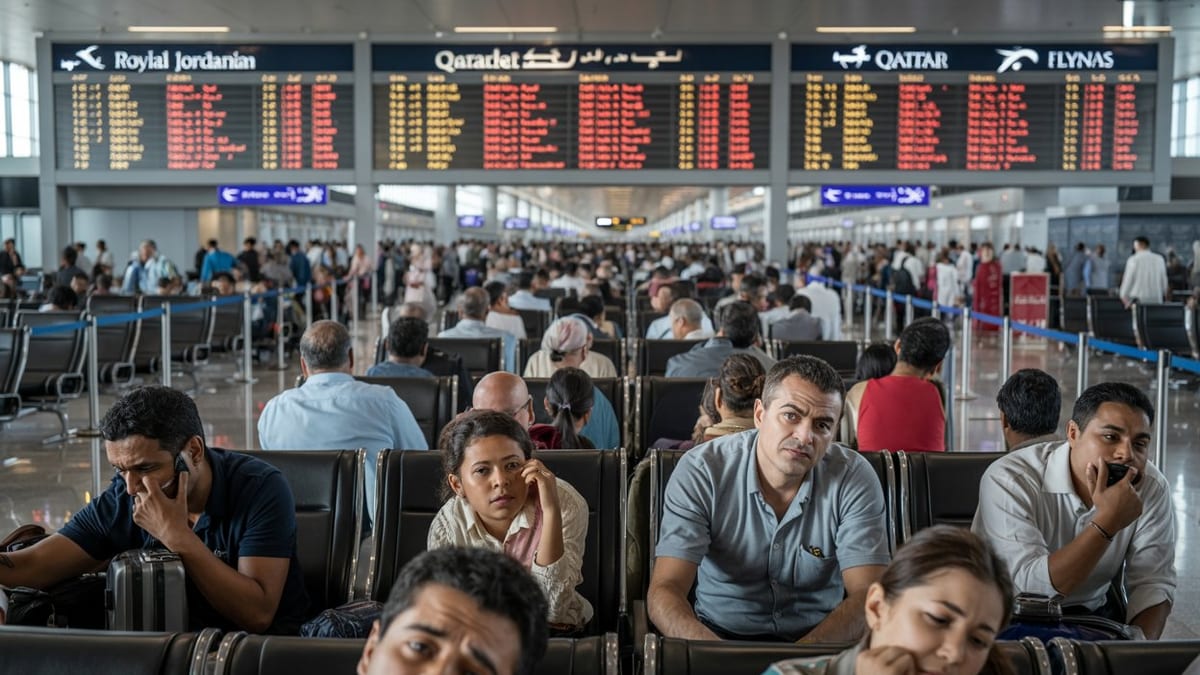
BWI Emerges as a Flashpoint for Holiday-Weekend Disruption
According to airport-status dashboards and flight-tracking data for Sunday, May 24, Baltimore/Washington International Thurgood Marshall Airport (BWI) is experiencing elevated delays on departures and arrivals, particularly among large domestic carriers. Publicly available tools tracking the National Airspace System indicate ground-delay programs in the broader Washington region, slowing departures and creating congestion across East Coast corridors.
Published aviation reports show that carriers serving BWI, including Southwest, United and American, entered the weekend with limited slack in their schedules after several days of volatile spring weather across the Southeast and Mid-Atlantic. One industry-focused analysis cited more than 5,000 delays nationwide on Saturday, May 23, as storms and staffing constraints forced airlines to hold or reroute aircraft rather than scrub entire legs, a strategy that can preserve schedules on paper while leaving passengers waiting for hours at the gate.
At BWI, flight-status trackers on Sunday list a mix of late departures, rolling gate changes and scattered cancellations for those three carriers, creating long lines at check-in counters and security lanes during peak morning and midafternoon banks. Travelers connecting through Baltimore to popular leisure destinations such as Florida, the Gulf Coast and the Mountain West are among the most affected, with several flights displaying revised departure times of 30 minutes or more beyond their original schedule.
Industry commentators note that BWI’s role as a major low-fare gateway and a key node in the Washington-area aviation system amplifies the impact when disruptions occur. The airport serves as a primary base for Southwest and an important spoke for United and American, so localized constraints can quickly cascade into missed connections and crew displacements throughout the domestic network.
Southwest, United and American Log Dozens of Delays
Based on mid-day status tallies for May 24, operations data indicate that Southwest, United and American have collectively logged dozens of delayed departures and arrivals at BWI, with some tracking services listing at least 47 late operations for the three carriers combined. While many flights still show “scheduled” or “on time,” a sizable share now carry updated departure or arrival estimates reflecting air-traffic flow restrictions and knock-on congestion from earlier in the weekend.
On Southwest, real-time trackers highlight a series of BWI departures to domestic hubs such as Nashville, Tampa and New Orleans operating behind schedule, in several cases after incremental pushbacks of five to fifteen minutes. While some of those shifts fall short of the 15-minute threshold typically used by regulators to classify a flight as delayed, passengers report extended waits as boarding times are repeatedly adjusted while crews and aircraft reposition through storm-affected regions.
United’s BWI operations also show strain, with certain services to Denver and other key western gateways posting revised arrival estimates and holding patterns in the schedule throughout Sunday morning. Published route-performance summaries for BWI links to major hubs, including long-haul connections to the West Coast, already show average delays near three-quarters of an hour in recent weeks, underscoring the vulnerability of these routes when thunderstorms, air-traffic caps or crew shortages intersect.
American Airlines, which uses BWI as an important feeder for its hubs in Charlotte and Dallas-Fort Worth, is contending with similar pressures. Industry guidance documents circulating since early 2026 have outlined how weather, air-traffic control programs and internal staffing constraints can combine to produce rolling disruptions, particularly at peak times and at airports with intensive narrowbody operations. Sunday’s pattern at BWI aligns with that dynamic, with relatively few outright cancellations but a concentration of short to medium-length delays that complicate downline connections.
Weather, Air-Traffic Programs and Crew Rules Combine
Aviation analysts point to a familiar mix of drivers behind the latest disruption at BWI. Springtime thunderstorms along the Eastern Seaboard, combined with lingering staffing constraints in certain air-traffic control centers, have prompted the Federal Aviation Administration to implement episodic ground-delay and flow-control programs in recent days. Those measures reduce the rate of arrivals and departures, forcing airlines to meter flights into already saturated airspace.
When these restrictions coincide with peak travel weekends, network carriers often respond by holding aircraft on the ground instead of cancelling flights outright. While this approach can help preserve aircraft rotations and minimize the need for overnight crew relocations, it frequently results in rolling delays that reset departure times multiple times throughout the day. Travelers in Baltimore and other affected hubs have described sequences of incremental delays, terminal changes and last-minute gate switches as airlines attempt to keep as much of the schedule intact as possible.
Crew-duty limits add another layer of complexity. Under federal rules, pilots and flight attendants must adhere to strict maximum work hours and mandatory rest periods. When earlier flights are delayed by weather or air-traffic constraints, crews can “time out” before operating later legs, forcing airlines to cancel or further delay those segments. Industry explainer documents circulated this year emphasize how a single early-morning weather event can ripple through evening operations, especially at high-volume airports like BWI where aircraft and crew utilization rates are high.
Infrastructure work at BWI also plays a supporting role. Airport planning materials describe an ongoing terminal improvement program designed to modernize connections between concourses, expand hold rooms and upgrade baggage systems, particularly in areas heavily used by Southwest. While the construction is staged to keep capacity available, any reduction in gate flexibility or baggage throughput can make it harder for airlines to absorb day-of-operations shocks without visible disruption.
Nationwide Networks Feel the Ripple Effects
Although Sunday’s operational challenges are centered on Baltimore/Washington International, the impact is national. BWI’s extensive domestic network links it to major leisure and business markets, so delays there reverberate through airports in the Southeast, Midwest and Mountain West. Industry travel briefings published over the weekend describe a broader pattern of strain across major hubs, with more than 5,000 delays recorded nationwide on Saturday and elevated numbers persisting into Sunday.
Southwest’s point-to-point network, which relies heavily on BWI for East Coast connectivity, is particularly susceptible to cascading effects. When several departures from Baltimore push back, downline aircraft may arrive late to secondary cities, compressing turn times and leading to additional delays or missed slots at congested airports. United and American, which use a more traditional hub-and-spoke structure, contend with their own challenges as late-arriving feeder flights from BWI jeopardize onward connections to long-haul services.
Travel forums and passenger accounts over the last two months have documented similar chains of disruption, with some customers describing being stranded overnight after a sequence of rolling delays evolved into last-minute cancellations and missed connections. While those narratives span multiple airlines, they underline how thin the margin has become for U.S. carriers during busy travel periods, particularly when weather and staffing constraints intersect at key hubs and focus cities.
For travelers, the practical effect is a growing sense of unpredictability around itineraries that involve Baltimore and other high-volume East Coast airports. Even when their own flights ultimately operate, passengers increasingly face longer queue times, busier concourses and tighter connections, conditions that have become especially pronounced during this latest wave of BWI-centered disruption.
What Travelers Can Do as Delays Mount
Consumer and aviation advisories released in 2026 highlight several steps travelers can take when disruption hits airports like BWI. First, passengers are urged to monitor both airline apps and independent flight-tracking tools, since official schedules may lag behind real-time operational decisions during major delay events. In previous mass-disruption scenarios, travelers have reported that push notifications and publicly available airspace dashboards often provided earlier clues to impending ground delays or route constraints.
Guidance materials specific to Southwest, United and American also emphasize the importance of understanding rebooking and compensation policies. While weather-related disruptions often limit eligibility for financial compensation, carriers may still offer meal vouchers, hotel accommodations or no-fee changes in cases where delays stretch into overnight hours or when controllable factors such as crew or equipment issues contribute. Recent informational documents from consumer advocates encourage passengers to keep detailed records of delay times and any additional expenses incurred.
For those planning upcoming trips through Baltimore/Washington International, travel planners recommend building in longer connection windows and considering early-morning departures, which historically face fewer cumulative delays than afternoon or evening flights. Some corporate travel departments have also begun encouraging flexible routing, including alternative Washington-area airports, when itineraries involve tight international connections or time-sensitive engagements.
With summer peak season approaching, the situation unfolding at BWI serves as another reminder of the fragility of the U.S. air travel system when weather, resource constraints and high demand collide. As Southwest, United and American work through Sunday’s backlog of at least 47 delayed operations tied to Baltimore, flyers across the country are bracing for further knock-on effects in the days ahead.