


More news on this day
A train derailment in Caddo Parish, Louisiana, is under active review by the Caddo Parish Sheriff’s Office after rail cars left the tracks near a key highway corridor, disrupting traffic and drawing fresh attention to freight rail safety in the region.
Get the latest news straight to your inbox!
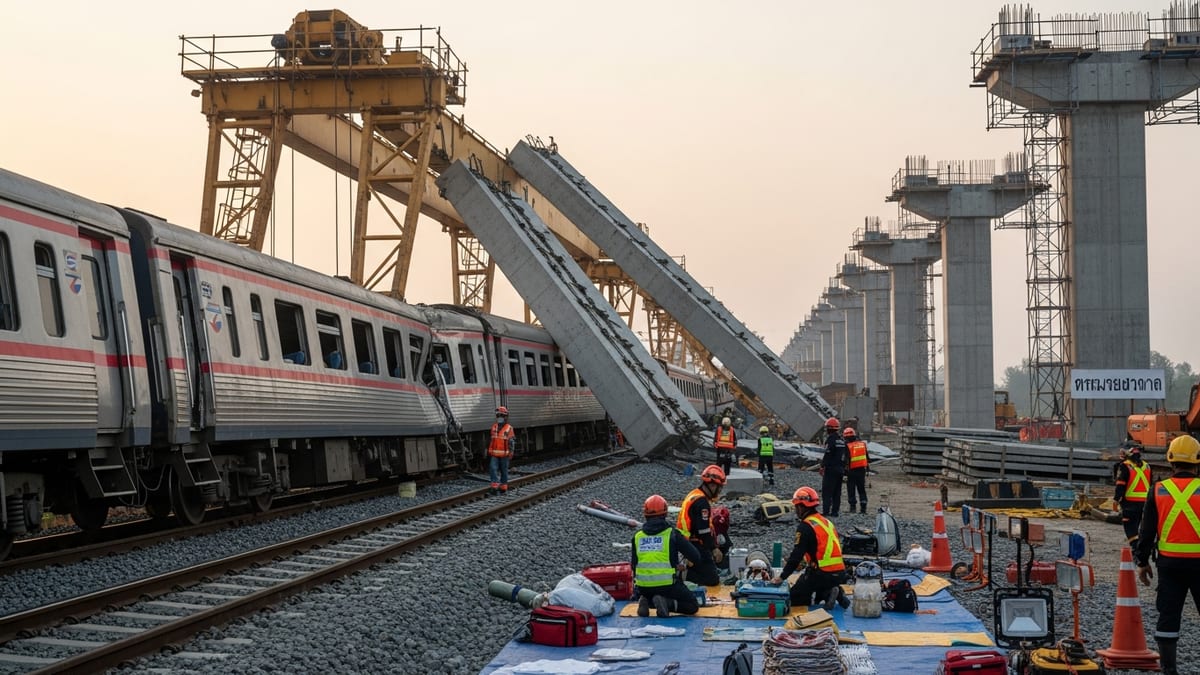
Derailment reported near major Caddo Parish highway
According to publicly available information from the Caddo Parish Sheriff’s Office, deputies responded to a report of a train derailment on the north end of the parish, in an area where freight traffic and local roadways intersect. Early details indicate that multiple rail cars left the tracks near a stretch of Louisiana Highway 1, prompting detours for drivers and an extended on scene response by local agencies and railroad personnel.
Published updates from the sheriff’s office describe a scene in which rail equipment blocked or closely bordered the highway, requiring traffic control on approaches to the derailment site. Motorists north of the area were rerouted onto alternate parish roads, while access from the south was also restricted as crews assessed damage and began clearance work.
Initial reports did not indicate widespread injuries among rail personnel or nearby residents. However, responders focused on securing the scene, documenting the position of derailed cars, and coordinating with railroad representatives to remove damaged equipment and inspect track conditions before any rail operations could resume.
The incident follows earlier train related events in the region, including previous derailments in south Caddo Parish reported in recent months. Those earlier episodes also prompted temporary closures along Highway 1 and surrounding connectors, underscoring the corridor’s sensitivity to rail disruptions.
Investigation focuses on track conditions and train operations
The Caddo Parish Sheriff’s Office has opened an investigation into the circumstances surrounding the most recent derailment, with attention on both infrastructure and train handling in the moments before the cars left the rails. Publicly available summaries from the sheriff’s office and federal rail safety databases show that investigators routinely examine factors such as track geometry, switch alignment, equipment condition, and speed profiles when freight cars derail.
Federal Railroad Administration data for recent derailments in and around Caddo Parish highlight recurring technical themes, including rail defects, broken components, and issues with track support. In similar cases elsewhere in the country, investigation summaries have pointed to faulty welds, compromised fasteners, or pre existing rail damage as potential contributors to derailments.
Operational practices also form part of the inquiry. Safety reports from other freight incidents describe how train length, distributed power settings, braking patterns, and load distribution can influence forces on curves and grades. Investigators in Caddo Parish are expected to compare event timelines, locomotive data, and crew statements with track inspection records and recent maintenance logs to determine whether mechanical failure, infrastructure deficiencies, or a combination of both played a role.
Any findings from the current review will likely be shared with federal rail regulators and the involved railroad company, adding to a broader body of safety information on freight movements through north Louisiana.
Traffic, business, and community impacts along the corridor
The derailment’s location along a key route in northern Caddo Parish has had a noticeable effect on local mobility, according to published coverage from regional news outlets and public agencies. Highway 1 serves residents, truck traffic, and workers commuting to industrial sites. When rail cars came off the tracks and impeded the roadway, drivers faced delays, detours, and uncertainty about how long the closure would last.
Motorists were redirected to nearby parish roads, including smaller connectors that are not typically designed to absorb sustained surges in traffic volume. That shift can extend travel times for commuters, complicate logistics for local businesses, and limit access routes for emergency services until the corridor is fully reopened.
Local reporting on earlier derailments in Caddo Parish and nearby jurisdictions points to knock on effects for commerce when freight trains stall or block roadway crossings. Industrial facilities that rely on consistent rail deliveries may experience delays or rerouting of shipments, while small businesses along closed highway segments can see reduced customer flow during the disruption.
Residents living near the affected tracks also face short term quality of life concerns, such as noise from heavy machinery clearing derailed cars, bright work lights at night, and the presence of additional vehicle traffic on residential streets used as informal detours.
Questions about hazardous materials and emergency preparedness
Publicly available information on the latest Caddo Parish derailment has not indicated a major release of hazardous materials, but the incident inevitably raises questions about what could happen if tank cars carrying chemicals or fuels were involved. Federal rail safety records show that ports and industrial hubs near Caddo Parish routinely handle tank cars, and derailments in other states have demonstrated how hazardous cargo can complicate response and recovery.
In previous high profile derailments elsewhere in the United States, investigators have described extensive environmental assessments, air monitoring, and soil testing after spills of flammable liquids or corrosive substances. These cases have prompted renewed scrutiny of train routing, the design of tank cars, and emergency notification procedures for nearby communities.
Preparedness plans in parishes like Caddo generally account for such scenarios, outlining coordination among local law enforcement agencies, fire departments, emergency medical services, and state environmental authorities. Public documents typically emphasize the importance of rapid scene assessment, clear communication with residents, and pre identified evacuation or shelter in place guidelines if hazardous materials are present.
While early information from the current incident in Caddo Parish has not pointed to a large scale hazardous release, the derailment reinforces the importance of maintaining and updating these plans as freight volumes and commodity mixes evolve.
Rail safety debates reach north Louisiana
The Caddo Parish derailment unfolds against a backdrop of national discussion about freight rail safety, train length, and infrastructure investment. Recent federal and state level reports on derailments across the country have highlighted aging track segments, deferred maintenance, and workforce changes as issues that can influence overall system reliability.
Advocacy groups, transportation analysts, and rail industry representatives have offered differing views on the pace and focus of safety improvements. Some public reports call for more frequent and technologically advanced track inspections, citing cases where subtle defects preceded significant derailments. Others emphasize the role of modern braking systems, real time train monitoring, and stricter standards for trains carrying hazardous cargo.
For communities along busy rail corridors in Louisiana, including Caddo Parish, the current investigation may feed into broader conversations about how often tracks are inspected, how information about incidents is shared, and what infrastructure upgrades might reduce future risks. Publicly available statements from state and federal transportation agencies often point to collaborative efforts that include local governments, railroads, and regulators.
As investigators continue their work in Caddo Parish, residents and travelers in the region are watching for additional details on what caused the derailment, how long full service restoration will take, and whether any recommended changes will emerge that could shape rail operations through north Louisiana in the months and years ahead.