


More news on this day
Air travelers across Europe faced another day of severe disruption on Monday, as data from flight-tracking and passenger-rights services indicated more than 200 flight cancellations and over 3,200 delays affecting major hubs in Germany, France, Italy, Austria, Ireland, Croatia and other countries.
Get the latest news straight to your inbox!
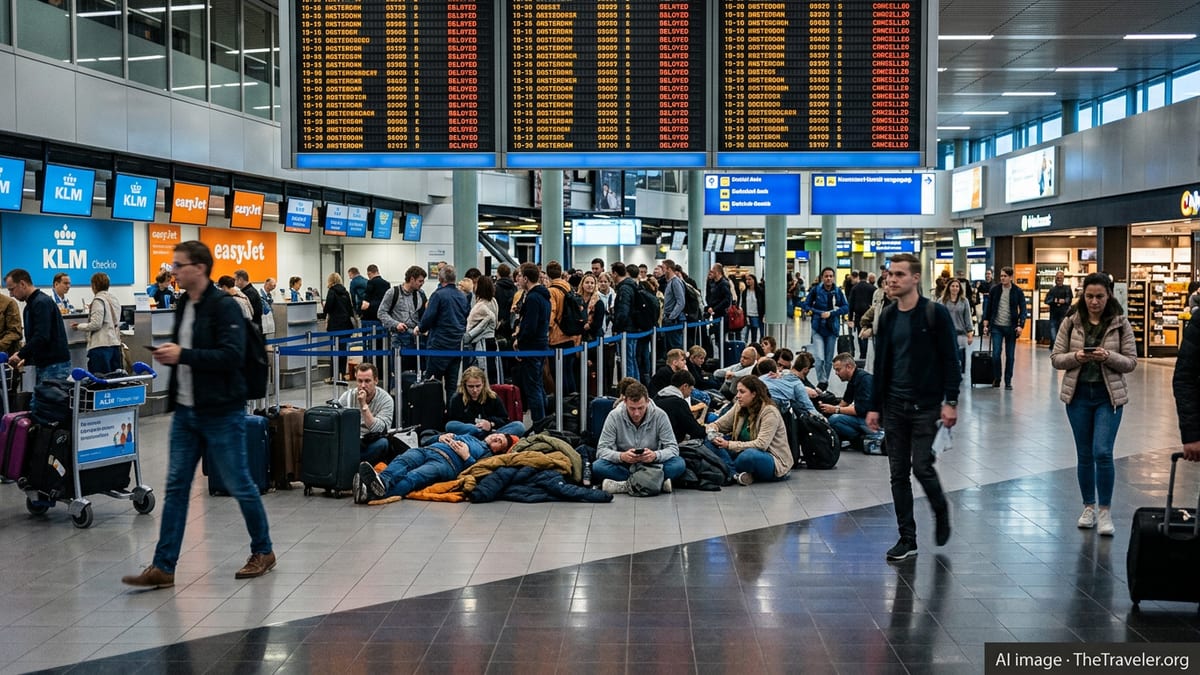
Widespread Cancellations At Major European Hubs
Publicly available disruption trackers and airport-status feeds on 29 June 2026 show widespread operational strain across the European network, with cancellations and heavy delays concentrated at large hubs such as Frankfurt, Paris, Rome and Vienna. Aggregated figures from flight monitoring platforms point to roughly 200 cancellations and more than 3,200 delayed services Europe-wide, affecting both short haul and long haul routes.
The impact is especially visible in Germany, where Frankfurt Airport continues to experience rolling disruption following months of schedule adjustments, strikes and operational bottlenecks involving Lufthansa and its regional partners. Historical and current flight-tracking records highlight multiple cancelled and heavily delayed Lufthansa departures, feeding onward knock-on effects across the airline’s hub-and-spoke network.
Italy is also heavily affected, with Rome Fiumicino seeing late-running and cancelled services operated or codeshared by ITA Airways, Lufthansa and other European carriers. Coverage from passenger advocacy services lists specific Lufthansa and ITA Airways flights between Rome and Frankfurt among those cancelled or subject to extended delays, underlining how a single route can ripple across several airline networks at once.
In Austria and France, Vienna and the Paris airports continue to absorb high volumes of delayed flights, according to Eurocontrol’s network performance data and live delay dashboards. While outright cancellations are fewer than at some German and Italian hubs, recurring air traffic management and staffing constraints have added to congestion, lengthening turnaround times and further constraining available capacity.
Lufthansa, Air France, Austrian And ITA Among Carriers Hit
Disruption data indicates that legacy network airlines have borne a significant share of Monday’s cancellations and delays. Lufthansa’s schedule in and out of Frankfurt features a series of cancellations alongside services that are delayed well beyond their scheduled times. Passenger-rights platforms that track compensation eligibility list multiple Lufthansa flights on 29 June as cancelled, reflecting both recent labor actions and ongoing operational pressures.
Austrian Airlines, which relies heavily on Vienna as its primary hub, is working through the knock-on effects of wider network congestion in Central Europe. Although its published timetable remains largely intact, delays on feeder routes and connecting services are common when major hubs experience capacity constraints. This, in turn, complicates rebooking for travelers whose onward journeys depend on tight connections through Vienna.
In Italy, ITA Airways is facing its own operational challenges while simultaneously being affected by the broader European network’s fragility. Shared routes and codeshares with Lufthansa and other partners mean that a cancellation on one airline’s metal can cascade across multiple brands and flight numbers. Flight-status records for Rome to Frankfurt services, for example, show mixed performance, including outright cancellations, extended delays and aircraft swaps.
Air France’s Paris hubs, particularly Charles de Gaulle, are also contending with high delay volumes. While many flights eventually depart, longer-than-normal taxi, ground-handling and slot-management times have pushed back departure and arrival windows. Combined with weather-related constraints reported in recent days, this has left the airline managing congested ground operations even when most of its schedule technically remains operating.
Weather, Staffing And Airspace Constraints Combine
Reports from network management bodies and airline-focused analyses suggest that Monday’s disruption reflects the convergence of several familiar stress points rather than a single, isolated incident. Periodic adverse weather in parts of Western and Central Europe has tightened usable runway capacity at key hubs just as the summer travel peak gathers pace, forcing temporary ground delay programs and schedule reshuffles.
Staffing and labor relations also continue to weigh on reliability. Over recent months, Lufthansa and its subsidiaries have faced industrial actions that led to hundreds of cancellations at Frankfurt and Munich, while Italy has experienced nationwide airport and ground-handling strikes that disrupted more than a thousand flights in a single day. Although no single Europe-wide strike is driving today’s figures, these disputes have contributed to thinner operational margins and more fragile rosters.
At the same time, Eurocontrol’s network reports point to ongoing structural capacity issues in European airspace, including air traffic control constraints in certain control centers and airports. Even relatively short restrictions imposed for safety or technical reasons can generate cascading air traffic flow management delays, especially when aircraft and crews are already tightly scheduled and aircraft utilization is high.
This combination of weather constraints, staffing shortages in critical functions and airspace bottlenecks has created conditions in which even routine disruptions can spill over into large-scale cancellations and day-long delays affecting thousands of passengers across multiple countries.
Travelers Face Missed Connections And Lengthy Rebookings
For passengers, the most immediate effects of Monday’s disruption are missed connections, extended layovers and, in some cases, overnight stays. Online accounts on travel and airline discussion forums describe travelers facing last-minute cancellation notices, schedule changes on intra-European links to Croatia and Ireland, and reroutings via alternative hubs such as Vienna, Zurich or Amsterdam.
Some long-haul travelers bound for Southern and Eastern Europe report being rebooked from direct or one-stop itineraries onto longer, multi-stop journeys via different partner airlines, adding several hours to total travel time. In several cases, connections through Frankfurt, Paris or Rome have been replaced with routings that involve layovers in Vienna or other secondary hubs when original flights are cancelled or significantly delayed.
These rebookings can be particularly disruptive for passengers with time-sensitive plans, such as cruise departures in the Adriatic, business meetings in major financial centers, or onward rail and ferry connections. With aircraft already heavily booked during the busy summer period, alternative seats are limited, and some travelers report being offered itineraries that arrive many hours or even a full day later than originally planned.
The complexity of Europe’s codeshare and alliance networks adds another layer of confusion. It is common for a single cancelled flight to carry flight numbers from several airlines, including Lufthansa, ITA Airways, Air France and Austrian. When a disruption occurs, passengers may need to coordinate between the marketing carrier that sold the ticket and the operating airline that runs the aircraft to secure rebookings, refunds or care.
What Stranded Passengers Can Do Under EU Rules
Consumer advocates are pointing passengers toward the protections contained in Regulation (EC) No 261/2004, the European Union’s air passenger rights framework. Under this regulation, travelers departing from an EU, EEA or UK airport, as well as those flying to the region on an EU or UK carrier, may be entitled to care, rerouting and in many cases financial compensation when flights are cancelled or arrive with long delays.
The rules generally require airlines to offer a choice between rerouting at the earliest opportunity and a refund of the unused ticket portion when a flight is cancelled. Depending on the length of the journey and the length of the delay at final arrival, passengers may also qualify for fixed-sum compensation, typically ranging from 250 to 600 euros, unless the airline can demonstrate that the cause of disruption falls under legally defined extraordinary circumstances.
Separate from compensation, airlines must provide assistance when travelers are stranded for extended periods. This can include meals, refreshments, communication facilities and hotel accommodation where necessary, proportionate to the length of the delay and the distance of the affected flight. Travelers are generally advised to keep receipts for any essential expenses incurred while waiting for rebooking or overnight stays.
Given Monday’s widespread disruption across Europe, passenger-rights organizations expect a surge of claims in the coming days and weeks. Travelers affected by cancellations and long delays on Lufthansa, Air France, Austrian, ITA and other European carriers are being encouraged by these groups to document their original itinerary, any airline notifications received, and the actual arrival time at their final destination to determine whether they qualify for support or compensation.