


More news on this day
Canada and the United States appear increasingly aligned on how next-generation AI-powered “smart luggage” fits into the future of air travel, as Chinese mobility brand Airwheel accelerates the global rollout of its autonomous and rideable cabin suitcases across major international markets.
Get the latest news straight to your inbox!
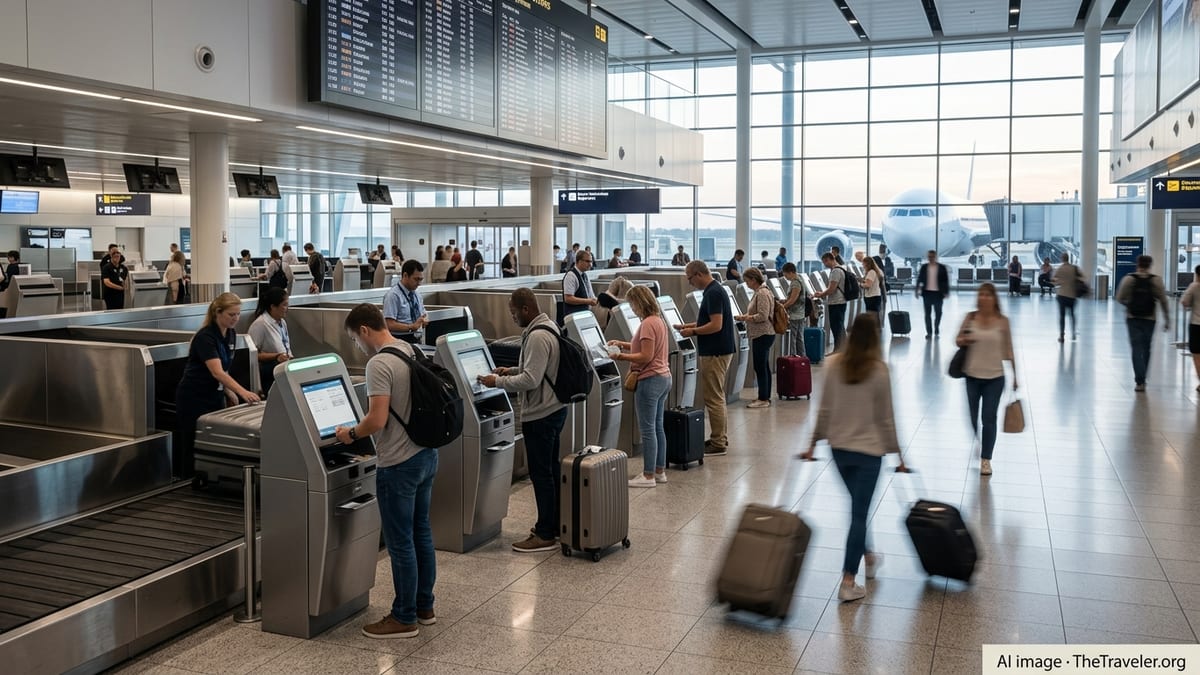
AI Luggage Moves From Gadget to Global Travel Infrastructure
Airwheel, long known for self-balancing scooters and smart mobility gear, has spent the past several years repositioning its technology for airports and transport hubs. Its SR5 intelligent suitcase, for example, uses sensors, UWB positioning and an AI control system to autonomously follow a traveler while avoiding obstacles, effectively turning carry-ons into small robotic companions in busy terminals.
Recent product communications highlight a newer generation of rideable smart cabin suitcases, including the SE3 series, which combine electric drive motors, folding footrests and integrated controls so passengers can sit and ride between gates. These models pair AI-assisted balance and speed control with traditional storage capacity, aiming to merge short-distance mobility with everyday baggage functionality.
According to marketing materials and technical documentation, Airwheel’s smart luggage portfolio relies on removable lithium battery modules that power traction motors, position sensors and USB charging ports. In parallel, the company emphasizes compliance with international aviation limits on watt-hour ratings for consumer batteries, positioning the products as airline-ready when carried on board.
The result is that smart luggage is increasingly being framed not only as a novelty device, but as a form of intelligent travel infrastructure designed to ease congestion, support passengers with mobility challenges and smooth long walks through expanding airport terminals.
Canada Joins Global Network for Airwheel Smart Suitcases
Publicly available information on Airwheel’s global distribution network shows that Canada features prominently among the company’s overseas markets. A regional selection list for online purchases and a recent update on the firm’s offline retail footprint both indicate availability across North and South America, including Canada and the United States, alongside European and Asian destinations. ([airwheel.net](https://www.airwheel.net/home/activity/20501?utm_source=openai))
Dedicated Canadian-facing retail sites and resellers now promote Airwheel ride-on electric luggage in carry-on compliant sizes, signalling that the brand is moving beyond experimental imports and into more mainstream channels. Product descriptions typically highlight compatibility with Canadian and international airline cabin rules, with particular focus on removable battery packs and overall dimensions within standard carry-on limits. ([airwheelcanada.ca](https://airwheelcanada.ca/products/airwheel-smart-ride-on-electric-luggage?utm_source=openai))
This growing presence aligns Canada with other early adopter markets such as the United States, parts of Europe and select Asia-Pacific hubs where AI-enabled luggage is being marketed not only to tech enthusiasts but also to frequent flyers, families and older travelers. As Canadian airports continue to invest in automation and self-service technologies, robotics-enhanced luggage is emerging as a complementary layer in the broader smart travel ecosystem.
Industry observers note that Canada’s adoption trajectory benefits from close regulatory coordination with U.S. and international standards bodies. Canadian and American rules on dangerous goods, including lithium batteries, are generally harmonized, giving manufacturers a clearer pathway to certify products for cross-border travel and joint itineraries. ([govinfo.gov](https://www.govinfo.gov/content/pkg/FR-2020-05-11/pdf/FR-2020-05-11.pdf?utm_source=openai))
United States Market Helps Set the Pace on Safety
The United States remains one of the most influential markets for smart luggage, in large part because battery safety rules and airline policies there often set practical benchmarks for global travel. U.S. Department of Transportation and Federal Aviation Administration guidance specifies that baggage containing lithium batteries for smart features such as motors and tracking must generally travel in the cabin, or else have batteries removed before being placed in the hold. ([faa.gov](https://www.faa.gov/hazmat/packsafe/baggage-with-lithium-batteries?utm_source=openai))
Regulatory documents addressing “baggage equipped with lithium batteries” underscore the risks of thermal runaway in cargo areas and formalize expectations that passenger power banks and battery-powered luggage travel as carry-on whenever possible. Industry fact sheets and public advisories reinforce limits on watt-hour ratings, quantities of spare batteries and the need for accessible placement so cabin crew can respond quickly in the event of overheating. ([downloads.regulations.gov](https://downloads.regulations.gov/PHMSA-2017-0108-0002/attachment_1.pdf?utm_source=openai))
Within this environment, Airwheel’s recent announcements spotlight removable lithium battery modules sized to stay within international 100 Wh thresholds per unit, attempting to address the chief regulatory hurdle that led some airlines to initially restrict “smart bags.” Company releases from early 2026 describe an “AI-enabled rideable electric cabin suitcase” designed with carry-on compliance in mind, suggesting that manufacturers now treat U.S. and allied rules as baseline design inputs rather than afterthoughts. ([globenewswire.com](https://www.globenewswire.com/news-release/2026/02/09/3234241/0/en/Airwheel-Announces-Expanded-Global-Deployment-of-AI-Enabled-Rideable-Smart-Electric-Cabin-Suitcase.html?utm_source=openai))
As American carriers refine their own policies on powered luggage and airport operators strengthen screening for lithium batteries, the U.S. market has effectively become a proving ground for whether AI-driven suitcases can operate safely at scale. That model is increasingly echoed in partner jurisdictions, including Canada, which apply similar thresholds and screening protocols.
Coordinated Battery Rules Shape Canada–US Travel Experience
Canada’s aviation and security framework largely mirrors U.S. practice in its treatment of lithium batteries, creating a consistent experience for travelers moving between the two countries with smart luggage. Canadian guidance for passengers, published by the Canadian Air Transport Security Authority, directs travelers to pack devices powered by lithium batteries, such as power banks and smart gadgets, in carry-on baggage rather than checked luggage, aligning with U.S. safety rationale. ([catsa-acsta.gc.ca](https://www.catsa-acsta.gc.ca/en/what-can-bring/guidelines-batteries?utm_source=openai))
Transport Canada’s dangerous goods policies, together with harmonized rules developed through international forums, set similar watt-hour limits and packaging requirements for consumer batteries. Regulatory materials note close coordination with U.S. and global standards for air transport of lithium cells, helping to ensure that products approved for American carriers can typically operate on Canadian routes as well, subject to individual airline policies. ([govinfo.gov](https://www.govinfo.gov/content/pkg/FR-2020-05-11/pdf/FR-2020-05-11.pdf?utm_source=openai))
This regulatory alignment means travelers carrying AI-powered luggage from brands such as Airwheel can often rely on a single set of battery-related expectations across North American itineraries. Provided batteries are removable, appropriately rated and stowed in cabin baggage, smart suitcases are increasingly positioned as compatible with cross-border flights linking Canadian hubs like Toronto, Vancouver or Montreal with major U.S. gateways.
At the same time, both Canadian and U.S. authorities continue to highlight incidents involving lithium batteries in aircraft and terminals, reinforcing that smart luggage must evolve within a safety-first paradigm. Public advisories and fact sheets stress careful charging practices, physical protection of battery terminals and prompt reporting of any signs of overheating, pushing manufacturers to integrate battery management systems and thermal safeguards directly into AI luggage designs. ([faa.gov](https://www.faa.gov/hazmat/packsafe/airline-passengers-and-batteries?utm_source=openai))
Airwheel Expands AI Luggage Portfolio for the Next Phase of Global Travel
Against this regulatory backdrop, Airwheel is signaling a broader strategic shift toward treating AI luggage as a long-term pillar of its mobility lineup. Corporate communications released in early 2026 describe a phased rollout of AI-driven, rideable cabin suitcases that use robotics, IoT sensors and algorithmic control to navigate terminals, assist with short-distance rides and provide connected services such as device charging and, in some models, app-based monitoring. ([globenewswire.com](https://www.globenewswire.com/news-release/2026/02/04/3231752/0/en/airwheel-introduces-ai-driven-rideable-smart-cabin-suitcase-solutions-for-the-next-generation-of-global-travel.html?utm_source=openai))
The company reports a growing international intellectual property portfolio, with trademarks registered in more than 160 countries and regions, suggesting ambitions that extend well beyond a handful of early adopter markets. A published overview of Airwheel’s global retail presence shows both Canada and the United States included among a wide network of airport stores, flagships and shopping mall outlets where electric and AI-enabled luggage is available. ([airwheel.net](https://www.airwheel.net/home/activity/20501?utm_source=openai))
For travelers, the near-term impact is likely to be incremental rather than transformative: more frequent sightings of autonomous or rideable suitcases at gates, additional battery checks at security and a gradual normalization of robotic baggage as part of the wider airport landscape. For regulators in Canada, the United States and partner countries, the rise of AI luggage is accelerating ongoing efforts to balance digital innovation with enduring concerns about lithium battery risks and airside safety.
As global passenger numbers continue to climb and terminal footprints expand, the interplay between companies such as Airwheel and the aligned regulatory approaches of countries including Canada and the United States is expected to shape how far and how fast AI luggage can redefine the travel experience for millions.