


More news on this day
Travel between Sri Lanka and Indonesia has been hit by fresh uncertainty after SriLankan Airlines suspended its Colombo–Jakarta services in response to mounting volcanic ash risks from Indonesia’s erupting Anak Krakatau, compounding wider regional flight disruptions around the Indonesian capital.
Get the latest news straight to your inbox!
Volcanic Ash From Anak Krakatau Spreads Across Western Indonesia
Indonesia’s Mount Anak Krakatau began a new eruptive phase in early September, sending thick columns of ash several kilometres into the atmosphere and triggering rapid changes in regional airspace conditions. Satellite and ground observations cited in regional media describe ash clouds rising to around 6 kilometres and drifting over Jakarta, Banten, West Java and adjacent waters, creating a complex hazard picture for aviation across western Indonesia.
According to published coverage from Indonesian outlets and international news wires, the eruption on September 5 and 6 prompted authorities to temporarily close or restrict operations at multiple airports, including Jakarta’s Soekarno Hatta International Airport, after volcanic ash was detected within critical flight paths. Notices to airmen (NOTAMs) issued by Indonesia’s air navigation authorities documented closure windows for Soekarno Hatta on September 6, with cascading impacts on both domestic and international schedules.
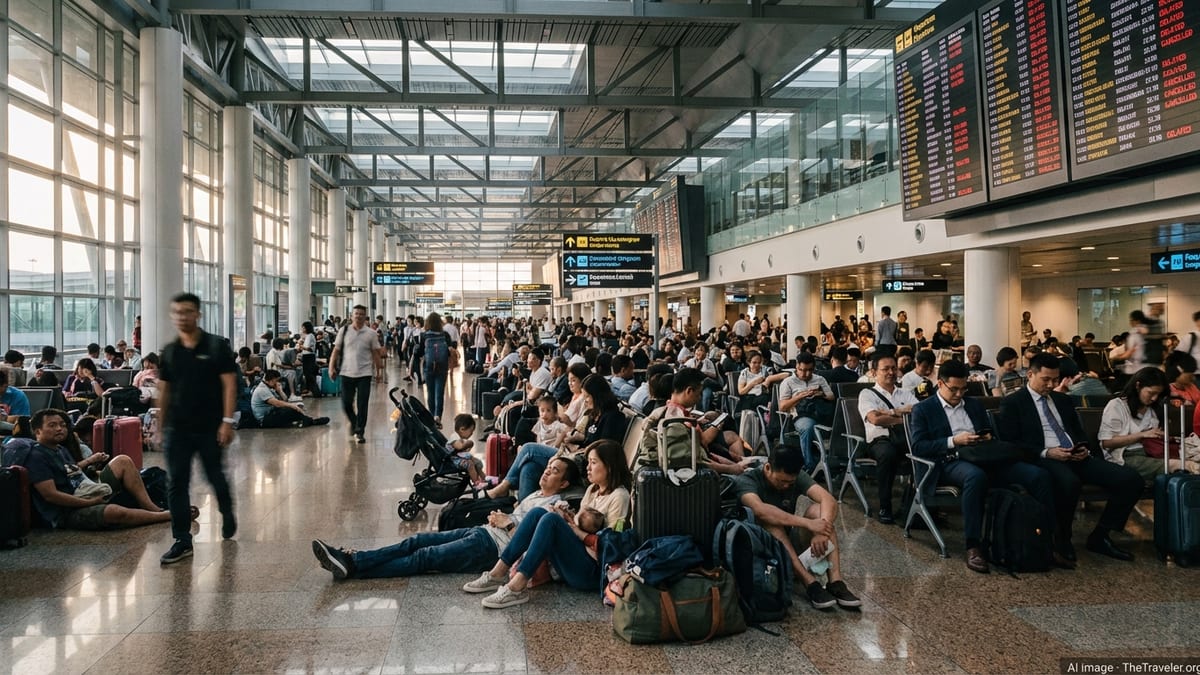
State news agency reports and airport operator statements indicate that hundreds of flights were affected at Soekarno Hatta alone, with flight boards showing waves of cancellations and delays as airspace managers repeatedly adjusted restrictions in line with evolving ash forecasts. Passenger numbers disrupted across the network have been estimated in the tens of thousands, with some travelers stranded overnight in Jakarta and other affected hubs while airlines reworked rotations.
Volcanic ash poses a serious threat to jet engines and onboard systems, as it can melt and fuse inside turbines and abrade cockpit windows and sensors. Indonesia, which lies on the seismically active Pacific Ring of Fire, has long maintained dedicated contingency procedures for volcanic events, including coordinated monitoring between meteorological agencies, the Directorate General of Civil Aviation and air navigation services. The Anak Krakatau episode is now providing a fresh test of those frameworks for the Jakarta Flight Information Region.
Colombo–Jakarta Flights Suspended as Risk Thresholds Tighten
Against this backdrop, SriLankan Airlines has moved to suspend its direct Colombo–Jakarta services, a decision travel industry observers link directly to the Anak Krakatau ash advisories affecting approaches to the Indonesian capital. Flight-tracking data for SriLankan’s UL364 service between Colombo’s Bandaranaike International Airport and Jakarta’s Soekarno Hatta show that the most recent scheduled rotation on September 6 was cancelled, breaking a previously regular pattern of operations on the route.
While SriLankan had been actively selling Colombo–Jakarta itineraries as recently as earlier in the week, route listings and booking engines now show the connection as unavailable over the immediate term, reflecting a pause in operations while conditions remain volatile. The airline has not issued a detailed public bulletin on the suspension, but published schedules and third-party data providers indicate that forward availability on the route is being withdrawn while ash dispersion forecasts continue to cover airspace around Jakarta.
Priced fare displays captured prior to the eruption showed Colombo–Jakarta returns marketed from roughly LKR 170,000 for travel later in 2026, underscoring the route’s role as a competitive option for Sri Lanka–Indonesia itineraries. With the suspension now in place, travelers are likely to be re-accommodated via alternative hubs or offered date changes and refunds under the airline’s disruption policies, in line with broader industry practices currently being applied by other carriers operating in and out of Jakarta.
The pause comes at a sensitive moment for SriLankan Airlines, which has been working to stabilise and grow its long-haul and regional network following previous disruption episodes linked to geopolitical tensions and operational constraints. The Colombo–Jakarta sector connected a rising volume of leisure and business traffic, including Sri Lankan travelers heading onward to Indonesian islands and Indonesian visitors combining Sri Lanka with broader South Asian itineraries.
Knock-on Effects for Sri Lankan Travellers and Indonesia-bound Tourism
The suspension of Colombo–Jakarta flights is emerging as a new obstacle for Sri Lankan holidaymakers and business travelers targeting Indonesia during the September shoulder season and into the final quarter of 2026. Jakarta is a key entry point for onward connections to Bali, Yogyakarta, Lombok and other Indonesian destinations, meaning that the loss of a nonstop link from Colombo forces itineraries onto longer, multi-stop routings.
Travel forums and social media posts show Sri Lankan and regional passengers scrambling to rebook via Singapore, Kuala Lumpur or Middle Eastern hubs, in some cases adding several hours of transit time and higher last-minute fares. The Anak Krakatau ash cloud has also led some carriers in Southeast Asia and Australia to adjust flight paths or cancel Jakarta services temporarily, narrowing options for those trying to reach Indonesia from South Asia and beyond.
For inbound tourism to Sri Lanka, the impact may be more limited in the immediate term, as Jakarta is a secondary source market compared with key Asian and Middle Eastern hubs. However, the suspended route removes one more direct connection linking Sri Lanka to Southeast Asia’s largest economy, at a time when Sri Lanka’s tourism sector has been trying to diversify source markets and attract more visitors from Indonesia and the wider ASEAN region.
Industry analysts note that repeat episodes of volcanic or geopolitical disruption across regional air corridors can erode traveler confidence and complicate long-term planning for tour operators. Travelers considering multi-country itineraries that include Sri Lanka and Indonesia may now opt for routings that avoid Jakarta until the scale and duration of the Anak Krakatau activity becomes clearer.
How Long Could the Disruption Last?
Forecasting the duration of aviation disruptions linked to volcanic ash is inherently difficult, and specialist agencies caution that Anak Krakatau’s current eruptive phase could involve a series of pulses rather than a single isolated event. Indonesian meteorological and aviation authorities have been issuing frequent ash advisories, with patterns over recent days showing the plume moving with prevailing winds and occasionally clearing enough for airports to reopen before new detections prompt further restrictions.
Contingency plans developed by Indonesia and international aviation bodies emphasise a conservative approach when volcanic ash is detected along air routes or near climb and descent paths. Guidance from the International Civil Aviation Organization describes the need to reroute or suspend flights where ash concentrations cannot be reliably avoided, even if that means significant short-term disruption to schedules in busy airspace such as the Jakarta Flight Information Region.
In practical terms, that means airlines serving Jakarta, including SriLankan, are likely to keep schedule changes under review day by day, responding to updated ash dispersion modelling and NOTAMs. Some carriers affected by the latest closures have published travel waivers for passengers booked between September 5 and 9, suggesting that operators expect at least several days of rolling disruption while authorities track the evolution of the ash cloud.
If Anak Krakatau’s activity subsides and ash clouds drift away from key air corridors, airlines could move relatively quickly to restore services, albeit with some backlog as aircraft and crews return to normal rotations. However, sustained or repeated eruptions would make it harder to justify reopening routes that directly depend on stable access to Jakarta’s airspace, potentially prolonging the suspension of non-essential services such as point-to-point leisure flights.
What Travelers Between Sri Lanka and Indonesia Can Do Now
For passengers caught in the middle of the Colombo–Jakarta suspension, travel advisers recommend closely monitoring airline notifications, checking booking management tools and watching for fresh advisories from airports in both Sri Lanka and Indonesia. International and regional carriers often update their travel waiver policies as conditions evolve, allowing affected passengers to change dates, re-route itineraries or request refunds in cases where flights are cancelled or significantly delayed.
Publicly available information from Indonesian agencies and airport operators suggests that travelers should pay particular attention to any new NOTAMs regarding Soekarno Hatta and nearby airports, as these documents set the parameters for when flights can safely operate in and out of Jakarta. Monitoring reputable news outlets and official channels can also help travelers distinguish between short-lived closure windows and more extended restrictions if Anak Krakatau’s ash plume persists.
For Sri Lankan residents planning trips to Indonesia later in 2026, industry observers suggest considering flexible tickets, travel insurance with disruption coverage and routings that include alternative gateways such as Singapore, Kuala Lumpur or Bangkok, in case Jakarta experiences renewed ash episodes. While these options may add complexity and some extra cost, they can provide more resilience if volcanic conditions deteriorate again at short notice.
Ultimately, the resumption of SriLankan Airlines’ Colombo–Jakarta route will hinge on how quickly airspace around the Indonesian capital can be declared consistently safe from ash intrusions. Until then, Sri Lanka–Indonesia travel will depend on a patchwork of alternative connections, as both countries’ tourism and aviation sectors wait for Anak Krakatau’s latest burst of volatility to ease.
ANTARA News report on Anak Krakatau ash and airport suspensions
Channel NewsAsia coverage of Jakarta flight disruptions
ABC News analysis of Anak Krakatau’s impact on Jakarta flights