


More news on this day
Thousands of airline passengers across Canada are facing severe disruption after a fresh wave of operational problems led to 209 flight cancellations and 671 delays at major airports including Toronto, Montreal, Ottawa, Edmonton and Vancouver, affecting services operated by Air Canada, Porter, Jazz, Air Borealis and other carriers.
Get the latest news straight to your inbox!
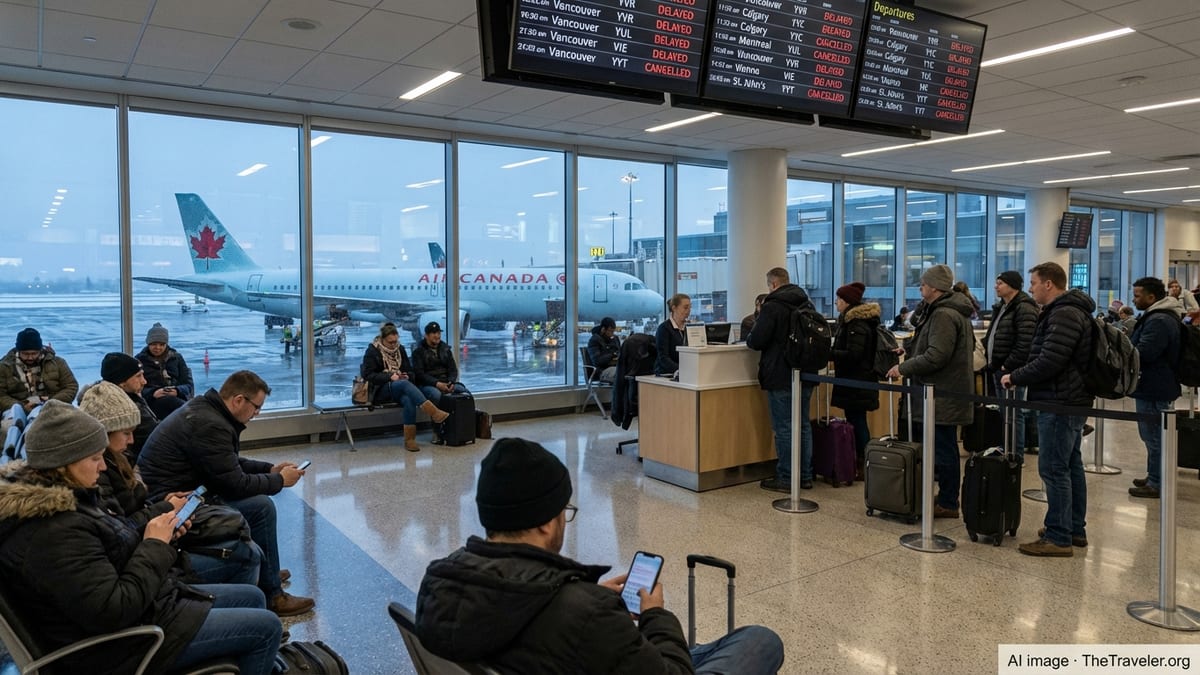
Network Disruptions Ripple Across Major Canadian Hubs
The latest disruption has hit Canada’s busiest aviation corridors, with Toronto Pearson and Vancouver International among the worst affected according to publicly available flight-tracking snapshots. Montreal, Ottawa and Edmonton are also reporting significant schedule changes, while additional cancellations and delays are being recorded at regional gateways that feed into these hubs.
Operational data indicates that the 209 cancellations and 671 delays are spread across domestic, transborder and select international routes. High-frequency shuttle links between Toronto, Montreal and Ottawa, as well as connections from Western Canada into Vancouver and Edmonton, appear particularly exposed when timetable pressure builds, compounding missed connections and extended ground holds.
Smaller and more remote communities are also feeling the impact. When major hubs experience large blocks of cancellations and rolling delays, regional services are often re-timed or dropped from the schedule as airlines reposition aircraft and crew, leaving travelers with fewer same-day alternatives and longer rebooking windows.
The scale of today’s disruption follows a pattern seen in several recent operational episodes where Canadian airports recorded hundreds of delays and dozens of cancellations in a single day, with knock-on effects lasting well beyond the initial weather or technical trigger.
Multiple Airlines Affected, From Flag Carrier to Regional Operators
Publicly available information shows that the latest wave of disruption is not confined to a single airline. Air Canada, Porter Airlines, Jazz Aviation and regional operator Air Borealis are among the carriers with affected services, alongside other domestic and international airlines that use Canada’s major hubs as transfer points.
Air Canada, as the country’s largest carrier, often accounts for a substantial share of schedule changes during major disruption events, given its dense network centered on Toronto, Montreal and Vancouver. Jazz, which operates many regional routes under capacity-purchase agreements, tends to see secondary impacts as aircraft and crews are reallocated to protect core trunk services.
Porter Airlines, which has rapidly expanded from its traditional regional footprint into a broader network linking Eastern and Western Canada, has also been sensitive to periods of intense disruption. When large numbers of flights are delayed or cancelled in short succession, smaller fleets can struggle to absorb the shock, especially where there are limited spare aircraft or crews available at outstations.
Air Borealis and other northern and Atlantic operators play a critical role in serving remote communities, where even a single cancellation can have outsized consequences. For passengers in these regions, missed medical appointments, delayed cargo and disrupted school or work travel plans can linger long after schedules at the big hubs appear to normalize.
Weather, Congestion and Operational Strain Drive Ongoing Volatility
Recent coverage of Canada’s air travel performance in 2026 highlights the combined impact of harsh seasonal weather, congested airspace and lingering operational fragilities. In several earlier episodes this year, data published by travel and aviation outlets documented days with hundreds of delays and dozens of cancellations at Toronto, Vancouver and Montreal, often tied to winter storms or rapidly changing conditions.
When snow, freezing rain or high winds sweep across multiple regions at once, airports frequently resort to slower departure and arrival rates, runway closures or de-icing queues. Even a few hours of constrained capacity can create a backlog that spills into subsequent waves of flights, leading to rolling delays that persist into the evening and, in some cases, force preemptive cancellations for the following day.
Beyond weather, airlines and airports continue to navigate tight staffing levels in some operational areas, including ground handling, maintenance and air traffic control support. Reports indicate that when irregular operations hit, these constraints can slow recovery, particularly if aircraft end up out of position or if crews run up against duty-time limits before schedules can be fully restored.
The result for travelers is a network that can appear stable on paper yet remains vulnerable to sudden, large-scale disruption. The current tally of 209 cancellations and 671 delays underscores how quickly that vulnerability can translate into stranded passengers and crowded terminals when multiple stressors coincide.
Stranded Passengers Face Long Waits, Rebookings and Accommodation Challenges
With hundreds of flights disrupted across multiple cities at once, passengers are encountering long customer service queues, limited same-day rebooking options and, in some cases, difficulty securing hotel rooms near major airports. Families returning from holidays, business travelers and international passengers on tight connections are among those most affected.
Published accounts from previous disruption days in Canada show that travelers often face rebookings spread over several days when large portions of the schedule are wiped out. This is especially true on routes with limited daily frequencies or for passengers attempting to coordinate onward connections in Europe, the United States or within Canada’s northern and Atlantic regions.
Airlines operating in Canada are subject to national passenger protection regulations that set out entitlements for food, accommodation, rebooking and, in some circumstances, financial compensation. However, what travelers receive can depend on the specific cause of the disruption, whether it was within the carrier’s control and the size of the airline involved, which can be confusing in the midst of a fast-moving operational crisis.
Public guidance from consumer advocates and travel law specialists consistently encourages passengers to document all expenses, keep boarding passes and booking confirmations, and follow up directly with airlines after travel is complete, especially when ground staff and call centers are overwhelmed on the day of disruption.
What Today’s Turbulence Signals for Canada’s Summer and Winter Travel Seasons
The latest bout of nationwide disruption is renewing questions about how resilient Canada’s air travel system will be heading into the peak summer season and the next winter period. Episodes in early 2026 with several hundred delays and significant cancellation totals have already illustrated how quickly weather systems or operational bottlenecks can upend travel plans.
Industry observers note that continued growth in passenger volumes, combined with the tight scheduling used to maximize aircraft utilization, leaves little slack in the system to absorb cascading delays. When a single day produces more than 200 cancellations and more than 600 delayed flights, recovery can stretch well beyond the initial disturbance, particularly for smaller carriers and regional routes.
Some analysts argue that additional investment in de-icing infrastructure, airport capacity and staffing resilience could help smooth the worst impacts of these events, while others point to the need for more transparent, real-time communication tools that allow passengers to make informed decisions earlier, such as proactively rebooking or adjusting itineraries before they reach the airport.
For now, travelers moving through Canadian airports on days marked by widespread disruption are likely to continue facing longer lines, tighter connection margins and a greater risk of being stranded. The current wave of 209 cancellations and 671 delays serves as another reminder that flexibility, contingency planning and close monitoring of flight status remain essential parts of flying across Canada.