


More news on this day
Canada is quietly warning its citizens that being Canadian will not shield them from harsh foreign justice systems, after revelations that corrupt airport staff allegedly switched baggage tags at Toronto Pearson International Airport, leaving unsuspecting travelers detained overseas on serious drug charges.
Get the latest news straight to your inbox!
CTV Investigation Exposes Baggage Tag Switching Scheme
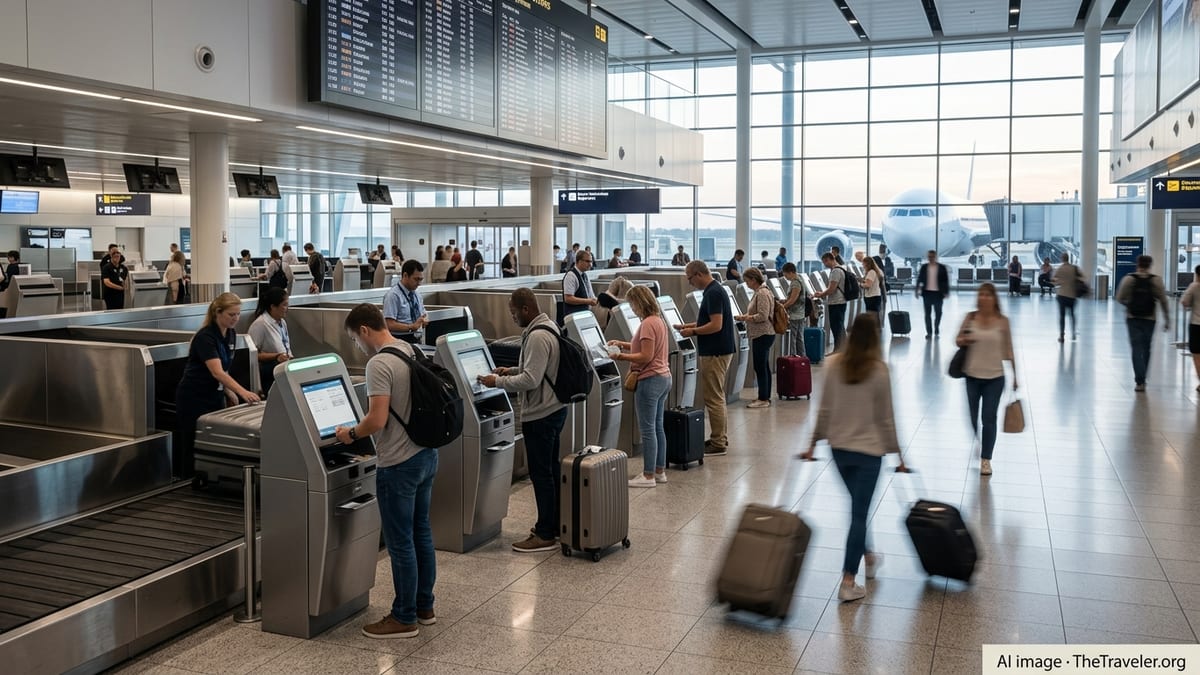
Recent investigative reporting in Canada has detailed how luggage tags were allegedly removed from legitimate passengers’ checked bags at Toronto Pearson International Airport and placed on suitcases packed with drugs. Travelers only discovered the switch when they arrived abroad to find themselves linked to bags filled with contraband, in some cases several kilograms of narcotics.
Publicly available court and police records cited in the coverage describe Royal Canadian Mounted Police investigations involving Pearson-based baggage handlers and ramp workers, including employees of ground service firms and at least one airline staff member. In one case, cannabis was routed from Canada to Europe using tags taken from the bags of unsuspecting travelers. Online discussions summarizing the reporting indicate that at least a dozen Canadians have been detained or arrested overseas over the last year after arriving to find their names on drug-laden luggage.
The allegations have reignited long-standing concerns about security in restricted airport zones. Earlier parliamentary and security reviews had already questioned screening practices for staff with access to aircraft and baggage systems. The new cases suggest that vulnerabilities identified years ago remain only partially addressed, despite the high volumes of international traffic that pass through Canada’s largest hubs.
While police operations have led to several arrests, experts quoted in recent coverage say the true scale of the problem is difficult to quantify. Organized crime groups are believed to target baggage handlers precisely because they can manipulate luggage flows out of public view, and because any resulting suspicion is likely to fall on the ticketed traveler whose name appears on the tag.
Ottawa’s Message: Your Passport Will Not Protect You
Against this backdrop, Canadian federal agencies have sharpened the language of general travel security messaging. Official safety pamphlets and online advisories stress that Canadians abroad are fully subject to the laws of their destination countries, and that consular support cannot erase criminal charges or override local investigations.
Recent guidance for travelers emphasizes that foreign authorities will treat any person linked to a suspect bag as responsible until investigations prove otherwise. Publicly available documents from Canadian security and foreign affairs departments underscore that penalties for drug trafficking and related offenses can be severe in many jurisdictions, including lengthy prison terms and, in some countries, capital punishment.
The emerging narrative is blunt: nationality is no shield. Travel information produced by Canadian agencies already advises citizens to monitor their belongings closely in airports and reminds them that legal standards of evidence, due process, and detention conditions can differ sharply from those at home. The new baggage-switch revelations have given that long-standing message a sharper edge and a concrete, highly visible example.
Analysts note that the situation is particularly awkward for Ottawa because the alleged tampering occurred on Canadian soil, in facilities subject to Canadian regulation. The risk to travelers ultimately materializes abroad, where consular officials have limited leverage once local police and prosecutors are involved.
Airports Under Pressure Over Employee Screening and Oversight
The controversy is also fueling renewed scrutiny of airport security culture and hiring practices. An earlier high-profile theft of gold and cash from Toronto Pearson had already focused attention on how thousands of workers obtained security clearance despite past warning signs. The new reporting on baggage-tag switching has added concerns about routine oversight of staff working around aircraft and in baggage halls.
Industry commentators observing the Canadian situation point out that modern airports rely on a patchwork of employers, including airlines, ground handling contractors, caterers, and retail concessions. Security checks are typically centralized, but day-to-day supervision of employees with airside access can vary widely. When something goes wrong, it can be difficult for passengers and even investigators to determine who controlled which part of the baggage chain.
Travel forums and aviation professionals reacting to the reports describe a system in which most employees perform their roles properly but where small groups of insiders can still exploit gaps in surveillance, staffing shortages, or outdated procedures. Suggestions from industry voices include expanding random screening of staff entering secure areas, tightening background checks, and ensuring that access privileges are rapidly revoked when concerns are raised.
Canadian airport authorities and transport regulators now face pressure to demonstrate that they can reduce insider threats without further disrupting operations that have already struggled with congestion, delays, and lost luggage in recent years. Observers say the handling of the baggage-switch affair will be closely watched by other jurisdictions dealing with similar insider-risk challenges.
What Canada’s Updated Advice Means for Ordinary Travelers
While the alleged corruption took place in Canada, federal guidance is framing the scandal as a broader lesson for anyone flying internationally. Recent Canadian travel security publications advise passengers to keep their checked-bag tags in sight during check-in, verify that the label printed at the counter matches their itinerary, and document their luggage with photos before it disappears behind the conveyor belt.
Security advisories also encourage travelers to minimize the use of checked luggage when practical, especially on trips to destinations with strict or opaque criminal justice systems. Where checking bags is unavoidable, travelers are urged to use distinctive identifiers on their suitcases and to report any irregularities, such as damaged or replaced tags, to airline staff before leaving the baggage area.
Canada’s messaging further highlights the importance of preparing for worst-case scenarios abroad. This includes sharing itineraries with trusted contacts, understanding local legal risks, and purchasing travel insurance that covers legal assistance. Guidance from federal agencies stresses that a Canadian passport primarily facilitates travel and access to consular services, but does not provide immunity from investigation or prosecution.
Consumer advocates note that, so far, there is limited clarity about compensation or recourse for travelers whose trips are derailed by criminal schemes involving airport staff. While civil lawsuits and insurance claims may eventually establish precedents, current advice focuses on prevention rather than post-incident remedies.
Global Repercussions for Canada’s Reputation as a Transit Hub
The baggage-switch revelations arrive at a delicate moment for Canada’s aviation and tourism sector. Toronto Pearson and other major Canadian airports serve as key gateways between North America and Europe, the Caribbean, and parts of Asia. Any perception that baggage systems can be co-opted by organized crime risks damaging confidence among international carriers, foreign regulators, and high-spending passengers.
Travel industry observers warn that if more cases emerge of non-Canadians being implicated in drug smuggling schemes that originate in Canada, foreign governments could respond with heightened screening of flights from Canadian cities or additional questioning of passengers transiting via Canadian hubs. That would add friction to itineraries and potentially push airlines and travelers to favor alternative routes.
Domestic commentators argue that the episode should serve as a catalyst for a broader reassessment of how Canada manages security in critical transport infrastructure, from airports to seaports and rail hubs. They contend that complacency around insider threats could carry far-reaching economic and diplomatic consequences if left unchecked.
For now, Canada’s sharpened travel messaging captures the new reality for its citizens: even if a crime originates in a secure zone at home, the legal battle may be fought in a foreign courtroom. The warning that “being Canadian will not protect you abroad” is intended to sound stark, and the baggage-switch scandal shows why many policy watchers believe it is no exaggeration.