


More news on this day
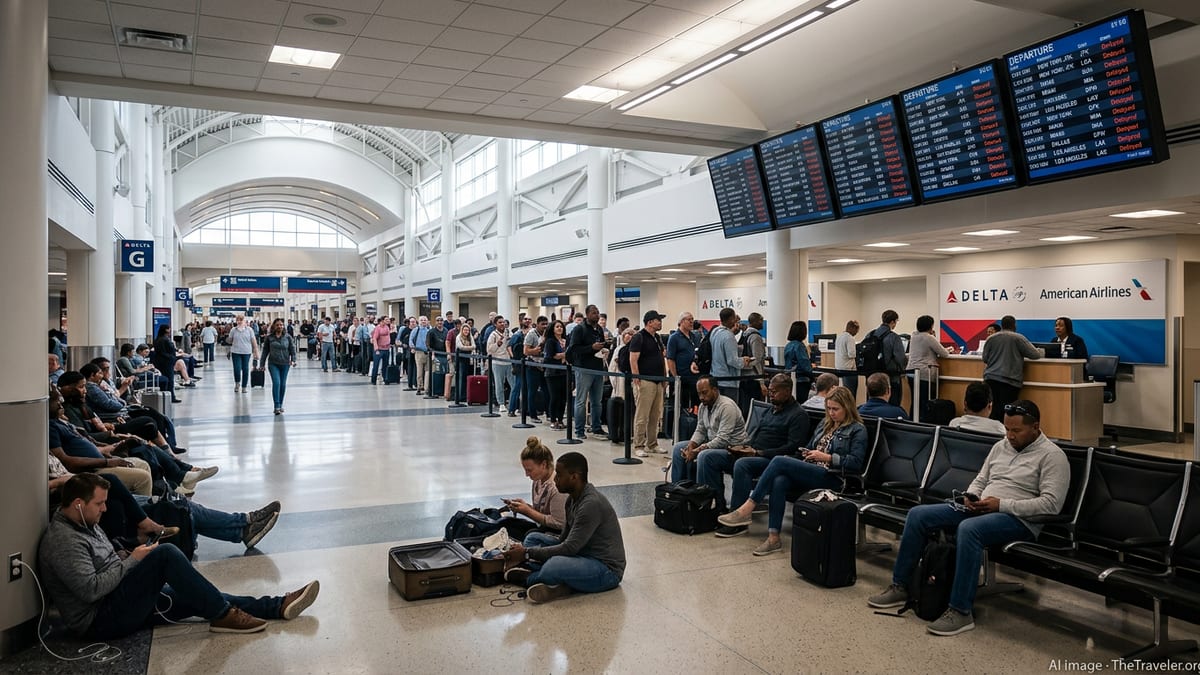
Thousands of international tourists have been left stranded in Phuket after a fresh wave of disruptions at key Middle East transit hubs triggered more than 200 flight cancellations and diversions across routes connecting Thailand with Europe and beyond, according to aviation tracking data and local media reports.
Get the latest news straight to your inbox!
Middle East Hub Collapse Ripples Into Thailand
The latest bout of travel turmoil stems from a sharp escalation in the Middle East crisis, which has repeatedly forced airspace closures and heavy restrictions across parts of the Gulf. Industry assessments describe a functional breakdown of some hub operations, with long haul traffic between Europe and Asia rerouted or cut altogether as carriers attempt to avoid conflict zones and soaring war risk costs.
Executive briefing papers on the crisis describe connectivity between Asia, Africa and Australasia via Middle East hubs as effectively severed through the second quarter of 2026, with many airlines shifting capacity away from the region. Analysts note that European and Asian leisure destinations that rely on Gulf stopovers have been among the hardest hit, as itineraries built around one or two big transit airports no longer operate as planned.
Thailand, which markets itself heavily to long haul visitors connecting through Gulf carriers, is now seeing the downstream effect. Tourism and aviation analyses published in June highlight that long haul arrivals are already under pressure, and the latest wave of hub disruptions is compounding schedule instability just as the region moves into the busy northern summer period.
For travelers in Phuket, the collapse of previously reliable connections via Doha, Abu Dhabi and other Gulf hubs has translated into sudden cancellations, missed onward flights and multi day waits for alternative routings, much of it funneled at short notice through Bangkok.
Phuket Bottleneck: 5,000 Stranded as Bangkok Handles 200-Flight Shock
Local tourism coverage and airport-focused reporting indicate that as many as 5,000 tourists are currently stuck in Phuket, unable to secure immediate onward travel to Europe or the Middle East. The majority of affected passengers appear to hold tickets on itineraries that originally routed through Gulf hubs now facing severe operational constraints.
Bangkok’s main international airport is absorbing much of the disruption, with aviation monitoring services pointing to around 200 flights cancelled, heavily delayed or rerouted over a short window as carriers attempt to re-stitch schedules. These include widebody services to European gateways, regional flights linking to alternative hubs such as Istanbul and Singapore, and additional domestic services used to reposition stranded travelers.
Publicly available information shows that several airlines have introduced ad hoc recovery flights to and from Bangkok in recent months to move displaced passengers, even as they curtail or suspend some Middle East operations. While these extra services help reduce backlogs, they also create temporary waves of congestion in Bangkok that can take days to clear, especially when aircraft and crew are already stretched.
For travelers stuck in Phuket, the bottleneck effect is particularly acute. The island’s airport is one of Thailand’s busiest tourism gateways, but it relies heavily on connections through external hubs. When those hubs falter, the local system rapidly clogs with passengers competing for a limited number of seats out via Bangkok, Seoul, Singapore or other alternative transit points.
From Runway Incidents to War Risk: A Fragile Aviation Chain
The current disruption comes on top of a series of recent operational shocks that have highlighted just how fragile regional aviation chains can be. In March, a disabled aircraft incident in Phuket forced a temporary runway closure, prompting delays and diversions that rippled across domestic and international services. Reports at the time noted how quickly queues built inside the terminal when only a handful of widebody flights were affected.
By comparison, the present crisis is more systemic. Industry analyses of the Middle East conflict cite tens of thousands of flights rerouted or cancelled globally, elevated fuel prices and sharp increases in war risk insurance premiums. These factors push some carriers to thin out their schedules, concentrate on a smaller number of safe corridors and park marginal routes, leaving leisure markets like Phuket with fewer options.
Travel and hospitality impact assessments also estimate that major Gulf hubs have at times been operating at barely half of pre-war capacity, with daily reroutes adding hundreds of thousands of extra kilometers to flight paths. This creates knock-on problems across aircraft rotations and crew duty hours, making it much harder for airlines to recover quickly once a disruption hits.
In this context, the sight of thousands of stranded holidaymakers in Phuket and a 200-flight backlog flowing through Bangkok is a visible symptom of a deeper structural strain. The system has very little spare capacity, so any large-scale hub failure quickly triggers a cascade of missed connections and stranded passengers across multiple continents.
Scramble for Seats: Passengers Turn to Alternative Hubs
As the Gulf routings falter, many travelers are turning to alternative paths out of Thailand. Publicly shared itineraries and forum discussions describe passengers rebooking itineraries via East Asian and European hubs such as Seoul, Istanbul and major Chinese cities, often at short notice and at significantly higher prices.
Some long haul carriers that do not depend on Middle East stopovers are benefitting from this sudden demand, adding capacity where possible or upsizing aircraft on key Bangkok routes. Aviation briefings note that non-Gulf hubs in Asia and Europe are increasingly positioning themselves as safer, more reliable bridges between the continents, though their own systems face mounting congestion as new flows are redirected through them.
For leisure travelers and tour operators, the immediate challenge is uncertainty. Ticket holders report repeated reissues as airlines adjust routings, while package tour customers are negotiating with agents for extended hotel stays, partial refunds or rerouting via entirely different continents. Travel insurance fine print has come sharply into focus, as policies vary widely in how they treat war-related disruption and airspace closures.
The situation has also exposed how dependent many long haul visitors to Phuket are on a handful of high volume hub-and-spoke networks. Analysts argue that destinations served primarily via one or two Gulf hubs are inherently vulnerable to geopolitical shocks, and that rebuilding connectivity through a broader mix of direct flights and non-Gulf hubs will be essential over the medium term.
Thailand’s Tourism Strategy Tested by Global Aviation Turbulence
The disruption arrives at a sensitive moment for Thailand’s tourism recovery. Recent forecasts from industry stakeholders indicate that long haul arrivals were already expected to ease slightly in 2026 amid fuel price volatility and global economic headwinds. The Middle East crisis is now adding a fresh layer of complexity to that outlook.
Tourism planners have been exploring ways to diversify access to key resort areas, including plans to strengthen regional airports and introduce new links across the Andaman coast. Proposals for enhanced connectivity between Krabi and Phuket, along with efforts to expand services from secondary international gateways, are framed as steps toward reducing dependence on a narrow set of long haul transit hubs.
At the same time, the current episode underscores the importance of clear communication with visitors. Public advisories and airline notices are encouraging travelers to monitor itineraries closely, build in longer connection times and consider routing options that avoid known conflict zones. Travel industry groups are also urging better coordination between carriers, tourism bodies and accommodation providers so that stranded guests, like the thousands now waiting in Phuket, can access temporary support more quickly.
With peak travel season approaching for many European markets, aviation analysts suggest that more turbulence is likely in the months ahead. For destinations like Phuket, the immediate priority is clearing the current backlog of stranded passengers. The longer-term test will be whether Thailand can adapt its tourism and air connectivity strategy to a world where major hub disruptions may become far more common.