


More news on this day
Travelers moving through Adelaide International Airport on 11 June 2026 are facing widespread disruption as at least five flight cancellations and multiple delays involving Alliance Airlines, Qantas and partner carriers ripple across key domestic and international routes linking Perth, Melbourne, Canberra, Alice Springs, Broken Hill and Indonesia.
Get the latest news straight to your inbox!
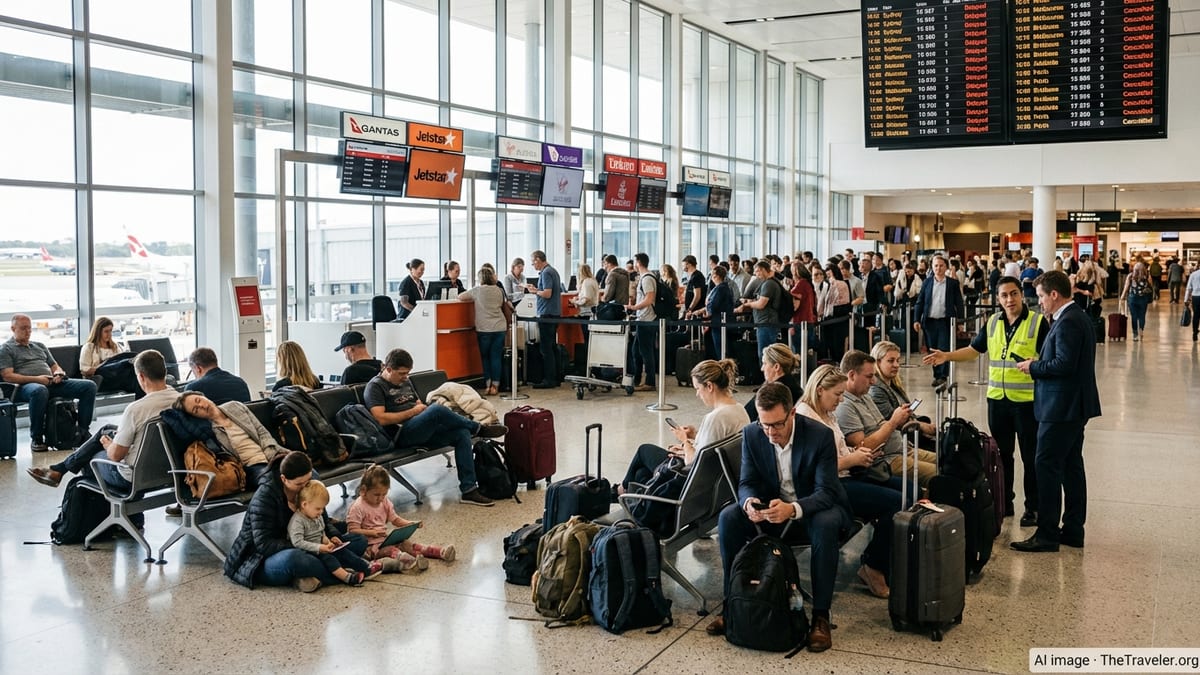
Cluster of Cancellations Hits Alliance and Qantas Services
Publicly available flight-tracking data and schedule information for 11 June indicate that a series of same-day cancellations has affected at least five services touching Adelaide, with Alliance Airlines and Qantas among the most heavily impacted operators. The pattern shows several regional and domestic sectors scrubbed from the timetable, particularly those feeding smaller communities and onward connections.
The cancellations are concentrated on routes that typically support Adelaide’s role as a connector for South Australia, the Northern Territory and interstate hubs, including flights normally operating to or from Alice Springs, Broken Hill and other regional centers. The affected services include aircraft operating under Alliance Airlines as well as services marketed by Qantas and its regional arm on shared or contracted metal.
While the precise operational triggers vary by flight, the combined effect is a visible thinning of Adelaide’s usual midweek schedule. Passengers booked on morning and early afternoon departures have reported abrupt changes in status from scheduled or delayed to cancelled, with rebooking options often pushed several hours later or moved to alternative routings via larger hubs on the east or west coast.
Published travel alerts and airline advisory material emphasise that such short-notice cancellations can stem from a mix of operational constraints, including aircraft availability, crew resourcing and broader network adjustments. Industry data from recent months also points to a broader trend of capacity tightening across some Australian domestic corridors, making it more difficult for travelers to find like-for-like alternatives on the same day.
Major Domestic Links: Perth, Melbourne and Canberra Affected
The disruption at Adelaide is not limited to regional sectors. Flight-status boards and tracking services show that some of the airport’s busiest domestic connections, including services to Perth, Melbourne and Canberra, have also experienced delays and schedule changes on 11 June. In several cases, departure times have slid by 30 minutes or more, creating knock-on effects for passengers with tight onward connections.
Routes linking Adelaide with Melbourne and Perth are critical for both leisure and business travel, acting as gateways to long-haul international flights as well as to mining, resources and government-related traffic. When departures on these sectors are pushed back or consolidated, travelers may miss onward services or be forced to overnight in transit, especially where itineraries were ticketed separately.
According to recent performance data and publicly discussed network plans, Qantas has already been operating with a leaner domestic schedule during parts of 2026, following previous announcements about trimming capacity to manage costs and reliability. On days when disruptions emerge around a hub such as Adelaide, the reduced buffer in the system can quickly translate into a shortage of spare seats on alternative flights, amplifying the impact of even a small number of cancellations.
Canberra in particular has been highlighted in past discussions among frequent flyers as a route prone to delays and schedule reshuffles operated with smaller regional jets and turboprops. With Adelaide feeding multiple services to the national capital, any irregular operations at one end of the corridor can reverberate across both airports and into connecting networks further afield.
Regional Lifelines: Alice Springs, Broken Hill and Smaller Communities
For regional centers such as Alice Springs and Broken Hill, Adelaide functions as a vital lifeline, linking remote communities with specialist medical care, education and national transport networks. When services on these routes are disrupted, the consequences can extend beyond missed holidays to include postponed medical appointments or delayed freight and mail.
Schedule information and network maps show that Alliance Airlines and QantasLink play a central role in connecting Adelaide with inland destinations using smaller jets and regional aircraft. On 11 June, several of the affected flights fall into this category, tightening already limited options for same-day travel to and from the outback and regional South Australia.
Travel forums and previously published policy submissions have noted ongoing concerns about the reliability of some regional services, as well as the lack of a formal compensation scheme for delays and cancellations in Australia. In practice, this often means that while affected passengers can be rebooked or refunded, they may still face out-of-pocket costs for accommodation, meals and alternative transport when irregular operations occur at short notice.
The latest disruptions at Adelaide are therefore likely to resonate strongly in smaller communities where air services are already scarce and where flights frequently operate only a few times a week. For residents who rely on a single daily or near-daily service, the cancellation of even one sector can translate into waits of 24 hours or more before they can resume their journeys.
International and Indonesia-Bound Travelers Caught in the Ripple
The wave of irregular operations is also affecting travelers bound for Indonesia and other international destinations who rely on Adelaide as a starting point or a key domestic connection. Publicly available coverage of Adelaide’s recent growth underscores its expanding portfolio of routes into Asia, including services to Bali and other Indonesian gateways that depend on smooth domestic feed from cities across Australia.
When domestic flights from Perth, Melbourne, Canberra and regional centers into Adelaide are delayed or cancelled, passengers headed for Indonesian holiday destinations may find themselves arriving too late for their onward departure. In such cases, re-accommodation typically involves rerouting through larger hubs such as Sydney, Melbourne or Perth, which can add hours to total journey time and, at peak periods, leave limited seat availability.
Some travelers face an additional layer of complexity when itineraries are split across multiple tickets or different carriers, something that has become more common as passengers seek to manage costs. In these cases, missed connections caused by a delayed Adelaide leg may not automatically trigger rebooking on the international sector, leaving passengers to negotiate new tickets or make claims through travel insurance rather than through the airline operating the disrupted flight.
These challenges are particularly acute at the start of winter travel peaks, when demand for Bali and other Indonesian resorts climbs and load factors on popular departures rise. With Adelaide Airport posting record international passenger numbers through 2025 and into 2026, the margin for error during busy days has narrowed, making disruptions like those seen on 11 June especially disruptive for holidaymakers and tour groups.
What Passengers Can Do As Disruptions Continue
With airlines and airports cautioning that flight timings remain subject to change, travelers with bookings touching Adelaide in the coming days are being advised by publicly available guidance to monitor their flight status closely via official airline channels and departure boards. Same-day schedule shifts, equipment changes and rolling delays remain possible as operators work to recover their networks and reposition aircraft and crew.
Consumer guidance materials from airlines and aviation agencies generally recommend that passengers impacted by cancellations or long delays first check eligibility for free rebooking or refunds, and then contact their travel insurer if additional costs arise. Travelers booked on separate tickets for domestic and international legs are commonly urged to build in larger connection windows, particularly when connecting through busy hubs or during peak holiday seasons.
Experienced travelers posting publicly about similar disruption events also suggest arriving at the airport earlier than usual on days when irregular operations are reported, in order to secure seats on the first available alternatives if flights are consolidated. For those with critical connections, such as long-haul departures to Asia, Europe or North America, some trip-planning advice recommends scheduling an overnight stop in the gateway city rather than relying on tight same-day transfers.
As Adelaide International Airport continues to handle record traffic and a growing mix of domestic, regional and international services, travel analysts note that occasional disruption clusters like the one seen on 11 June are likely to remain a feature of the system. Passengers planning journeys through South Australia’s main aviation hub are being encouraged to factor this risk into their itineraries and to remain flexible when operational conditions change at short notice.