


More news on this day
Heightened regional tensions and evolving airspace advisories are again disrupting flights to and from Kuwait and Bahrain, as major global and Gulf carriers adjust routes, suspend services and warn passengers of possible last minute changes across the wider Middle East.
Get the latest news straight to your inbox!
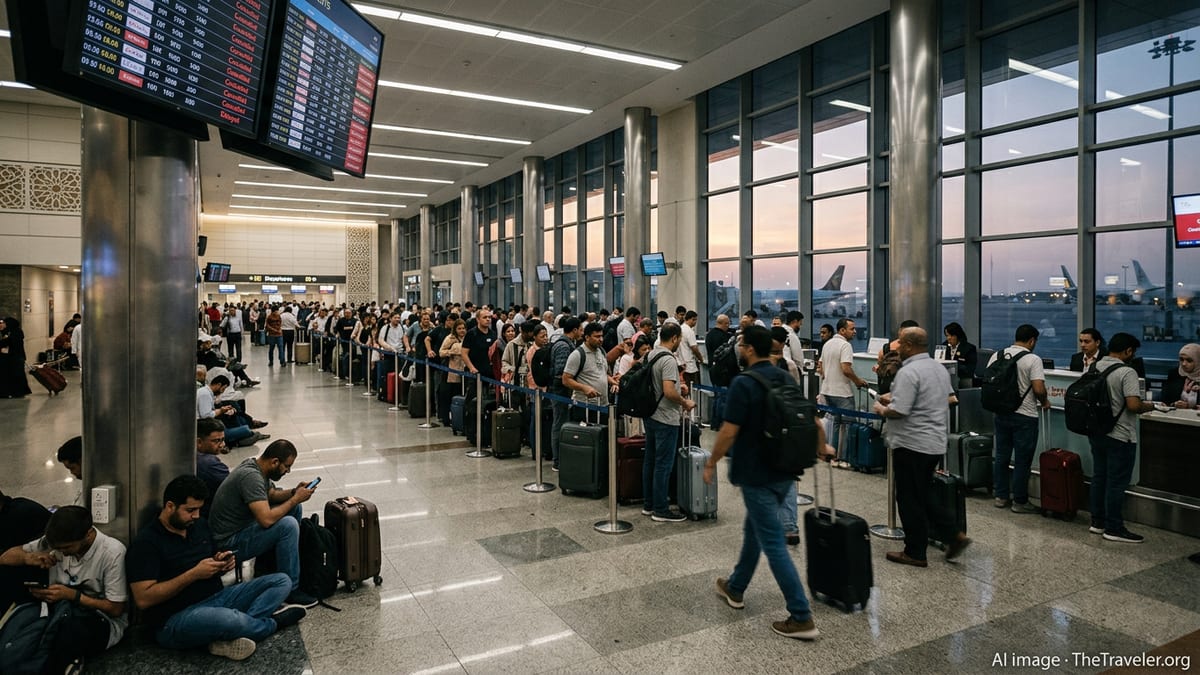
Regional Security Tensions Ripple Through Gulf Airspace
Recent military activity and retaliatory strikes linked to the 2026 Iran conflict have intensified pressure on Gulf airspace, with Kuwait and Bahrain among the states most directly affected. Publicly available timelines of the conflict show that both countries previously closed their airspace following attacks earlier in the year, contributing to a broader disruption on key Europe Asia and Africa Asia flight corridors.
While full blanket closures are no longer in place, aviation safety notices and government travel advisories indicate that the risk environment remains volatile. The European Union Aviation Safety Agency has extended a warning that covers airspace over Kuwait, Bahrain and neighboring Gulf states until at least the end of August, citing the continuing possibility of military activity and missile or drone incidents along regional flight paths.
Government travel advice from several countries now highlights the potential for sudden airspace restrictions, flight cancellations and diversions affecting Kuwait City and Manama, particularly if tensions escalate or new security incidents occur. Travelers are being urged to treat current operations as subject to short notice change rather than fully stable schedules.
These warnings feed into a wider pattern across the Middle East, where air travel has been repeatedly disrupted since late February. Analysts note that the Gulf region handles a significant share of global connecting traffic, so any instability in Kuwait or Bahrain can quickly affect journeys far beyond the immediate neighborhood.
Airlines Suspend, Reroute and Trim Services
Airlines based in the Gulf and further afield are continuing to recalibrate their networks in response to operational constraints around Kuwait and Bahrain. Recent travel alerts from regional carriers and global long haul airlines show a mix of temporary suspensions, reduced frequencies and rerouted services designed to keep aircraft away from the most sensitive airspace.
One major Middle Eastern airline group has confirmed the cancellation or suspension of selected services between the United Arab Emirates and both Kuwait and Bahrain following the latest security developments. According to published coverage in regional business media, these moves have been timed to coincide with intermittent airspace restrictions and rolling safety assessments, particularly on routes that pass near potential military targets.
Travel alerts from individual airlines serving Kuwait International Airport describe operations affected by earlier closures of Kuwaiti airspace and caution that residual delays and schedule changes may continue while networks are reset. Some carriers have introduced limited direct services or triangular routings via other Gulf hubs to maintain basic connectivity while avoiding the most constrained corridors.
In Bahrain, network updates from global airlines also point to selective suspensions and reduced capacity, especially on connecting services that rely on precise banked waves of arrivals and departures. Cargo and logistics operators have issued their own advisories noting that constrained bellyhold capacity and rerouting can lengthen transit times to and from Bahrain and Kuwait, even where passenger flights are still running.
Travel Advisories Tighten for Kuwait and Bahrain
Several governments have recently raised their formal travel advice levels for Kuwait and Bahrain in light of the deteriorating security climate. Public statements from foreign ministries indicate that both countries are now grouped with a cluster of higher risk Middle Eastern destinations where non essential travel is strongly discouraged or subject to an explicit “do not travel” designation.
Updated advisories for Kuwait refer to intensifying military strikes and reprisal attacks across the region, warning that airspace closures and flight cancellations may occur at short notice. Guidance for Bahrain similarly highlights the possibility that regional military activity could disrupt normal operations at Bahrain International Airport, including through temporary runway closures, diversions or ground holds during periods of heightened alert.
Separate worldwide caution notices issued by some governments emphasize that travelers transiting any Middle Eastern hub should be prepared for knock on effects, even if their final destination lies elsewhere. Advice commonly includes monitoring airline messages closely, planning for potential overnight layovers if connections are missed and ensuring that travel insurance covers disruption linked to conflict and security incidents.
Risk assessment providers tracking corporate and business travel have also noted a jump in alerts for both Kuwait and Bahrain. Recent commentary from these firms suggests that while day to day life may continue in many districts, the operational risk to aviation remains elevated, particularly where airports sit near military facilities or strategic infrastructure.
Knock On Effects for Global Routes and Connections
The disruptions affecting Kuwait and Bahrain are part of a larger reconfiguration of global flight paths as airlines work around constrained Middle Eastern airspace. Analysis of recent schedules and flight tracking data shows that many Europe Asia and Africa Asia services are flying longer southern or northern routes to avoid certain conflict adjacent zones, adding time and fuel burn to previously direct corridors.
Rerouting away from specific Gulf airspace sectors has created bottlenecks on remaining high altitude corridors, with some carriers spacing flights more widely to manage traffic and reduce operational risk. This can shrink the number of viable departure and arrival slots at busy hubs, which in turn reinforces decisions to suspend or limit services to airports such as Kuwait and Bahrain that would otherwise depend on tight connection banks.
Travel and logistics bulletins indicate that limited capacity into Bahrain and Kuwait is already contributing to tighter availability across the region. Cargo operators report that shipments may face delays or routing via alternative gateways in neighboring states, while passenger itineraries that once relied on smooth same day connections are increasingly vulnerable to disruption if any single leg is delayed.
Industry observers note that the timing of these disruptions overlaps with a peak summer travel season, amplifying the impact on leisure travelers, expatriate communities and migrant workers who typically transit Gulf hubs at this time of year. Even where flights operate broadly on schedule, longer routings and security procedures can translate into extended journey times and more crowded terminals.
What Travelers Headed to Kuwait or Bahrain Should Expect
For passengers planning trips involving Kuwait or Bahrain in the coming weeks, published guidance from airlines, airports and governments points to a need for flexibility. Carriers are encouraging travelers to reconfirm flight status repeatedly in the days and hours before departure, as adjustments to schedules or routings may be introduced with limited notice in response to security developments or updated safety advisories.
Many airlines have temporarily relaxed certain change and rebooking conditions for itineraries touching affected airports, allowing date or routing changes without standard penalties when services are curtailed. However, policies vary by carrier and fare class, so travelers are being advised in public information bulletins to study conditions carefully and retain documentation related to any cancellations or significant delays.
Given the raised risk levels in official travel advisories, some governments are asking their nationals to reconsider non essential travel to Kuwait and Bahrain altogether, or to ensure that contingency plans are in place if they decide to proceed. Recommendations commonly include ensuring that passports and visas remain valid for longer than the planned stay, holding extra funds for unexpected accommodation and being ready for itinerary changes that could extend time in transit.
For those who must travel, specialist travel risk assessments emphasize the value of building additional buffer time into itineraries that rely on Gulf connections, particularly when onward flights involve long haul sectors to Europe, North America or East Asia. With global airlines continuing to reroute around parts of Middle Eastern airspace, Kuwait and Bahrain are set to remain focal points of aviation uncertainty, even as authorities and carriers work to keep essential links open.