


More news on this day
American Airlines flight AAL2992 operating from Dallas experienced an in-flight disruption that resulted in a diversion to Charlotte, according to live flight-tracking data and early media reports. The unscheduled stop altered travel plans for passengers and drew renewed attention to how diversions are managed across the U.S. air network.
Get the latest news straight to your inbox!
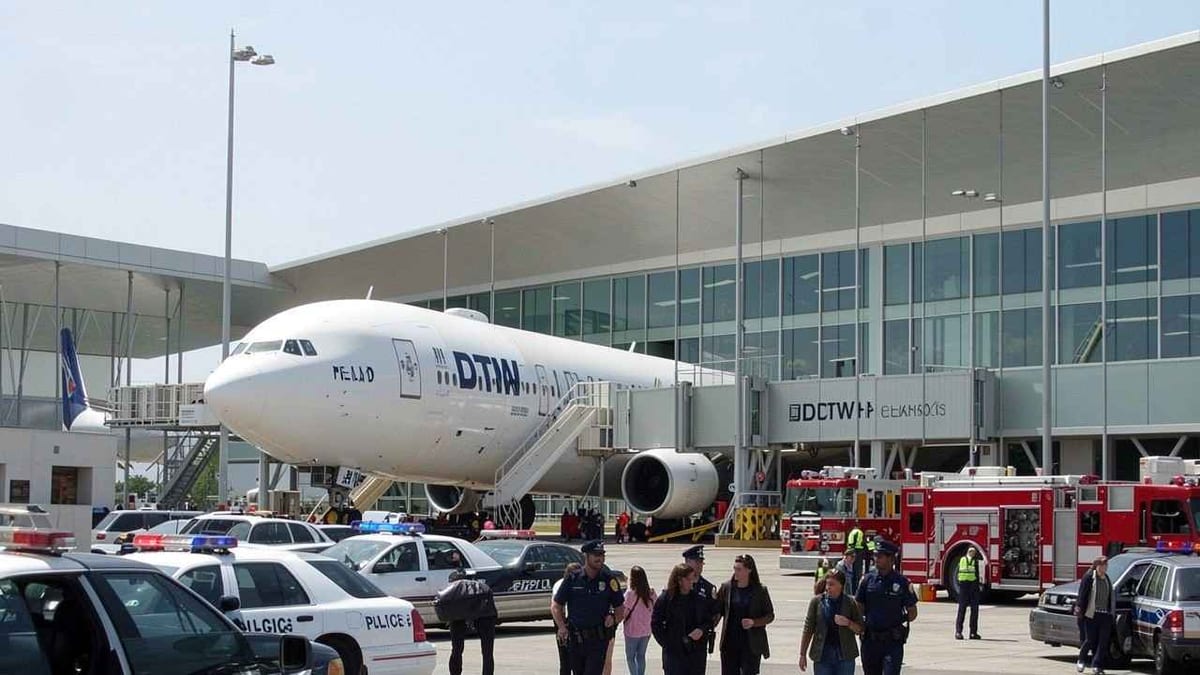
Diversion From Planned Route to Charlotte
Publicly available flight-tracking information shows that American Airlines flight AAL2992 departed from Dallas and was originally scheduled to continue on its planned route before diverting to Charlotte Douglas International Airport. The aircraft changed course en route and landed in Charlotte, where it remained on the ground while onward arrangements were made.
Initial reports indicate that the diversion occurred after departure rather than before pushback or taxi, meaning passengers were already airborne when the decision was taken to proceed to Charlotte. In line with standard operating practice, the flight crew would have coordinated with company dispatch and air traffic control to identify a suitable airport with the necessary runway length, ground handling and passenger facilities.
While specific details about the reason for the diversion of AAL2992 were not immediately available, historical operations data in the United States shows that the most common causes for diversions generally include medical concerns involving passengers or crew, adverse weather conditions, and potential technical or maintenance issues identified in flight.
Once on the ground in Charlotte, AAL2992 passengers faced schedule changes as airline staff worked to secure onward transportation. Some travelers were able to continue on later flights, while others encountered longer waits as the carrier adjusted its schedule around the disruption.
How U.S. Airlines Decide When to Divert
Industry guidance and publicly available airline policy materials describe in-flight diversion decisions as a balance of safety, aircraft performance and available airport infrastructure. Flight crews and company dispatchers monitor conditions along the route, including weather, air traffic constraints and any on-board issues that may require a change of plan.
In the case of a potential technical concern, procedures call for crews to follow checklists, consult with engineering and evaluate whether continuing, turning back or diverting is the most conservative option. For medical issues, many carriers use contracted medical advisory services that help assess a passenger’s condition and recommend whether the aircraft should land as soon as practicable so a traveler can receive treatment on the ground.
When weather is a factor, storm systems, low visibility, crosswinds or other unfavorable conditions at the destination can temporarily prevent safe landings. In those instances, dispatchers may direct flights to land at an alternate airport, as appears to have occurred with flight AAL2992’s decision to continue to Charlotte rather than its original endpoint.
Although diversions are disruptive, aviation safety data shows they are a routine part of large airline operations and are used as a preventive measure. The objective is to position the aircraft at an airport where it can be inspected, refueled if necessary, and where passengers can be accommodated as efficiently as possible.
Impact on Passengers and Operations
Diversions such as the one involving flight AAL2992 can trigger a series of knock-on effects for travelers. Passengers on the affected flight must disembark at an airport that may not be their planned destination, then wait for rebooking, hotel arrangements where applicable, or ground transportation. Connections on other flights can be missed, leading to further itinerary changes.
For the airline, a diversion means an aircraft is now out of its usual rotation. This can complicate crew scheduling and aircraft availability, especially at busy hubs like Charlotte where operations are already tightly choreographed. Subsequent flights using the same aircraft or crew may experience delays or equipment swaps as the schedule is rebuilt.
Travelers impacted by diversions typically turn to flight status tools, mobile apps and airport information boards to understand their new options. Consumer-rights information from regulators outlines that compensation and accommodation policies vary depending on the circumstances and whether the cause is within the airline’s control or the result of weather and other factors.
Recent academic work analyzing flight delay and disruption patterns across major U.S. carriers has highlighted how even a single irregular operation can ripple through the network, affecting flights and passengers far beyond the original route. Events such as the diversion of AAL2992 therefore become part of a broader picture of operational resilience.
Charlotte’s Role as a Major Diversion Gateway
Charlotte Douglas International Airport serves as one of American Airlines’ largest hubs, which makes it a frequent diversion point for flights traversing the eastern half of the United States. The airport’s runway capacity, maintenance facilities and extensive bank of connecting flights give operators flexibility when an aircraft needs to land away from its intended destination.
When a diverted aircraft arrives at a hub like Charlotte, ground teams can typically support a wider range of technical inspections and maintenance checks than might be available at smaller regional airports. In many cases, airlines can either repair issues on site or substitute another aircraft to continue carrying passengers to their final destinations.
The hub structure also allows carriers to distribute displaced travelers across multiple onward flights. For those arriving on a diverted service such as AAL2992, that can mean access to additional options later the same day or on subsequent days, depending on seat availability and broader operational pressures.
However, periods of severe weather or peak travel demand can limit this flexibility, resulting in longer waits for rebooking. Passenger accounts from recent disruption events at large hubs describe crowded terminals, long customer-service lines and limited same-day alternatives when schedules are already tight.
What Travelers Can Do When Their Flight Diverts
Travel-advice resources consistently recommend that passengers keep airline apps and contact details handy in case of in-flight changes such as a diversion. Once an aircraft lands at an unplanned airport, rebooking can often be completed more quickly via digital tools than by waiting in line at a service desk.
Experts also suggest monitoring weather patterns and checking the status of both the departure and arrival airports on the day of travel. While most diversions cannot be predicted by individual passengers, an awareness of systemwide disruptions can help travelers anticipate possible delays and build additional time into tight connections.
For those aboard American Airlines flight AAL2992, the diversion to Charlotte underscored how air travel plans can shift with little notice, even on routine routes. As airlines continue to refine their disruption-management strategies, diversions remain an important safety tool and a recurring feature of modern commercial aviation.