


More news on this day
One of Ireland’s most celebrated coastal drives, the network of scenic roads skirting Connemara’s Atlantic edge, is coming under renewed scrutiny as fresh research on coastal erosion warns that hundreds of kilometres of roadway across the country could be lost to the sea in the coming decades, unsettling travel plans for visitors who rely on the wild west’s fragile road network.
Get the latest news straight to your inbox!
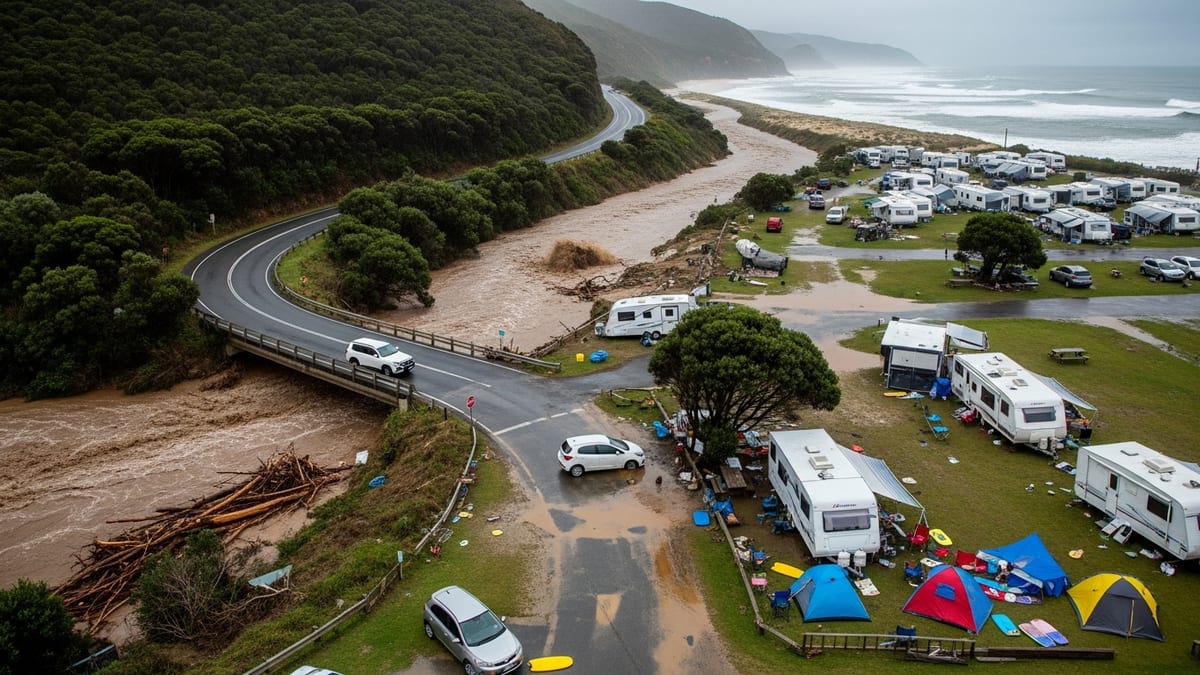
Coastal Erosion Research Puts Connemara Routes in the Spotlight
New national research on coastal change has highlighted an urgent need for Ireland to plan for the relocation of homes, roads and key infrastructure exposed to worsening erosion and sea level rise. The study, prepared for the Climate Change Advisory Council, outlines how entire stretches of coastal transport links could face managed retreat over the next 25 years, with western seaboard counties among the areas most exposed.
Published coverage of the findings indicates that thousands of properties and hundreds of kilometres of roadway are potentially at risk. While the research assesses Ireland’s coastline as a whole, it has sharpened attention on tourism-dependent regions such as Connemara, where narrow coastal roads hug sandy bays and peat bogs that are already vulnerable to Atlantic storms.
Tourism and climate policy documents for 2025 to 2030 acknowledge that popular coastal destinations in counties such as Galway, Clare, Kerry and Donegal will feel the impacts of erosion and more frequent extreme weather. For Connemara, where the visitor experience is built around dramatic sea views, islands and peninsulas, that vulnerability is not just an environmental issue but a transport and holiday-planning concern.
Experts involved in coastal studies argue that Ireland needs to move from simply monitoring erosion to creating legal and financial mechanisms to relocate at-risk roads and other assets. For drivers tracing the famed loops around Clifden, Roundstone or the Renvyle peninsula, that shift could eventually translate into detours, road realignments or weight limits during severe weather.
Iconic Atlantic Drives Face Growing Weather Disruption
Recent winters and storm seasons have already shown how quickly Irish transport networks can be thrown off course by wind, rain and coastal flooding. National emergency briefings have repeatedly warned motorists to avoid coastal edges, piers and low-lying promenades during high tides, and to turn back where roads are flooded or undermined after heavy rain.
In Connemara, many of the most photogenic sections of road run close to the shoreline, across low-lying causeways or along cliff-backed bays. When strong Atlantic systems coincide with high seas, pooled water, debris and soft verges can make these stretches hazardous or temporarily impassable, even where no long-term structural damage is recorded.
Travel guidance aimed at bank holiday motorists in 2026 has already flagged that west-coast routes can become choke points when weather and congestion combine. Reports note that Ireland’s overall road death figures climbed in 2025, with busy holiday weekends disproportionately represented, adding another dimension to concerns about narrow, weather-affected rural roads used heavily by visitors unfamiliar with local driving conditions.
For international travellers plotting panoramic loops from Galway through Clifden, Kylemore and Killary Harbour, the message emerging from recent coverage is that these routes remain open and stunning, but more exposed to temporary disruption than in the past. Flexibility in timing, an eye on local forecasts and a willingness to reroute inland when necessary are becoming part of responsible trip planning.
Tourism Plans Seek Balance Between Access and Safety
Regional tourism strategies for the Connemara coast and islands, prepared in recent years by national tourism bodies, have placed great emphasis on keeping visitors connected to the shoreline. Proposals for new viewing points, upgraded lay-bys, improved signage and expanded walking and cycling links all assume that the coastal experience is central to the area’s appeal.
At the same time, more recent policy papers on tourism and climate adaptation acknowledge that parts of Ireland’s 5,800 kilometre coastline are already retreating. They point to sections in counties Galway, Clare and Kerry where erosion could begin to undercut roads and car parks that currently serve beaches, headlands and harbour villages.
In Connemara, this tension between access and safety is especially evident around low-lying stretches where the road runs just metres from the water or across reclaimed bogland. Publicly available planning documents stress the need to identify alternative alignments, shore up vulnerable sections or, in some cases, accept that certain viewpoints or loops may not be maintainable in their current form over the long term.
For now, investment is also flowing into parallel infrastructure that can reduce pressure on the most fragile roads. The Connemara Greenway, a developing 76 kilometre walking and cycling route following an old railway alignment between Galway and Clifden, is being promoted as a way to experience the landscape at a slower pace while diverting some traffic away from narrow coastal lanes during the peak season.
What Visitors Can Expect for Summer 2026 Trips
For travellers eyeing Ireland’s west coast this summer, there is no indication in current public information of an immediate large-scale closure of Connemara’s main touring roads. Access to headline attractions such as Connemara National Park, Kylemore Abbey and the Sky Road remains in place, and accommodation bases in Galway city, Clifden and Westport continue to market the region as a premier road-trip destination.
However, recent climate and infrastructure reporting suggests that visitors should prepare for more short-notice advisories, local diversions and occasional delays, particularly during and after stormy spells. Rural roads in the west can be quickly affected by surface flooding, fallen branches or minor subsidence, and recovery operations may take time in isolated areas.
Travel experts and motoring organisations routinely recommend that visitors build extra time into day-by-day itineraries, keep fuel tanks topped up in remote districts and avoid rigid, non-refundable bookings that depend on a single narrow road being open at a precise hour. For those planning tightly packed loops that attempt to combine long drives with multiple walks and sightseeing stops, the growing emphasis is on slowing down and allowing for unscheduled changes.
Insurance providers and tour operators are also paying closer attention to climate-related disruption. While standard policies still treat most weather-related detours as part of normal travel risk, an increasing number of packages and self-drive products highlight flexible cancellation terms or alternative touring suggestions if particular coastal sections become temporarily unsafe.
Long-Term Questions for Ireland’s Coastal Road Trip Image
The broader conversation now unfolding in Ireland about managed retreat and coastal relocation raises difficult questions for the image of the country as a land of limitless coastal road trips. Parliamentary debates, academic research and regional media reports all point to the likelihood that certain stretches of scenic roadway may, in time, need to be moved inland or surrendered to the sea entirely.
For Connemara, which features prominently in international marketing for the Wild Atlantic landscape, that prospect is particularly sensitive. Any major realignment of roads around famed viewpoints would alter how travellers experience the region, even if the underlying natural scenery remains unchanged.
Tourism planners argue in published documents that early, coordinated adaptation could help avoid abrupt closures later. By identifying alternative inland viewpoints, investing in off-road greenways and upgrading a network of parallel routes, they suggest that visitor access can be maintained even if some of today’s most precarious stretches of tarmac cannot be preserved indefinitely.
In the meantime, Connemara’s crumbling edges have become a symbol of a wider European challenge: how to welcome ever-growing numbers of coastal visitors while the very roads that carry them are increasingly shaped by wind, waves and a rapidly changing climate.