


More news on this day
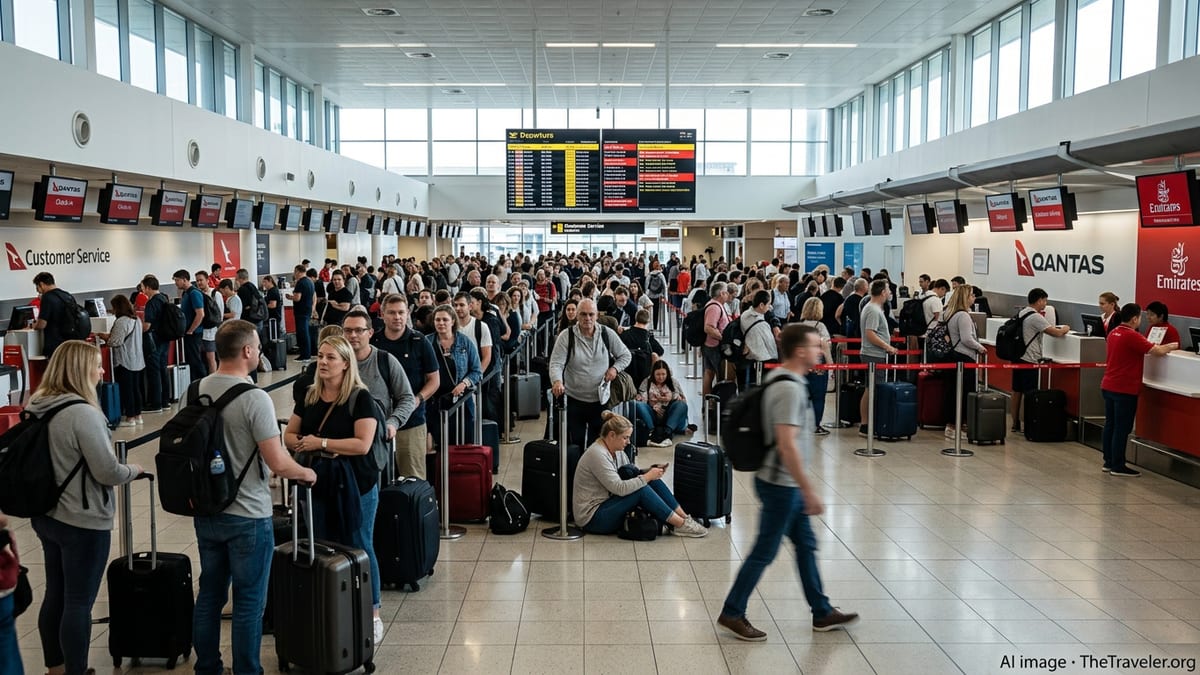
More than 30 flights were delayed at Sydney Airport after air traffic control staffing shortfalls disrupted operations, slowing aircraft movements and extending wait times for hundreds of passengers.
Get the latest news straight to your inbox!
Staffing gaps trigger fresh disruption at Australia’s busiest hub
According to local media coverage and publicly available flight-tracking data, a shortfall in available air traffic controllers at Sydney Airport led to delays affecting more than 30 services, primarily during the morning and early afternoon peak. The disruption resulted in a temporary reduction in the number of aircraft movements allowed per hour, forcing airlines to push back departure and arrival times.
Reports indicate that most affected flights were delayed by between 30 minutes and two hours, although some services experienced longer knock-on impacts as schedules backed up. The delays were spread across a mix of domestic routes and shorter international sectors, reflecting Sydney’s role as a key national and regional hub.
Published coverage notes that the incident is the latest in a series of operational challenges linked to air traffic control resourcing at Sydney, where demand has approached or exceeded pre pandemic levels. With the airport subject to a legislated cap of 80 movements per hour and a strict overnight curfew, any reduction in air traffic control capacity quickly translates into queues on the ground and in the air.
Air traffic control shortages under renewed scrutiny
Public documents and recent submissions to government consultations show that air traffic control staffing has been a persistent concern for the aviation sector in Australia. Sydney Airport and airlines have previously reported that controller shortages at the national air navigation provider have contributed to ground delay programs, extended holding and higher rates of delays and cancellations.
In evidence published over the past two years, airport operators have pointed to periods in which a significant share of operating hours at Sydney have been affected by staffing constraints in the control tower and approach control. These constraints can prompt regulators and traffic managers to limit scheduled arrivals and departures, even in clear weather, in order to maintain safety margins.
The latest disruption has again highlighted how sensitive Australia’s largest airport is to fluctuations in controller availability. With limited runway capacity, a capped hourly movement rate and strong demand in peak morning and evening waves, relatively small staffing gaps can ripple through the network and cause widespread inconvenience for travelers.
Impact on passengers and airline operations
Travelers caught up in the delays reported crowded departure lounges and longer than usual waits on the tarmac as aircraft held for revised take off slots. Publicly available information from airline apps and airport departure boards showed rolling delay notifications as traffic managers adjusted the flow of flights in and out of Sydney.
For airlines, the staffing related restrictions complicated aircraft and crew rotations across the domestic network. When flights depart late from Sydney, they often arrive late at regional and interstate destinations, where the same aircraft and crew may be scheduled to operate subsequent services. This can lead to secondary delays far from the original bottleneck.
Operational data published in recent months already shows that Sydney has been among Australia’s more delay prone airports, with on time performance under pressure from a combination of strong demand, weather and resourcing issues. The latest episode adds to a growing list of days when staffing constraints, rather than storms or low visibility, have been a primary cause of disruption.
Wider debate over reliability and consumer protections
The situation at Sydney feeds into a broader national debate about flight reliability and consumer rights. Australian lawmakers have recently considered proposals aiming to strengthen compensation and care obligations for passengers affected by long delays and cancellations, particularly when problems are linked to controllable operational factors rather than severe weather.
Policy papers and draft legislation have cited air traffic control staffing issues, crew shortages and tight scheduling as recurrent contributors to disrupted journeys. While safety remains the overriding priority in traffic management decisions, the frequency of delays connected to staffing shortfalls has raised questions about long term workforce planning and investment.
Travel industry observers note that more resilient staffing levels in air traffic control, combined with realistic airline schedules and adequate contingency, will be critical as passenger volumes continue to grow. Without those foundations, even routine peaks and minor operational hiccups can leave travelers facing missed connections, rebookings and additional accommodation costs.
What travelers using Sydney Airport should expect
For passengers planning to travel through Sydney in the coming days, publicly available guidance from airlines and airport operators emphasizes the importance of checking flight status regularly and allowing extra time at the airport, especially during busy morning and evening banks. While the latest staffing shortfall appears to have been managed within the same operating day, residual knock on delays can linger across subsequent rotations.
Travel planners suggest that those with critical same day connections build in generous buffers and consider earlier departures where possible. Passengers on domestic services connecting to international flights are often advised to opt for longer connection windows when booking, particularly through peak travel periods such as school holidays and long weekends.
As the aviation sector continues to rebuild and expand, the episode at Sydney Airport underlines how crucial behind the scenes roles like air traffic control are to the travel experience. For now, travelers can expect that occasional days of disruption will remain a feature of flying in and out of Australia’s busiest gateway until staffing and capacity better align with demand.