


More news on this day
Passengers traveling through Paris Charles de Gaulle on July 5 and 6 are facing a fresh wave of disruption, with dozens of cancellations and delays affecting flights operated by Air France, its regional arm HOP, and United Airlines on routes linking France with North America, Europe and North Africa.
Get the latest news straight to your inbox!
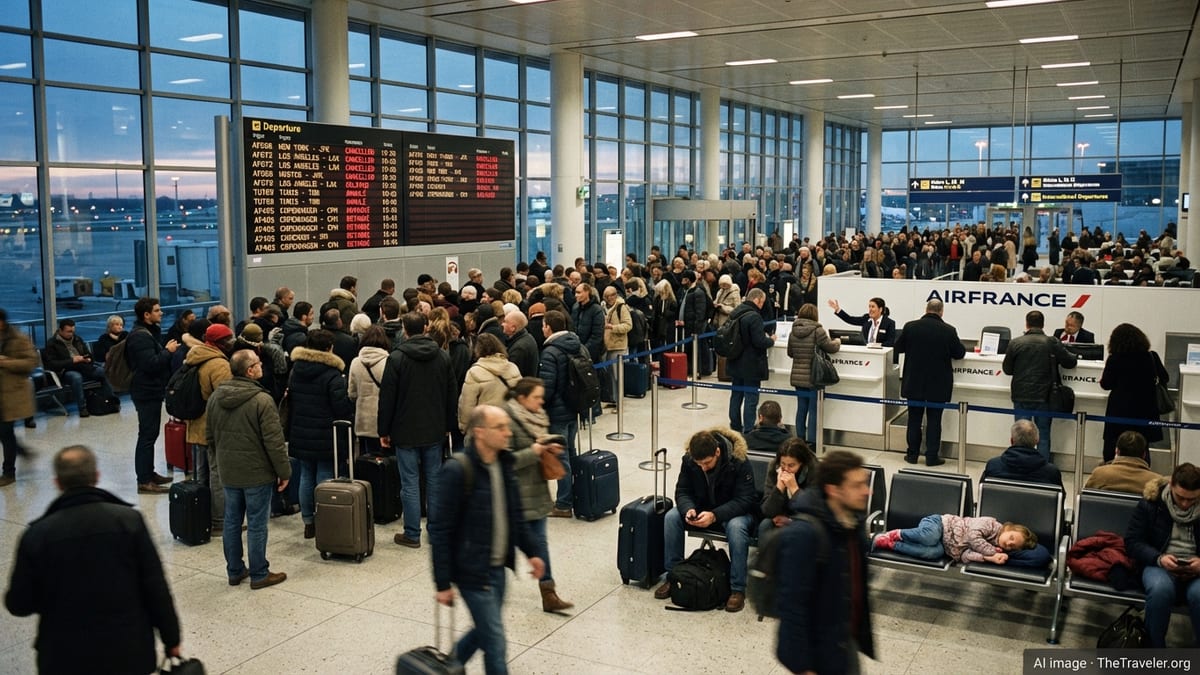
Disruptions Mount as Dozens of Flights Are Scrubbed
Operational data from flight tracking services for Sunday, July 5 and Monday, July 6 indicate that at least 31 flights involving Paris Charles de Gaulle have been cancelled, alongside more than 50 recorded delays, concentrated in the busy afternoon and evening banks of departures and arrivals. The pattern shows particular pressure on short and medium haul services within France and to neighboring European countries, with knock-on effects for long haul connections.
Several of the cancellations involve services marketed by Air France but operated by its regional partner HOP, including flights shuttling between Charles de Gaulle and secondary French and European cities. Publicly available schedules show multiple regional rotations tagged as cancelled on July 5, reducing capacity for passengers attempting to position into Paris for onward long haul travel.
The disruption is not confined to domestic and intra-European sectors. Long haul services used to connect France with major hubs in the United States and Canada are experiencing significant delays, while some regional cancellations are forcing passengers to reroute via alternate European gateways or wait for next day departures.
While no single overarching cause has been formally identified in public statements, recent months have seen a combination of air traffic control constraints, weather-related bottlenecks and tight aircraft and crew rotations across French and European networks, all of which can quickly cascade into cancellations and late-running flights when schedules are already heavily loaded.
Air France and HOP Cancellations Ripple Across Europe
Air France and its regional unit HOP appear at the center of the current wave of disruption, according to online flight status boards and independent tracking platforms. Multiple HOP-operated flights sold under Air France codes between Charles de Gaulle and cities such as Biarritz and other regional destinations are showing as cancelled on July 5, removing entire rotations from the schedule.
Additional cancellations are visible on Air France mainline services linking Paris with other European capitals, compounding the pressure on connecting itineraries. Passengers booked from smaller French or European airports via Charles de Gaulle to long haul destinations in North America and North Africa are among those most exposed, given the reduced number of alternative same-day options once a feeder leg is withdrawn.
Reports from affected travelers on public forums describe missed connections, overnight stays and rebookings spread across the following days after arriving late into Paris from delayed or rerouted regional services. In some cases, passengers indicate that late arrivals into Charles de Gaulle left insufficient time to clear transfer formalities and reach onward gates before boarding closed, even where long haul flights ultimately departed.
The combination of cancelled regional flights and tight connections for long haul departures highlights how heavily Air France’s global operation depends on reliable short haul feeders into its Paris hub, and how quickly any reduction in that feeder network can cascade across the wider route map.
United Flights Feel the Impact on Transatlantic Links
United Airlines services linking Charles de Gaulle with major US hubs are also experiencing disruption during the same period, reflecting both conditions in Paris and broader strains in the transatlantic network. Flight status data for early July show late-running and schedule adjustments on certain United departures from Newark and other US cities bound for Paris, which can affect arrival times into Charles de Gaulle and subsequent passenger connections onward on Air France and partner carriers.
Some of the affected United services are codeshared with other Star Alliance airlines including Air Canada, Lufthansa, Swiss, Austrian and Brussels Airlines, expanding the pool of travelers impacted when a single long haul flight is significantly delayed or retimed. For passengers connecting in Paris to onward services to Belgium, Greece, Morocco, Tunisia or other destinations, even a modest delay on the inbound US sector can translate into a missed short haul connection if minimum transfer times are exceeded.
Public commentary from travelers on social platforms in recent days points to multi-hour delays and extended total journey times when United-operated flights into or out of Charles de Gaulle encounter disruptions. In several cases, passengers describe being rebooked onto later flights or rerouted through alternate hubs such as Frankfurt, Munich or Zurich when direct Paris services became unavailable.
The ongoing pressure on United’s Paris services underscores how sensitive transatlantic itineraries remain to even localized operational issues at a major European hub, particularly at the height of the summer travel season when most flights are already operating close to capacity.
Knock-on Effects for North Africa, Southern Europe and Beyond
The current disruption at Charles de Gaulle is being felt well beyond France and North America. Air France and partner carriers use Paris as a key connecting point for travelers bound for Belgium, Greece, Morocco, Tunisia and destinations across the wider Mediterranean region and North Africa. When regional feeders and transatlantic arrivals are cancelled or significantly delayed, these onward links can quickly become oversubscribed.
According to publicly available route maps and schedules, Charles de Gaulle is a primary gateway for services to cities such as Casablanca and Tunis, as well as for seasonal and year-round links to Greek and other southern European destinations. Even when flights on these routes operate close to schedule, late-arriving passengers from North American or European feeder services may find themselves stranded in Paris if they are unable to reach their connection in time.
Travelers reporting their experiences online describe extended layovers and unexpected overnight stays after missing flights to North African and southern European destinations, with some being rerouted through alternative European hubs or placed on flights one or more days later. These knock-on effects can be particularly disruptive for leisure travelers with fixed hotel bookings or tour departures and for residents traveling between Europe and North Africa for family visits.
With school holidays underway across many parts of Europe and North America, the timing of the latest wave of cancellations and delays at Charles de Gaulle amplifies its impact, as aircraft are fuller and spare seats on later flights are harder to find for rebookings.
What Travelers Can Expect and How to Prepare
Given the ongoing pattern of cancellations and delays recorded at Charles de Gaulle at the start of July, passengers scheduled to fly with Air France, HOP and United in the coming days may face a higher-than-usual risk of disruption, particularly if their itineraries rely on tight connections or involve multiple carriers. Travel industry guidance generally advises allowing generous connection times through major hubs and monitoring flight status closely in the 24 hours before departure.
For those already affected by cancellations or long delays, publicly available information on European air passenger regulations indicates that travelers departing from European Union airports or flying on EU carriers may be entitled to assistance such as meals, hotel accommodation and, in some circumstances, financial compensation, depending on the cause and length of the disruption and the distance of the flight.
Consumer advocates regularly highlight the importance of documenting all aspects of a disrupted journey, including boarding passes, booking confirmations and receipts for additional expenses such as meals or overnight stays, which can support later claims. Travelers are also generally encouraged to keep an eye on alternative routing options through other European hubs, especially during peak travel periods when same-day options from Paris can quickly sell out.
With Charles de Gaulle functioning as one of Europe’s largest and busiest hubs, aviation analysts note that periods of concentrated disruption are likely to recur during the peak summer months. For now, the cancellations and delays recorded on July 5 and 6 serve as a fresh reminder of how quickly operational strains can spread across interconnected networks linking France with North America, Europe and North Africa.