


More news on this day
Thousands of passengers at New York’s LaGuardia Airport encountered severe disruption as dozens of flights operated by Republic Airways, Delta Air Lines, Endeavor Air, American Airlines, United, Frontier and Jazz were suspended or delayed, snarling connections across the United States and Canada.
Get the latest news straight to your inbox!
Wave of Cancellations and Delays Hits Key LaGuardia Carriers
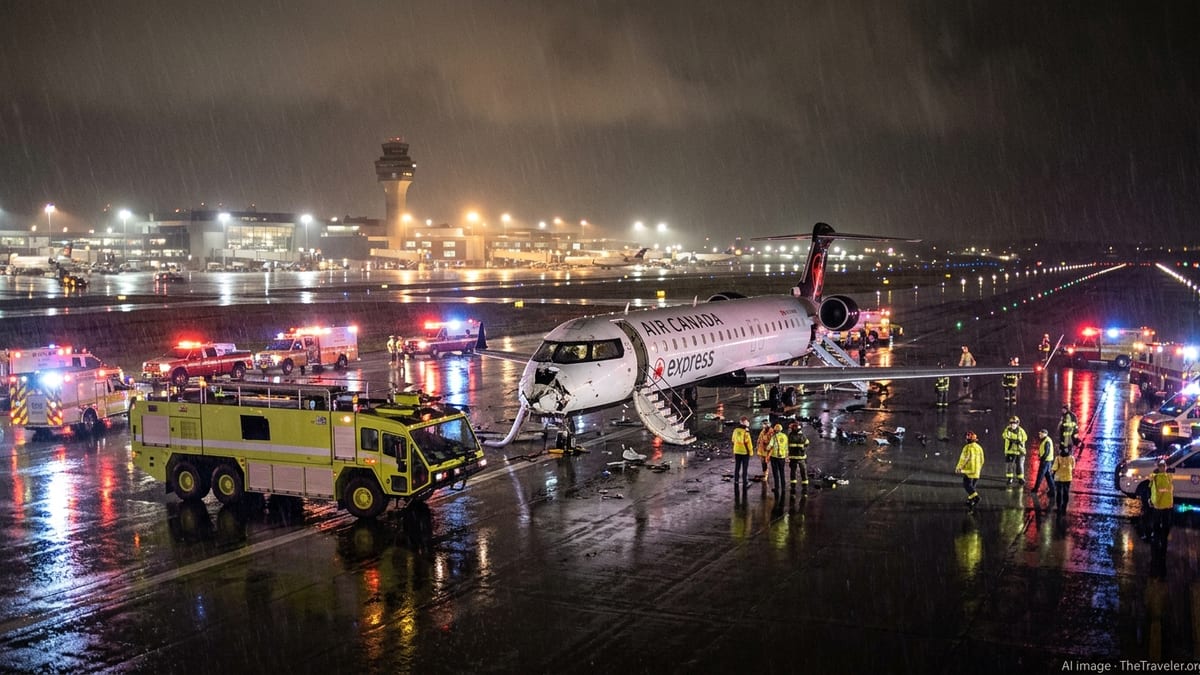
Publicly available flight-tracking data for Sunday shows at least 85 flights linked to LaGuardia Airport removed from schedules or listed as cancelled across a mix of mainline and regional carriers, with an additional 22 departures and arrivals recorded as significantly delayed. Impacted services span Republic Airways’ operations on behalf of major brands, Delta Air Lines mainline departures, Delta Connection flights run by Endeavor Air, as well as American Airlines, United Airlines, Frontier Airlines and Jazz Aviation operating as Air Canada Express.
The disruption follows a pattern of operational strain that has repeatedly surfaced at LaGuardia in recent months. Aggregated airport performance snapshots and travel-industry reports have highlighted spikes of 40 or more cancellations and delays on individual days, with earlier episodes in 2026 documenting totals in the triple digits as ground delays and air traffic restrictions converged on the airport.
While precise passenger counts are not published in real time, typical aircraft used on the affected routes range from 70-seat regional jets to narrowbody aircraft with more than 150 seats. Based on that mix, the suspension or delay of over one hundred flights in a single day is likely to involve several thousand ticketed travelers facing missed connections, overnight stays, or lengthy rebookings.
The latest figures place LaGuardia once again among the more heavily disrupted U.S. hubs on the day, even as other airports across the Northeast reported more moderate irregular operations. The concentration of regional feeder flights at LaGuardia, and its tight scheduling patterns, mean individual cancellations or ground stoppages can quickly translate into a high number of affected itineraries.
Knock-On Effects Across U.S. and Canadian Networks
The operational problems at LaGuardia did not remain confined to New York City. Flight-status boards for airports including Boston, Washington National, Chicago, Toronto, Montreal and several Midwestern and Southeastern destinations showed a sequence of delayed or cancelled services tied back to LaGuardia flights, particularly on routes operated by Republic Airways, Endeavor Air and Jazz.
Regional jets that were scheduled to operate multiple legs throughout the day often began with a LaGuardia departure or arrival. When those initial sectors were cancelled or significantly delayed, the aircraft and crews assigned to subsequent flights were no longer available on time, prompting schedule adjustments and rolling disruptions at downline airports.
Travel-industry coverage in recent months has underscored the vulnerability of this kind of hub-and-spoke structure. Earlier episodes involving LaGuardia and other East Coast hubs have shown how a ground delay program or temporary suspension can create widespread knock-on effects, even at airports that are not directly affected by weather or local operational constraints.
By late afternoon, domestic and cross-border routes linking New York with Canadian cities such as Toronto and Montreal, as well as U.S. destinations from the Mid-Atlantic to the Great Lakes, showed clusters of late departures and cancellations tied to the day’s LaGuardia disruption. Passengers on multi-leg journeys, particularly those connecting to transcontinental or international flights, faced some of the most complex rebooking challenges.
Weather, Congestion and Operational Constraints Behind Disruption
Recent data and prior reporting on LaGuardia’s performance point to a combination of factors behind recurring episodes of disruption. The airport operates with limited runway capacity relative to its dense schedule of short-haul flights, which leaves little margin when thunderstorms or low visibility move through the New York area.
When weather systems pass over the Northeast corridor, air traffic managers can introduce spacing requirements and ground delay programs that cut the number of aircraft allowed to land and depart per hour. Even modest reductions in capacity can quickly lead to crowded taxiways and gate shortages at LaGuardia, forcing airlines to cancel or consolidate flights to prevent gridlock.
Industry analyses published over the spring and early summer have also highlighted how regional operators such as Republic Airways, Endeavor Air and Jazz often bear a disproportionate share of cancellations in such scenarios. These carriers operate many of the shorter, higher-frequency routes that can be trimmed from the schedule when capacity shrinks, while airlines seek to preserve long-haul and higher-demand services where possible.
Congestion is further amplified by LaGuardia’s slot-controlled environment, which requires airlines to coordinate a high volume of operations within fixed time windows. Any prolonged interruption can trigger cascading schedule changes as carriers try to reposition aircraft and crews back into their allotted time slots once conditions improve.
Impact on Travelers and What Disrupted Passengers Can Expect
The sudden loss or delay of 85 flights in a single operating day has tangible consequences for passengers. Many affected travelers at LaGuardia reported extended waits at rebooking counters, crowded gate areas and limited same-day alternatives on popular routes as remaining flights filled to capacity.
Published guidance from consumer-rights organizations and regulatory bodies notes that, depending on the reason for a cancellation or lengthy delay, travelers may be entitled to rebooking at no additional cost, meal vouchers or hotel accommodation. U.S. regulations generally require airlines to provide prompt updates on changes to departure times and gate assignments, while some carriers voluntarily offer additional assistance in cases of extensive disruption.
For those still holding LaGuardia tickets, industry advisories consistently recommend monitoring airline apps and airport information screens, checking in early, and considering carry-on-only travel when possible to preserve flexibility if last-minute rebookings become necessary. Travelers with critical connections, such as international departures or time-sensitive events, may also consider proactive rerouting through alternative hubs where seats are available.
Given LaGuardia’s track record of weather-sensitive delays and cancellations, the day’s events are likely to renew discussion about the balance between schedule density and operational resilience at one of the nation’s busiest urban airports.
Broader Questions Around Reliability at Congested U.S. Hubs
The latest turmoil at LaGuardia fits into a wider conversation about reliability across the U.S. aviation system, particularly at heavily utilized airports along the East Coast. National statistics compiled over recent years have shown notable variation in on-time performance among carriers, with some low-cost and ultra-low-cost airlines recording higher disruption rates, while certain legacy and regional operators have performed relatively better.
However, analysts frequently point out that even airlines with stronger average on-time records can experience sharp spikes in delays and cancellations during high-stress days when multiple hubs face adverse weather or air traffic constraints. In those circumstances, the structural limitations of airports such as LaGuardia, combined with intense demand on peak travel days, can override carrier-specific reliability trends.
Travel commentators have suggested that recurring incidents at LaGuardia and other constrained hubs may encourage some passengers to favor itineraries through larger, less slot-restricted airports when schedule flexibility allows. Others note that for many travelers in the New York region, particularly those heading to business centers along the East Coast, LaGuardia’s location and route network remain compelling despite the risk of disruption.
As airlines, regulators and airport operators continue to refine schedules and invest in infrastructure, the latest episode of cancellations and delays at LaGuardia highlights the ongoing challenge of delivering reliable service at airports that regularly operate near the edge of their capacity.