


More news on this day
Travellers passing through Jeddah’s King Abdulaziz International Airport on June 5 faced fresh disruption as Yemenia, Saudia, and low cost subsidiary flyadeal canceled several services and reported further delays across a network of routes linking Saudi Arabia with Egypt, Russia, Qatar, the United Arab Emirates, and other destinations.
Get the latest news straight to your inbox!
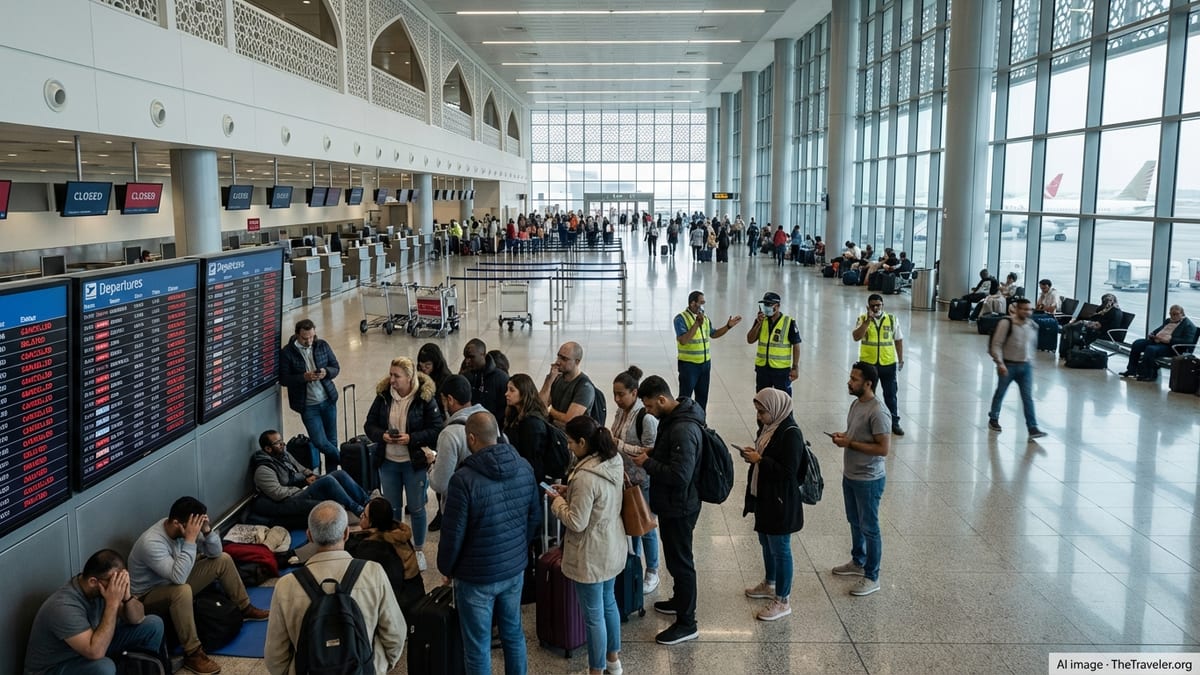
Wave of Cancellations Hits Key Carriers at Jeddah Hub
King Abdulaziz International Airport serves as the main hub for Saudia and as a base for flyadeal, placing it at the center of traffic flows across the Middle East, North Africa, and beyond. Publicly available airport data and third party flight tracking platforms on June 5 indicate an unusual cluster of cancellations and late running services affecting multiple operators at the Jeddah gateway.
Among the most affected are flights marketed by Saudia and flyadeal on high demand regional routes, alongside services operated by Yemenia, which links Jeddah with Yemeni cities such as Aden. Monitoring sites show a mix of outright cancellations and extensive delays, with some departures either removed from daily schedules or posting revised departure times well beyond their original slots.
The cluster of disruptions involves at least five flights across the three carriers, cutting into capacity on already busy corridors used by religious pilgrims, labour traffic, and leisure travellers. While not on the scale of a full airspace shutdown, the pattern is significant enough to create bottlenecks for itineraries involving connections through Jeddah.
Travel industry observers note that Jeddah has seen periodic waves of operational strain, particularly during peak pilgrimage and holiday periods. The latest set of cancellations underscores that even on a routine June weekday, the knock on effects can spread quickly across multiple airlines sharing the same infrastructure.
Routes to Egypt, Russia, the Gulf and Beyond Affected
The impacted services trace some of the region’s busiest short and medium haul corridors. Data from real time flight trackers on June 5 show flyadeal adjusting or canceling services from Jeddah to destinations including domestic Saudi cities and popular regional points, while Saudia’s long list of daily departures includes several delayed sectors that connect onward to major hubs.
Connections to Egypt are particularly sensitive, with Jeddah Cairo traffic providing a vital bridge for both business and family visits. Flight history records for flyadeal’s Jeddah Cairo sector highlight how schedule changes and delays can cascade through the day, forcing passengers with onward connections toward North Africa and Europe to rebook or endure longer layovers.
Routes toward Russia and Central Asia are also affected by schedule fluctuations, with Jeddah linked to secondary cities via low cost carriers and charter style operations. Any disruption on these longer leisure and labour routes can be particularly challenging, as frequencies are typically lower and alternative same day options may be limited or fully booked.
In the Gulf region, capacity between Saudi Arabia and Qatar and the United Arab Emirates remains in high demand. Even when only a single daily rotation is canceled or heavily delayed, passengers connecting onward through Doha, Dubai or Abu Dhabi can miss long haul flights to Europe, North America and Asia, compounding the knock on impact well beyond the Middle East.
Knock On Impact for Pilgrims and Transit Passengers
Jeddah’s role as the primary international gateway for pilgrims traveling to the holy cities means any operational disruption can directly affect those on time sensitive religious journeys. Social media posts and community forums over recent weeks show travellers already grappling with rebookings, significant schedule changes and routing adjustments involving Saudia services into and out of Jeddah.
On June 5, the latest wave of cancellations and delays adds another layer of uncertainty for passengers who may have combined flights on national carriers with separate tickets on regional or international airlines. When one leg of a journey is canceled, self connecting passengers can find themselves responsible for arranging and paying for new itineraries at short notice.
Transit passengers using Jeddah as a connecting hub between Africa, the Gulf and Asia are also exposed when departure times are pushed back or aircraft rotations are reshuffled. Longer ground times and missed minimum connection windows can quickly translate into unscheduled overnight stays, particularly where visa rules or limited same day capacity restrict rebooking options.
Travel planning tools and flight comparison platforms already flag Jeddah connections as requiring generous buffers, and the June 5 pattern of disruptions may reinforce recommendations for longer layovers. For many travellers, particularly those without flexible budgets, that adds cost and complexity to trips that were originally planned around tight, same day transfers.
Airlines Adjust Schedules Amid Capacity and Network Pressures
According to airline schedule databases and recent public coverage of network changes, Saudia and flyadeal have been reshaping parts of their route maps in response to evolving demand, fleet availability, and competitive pressure across the region. Reports of route suspensions, aircraft redeployments and increased focus on key domestic and Gulf markets have circulated in recent months.
Yemenia’s operations into and out of Saudi Arabia are influenced by additional layers of complexity, including security considerations and constraints on airspace and infrastructure in Yemen. This can result in sudden schedule changes, with knock on effects for passengers relying on Jeddah as a stable entry and exit point for connecting journeys.
On the operational side, capacity declarations and terminal allocation documents for King Abdulaziz International Airport show that Saudia and flyadeal share check in, security and boarding resources alongside other carriers. When one element of the system experiences strain such as ground handling delays or aircraft rotations running late the result can be a domino effect of delayed pushbacks and missed slots.
Industry analysts point out that low cost carriers like flyadeal typically operate their aircraft on tight turnaround times to maximize utilization. While efficient in normal operations, this model leaves little margin for recovering from unexpected disruptions, increasing the likelihood that an initial delay in the morning will still be felt by passengers boarding evening departures.
What Travellers Are Being Advised to Do
Consumer advocacy groups and travel advisers following the situation around Jeddah emphasize the importance of checking flight status repeatedly in the 24 hours before departure, particularly for services operated by Saudia, flyadeal and Yemenia. Travellers are urged to use official airline channels and reputable flight tracking services to confirm whether their flight is operating, delayed or canceled.
For those whose itineraries span multiple countries including Saudi Arabia, Egypt, Russia, Qatar and the UAE recent guidance has focused on building extra flexibility into travel dates and considering fully protected through tickets when possible. Separate bookings on different airlines can appear cheaper but leave passengers more exposed when one sector is canceled.
Published information on airline customer rights and compensation policies indicates that eligibility for refunds, rebooking or financial redress depends on the cause of disruption, the jurisdiction where the ticket was purchased and the exact ticket conditions. Travellers are advised to retain boarding passes, booking confirmations and receipts in case they need to file claims after their journey.
With flight operations at King Abdulaziz International Airport remaining dynamic, especially on complex regional networks touching conflict affected areas and constrained hubs, the June 5 disruptions are a reminder that passengers may need to plan for contingencies. For now, the pattern of cancellations and delays involving Yemenia, Saudia and flyadeal is adding fresh uncertainty to an already challenging regional travel landscape.