


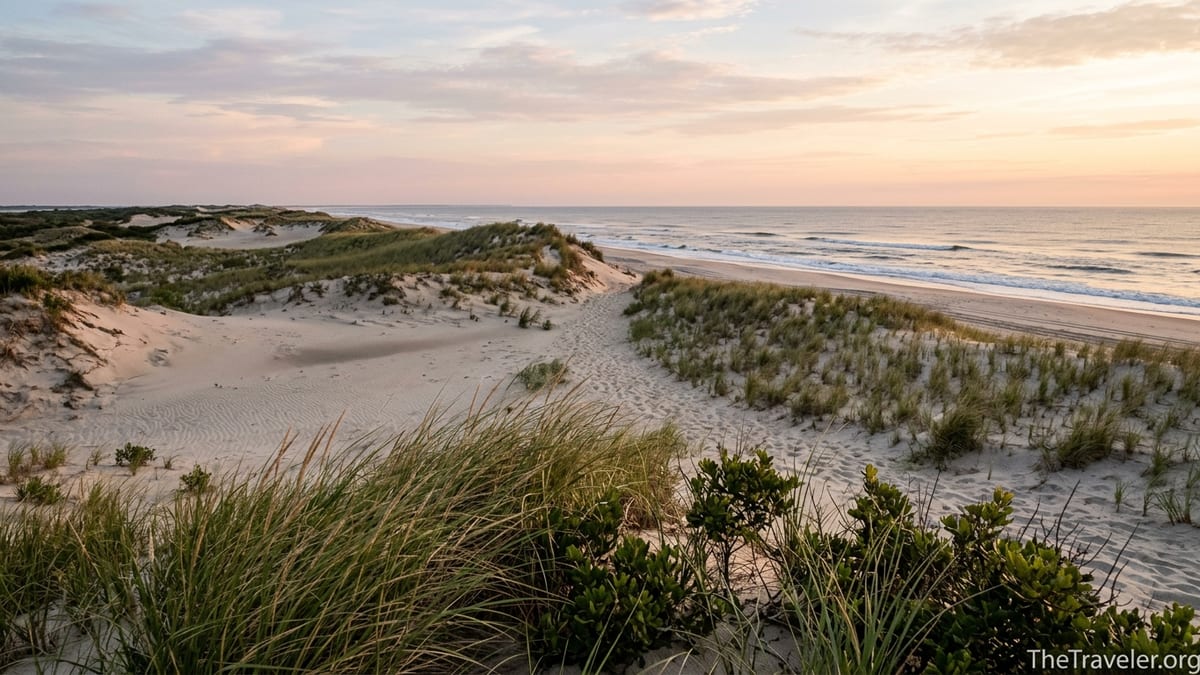
Drive a few minutes south from the flashing rides of Seaside Heights and the arcades of Ortley Beach and you suddenly hit a wall of dune grass and sky. Island Beach State Park, a nearly 10-mile run of wild sand and maritime forest on New Jersey’s Barnegat Peninsula, feels less like a classic shore resort and more like a protected edge of the Atlantic. With no boardwalk, no condos, and only a handful of low-rise bathhouses breaking the horizon, its towering dunes and wind-sculpted beachscape make it feel worlds away from the nearby beach towns sharing the same strip of land.
Get the latest updates straight to your inbox!
A Rare Stretch of Untamed Jersey Shore
Island Beach State Park protects one of the last largely undeveloped barrier island ecosystems on the New Jersey coast, roughly 10 miles long and more than 3,000 acres of dunes, beaches, and bayside marsh. While the rest of the Barnegat Peninsula is filled with boardwalks, motels, and tightly packed shore houses in places like Seaside Heights, Seaside Park, Ortley Beach, and Lavallette, the park has been kept mostly free of commercial development. You drive in through a simple entrance gate, pass a small visitor contact station, and then it is just sand, scrub, and the low silhouette of lifeguard pavilions.
That lack of construction is immediately obvious in the dune line itself. Instead of the low, groomed dunes you see fronting many town beaches, Island Beach’s dunes are high, rolling ridges layered along the island’s spine. Marram grass and bayberry clutch the sand in dense mats, and in some spots the dunes form walls that block any view of the ocean from the road. There are no hotels looking over the surf here, no second-row homes trying to peek above the dune line, just a wild-looking barrier between asphalt and Atlantic.
The effect on the visitor experience is dramatic. On peak summer weekends, parking lots at the guarded swimming areas fill and the sand near the main access paths can be busy. Yet even then, the beach never feels like the densely packed scenes you find in Seaside Heights, with shoulder-to-shoulder umbrellas in front of amusement rides and bars. Walk five minutes north or south along the sand at Island Beach State Park and the crowds thin to pockets of families and surfcasters, framed by nothing more than dunes and horizon.
Wild Dunes, Not Boardwalks and Nightlife
What most defines the park’s character is what is missing. In Seaside Heights, a summer day means the rattle of roller coasters, the smell of sausage stands, and a grid of beach snack bars and rental stands behind the sand. Beach badges are scanned at multiple access points, and side streets are crammed with day-trippers circling for parking near the boardwalk. That energy is part of the appeal for many, but it sets a very specific tone.
Island Beach State Park strips all of that away. There is no boardwalk running along the oceanfront, only sandy paths cut through the dunes at numbered access points that correspond to small parking lots on the main road. Instead of arcades and T-shirt shops, you find simple bathhouses, seasonal snack stands near the guarded swimming beaches, a nature center, and a ranger station. After you park, you might carry your cooler up a short wooden walkway, crest the dune, and be greeted not by neon signs but by a wide-open sweep of beach and waves.
Nightlife also looks very different. Nearby Seaside Heights markets itself on bars, clubs, and a party atmosphere that stretches late into the evening, while Island Beach State Park is governed by state park hours and regulations. After daytime beachgoers pack up, the park quiets to surf fishermen, a few permitted overnight users in designated areas, and the rustle of wind in the dunes. Many visitors pair a daytime escape in the park with an evening stroll or dinner back in towns like Seaside Park or Lavallette, using Island Beach for the wild daytime experience and the towns for restaurants and entertainment.
Dune Ecology and the Feeling of a Living Landscape
Because the park’s dunes and back-bay marshes are protected, the landscape feels like a living system rather than a backdrop for shore houses. The ridge-and-swale pattern of the dunes, with some cross-island trails weaving from ocean to bay, gives you a strong sense of being on a narrow strip of land between two bodies of water. On short walks from the main road, you pass through different plant communities: low dune grass and beach heather on the seaward side, thickets of bayberry and holly in the interior, and then the open, salty air of Barnegat Bay on the west.
Wildlife is part of the daily scenery. The park’s beaches and dunes are important habitat for shorebirds, including the federally threatened piping plover and other beach-nesting species that return to the Jersey coast each season. In nesting periods, you may notice sections of dune fenced off or signs requesting that visitors avoid certain areas to protect birds and their chicks. That can feel restrictive if you are used to free-roaming town beaches, but it also underscores the idea that you are moving through a habitat first and a beach destination second.
Even casual visitors notice how the park’s management choices let natural processes dominate. Driftwood is often left where storms cast it ashore, and the dunes are not sculpted into manicured shapes. After nor’easters or winter storms, you might see overwash fans where waves pushed sand inland, a reminder of how barrier islands shift and rebuild. On hot summer days, the scent of bayberry and pine from the island’s small maritime forest mixes with sea air, giving the park a distinct smell you rarely notice in more developed towns where asphalt and buildings overpower the vegetation.
Practical Differences: Access, Fees, and Facilities
Reaching Island Beach State Park is straightforward by car. From the Garden State Parkway, most visitors exit in the Toms River area, follow Route 37 east toward Seaside Heights, then continue south along the barrier island past Seaside Park into the park entrance. Unlike town beaches that require per-person badges, the park charges a per-vehicle entrance fee at a main gate. Recent seasons have seen weekday and weekend rates for New Jersey residents and nonresidents, with fees typically higher on summer weekends and holidays; travelers should confirm the latest amounts and any special “fee holiday” programs before they go.
Once inside, the park feels more like a national seashore than a boardwalk town. A single, two-lane road runs the length of the park, with clearly marked parking areas on both the ocean and bay sides. The first few lots serve the main guarded swimming beach, which has lifeguards in season, restrooms, changing areas, and a snack bar. Farther south, smaller lots give access to unguarded sections of beach where many locals set up for quieter days. Those accustomed to town streets and metered curbside parking in Seaside Heights or Lavallette will notice the difference: here, parking is organized into discrete lots rather than woven into a residential grid.
Facilities also reflect the park’s wilder focus. You will not find rows of beach chair rentals, inflatable slides, or pier-side restaurants. Instead, you have simple bathhouses, scattered picnic tables near the bay, and a couple of small concessions that sell basics like cold drinks and sandwiches in season. There are no big grocery stores or nightlife districts within the park boundaries, so visitors often stock up in nearby Toms River or Seaside Park and treat the park itself as a day-use natural escape.
Experiences You Can Only Have in the Wild Dunes
One of the strongest contrasts between Island Beach State Park and its neighboring towns is the range of low-key, nature-driven activities available. Surf fishing is a major draw here, with anglers lined up along the surf at dawn and dusk targeting striped bass, bluefish, and other species in season. The state oversees special mobile sport fishing vehicle permits that allow qualified four-wheel-drive vehicles onto certain stretches of sand for fishing access. While nearby towns may offer surf casting along their beaches, few match the length of uninterrupted shoreline and relative seclusion anglers find at Island Beach.
On the bayside, shallow waters and tidal creeks near the Sedge Islands area are popular with kayakers and paddleboarders. Outfitters based outside the park run guided eco-tours that slip between marsh grasses, pointing out ospreys on nesting platforms, wading herons, and the occasional diamondback terrapin poking its head above the water. In contrast, the bays behind developed towns often have more boat traffic, seawalls, and private docks, making the paddling experience feel busier and more constrained.
Even simple beachgoing feels different here. Without music blaring from boardwalk bars or amusement rides, the dominant sounds are surf and wind. Many visitors report that even when sharing the sand with plenty of other beachgoers near the main swimming area, the absence of high-rise buildings and commercial noise makes the park feel calmer. For families with young children, the sense of space can be a relief: there is room to spread out a little further from your neighbors, and older kids can explore the edge of the dunes or search for shells along a long, unbroken shoreline.
Seasonal Rhythms and When the Park Feels Most Remote
The wild character of Island Beach State Park shifts with the seasons, and timing can make it feel even more removed from the nearby resort towns. In high summer, particularly on hot weekends, the entrance line of cars can stretch back toward Seaside Park by mid-morning, and the park may close temporarily when parking lots reach capacity. On those days, the guarded swimming areas are busy, and the main lots feel every bit as popular as the boardwalk beaches to the north, just without the rides and arcades.
Shoulder seasons tell a different story. On a clear June weekday before school lets out, or a warm September afternoon after crowds thin, you might park in one of the southern lots and share an entire stretch of beach with only a few other groups spread far apart. The town beaches of Seaside Heights and Ortley may still have cars circling for street parking on warm weekends in those months, but inside the park the mood shifts to something more contemplative: fishermen quietly working the surf, couples walking the water’s edge, and birders scanning the dunes with binoculars.
Winter and early spring reveal another side of the dunes. While many nearby shore rentals are shuttered and boardwalk businesses run on limited hours, Island Beach remains open under shorter daily schedules and with fewer amenities. Hardy walkers bundle up and head out to watch storm waves roll in, and photographers come for the low-angle light and empty horizons. On days like that, with the wind singing through bare branches of the island’s maritime forest and Barnegat Lighthouse visible across the inlet, it can feel less like suburban New Jersey and more like a remote Atlantic coast.
How Island Beach Fits Into a Jersey Shore Getaway
Because it sits immediately south of Seaside Park and only a short drive from Seaside Heights, Island Beach State Park slots naturally into many Jersey Shore itineraries. Travelers who book a motel on the Seaside boardwalk or rent a house in Lavallette often spend one or two days of their trip in the park to balance out the boardwalk energy. A common pattern is to head into the park for an early-morning beach walk or fishing session, then retreat back to town for lunch, rides, and night games on the boardwalk.
From farther afield, visitors driving from New York City or Philadelphia often use Island Beach as the centerpiece of a quieter weekend. Instead of choosing a fully built-up town like Seaside Heights, they might stay in a small inn or rental in Seaside Park, Bayville, or Toms River and treat Island Beach as their primary beach. That way, they get the practical benefits of town services and restaurants while spending their actual beach hours in the park’s wilder environment.
Even among New Jersey’s other relatively low-key shore destinations, Island Beach stands apart. Long Beach Island, for instance, has miles of peaceful residential beaches but still features dense blocks of beach houses and commercial strips in places like Beach Haven and Ship Bottom. In contrast, once you pass the entrance gate at Island Beach State Park, the only structures you see are park facilities and the occasional historic building, keeping the visual field dominated by dunes and sky.
The Takeaway
Island Beach State Park offers a rare chance to experience the New Jersey Shore the way much of the coast once looked: long, wind-carved dunes, open sand, and an Atlantic horizon uncluttered by towers and piers. Its wild character is not an accident but the result of deliberate protection, which limits development, maintains natural dune systems, and prioritizes habitat for beach-nesting birds and other wildlife. For visitors, that protection translates into a very different kind of beach day than in nearby resort towns.
For travelers who love the energy of boardwalks, arcades, and busy bars, the park pairs well with Seaside Heights and other towns along the Barnegat Peninsula, offering a natural counterpoint just a short drive away. For those seeking quiet, open sky, and the feeling of walking through a living coastal landscape, Island Beach can be the main attraction itself. Either way, the wild dunes are what make it special: they create a sense of distance and immersion that makes this corner of New Jersey feel, if only for a day, like a world apart.
FAQ
Q1. How is Island Beach State Park different from Seaside Heights or other nearby beach towns?
Island Beach State Park has no boardwalk, amusement rides, or residential development along its 10-mile shoreline. Instead, visitors find high natural dunes, simple park facilities, and long stretches of undeveloped beach, which gives it a quieter, more wild atmosphere than nearby towns like Seaside Heights and Ortley Beach.
Q2. Do I need a beach badge to use the beach at Island Beach State Park?
No, you do not purchase individual beach badges. Instead, the park charges a per-vehicle entrance fee at the gate, which covers beach access for everyone in the car. Fees vary by season, day of the week, and residency status, so visitors should check current rates before traveling.
Q3. Are there lifeguards on duty at Island Beach State Park?
Yes, lifeguards are on duty at designated ocean swimming beaches during the summer season, typically between Memorial Day and Labor Day, with exact dates and hours announced each year. Large sections of the shoreline remain unguarded, so swimming is advised only in posted, guarded areas.
Q4. Can I buy food and rent chairs or umbrellas inside the park?
There are seasonal snack bars near the main guarded swimming beaches that offer basics like drinks and simple meals, but services are limited compared with a boardwalk town. The park does not generally operate large-scale chair or umbrella rental stands, so most visitors bring their own equipment and coolers.
Q5. Is public transportation available to Island Beach State Park?
Direct public transit into the park is minimal. Many travelers take New Jersey Transit trains or buses to Toms River or the Seaside Heights area and then rely on taxis, rideshares, or local services to reach the park entrance. A private car remains the most reliable way to visit.
Q6. What wildlife might I see in the dunes and along the beach?
Common sightings include ospreys, gulls, terns, and shorebirds running along the surf line. In certain seasons, the park hosts nesting piping plovers and other protected species, and visitors may also spot foxes, deer in the interior vegetation, and various fish and crabs along the bay side.
Q7. Are there hiking trails or nature walks, or is it just beach access?
In addition to beach access paths, the park features short nature trails that cross the island from ocean to bay and interpretive routes through dune and maritime forest habitats. These trails offer a chance to experience the full range of barrier island ecosystems in a compact walk.
Q8. Can I drive on the beach at Island Beach State Park?
Driving on the beach is not permitted for general visitors, but the state offers special mobile sport fishing vehicle permits for qualified four-wheel-drive vehicles. These permits allow access to designated sections of sand for surf fishing under specific rules and seasonal guidelines.
Q9. Is Island Beach State Park suitable for families with young children?
Yes, many families visit for its guarded swimming areas, relatively gentle beach slope, and open space to spread out. Parents should keep in mind that services are more limited than in town beaches and that there are no amusement rides or arcades within the park, so planning snacks, shade, and entertainment in advance is important.
Q10. When is the best time to visit if I want the park to feel most secluded?
For a more secluded experience, aim for shoulder-season weekdays in late spring or early fall, or arrive early in the morning on summer weekdays. During peak summer weekends, the park can reach capacity, especially in the main lots, but walking a short distance from popular access points still often yields quieter stretches of sand.