


More news on this day
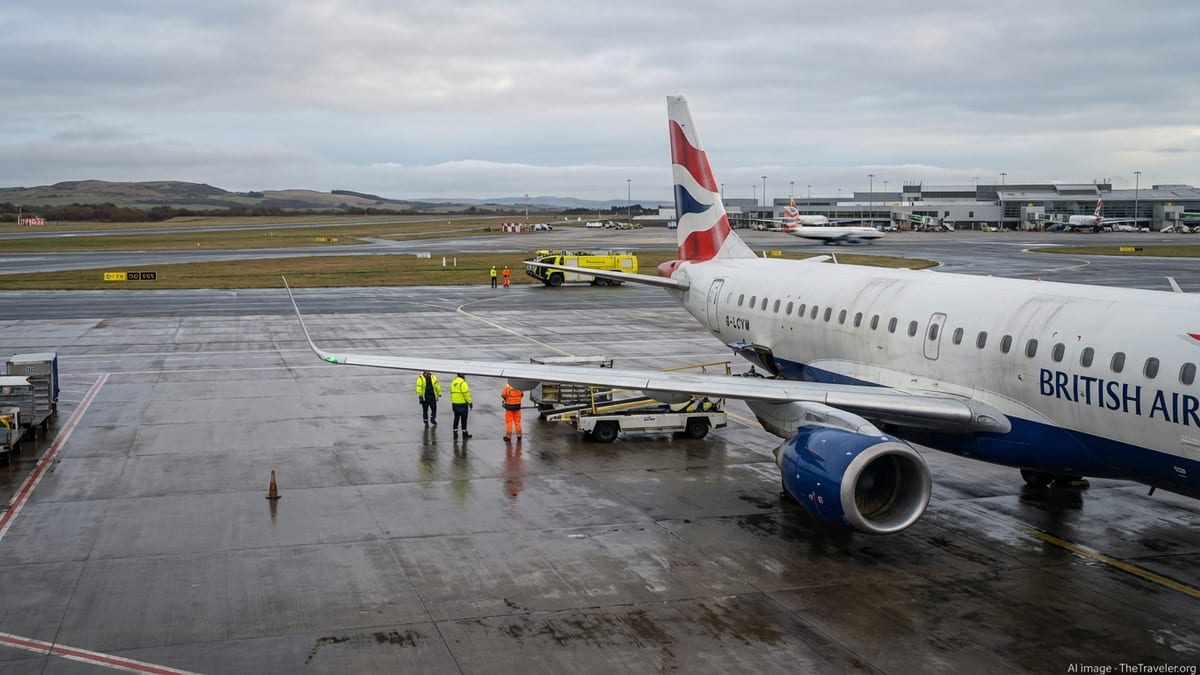
Disruption hit parts of the UK air network after a technical issue at NATS, the UK’s main air traffic control provider, affected flight schedules and triggered a wave of cancellations and delays on routes involving London.
Get the latest news straight to your inbox!
What happened, and which routes were most affected
Published coverage indicates the latest disruption was linked to a technical issue at NATS’ Prestwick centre in Scotland. While the underlying problem was reported as resolved later the same morning, knock-on impacts continued through the day as aircraft and crews were no longer in position and airports worked through revised flow restrictions.
The day’s cancellations skewed heavily toward domestic services and short-haul routes tied to Scotland, Northern England, and nearby UK markets. London airports were not uniformly affected; reports indicated airports south of Manchester were broadly less impacted, while flights heading north and departures from Scottish airports faced heavier disruption.
For travelers, that pattern matters: even if a London departure board shows “operating,” inbound aircraft on earlier rotations may have been delayed, increasing the chance of late gates, missed connections, or same-day aircraft swaps.
Full list of cancelled London flights reported so far
The following London cancellations were listed in published coverage during the disruption window. Because airport and airline operations can change quickly, travelers should treat this as a snapshot of reported cancellations rather than a definitive day-long ledger.
London Heathrow (LHR): 2:15pm London Heathrow to Newcastle (British Airways); 2:55pm Glasgow to London Heathrow (British Airways); 3:20pm London Heathrow to New York City (United Airlines); 3:20pm London Heathrow to Glasgow (British Airways); 4:05pm Amsterdam to London Heathrow (British Airways); 4:05pm London Heathrow to Aberdeen (British Airways); 4:45pm Dublin to London Heathrow (British Airways); 5:35pm Newcastle to London Heathrow (British Airways); 8:00pm Aberdeen to London Heathrow (British Airways); 8:10pm London Heathrow to Boston (British Airways); 9:35pm New York City to London Heathrow (United Airlines).
London Stansted (STN): 11:20am Edinburgh to London Stansted (easyJet); 11:50am London Stansted to Edinburgh (easyJet); 12:35pm London Stansted to Belfast (easyJet).
London City (LCY): 12:10pm Edinburgh to London City (British Airways); 6:15pm Isle of Man to London City (Loganair); 6:45pm London City to Isle of Man (Loganair).
Airlines and airports: what passengers should check first
In fast-moving ATC disruptions, the most useful information is usually not a news headline but the status of a specific flight number. Travelers should check the airline’s “manage booking” page or app for cancellation notifications, rebooking options, and whether the itinerary has been protected onto partner airlines or later services.
Where services remain operating but delayed, passengers should also watch for gate changes and revised check-in cutoffs. Even when the ATC issue is fixed, airports may meter departures to prevent congestion in the airspace, and that can turn a modest delay into a multi-hour wait once queues build for de-icing, runway slots, or stand availability.
For London-area departures, it can also help to verify whether the inbound aircraft has departed its origin. If the aircraft has not left, a listed “delay” can quickly become a cancellation if crew duty-time limits are exceeded.
Rebooking, refunds, and practical next steps during ATC disruption
If a flight is cancelled, passengers are generally offered a choice between a refund and rerouting, including rerouting at the earliest opportunity. Published guidance around UK and EU-style passenger rights commonly emphasizes that airlines must provide care and assistance during significant waits, such as meals and, where necessary, accommodation, depending on circumstances and delay length.
Compensation rules can be more complicated in ATC-related events. Air traffic control failures are often treated as outside an airline’s direct control, which can affect eligibility for cash compensation, but passengers may still be entitled to rerouting or refunds and duty-of-care support. Travelers who are rerouted onto a later service should keep receipts for reasonable expenses if the airline instructs them to claim afterward.
For travelers with onward connections, especially long-haul departures from Heathrow, it may be safer to adjust plans early rather than waiting at the airport. If separate tickets are involved, travelers should check whether their travel insurance covers missed connections triggered by ATC disruption and whether any “delay” benefits apply after a specified threshold.