


More news on this day
A district consumer commission in Punjab has ordered Northern Railway, Konkan Railway and the Indian Railway Catering and Tourism Corporation (IRCTC) to jointly compensate a passenger and his family with a total of ₹15,620 after their train departed two hours earlier than the time shown on their tickets, leaving them stranded at the station.
Get the latest news straight to your inbox!
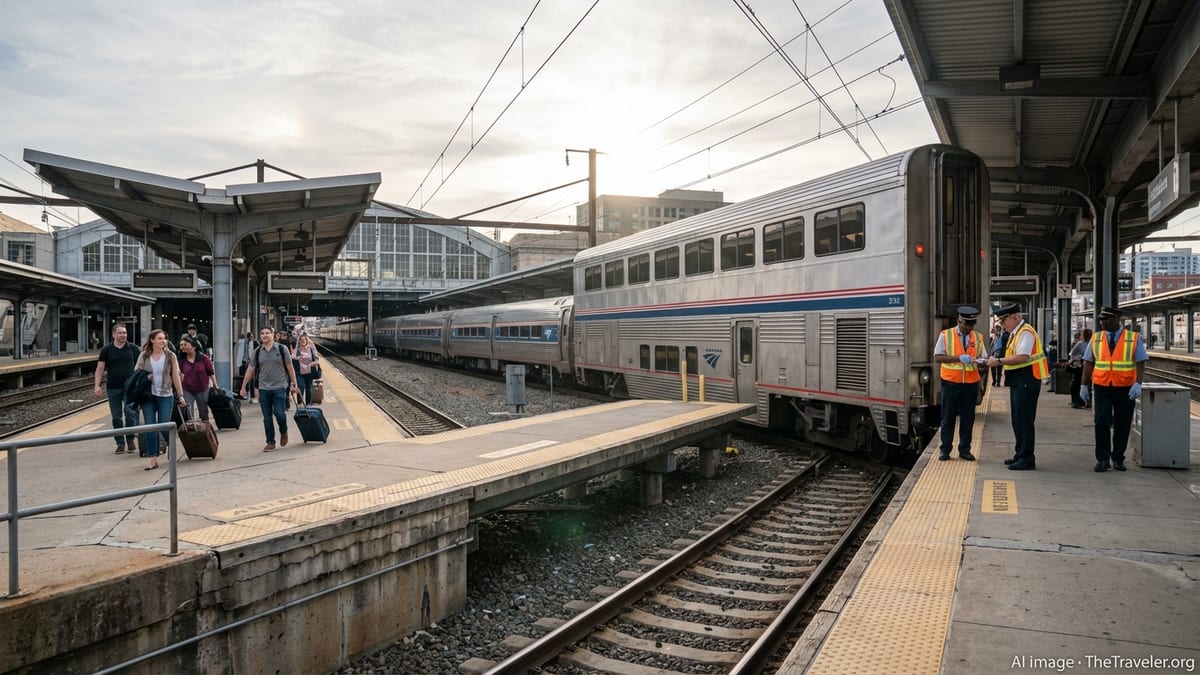
Family Stranded After Timetable Change
According to published legal coverage, the case arose when a passenger from Punjab booked three reserved tickets online through IRCTC for himself and his family. The journey was scheduled on a train operated jointly by Northern Railway and Konkan Railway, with the departure time clearly reflected on the electronic ticket and booking details.
On the day of travel, the family reached the departure station before the time displayed on their ticket. When they arrived on the platform, they discovered that the train had already left the station roughly two hours earlier than the original schedule. Enquiries at the station revealed that the timetable had been revised in advance, but the new departure time had not been communicated to the family.
The sudden change forced the passengers to abandon their planned rail journey and make alternative arrangements at short notice. The complainant later approached the Ferozepur District Consumer Disputes Redressal Commission, alleging deficiency in service and seeking a refund of the ticket amount along with compensation for the inconvenience and additional expenses.
Documents placed before the commission showed that the booking had been made in good faith on the basis of the departure time displayed on IRCTC’s online platform. The complainant argued that, having provided contact details and completed payment through the official channel, he was entitled to timely and accurate information about any material change in schedule.
Commission Finds Deficiency in Service
In its order issued in early November 2026, the Ferozepur District Consumer Disputes Redressal Commission held that the failure to inform the passenger about the rescheduled, earlier departure amounted to a clear deficiency in service on the part of Northern Railway, Konkan Railway and IRCTC.
The panel, headed by President Kiranjit Kaur Arora with member Suman Khanna, observed that passengers are entitled to timely and quality services from transport providers. Publicly available information on the ruling indicates that the commission underlined how passengers cannot be left to discover critical timetable changes only when they arrive at the station to find their train gone.
The order directed the three opposite parties to refund the full ticket cost of ₹10,620 for the unused reservations and to pay an additional ₹5,000 as compensation. The total amount of ₹15,620 covers both the fare and an award for mental agony, inconvenience and litigation expenses incurred by the complainant.
The commission held the railway administrations and IRCTC jointly and severally liable, meaning each party can be pursued for the entire amount until it is fully paid. The decision reiterates that when multiple entities jointly provide an online booking and transport service, they share responsibility for keeping passengers correctly informed.
Part of a Growing Series of Rail Consumer Cases
The Punjab ruling comes against the backdrop of a rising number of consumer disputes involving Indian Railways and IRCTC, particularly around delayed, rescheduled or cancelled trains. In recent months, consumer commissions in different states have dealt with cases ranging from trains departing hours before their original schedule to significant delays that caused passengers to miss entrance examinations or onward connections.
Earlier this year, reports from Kerala highlighted a case in which a consumer commission awarded ₹31,000 after a family missed their train when it left nearly three hours before the printed departure time. The commission in that matter also emphasized that passengers have a right to be informed promptly whenever there is a substantial change to a scheduled service.
Separate decisions have ordered substantial payouts in cases where delayed trains caused financial or academic setbacks. In one high profile order from Uttar Pradesh, a district consumer forum directed the Railways to pay over ₹9 lakh to a student who missed a crucial entrance examination after a train was delayed by more than two hours beyond its arrival schedule.
Legal commentary notes that while Indian Railways does not automatically compensate passengers for delays or disruptions under standard rules, consumer fora have increasingly treated serious lapses such as non-communication of rescheduling and extreme delays as deficiencies in service when they cause demonstrable loss or hardship.
What the Order Means for Rail Travellers
For passengers, the Ferozepur decision underscores that the timing printed on an IRCTC ticket or shown at the time of booking is not merely indicative. When a train is advanced by a significant margin, particularly by two hours or more, consumer bodies are indicating that operators are expected to inform affected travellers through reasonable means, such as updated digital records, notifications or public announcements.
Published information on IRCTC’s refund and Train Deposit Receipt rules shows that passengers who choose not to travel on a train running more than three hours late can often seek a refund under set conditions. However, the present case focuses on an early departure, a scenario where regular refund provisions may not fully address the loss if the passenger is left uninformed.
Legal experts writing on similar matters point out that consumer commissions look closely at whether the passenger acted diligently, for example by arriving at the station on time according to the ticket, and whether the railway administration or IRCTC can demonstrate that adequate notice of revised timings was given. Where communication is absent or inadequate, commissions have tended to side with passengers.
For frequent rail users, especially those planning family trips or long-distance journeys, the case serves as a reminder to monitor train status and schedule changes before departure, while also reinforcing that formal avenues exist for redress if they suffer loss due to unannounced timetable changes.
Implications for Railways and IRCTC
The order adds to a growing body of consumer jurisprudence that could influence how Indian Railways and IRCTC design their communication and notification systems. As more tickets move to digital platforms, commissions are treating the information displayed at the time of booking as a core part of the service that must remain accurate or be promptly updated.
Sector observers note that repeated findings of deficiency in service may encourage the rail administration and its online booking arm to strengthen automated alerts about rescheduled trains, including those departing earlier than initially planned. Enhancing integrations between timetable databases, station announcements and ticketing interfaces is seen as one way to reduce disputes and potential liability.
The case from Punjab also reinforces the principle that various entities involved in a single journey, from infrastructure-owning zones such as Northern Railway to route partners like Konkan Railway and digital platforms such as IRCTC, may be held jointly accountable for passenger-facing failures. For large, integrated networks that move millions of passengers daily, this shared responsibility could shape future policies on customer service and grievance handling.
While higher forums could be approached for appeals in individual matters, the trend of district and state consumer commissions awarding targeted compensation for schedule-related lapses is drawing attention across the rail ecosystem. For now, the Ferozepur ruling offers a clear signal that when trains leave significantly ahead of the printed time without proper intimation, the resulting inconvenience can carry a financial cost for operators.