


More news on this day
Mexican boxing star Saúl “Canelo” Álvarez has landed in Riyadh ahead of his October 31 title fight with Christian Mbilli, touching down in the Saudi capital just as the United States raises its travel risk level for Saudi Arabia and orders some diplomatic personnel and family members to leave the country.
Get the latest news straight to your inbox!
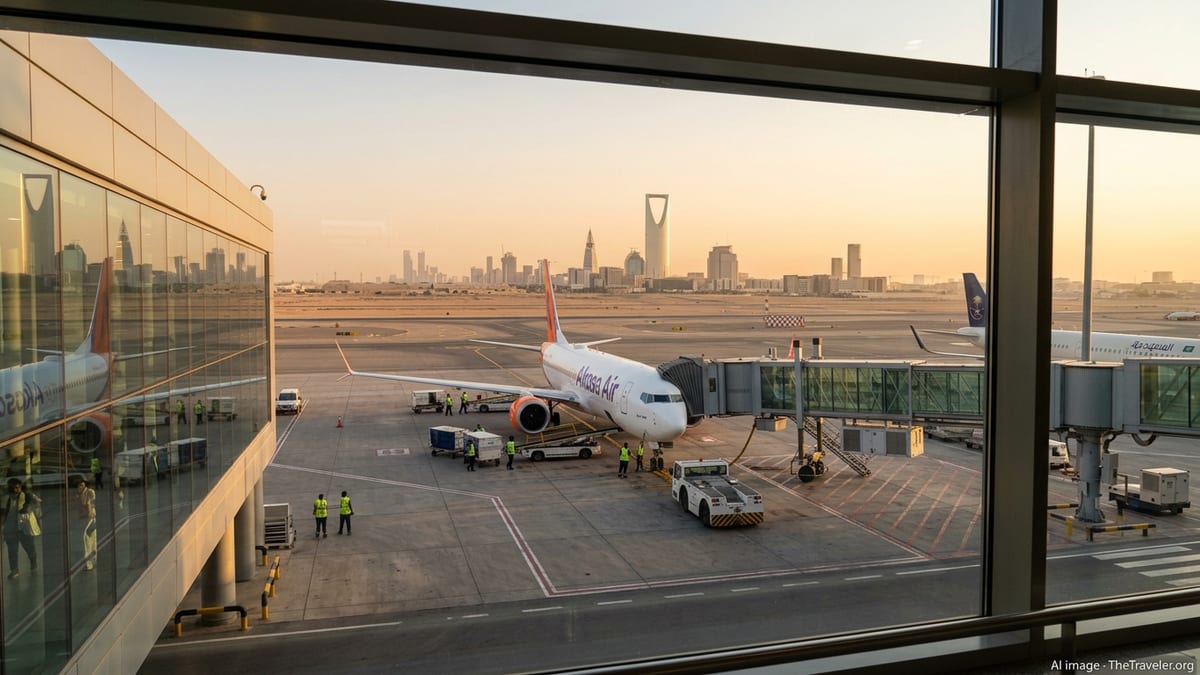
High-Profile Arrival Amid Heightened Security Concerns
Álvarez arrived in Riyadh on Monday, October 26, according to widely shared broadcast and social media footage, beginning fight week preparations in a city that has been at the center of recent regional tensions. The bout is scheduled as part of the Riyadh Season entertainment program, with organizers continuing to promote the event at the Kingdom Arena on October 31.
The visit follows weeks of speculation about whether the fight would be postponed or moved after a series of missile and drone attacks targeted airports and other infrastructure in Saudi Arabia in 2026. Publicly available reports indicate that King Khalid International Airport in Riyadh has faced repeated disruptions, with some international carriers suspending or restricting services into the capital.
Despite the security backdrop, ticketing platforms and boxing promotions continue to list the Álvarez versus Mbilli card as proceeding in Riyadh on the original date. No formal announcement of a venue change had been published as of October 27, even as aviation and diplomatic advisories grow more restrictive.
U.S. Travel Advisory Raised To ‘Reconsider Travel’
While Álvarez’s plane was heading to Riyadh, the U.S. Department of State was tightening its guidance for travelers. The Saudi Arabia country page on the State Department’s advisory system was updated in October, raising the nationwide classification to Level 3, “Reconsider travel,” with specific references to the risk of terrorism and missile and drone attacks against civilian infrastructure, including airports.
Separate public notices show that on October 21 the United States ordered the departure of some embassy staff and family members from Saudi Arabia, citing security risks linked to attacks by Yemen’s Houthi movement and broader regional tensions. The move applies to non-emergency personnel and dependents, while essential operations continue with additional restrictions.
The advisory language also places new limits on the movement of U.S. government employees inside the kingdom, including tighter rules for using Saudi airports. Travelers are urged to closely monitor alerts, have contingency plans for disrupted flights, and be prepared for additional screening, checkpoints, or short-notice curfews around critical infrastructure.
Boxing Spectacle Tests Saudi Arabia’s Sports Ambitions
The Riyadh bout is positioned as one of the centerpiece attractions of Riyadh Season 2026, a multi-month slate of sports and entertainment that has brought major boxing cards, mixed martial arts events, and international professional wrestling shows to Saudi Arabia. Publicly available schedules describe Álvarez versus Mbilli as a headline event in that program, with organizers marketing it to traveling fans from North America, Europe, and beyond.
Analysts who track the combat sports business note that Saudi Arabia has used high-profile fights to accelerate its push into global sports tourism, often underwriting purses and production costs to secure marquee names. Keeping the October 31 card on the calendar signals a determination to maintain that strategy even as airlines adjust routes and foreign governments reassess the risk profile for travel to the kingdom.
At the same time, some other planned events in the region have been subject to review, postponement, or relocation discussions in light of the evolving security situation. Industry coverage points to ongoing contingency planning among promoters, broadcasters, and sponsors, who must balance broadcast commitments and contractual guarantees with the practicalities of moving athletes, staff, and equipment into a country under elevated travel warnings.
Practical Considerations For Travelers Headed To Riyadh
For fans already holding tickets or considering last-minute travel to the fight, publicly available information highlights several practical challenges. With selected carriers suspending or rescheduling flights into Riyadh following the 2026 airport attacks, travelers may face limited routing options, longer layovers, or last-minute changes. Some airlines are routing via other Saudi cities or neighboring Gulf hubs, while others have paused direct services into the capital for part of the northern autumn period.
The updated State Department advisory encourages U.S. citizens to enroll in its traveler enrollment program, maintain flexible itineraries, and ensure that accommodation and transport providers can adapt quickly if security measures tighten. Travel insurance policies may also treat cancellations or diversions related to conflict and terrorism differently from standard disruptions, and travelers are advised in public guidance to review coverage closely before departure.
Local regulations in Saudi Arabia add an additional layer of planning. Visitors are expected to respect conservative social norms, and penalties for certain offenses can be significantly more severe than in many Western destinations. Current guidance also notes that photographing military sites, security forces, or missile and drone activity can attract legal consequences, which may be particularly relevant around airports and major venues at a time of heightened alert.
Balancing Risk Perception With On-The-Ground Reality
Travel analysts point out that advisory levels do not necessarily reflect uniform conditions across a country. While the U.S. advisory for Saudi Arabia now applies nationwide, much of the specific security language focuses on areas near the Yemeni border and critical infrastructure, such as airports, that have been targeted by Houthi attacks. Reports from business travelers and resident communities in Riyadh in recent months describe a city that continues to operate, with malls, hotels, and offices open, even as air-defense activity and occasional disruptions serve as reminders of the broader conflict.
The divergence between the elevated official risk assessment and the continuation of large entertainment events such as Álvarez versus Mbilli illustrates the complex calculus facing governments, promoters, and travelers. For Riyadh, staging a globally watched title fight under heightened security conditions carries reputational risks but also sends a deliberate message about resilience and the continuity of daily life.
For international visitors weighing whether to attend, the decision now sits at the intersection of personal risk tolerance, logistical feasibility, and the evolving security picture. As Álvarez settles into fight week training in Riyadh, the bout has become a focal point not only for boxing fans, but also for a wider debate over travel, safety, and the future of Saudi Arabia’s sports tourism ambitions under closer global scrutiny.