


More news on this day
Passengers flying through Dubai and other Middle East hubs are facing ongoing disruption as airlines keep Saudi Arabia routes curtailed and divert regional services, even after Riyadh’s main airport partially reopened following recent attacks.
Get the latest news straight to your inbox!
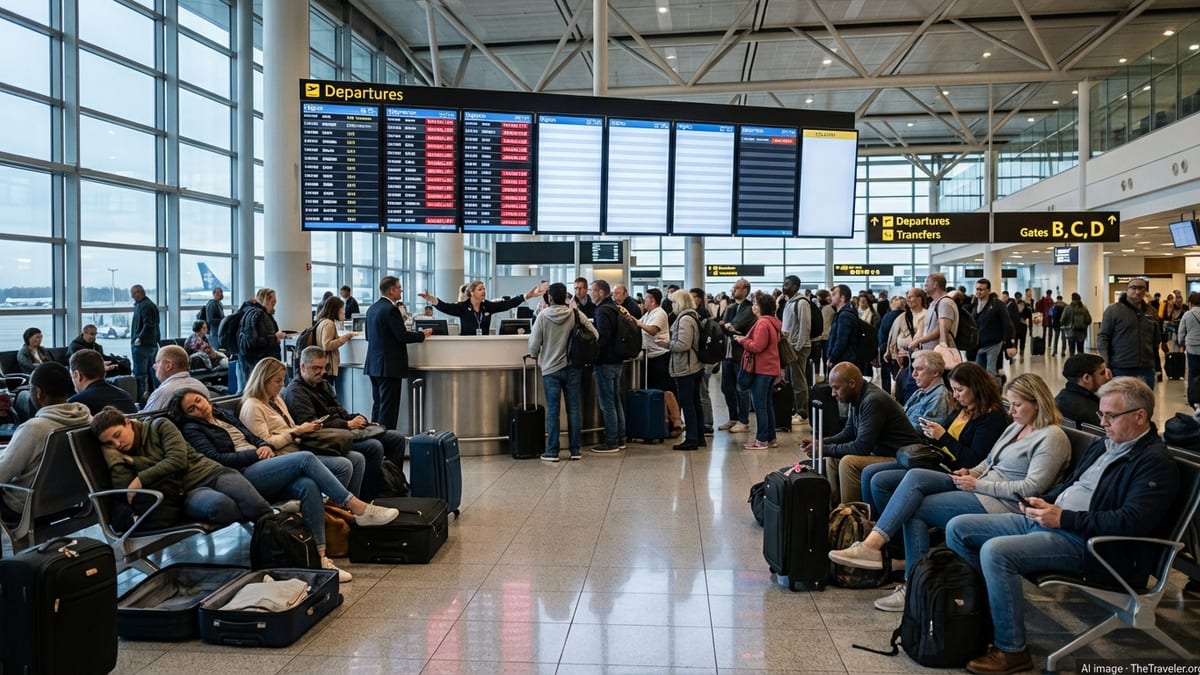
Riyadh airport reopens after attacks, but restrictions stay in place
Riyadh’s King Khalid International Airport resumed limited operations from two terminals on 18 October 2026, roughly two weeks after flight movements were halted following attacks attributed in regional reporting to Yemen’s Houthi movement. Publicly available information on the reopening indicates that services are restarting in phases, with airlines required to obtain prior approval and schedules remaining significantly reduced compared with early October levels.
Coverage from aviation trackers and regional outlets indicates that domestic flights and a small number of international services have returned to the Riyadh schedule. However, capacity remains constrained, and several foreign carriers are yet to add Riyadh back to their active networks, citing ongoing risk assessments and operational reviews of Saudi airspace.
Travel advisories and specialist aviation briefings note that the wider security picture across parts of Saudi Arabia has not fully stabilised, particularly for long haul and overflying traffic. Industry bulletins highlight that some air corridors in the kingdom continue to be subject to restrictions, leading to longer routings, congestion on alternative tracks and a cautious approach by many operators even where airports have technically reopened.
Dubai feels the impact as airlines extend Saudi cancellations
Dubai International Airport remains open and handling high volumes of traffic, but flight-status boards and airline updates show a series of ongoing cancellations and schedule changes on routes linking the city to Saudi Arabia. Recent customer advisories reproduced in regional business media indicate that Emirates and flydubai have cancelled multiple daily rotations between Dubai and Saudi cities including Riyadh, Jeddah and Dammam on selected dates in October, with decisions reviewed on a rolling basis.
According to a Middle East travel update published in late October, Riyadh’s reopening on 18 October has not immediately translated into normal service levels on key city pairs such as Dubai–Riyadh and Abu Dhabi–Riyadh. Instead, airlines are maintaining reduced frequencies or suspending specific flights altogether while they monitor further security developments and assess the reliability of airspace around the Saudi capital.
Other carriers have taken an even more conservative stance. A recent factbox from an international news agency listed European and Asian airlines that cancelled Riyadh services following the early October attacks, with some initially halting flights only until mid October but later extending suspensions toward the end of the month as risk analyses continued. Travel-industry monitoring sites show that several of those cancellations have knock-on effects for passengers using Dubai and other Gulf hubs as connection points to or from Saudi Arabia.
Regional airspace warnings keep Middle East routes under pressure
The ongoing disruption is not limited to point to point Saudi Arabia traffic. Notices from regional and European aviation regulators in October advise airlines to exercise caution or avoid certain airspace segments over parts of Iran, Iraq, Lebanon and defined portions of Saudi territory. A Middle East travel advisory compiled on 19 October notes that these warnings, combined with the attacks on Saudi airports, have prompted some operators to reroute long haul flights around higher risk corridors.
Publicly available flight-tracking data and traveller reports show aircraft making significant detours to skirt affected areas, increasing block times and tightening aircraft and crew availability. Some Gulf carriers are understood to be adjusting routings for services between Europe or Asia and their home hubs, which in turn reduces operational slack and can feed into last minute timetable changes for short haul sectors, including links between Dubai and secondary Middle East destinations.
Industry security briefings circulated earlier this year already described Saudi Arabia’s land network as an emerging contingency corridor when regional airspace is disrupted. The latest wave of airport attacks and missile activity has reinforced that pattern, with freight operators in particular shifting some flows onto road feeder services instead of relying solely on air connections via Riyadh or Dammam. For passengers, this translates into fewer available seats on certain cross border sectors and a greater risk of missed onward connections when reroutes or delays occur.
Passenger policies: rebooking windows and suspended networks
Airlines serving Dubai and the wider region have introduced a patchwork of waivers and customer policies in response to the volatility. A recent Middle East consumer travel piece notes that passengers holding tickets on affected routes involving Saudi Arabia can in some cases rebook without additional charges within specific time windows, often up to the end of October 2026, subject to cabin availability and fare conditions. These waivers typically apply to itineraries that were scheduled to transit Riyadh or other impacted Saudi airports during the period of heightened disruption.
Low cost and regional carriers have also reshaped their networks. According to a travel advisory published by a Middle East based outlet, Turkish budget airline Pegasus continues to suspend flights not only to Saudi destinations such as Riyadh, Dammam and Jeddah, but also to several other Middle East cities including Dubai, Abu Dhabi, Bahrain, Doha and Sharjah. This broad withdrawal removes additional capacity that normally helps connect secondary markets to Gulf hubs.
Separate disruption overviews from airline-rights and compensation platforms list a long roster of international carriers that have cancelled or cut frequencies to multiple Saudi airports since early October. The same reports highlight that some airlines have postponed planned launches of new Riyadh routes into 2027, reflecting a longer term reassessment of the risk environment rather than a short temporary suspension.
What travelers through Dubai and the region should expect now
For travelers, the main consequence is ongoing uncertainty, even as Riyadh’s King Khalid International Airport edges back toward partial normality. Publicly available schedules can change at short notice, and observers tracking operations across the Gulf report that an airport appearing open on paper does not guarantee that every airline will choose to operate its planned flights there.
Regional aviation coverage consistently advises passengers to monitor flight status directly with their airline in the 24 hours before departure, particularly for journeys involving Saudi Arabia or overflying segments that might be rerouted around restricted airspace. Dubai based passengers connecting onward to Saudi cities are being encouraged in public guidance to allow longer connection times and to be prepared for rebookings through alternative gateways such as Jeddah, Medina, Bahrain or Doha when Riyadh services are disrupted.
Analysts following Middle East aviation developments note that the situation remains fluid heading into November 2026. While the reopening of Riyadh’s main airport marks an important step toward restoring connectivity, the persistence of route cancellations and airspace warnings suggests that Dubai and other regional hubs will continue to feel the operational impact for some time, as airlines prioritise safety margins over schedule certainty.