


More news on this day
Saul “Canelo” Álvarez has arrived in Riyadh for his October 31 title bout against Christian Mbilli just days after the United States sharpened its travel warning for Saudi Arabia and ordered some government personnel and family members to leave the kingdom.
Get the latest news straight to your inbox!
Boxing Spectacle Presses Ahead Under Riyadh Season Banner
According to recent boxing coverage, Álvarez landed in the Saudi capital on October 26, joining fighters already assembling for the “Mexico vs The World” card scheduled at The Venue in Riyadh on Saturday, October 31. The event forms part of the entertainment-focused Riyadh Season and is slated to stream globally via pay-per-view platforms.
The headline bout pits Álvarez against WBC super middleweight titleholder Christian Mbilli, with first bell for the main event expected in the early hours of Sunday morning local time to capture prime-time television audiences in North America. Promotional information describes a full undercard featuring boxers from Mexico, Canada, Europe, and Asia, underlining Riyadh’s recent strategy of using major fight nights to draw international visitors.
Reports from specialized boxing outlets indicate that organizers intend to keep the schedule intact despite security concerns, while at least one undercard matchup has been reshuffled after a fighter declined to travel citing safety worries and logistical uncertainty. Ticket sales and broadcast plans are understood to be proceeding, reinforcing the intention to stage one of the year’s highest-profile boxing events in the region.
Álvarez’s presence in Riyadh follows weeks of speculation about whether he would travel amid a series of attacks targeting infrastructure in Saudi Arabia and surrounding states. Earlier interviews and social media posts referenced in international media suggested the Mexican star remained committed to the bout, a stance that now appears confirmed by his early arrival in the kingdom.
U.S. Travel Advisory Raised to ‘Reconsider Travel’ Level
While fight week gets underway, American travelers face a more restrictive policy backdrop. Publicly available State Department information shows that on October 12 the United States updated its advisory for Saudi Arabia to Level 3, “Reconsider Travel,” citing the risk of missile and drone attacks as well as terrorism concerns in certain areas.
An additional alert issued on October 23 ordered the departure of non-emergency U.S. government employees and eligible family members from Saudi Arabia in response to what officials described in public documents as rising security risks. Separate news reporting indicates that this move followed a series of deadly attacks attributed to Yemen-based Houthi forces, including strikes on civilian airports and other critical facilities that disrupted flights and caused casualties.
The advisory maintains a more severe Level 4, “Do Not Travel,” designation for areas near the Yemen border, reflecting long-standing conflict dynamics in the south of the country. Guidance for private U.S. citizens emphasizes careful monitoring of local media, contingency planning for sheltering in place, and close attention to airline operations and airport security procedures.
Although the overall advisory level for Saudi Arabia had been at Level 3 before the latest notices, the combination of ordered departures, airport disruptions, and high-profile attacks has effectively tightened the practical travel environment for Americans, particularly those considering leisure trips around major events such as the Álvarez–Mbilli bout.
Airport Disruptions and Route Changes Shape Fan Travel
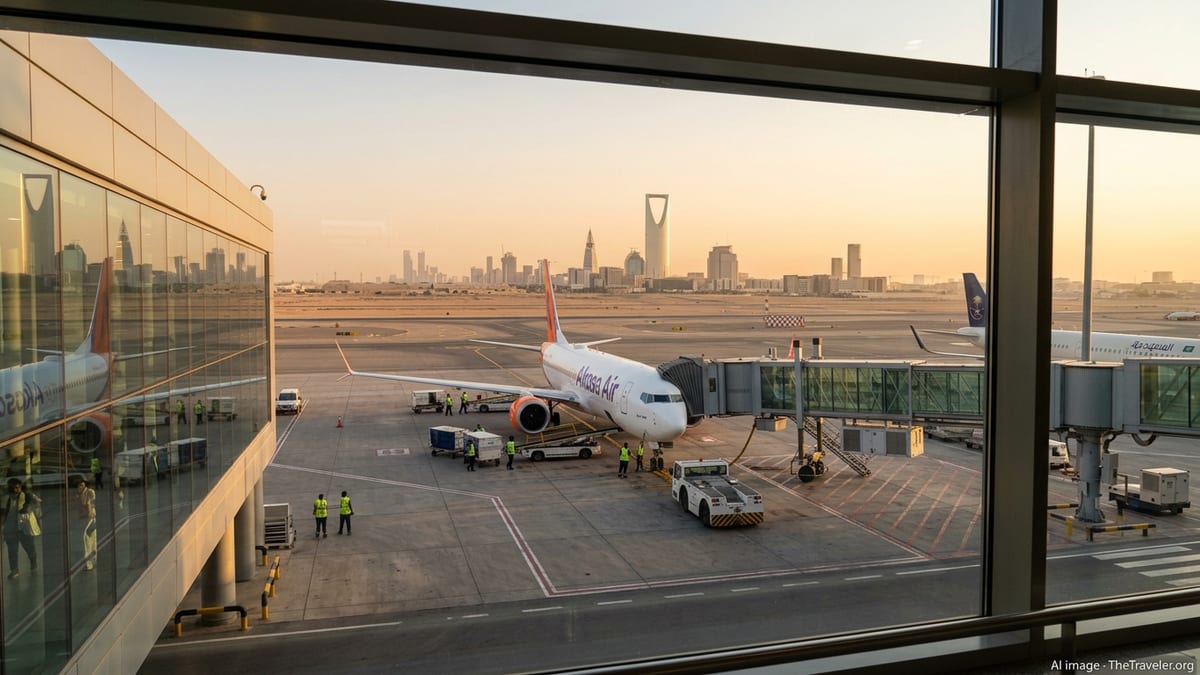
Travel-industry and sports reports describe a complex aviation picture for those attempting to reach Riyadh in late October. Civilian airports in Saudi Arabia, including the capital’s main hub, have experienced periodic closures and schedule changes in recent weeks following missile and drone incidents. In some cases, flights were temporarily halted while damage assessments and security checks were carried out.
Commentary from boxing media and fan communities indicates that some travelers connected to the fight card have opted for indirect routings, including flights into neighboring countries followed by overland journeys of several hours to Riyadh. These workarounds reflect both reduced nonstop capacity and apprehension about possible last-minute cancellations affecting international arrivals into Saudi airports.
Mainline carriers serving Riyadh and Jeddah continue to list commercial services, but timetables remain subject to operational adjustments tied to the evolving security situation. Prospective visitors are being encouraged in public advisories to stay in close contact with airlines, track flight-status notifications, and prepare contingency plans if routes are diverted or connections are interrupted.
For inbound fans, one practical implication is the erosion of the convenience that has characterized recent Riyadh Season events, which previously benefited from stable long-haul schedules and streamlined transit. With the Álvarez fight positioned as one of the centerpiece attractions of the festival’s opening weeks, any additional disruption could have outsized effects on crowd size and last-minute travel decisions.
Heightened Security Climate Around Major Events
Regional risk analyses circulated within the travel and security sector throughout 2026 have pointed to an elevated threat environment across parts of the Middle East, including Saudi Arabia. These assessments reference the potential for further missile or drone launches targeting airports, energy infrastructure, and symbolic venues, including large public gatherings such as concerts or sporting fixtures.
Riyadh Season organizers have promoted past editions of the festival as heavily policed and tightly managed, with stadiums, arenas, and fan zones subject to layered screening and restricted-vehicle perimeters. While specific measures for the Álvarez–Mbilli card are not fully detailed in public, the broader context suggests a high-visibility security operation around The Venue and adjacent entertainment districts.
Travel guidance from governments and private risk consultancies advises foreign visitors to minimize time spent in unsecured public areas outside controlled zones, avoid demonstrations, and be prepared to follow instructions from event staff and local security personnel if alerts or alarms occur. Travelers are also encouraged to identify safe rooms or interior spaces in hotels and venues where they could shelter temporarily during any incident involving incoming projectiles.
For many boxing fans, the decision to attend balances the allure of seeing Álvarez in a rare overseas appearance against concerns about being caught up in a rapidly changing security situation. Industry observers note that the outcome of this week’s events in Riyadh, both inside and outside the ring, could influence perceptions of Saudi Arabia’s viability as a long-term host for global mega-events.
What the Advisory Means for U.S. Travelers Considering Riyadh
For American visitors, the Level 3 advisory does not prohibit travel but signals that non-essential trips should be carefully reconsidered. Publicly available State Department guidance recommends that anyone who decides to proceed enroll in the Smart Traveler Enrollment Program so they can receive security updates and make it easier for consular staff to contact them in an emergency.
The advisory also highlights long-standing restrictions on where U.S. government personnel may travel within Saudi Arabia, including bans on personal trips within a specified distance of the Yemen border and limitations on the use of certain airports and transport corridors. While these rules apply directly to official staff, they illustrate the types of risks that independent travelers are asked to weigh.
Major international hotel brands in Riyadh continue to accept bookings around the October 31 fight date, and there is no broad requirement for private U.S. citizens to depart the country. However, the ordered departure of some government families underscores that conditions can tighten quickly, and visitors may face sudden changes to flight options, local movement, or event schedules if the security outlook deteriorates further.
Prospective travelers weighing a last-minute journey for the Álvarez–Mbilli showdown are therefore operating in a more constrained decision space than fans who attended previous Riyadh Season cards. The combination of a marquee sporting occasion and a fluctuating threat picture is turning this week in the Saudi capital into both a test of emergency planning for the travel sector and a high-stakes showcase for the kingdom’s ambitions as an international events hub.