


More news on this day
Rail operator Greater Anglia issued a strong “do not travel” warning to passengers after a fallen tree near Stansted Mountfitchet blocked key routes to Stansted Airport and Cambridge during a stormy October weekend.
Get the latest news straight to your inbox!
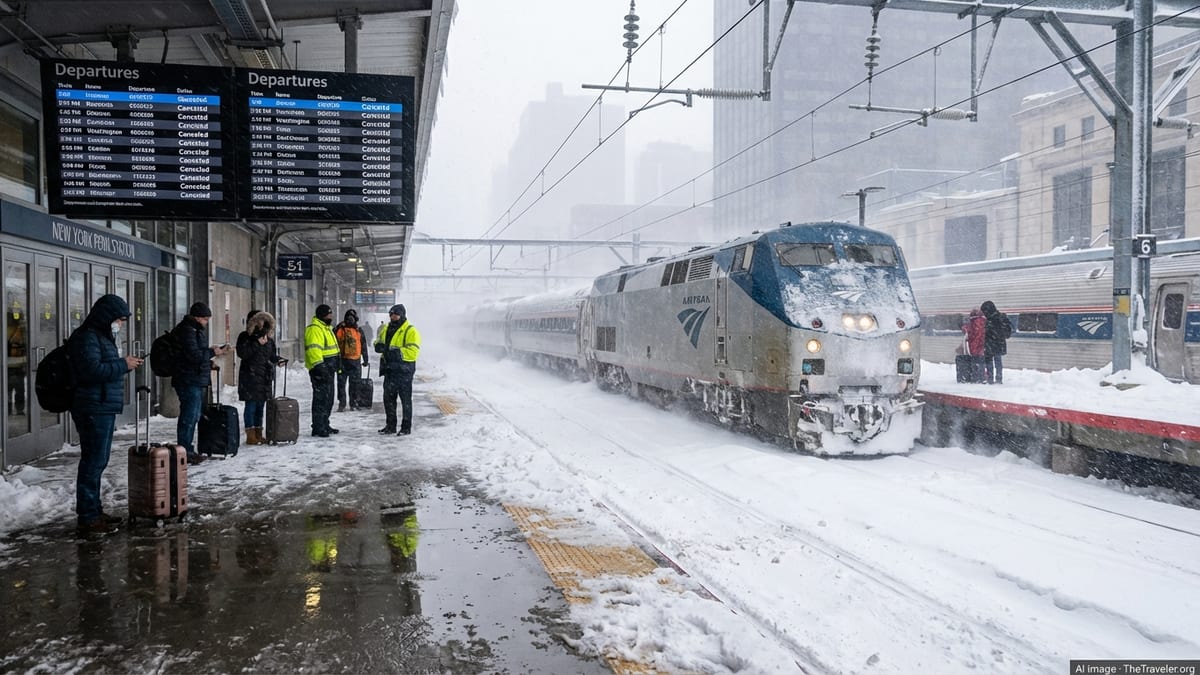
Fallen tree severs Stansted Airport and Cambridge links
According to publicly available information from rail disruption feeds, a tree came down onto the railway near Stansted Mountfitchet on the evening of Saturday 24 October, damaging overhead wires and blocking the line serving Stansted Airport. Services on the Stansted Express between London Liverpool Street and the airport were heavily disrupted, with trains cancelled or severely delayed.
Published coverage indicates that the impact extended beyond airport services to Greater Anglia trains running towards Cambridge and intermediate Hertfordshire stations such as Broxbourne and Bishop’s Stortford. National journey planners showed cancellations and short-notice alterations, with some trains terminating well short of their usual destinations while the obstruction remained in place.
Alerts circulated through rail information channels stated that passengers should not travel on the affected stretch between Bishop’s Stortford and Stansted Airport for the rest of the day. The warning was unusual in its strength, advising customers to defer journeys where possible rather than attempt to complete them by alternative routes.
Reports from local outlets in the Bishop’s Stortford area described services as “halted” towards Audley End and Stansted after the tree fell during storm conditions. Some travellers were left on stranded trains for extended periods overnight as teams worked to make the route safe and to restore power to the overhead equipment.
Stormy weekend brings wider East Anglia disruption
The fallen tree near Stansted formed part of a broader pattern of weather-related disruption across the East of England rail network over the same weekend. Forecasts associated with Storm Austen and the subsequently named Storm Boelo highlighted the risk of strong winds and heavy rain, conditions that often lead to debris on the line and damage to electrical infrastructure.
Rail disruption summaries show that Greater Anglia services between Colchester and Ipswich, and between Manningtree and Harwich Town, were also affected by storm-related problems, including reported damage to overhead wires. Trains were cancelled on some sections, and in at least one case a diesel-operated shuttle was brought in to cover an electric route while repairs were carried out.
Further east, information from National Rail and the operator’s own live-update platform recorded separate incidents involving trees on the railway between Beccles and Lowestoft and in the Eccles Road area on the Norwich to Cambridge line. In both cases, trains were suspended or heavily disrupted for several hours on 26 October while engineers worked alongside power-network teams where necessary.
By Sunday 25 October, published journey updates indicated that lines around Stansted and other affected corridors had reopened, although residual delays continued into the morning as services and train crews were brought back into position. Advisories continued to urge passengers to check live information before setting out, reflecting the risk of further short-notice disruption as unsettled weather persisted.
“Do not travel” message reflects severity of incident
Warnings explicitly advising passengers not to travel are relatively rare on the UK rail network outside of major strikes or extreme weather events. In this case, the combination of a blocked line, damaged overhead power equipment and the importance of the Stansted Airport route prompted Greater Anglia to use the strongest available wording for much of the day.
Journey-planning information and media reports show that the fallen tree near Stansted Mountfitchet cut off the main direct rail link between central London and the airport, as well as connections towards Cambridge North. With no clear estimate initially available for reopening the line, and with replacement buses in limited supply amid challenging road conditions, journey planners indicated that completing trips would be difficult for much of Saturday evening.
According to published coverage from national broadcasters, passengers needing to travel between London and Stansted Airport were advised to consider Great Northern services from London King’s Cross to Cambridge and then continue onwards, although capacity on alternative routes was constrained. Travellers heading to and from intermediate stations in Essex and Hertfordshire faced fewer fallback options, reinforcing the decision to discourage non-essential travel.
The wording of the operator’s alert contrasted with more typical advice during minor delays, which tends to encourage passengers simply to allow additional time. On this occasion, journeycheck systems and media summaries made it clear that journeys on the affected stretch were likely to be heavily disrupted or impossible for several hours.
Knock-on effects for airport and regional travellers
The timing and location of the incident meant that the disruption was felt well beyond local commuter flows. Stansted Airport relies heavily on rail connections for both air passengers and staff, with the dedicated Stansted Express forming a key part of surface access plans. With this route out of action for much of Saturday evening, travellers heading to late flights were forced to rely on road transport at short notice.
Local reporting around Bishop’s Stortford highlighted concerns among residents and visitors about the reliability of rail links during the stormy spell, particularly for those making time-sensitive journeys to the airport or returning home after late shifts. Some accounts described passengers being advised of very high taxi fares when rail services were suspended, underlining the financial impact that sudden line closures can have on individuals.
Beyond the airport corridor, the series of fallen-tree incidents between Beccles and Lowestoft and near Eccles Road disrupted travel plans across Norfolk and Suffolk. These lines are used by a mix of commuters, leisure travellers and students, many of whom had limited alternatives once services were halted. In several instances, operators arranged ticket acceptance on local bus routes to help passengers complete their journeys.
Despite these measures, publicly available service summaries make clear that capacity on buses was restricted and journey times were significantly extended. Passengers were advised to allow extra time, expect crowding on remaining services and to consider postponing trips that were not essential until conditions improved and rail lines fully reopened.
Rail operators prepare for further weather-related challenges
The weekend’s events have renewed attention on how storms affect rail operations in East Anglia, a region with extensive tree cover close to key rail corridors and multiple routes heavily dependent on overhead electric power. Historical case studies compiled by tree-safety and rail-industry bodies have repeatedly highlighted fallen trees as a significant risk factor for both safety incidents and prolonged service disruption.
Greater Anglia and infrastructure manager Network Rail routinely publish seasonal guidance explaining how they manage the risks posed by autumn and winter weather, including additional vegetation inspections, targeted tree management and protocols for temporarily reducing train speeds during high winds. However, the combination of saturated ground and strong gusts associated with recent storms has continued to generate incidents where entire trees are uprooted onto tracks or overhead lines.
Travel advice issued across the stormy weekend stressed the importance for passengers of monitoring live updates before travelling, especially on exposed rural routes and key airport links. Rail apps and operator websites carried repeated reminders that timetables could change at short notice if additional trees came down or if repair work took longer than expected.
While lines affected by the Stansted Mountfitchet, Beccles to Lowestoft and Eccles Road incidents had reopened by late 26 October, disruption summaries noted ongoing potential for delays as further bands of wet and windy weather cross the region. For rail users in East Anglia, the “do not travel” message issued during the fallen-tree incident near Stansted serves as a clear signal of how quickly conditions can deteriorate when storms coincide with vulnerable rail infrastructure.