


More news on this day
Saúl “Canelo” Álvarez has arrived in Riyadh ahead of his highly promoted title fight, touching down in the Saudi capital just as the United States tightens its travel warning for the kingdom amid heightened security concerns around key airports and critical infrastructure.
Get the latest news straight to your inbox!
A Star Arrival Amid Heightened Security Tensions
Álvarez landed in Riyadh on Monday, October 26, according to multiple boxing outlets and event organizers, beginning fight week for his WBC super middleweight title bout against Christian Mbilli scheduled for Saturday, October 31 at a venue in the city that forms part of the broader Riyadh Season entertainment program. Coverage of his arrival shows the Mexican champion greeted with flowers, traditional dances and a dense crowd of fans waving Mexican flags inside an arrivals hall.
The fight headlines a “Mexico vs The World” card that has been promoted for weeks as one of the centerpieces of this year’s Riyadh Season calendar. Promoters indicate that the main event is expected to start in the early hours local time to accommodate prime-time viewing in North America, continuing a pattern established in earlier Saudi-hosted boxing cards.
Álvarez’s early arrival comes after social media posts from senior Saudi entertainment officials earlier in October described the fighter as committed to competing in Riyadh “no matter what happens,” even as security headlines around the kingdom intensified. Publicly available footage from the airport shows no visible disruption to his entourage’s transit, even though commercial operations at Saudi gateways have been repeatedly affected by recent security incidents.
U.S. Upgrades Saudi Arabia to “Reconsider Travel”
Álvarez’s touchdown coincides with a significant change in U.S. government guidance. On October 23, 2026, the U.S. Department of State updated its Saudi Arabia country advisory to Level 3, labeled “Reconsider Travel,” citing the threat of missile and drone attacks, terrorism and the risk of ballistic strikes on civilian infrastructure, including airports. The update also ordered non-emergency U.S. government employees and eligible family members to depart the country.
The advisory highlights threats linked to Iran-backed Houthi forces in Yemen, which have carried out attacks against targets inside Saudi Arabia, including attempts to strike Riyadh and eastern provinces. In separate public reporting, aviation and civil defense authorities have acknowledged fatalities and disruption linked to attacks on airports, reinforcing concerns around congestion and cancellations for those trying to enter or leave the country by air.
In parallel, travel advisories from other governments, including Canada and Australia, now warn against travel to specific Saudi airports such as King Khalid International in Riyadh and King Fahd International in Dammam, or urge citizens already in the kingdom to consider overland and rail options if they opt to depart. The calibrated language reflects a scenario where general travel to Saudi Arabia has not been suspended, but non-essential trips face significantly elevated risk compared with earlier Riyadh Season editions.
Boxing Card Presses Ahead Despite Airport Disruptions
Despite the sharpened tone of government advisories and reports of interruptions at Riyadh’s main airport, organizers continue to signal that the Álvarez versus Mbilli card is proceeding as planned. Event schedules shared by boxing media list the fight night for October 31 in Riyadh with an undercard featuring international talent from Mexico, Europe, Asia and the Middle East, although at least one bout has reportedly been removed in recent days.
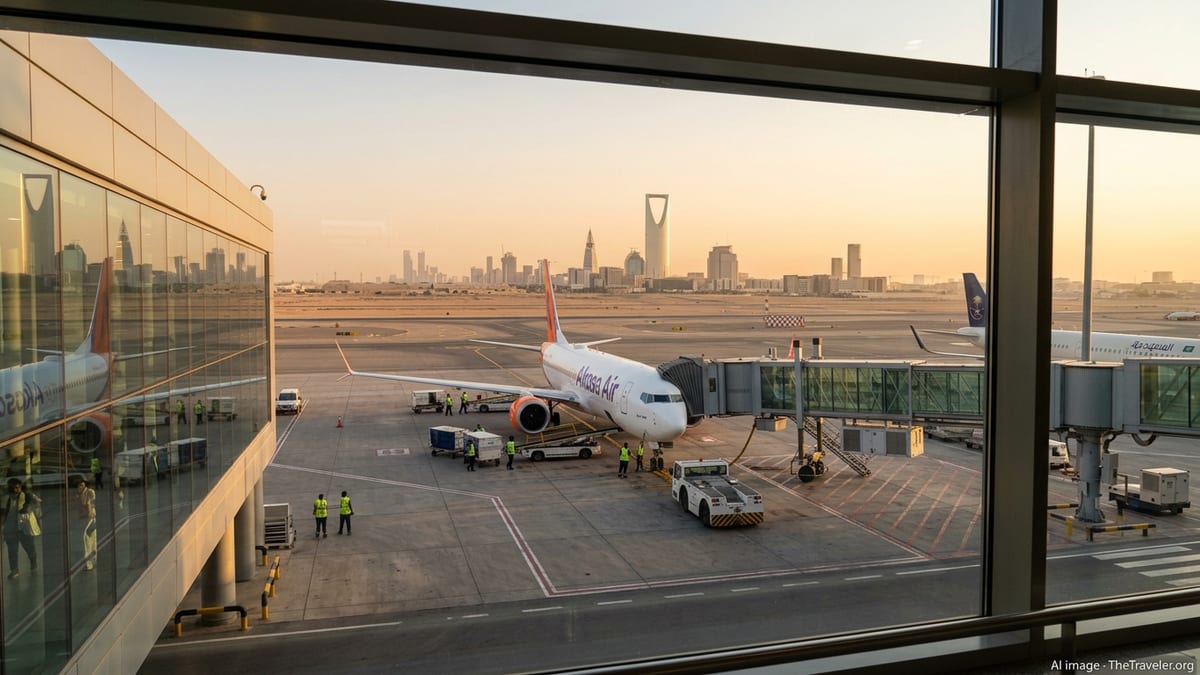
Reports indicate that in the weeks leading up to Álvarez’s arrival, flights into King Khalid International Airport experienced periodic shutdowns or diversions following projectile attacks claimed by Yemen’s Houthi movement. In some cases, service was suspended for hours at a time, forcing airlines to reroute or cancel inbound traffic to the Saudi capital and nearby hubs.
Travel industry updates suggest that while some major carriers have reduced or temporarily halted service into Riyadh, others continue to operate on adjusted schedules, often subject to last minute changes. Travelers heading to the fight are advised in official guidance to maintain flexible itineraries, register with consular services where available, and monitor airline notifications closely, as flight status can shift rapidly in response to security alerts.
For boxing fans in Saudi Arabia or neighboring Gulf states, alternative routes by car, bus or rail have been promoted by regional travel advisories as potential options to reach Riyadh, particularly from hubs in the United Arab Emirates and Qatar, though such journeys also require careful monitoring of local security notices.
Riyadh Season Pushes On Under Global Scrutiny
The Álvarez bout forms part of a wider slate of sports and entertainment programming branded under Riyadh Season, a festival that in recent years has brought high-profile boxing, mixed martial arts, wrestling and concerts to the Saudi capital. Previous editions have included heavyweight boxing showcases and major wrestling events, and the current season again combines combat sports with large-scale music and cultural attractions spread across purpose-built zones such as Boulevard City and other themed districts.
This year, however, Riyadh Season unfolds in the shadow of heightened regional tensions and sharper public debate in traveler communities about the balance between spectacle and safety. Online forums and fan discussions show a split between those determined to attend headline events regardless of risk and others weighing whether the elevated advisory level and airport attacks justify canceling or postponing trips.
Sports industry analysts note that the continuation of marquee events like Álvarez versus Mbilli offers Saudi organizers an opportunity to underscore their commitment to hosting international spectacles, even under pressure, but also exposes them to criticism if conditions deteriorate. The situation also places promoters, athletes and broadcasters under renewed scrutiny over how they assess and communicate risk to ticket holders and traveling staff.
What the New Advisory Means for U.S. Travelers
For U.S. citizens planning to travel to Riyadh for Álvarez’s fight or other Riyadh Season events, the updated State Department guidance has several practical implications. A Level 3 advisory does not prohibit travel, but it signals that Americans should avoid non-essential trips and be prepared to depart quickly if conditions worsen. The concurrent decision to draw down non-emergency embassy personnel and families suggests a reduced capacity for in-country consular support.
Publicly available information from the U.S. government encourages prospective visitors to carefully review commercial flight options, ensure that passports and visas are in order, and maintain contingency plans for alternative departure routes. Travelers are advised to enroll in relevant citizen registration programs so they can receive direct security alerts and to keep their families informed of itinerary changes.
Insurance and risk specialists further recommend that travelers confirm the details of any trip coverage, including exclusions related to conflict or terrorism, before departing. In many policies, elevated travel advisories can affect coverage for cancellations or evacuations, making it essential to understand the terms before purchasing tickets to high-profile events in volatile environments.
As Álvarez settles into fight week in Riyadh, the juxtaposition of a global boxing superstar’s arrival with the strictest U.S. travel warning for Saudi Arabia in recent years underscores the new complexity facing international sports tourism. Fans contemplating a late trip to see the champion in person now have to weigh not only card lineups and ticket prices, but also the fast-changing security picture that surrounds one of boxing’s biggest stages.