


Landing in Cape Town, most visitors head straight for the V&A Waterfront, home to major hotels, restaurants and the Cape Town Cruise Terminal. The journey is relatively short, around 20 kilometres, but the experience can feel very different depending on the time of day, traffic and how you choose to travel. This guide explains the real-world options from Cape Town International Airport to the V&A Waterfront and cruise pier, with clear expectations on cost, travel time, luggage handling and safety.
Get the latest updates straight to your inbox!
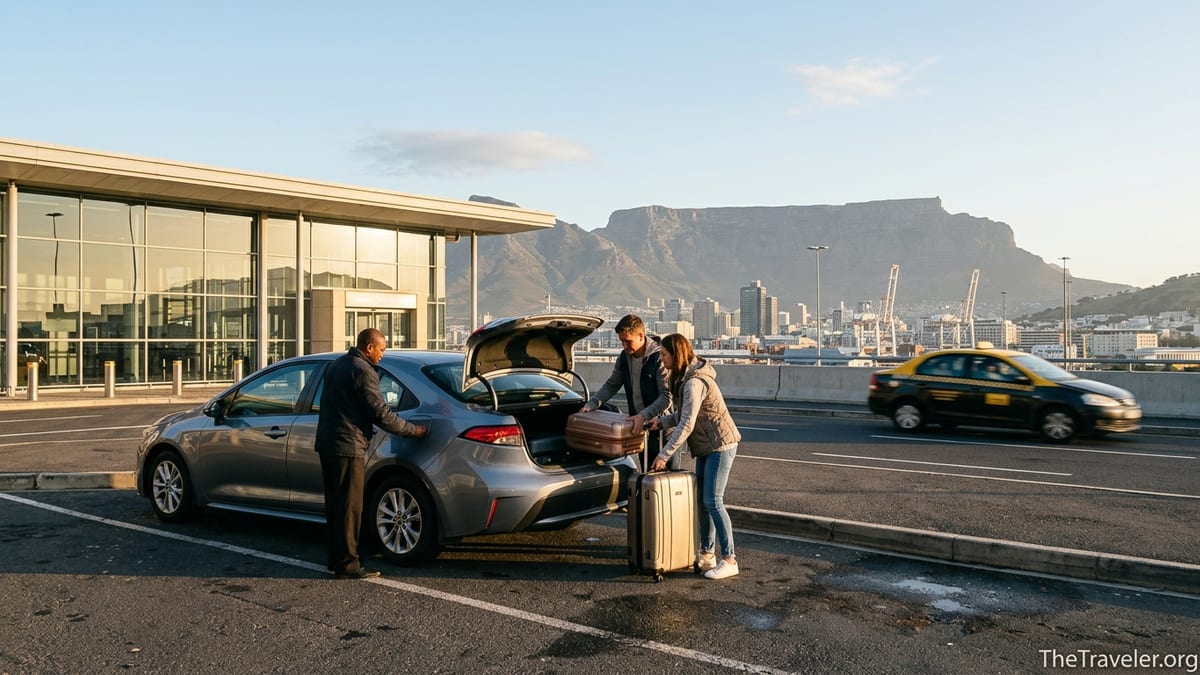
Understanding the Route: Airport, Waterfront and Cruise Terminal
Cape Town International Airport lies about 20 kilometres east of the central city and the V&A Waterfront, connected mainly by the N2 highway and then the M5 or Buitengracht and Dock Road into the harbour area. In light traffic, such as early on a Sunday morning, the drive can take as little as 20 minutes. In weekday rush hour or during major events it can stretch closer to 45 minutes or more, especially if there are delays around the Foreshore and docks.
The V&A Waterfront is a large precinct built around the working Port of Cape Town. Hotels such as the Table Bay Hotel, One&Only Cape Town, Victoria & Alfred Hotel, Radisson Red and several apartment-style properties are scattered across different basins. Many rideshare or taxi drivers know the general area but will ask which hotel or shopping mall entrance you prefer, so it helps to have the exact name ready and, if possible, to show it on your phone map.
The Cape Town Cruise Terminal is within the V&A Waterfront harbour but not directly next to the main shopping mall. Many large international lines dock here in season, and smaller expedition ships use adjacent berths. From the cruise terminal, it is a short drive or a 10 to 20 minute walk to most Waterfront hotels depending on which basin you are heading to. That means you can treat “V&A Waterfront” and “Cruise Terminal” as almost the same destination time-wise when you are planning your transfer from the airport.
The main variables that affect your journey are time of day, traffic congestion levels on the N2 and around the city bowl, how much luggage you have, and whether you prefer to prioritise cost, comfort or predictability. For many visitors, especially after a long overnight flight, the small price differences between options matter less than avoiding confusion in the arrivals hall.
Taking Uber or Bolt: Step by Step from Arrivals
Ridesharing with Uber or Bolt is one of the most popular ways to get from Cape Town Airport to the V&A Waterfront. The apps are widely used by locals and visitors alike, and typical fares for a standard category car from the airport to the Waterfront usually fall in the region of about 150 to 280 rand, depending on traffic, demand and the specific drop-off point. During peak times or if there is a surge due to rain or a big event in town, that price can climb, so always check the estimate before confirming.
When you exit customs in the international arrivals hall, you will walk out into a busy public concourse with cafes, ATMs and car-rental desks. It is normal to be approached by people asking if you need a taxi or offering what they call an Uber, but they are usually unregistered operators. For a genuine app booking, open Uber or Bolt once you have your bags, confirm “Cape Town International Airport” as your pickup, and select “V&A Waterfront” or the exact hotel name as your destination. The apps will direct you to a designated rideshare pickup area, typically just outside the terminal near the main parking garage, rather than the kerb directly in front of arrivals.
A practical example: a couple arriving around 10:00 on a weekday in July with two medium suitcases might wait five to ten minutes for a driver to accept the request and reach the pickup zone. The ride itself may take 25 to 35 minutes depending on traffic around the Foreshore interchange. The fare might show around 190 rand in the app at request time. Payment is handled in the app, which is helpful if you have not yet withdrawn cash. Drivers will usually help load luggage into the boot, but if your group carries more than four large suitcases or includes more than three adults, consider selecting an XL option so you are not forcing bags onto laps.
The main advantages of Uber and Bolt are price and flexibility. You can route directly from the airport to a specific Waterfront hotel entrance, an apartment building such as Lawhill or Waterfront Village, or the cruise terminal drop-off gate in front of check-in. You can also track your car on the map and share your trip with friends or family. The main disadvantages are that pickup can be confusing on your first visit, you may wait longer if there is high demand or if drivers avoid peak traffic around the Waterfront, and you have slightly less formal recourse if a driver refuses to enter a particular side street or hotel forecourt.
Official Airport Taxis and Metered Cabs
For travellers who prefer not to use ride-hailing apps, official airport taxis and metered cabs remain a straightforward option. Inside the arrivals concourse you will see an official taxi booking counter that assigns vehicles and quotes a fixed price for popular destinations such as the city centre and V&A Waterfront. Recent anecdotal reports put the typical fare to the Waterfront around 250 to 300 rand, slightly higher than a standard rideshare but not dramatically so for a couple or small family.
Booking at the official desk rather than walking out and negotiating with a driver on the kerb is the safer choice. The staff will record your destination, write down the vehicle details and often provide a slip with the quoted fare, which reduces the risk of misunderstandings later. It also means you do not need local mobile data on arrival, which is useful if you have not yet purchased a SIM card or enabled roaming.
A realistic scenario: a family of four with two small children and three checked suitcases arrives at 18:00, just as the evening commute builds. They approach the taxi counter, request a car to the One&Only Cape Town at the Waterfront, and are quoted a fixed fare in the upper 200 rand range. They may wait ten minutes for a larger sedan or minivan, then take 35 to 45 minutes to reach the hotel entrance due to traffic. The driver will drop them directly at hotel reception and assist with luggage, at which point porters take over.
The trade-offs with metered taxis are straightforward. You pay a little more than the cheapest rideshare in exchange for simplicity and a slightly more controlled booking environment. On the downside, some older taxis are less comfortable than typical rideshare vehicles, and air-conditioning or card terminals may not always work reliably. If card payment is not available, pay in cash in rand and avoid using large notes where possible.
Private Transfers for Hotels and Cruise Passengers
Many Waterfront hotels and cruise lines work with private transfer companies that offer pre-booked cars, vans or minibuses from the airport. These services cost more than rideshares or standard taxis but give you a named driver waiting in the arrivals hall with a sign, predictable pricing in your booking currency and space for extra luggage or sports equipment. They are particularly popular with cruise passengers carrying multiple large suitcases or older travellers who prefer a smoother handover.
As an example, a mid-range hotel at the Waterfront might quote in their pre-arrival email a private sedan transfer for up to three guests at a flat rate somewhere around the equivalent of 600 to 800 rand from the airport to the property, depending on contract rates and season. Larger luxury properties may offer Mercedes or similar vehicles for higher prices, while shared shuttle vans that stop at several Waterfront hotels may cost less per person but take longer.
Cruise passengers often have tighter time windows, especially on disembarkation days when flights leave in the late morning. A couple flying out at 11:30 and disembarking a large ocean ship at the Cape Town Cruise Terminal might choose a pre-booked transfer scheduled for 08:00. The driver meets them at the ship’s passenger exit, helps with two large suitcases and carry-ons, and takes a direct route to the airport. In light traffic that trip can be 25 to 30 minutes, but many cruise lines recommend allowing at least 45 to 60 minutes of driving time plus extra for check-in queues and potential congestion.
Private transfers make most sense if you value certainty or are travelling in a group. For four adults trailing heavy luggage, the per-person difference between a private van and two separate Uber rides can be modest, especially once you factor in the convenience of one vehicle, a larger luggage compartment and coordination with your hotel or cruise agent if your flight is delayed.
Luggage, Hotel Drop-offs and Cruise Check-in
How much luggage you carry can significantly shape the best choice of transfer. Rideshare sedans in Cape Town typically accommodate two medium suitcases in the boot and one or two smaller cabin bags. Anything more tends to spill into the rear footwells or across passengers’ laps. If you are a family who has just completed a safari and you are travelling with multiple large duffel bags and hard suitcases, an XL rideshare, minivan taxi or private transfer will be more comfortable and safer.
Most hotels at the V&A Waterfront are set up for car and taxi drop-offs at or near their main entrances. For instance, vehicles entering the main Waterfront precinct typically follow signs to hotel zones where porters wait by the curb. At larger properties, drivers pull under a porte-cochere, and staff load luggage onto trolleys before escorting you to reception. Apartment complexes inside the Waterfront, such as self-catering units around the marina, may have security gates or underground parking. In those cases, rideshare drivers will usually stop at the nearest pedestrian entrance or management office, so it is helpful to know which gate your host has specified.
For the cruise terminal, drop-off is usually just outside the check-in hall. Cars queue along the kerb, passengers unload bags onto the sidewalk and porters or cruise staff take checked luggage to the screening area. If you are arriving from the airport on embarkation day, keep your cruise tags accessible in your hand luggage so you can attach them before stepping out of the car. With heavy bags, consider tipping the driver a small amount in rand for assistance, as most standard fares do not include porterage.
On disembarkation day, luggage reclaim varies by cruise line and ship size. Many passengers choose self-assist programs where they roll their own suitcases off the ship early. In that case, having a pre-booked car or knowing exactly where to meet your rideshare is important, as the taxi and e-hailing pick-up area outside the terminal can be busy for an hour or two after a large ship arrives. Expect at least 15 to 30 minutes from when you walk off the ship to when you reach your waiting vehicle, longer if you must clear crowds and queues in the terminal.
Safety, Scams and What to Watch For
Cape Town’s route from the airport into the city passes through busy highways and some less affluent suburbs. Most travellers complete the journey without incident, but it is sensible to stay alert and adopt the same precautions you would in any large city. Keep phones and wallets out of sight when you are near the road, and avoid placing bags where they could be grabbed through open windows at traffic lights. Once in the Waterfront precinct itself, the environment is more controlled, with private security and access points, but basic common sense still applies.
One recurring issue at the airport is unofficial drivers presenting themselves as Uber or offering “better prices” in the arrivals hall or outside the terminal. To avoid this, only book rides via the official Uber or Bolt apps and check that the vehicle’s registration plate, car model and driver photo match what you see in the app before you get in. If someone approaches you saying they are your Uber but the trip has not appeared in your app, decline politely and walk away. If you are unsure where to meet your driver, ask an airport information desk rather than a stranger.
At night, it is prudent to go door to door rather than being dropped at a vague point “near” your accommodation, especially if you are staying in an apartment on the fringes of the Waterfront or walking to the area from the closest main road. Inside the V&A Waterfront complex, most hotels and restaurants are connected by well-lit pedestrian routes and monitored walkways. If you do need to walk with luggage, keep to these areas rather than quieter back streets or poorly lit underpasses.
If a driver suggests detouring via a remote ATM, changing the agreed route without explanation or picking up additional passengers, you are within your rights to refuse and, if necessary, ask to end the trip in a safe, busy area. In the case of e-hailing services, you can also contact support through the app later to report any problems. For peace of mind, many travellers share their live trip location via messaging apps with a friend or family member, particularly when travelling solo at night.
Realistic Travel Times and How to Avoid Delays
In pure distance terms, Cape Town Airport to the V&A Waterfront is not far, but traffic conditions and timing can have a noticeable impact on the length of your journey. During the early morning peak on weekdays, roughly from 07:00 to 09:00, inbound traffic on the N2 can slow significantly as commuters head into the city. Similarly, the evening peak between about 16:00 and 18:30 can create bottlenecks both on the N2 and on the approach roads around the central business district and port.
As a rough guide, if you travel outside the peaks and in normal weather, expect 20 to 30 minutes by car from terminal to hotel entrance at the Waterfront. During heavier traffic or on particularly busy cruise days when several ships are in port, plan for 35 to 45 minutes. In the event of roadworks, collisions or severe congestion, it can take longer, although such extended delays are not the norm on every day.
For arriving flights, there is little you can do about highway congestion, but you can streamline your own process. Sitting toward the front of the aircraft if you have a choice, heading directly to passport control, and using e-gates if you are eligible can shave 10 to 20 minutes off your time before you reach the luggage carousel. Travelling with carry-on only, when practical, can also reduce delays. Once you leave customs, having your chosen transport method decided in advance, whether an app ride, official taxi desk or pre-booked driver, helps you move quickly through the busy arrivals hall.
For departure days, work backward from your flight time. Most airlines out of Cape Town recommend arriving at least two hours ahead for domestic flights and three hours for international services. Add to that a conservative 45 minutes for the transfer from the V&A Waterfront, and you have a sensible buffer. So, for a 14:00 international departure, leaving your hotel or cruise terminal around 10:00 to 10:15 gives you a comfortable margin for traffic, check-in, security and a short break airside before boarding.
Choosing the Best Option for Your Trip
No single transfer option suits every traveller, but some patterns emerge. Solo travellers and couples who are comfortable with smartphone apps and want to minimise cost often prefer Uber or Bolt. They appreciate being able to request a car on arrival, watch it approach and pay without using cash. This works especially well for daytime arrivals when you can easily find your way to the pickup area and see vehicle details clearly.
Families with children, older travellers and those arriving late at night often lean toward either the official airport taxi desk or a pre-booked private transfer. The appeal is as much emotional as practical. Knowing someone will be waiting at a fixed point with your name on a sign or that you simply need to visit a clearly marked taxi counter can reduce stress at the end of a long journey. The cost difference, once spread across multiple travellers, is less dramatic than it appears when compared only on a per-car basis.
Cruise passengers should consider both the amount of luggage they carry and the timing of ship embarkation or disembarkation. On embarkation days, when hundreds or thousands of people converge on the Cape Town Cruise Terminal, having a pre-booked car at a set time can be reassuring. On disembarkation days, if you are heading directly to the airport, build in extra buffer time in case customs, luggage collection or port traffic take longer than planned.
Whichever option you choose, keep key details at hand. Store your hotel’s exact name and entrance in your phone, note the cruise terminal as your destination rather than simply “Waterfront” if you are heading straight to the ship, and make sure your phone has enough battery to show maps or booking confirmations. Small bits of preparation at the airport can make the short trip into Cape Town feel like the smooth start or finish to your stay that it should be.
FAQ
Q1. How long does it usually take to get from Cape Town Airport to the V&A Waterfront?
In normal daytime traffic, expect about 20 to 30 minutes by car. During weekday rush hours or on very busy days, it can stretch to 35 to 45 minutes.
Q2. What is a typical cost for an Uber or Bolt from the airport to the Waterfront?
For a standard car, most visitors report paying in the region of 150 to 280 rand, depending on traffic, demand, and the exact drop-off point.
Q3. Are taxis from the airport safe and reliable?
Using the official taxi desk inside the arrivals hall is generally considered the safest option if you prefer a taxi. It provides fixed pricing and records of your vehicle and destination.
Q4. Can I ask my Waterfront hotel to organise a transfer from the airport?
Yes, most Waterfront hotels can arrange private transfers. These usually cost more than rideshares but include a driver waiting in arrivals and direct drop-off at the hotel entrance.
Q5. How close is the Cape Town Cruise Terminal to the main V&A Waterfront area?
The cruise terminal sits within the broader Waterfront harbour. It is a short drive or roughly a 10 to 20 minute walk from many hotels and the main shopping mall area.
Q6. Is it safe to use Uber or Bolt at night from the airport?
Many people do use rideshares at night, but it is important to follow precautions, such as confirming vehicle details in the app, sitting in the back seat and going directly door to door at your destination.
Q7. What should I do if someone in the airport approaches me claiming to be my Uber driver?
Check your app. If the trip is not showing there and the car details do not match, decline the offer and only get into the car that appears in your confirmed booking.
Q8. How much time should I allow to get from the V&A Waterfront to the airport for an international flight?
Plan to leave at least three and a half to four hours before departure. That combines a 45 minute transfer buffer with the three hour early check-in recommended for international flights.
Q9. Do drivers help with luggage at Waterfront hotels and the cruise terminal?
Most taxi, rideshare and private transfer drivers will help load and unload bags. At larger hotels and the cruise terminal, porters also assist once you reach the drop-off area.
Q10. Is walking from the V&A Waterfront to the cruise terminal with luggage practical?
It can be manageable for fit travellers with light wheeled luggage, taking around 10 to 20 minutes, but most people with heavier bags or limited mobility prefer a short car ride.