


Landing in Cape Town for the first time can feel intense: new country, long overnight flight, and an unfamiliar airport on the edge of a big African city. Cape Town International Airport (CPT) is compact and efficiently run, but the experience is far smoother if you know what to expect. This guide walks you through arrivals, transport, money, SIM cards, nearby hotels, and key safety basics, with concrete examples tailored to first-time visitors to South Africa.
Get the latest updates straight to your inbox!
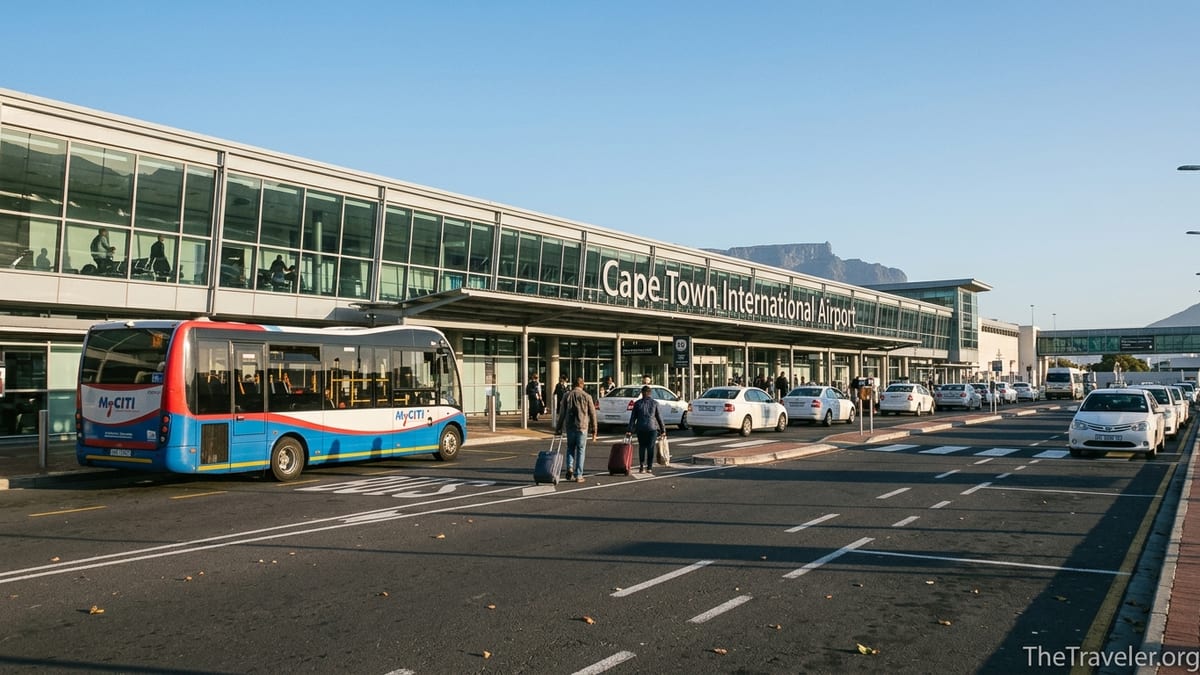
Arriving at Cape Town International: What to Expect
Cape Town International is South Africa’s second-busiest airport and regularly scores highly in global passenger rankings. The terminal layout is straightforward. International flights arrive on the upper levels of the central terminal. After disembarking, you follow the clearly marked route to immigration, baggage claim, and customs, exiting into a single arrivals hall. There are only a handful of baggage belts, so it is easy to orient yourself even when tired after a long-haul flight.
Immigration typically takes anywhere from 10 to 45 minutes depending on how many flights land at the same time. Passport control is separated into South African citizens and foreign passports. Have your completed arrival card (if given on the plane), proof of onward travel, and address for at least your first night ready. Officers sometimes ask for proof of funds or return tickets, particularly for travelers on visa-free schemes, so keeping digital copies on your phone plus printed confirmations can save time.
Once past immigration, you reach baggage claim. Luggage carts are free and easy to spot. Baggage delays do happen occasionally, so keep essentials, a change of clothes, and basic medication in your carry-on. After you collect bags and clear customs through the green or red channel, you pass through a single set of sliding doors into the public arrivals area. This is where you find ATMs, SIM card kiosks, car rental desks, official taxi counters, hotel shuttles, and the exit to the transport area.
In the arrivals hall, you will likely see people holding name boards for pre-booked transfers and a mix of taxi touts and family greeting travelers. Ignore anyone pressing you for a ride. Walk with your luggage directly to the official transport desks, the MyCiTi airport bus station, or the e-hailing pickup area. Cape Town’s airport is generally well policed, but as in any major city, keeping your valuables out of sight and moving with purpose is good practice.
Getting into the City: Taxis, Uber, Bolt and MyCiTi Bus
Most first-time visitors choose between three main options to reach the city center from CPT: official airport taxis, ride-hailing apps like Uber and Bolt, or the MyCiTi airport bus. The trip to central Cape Town typically takes 20 to 30 minutes in light traffic and around 40 minutes or more during weekday rush hour or summer holiday peaks.
Official meter taxis operate from a clearly signed taxi rank outside the terminal on the ground floor, near the arrivals exit. You either agree a fixed price at the desk inside the terminal or walk directly to the marked rank and speak to the dispatcher. As a rough guide, a licensed taxi from the airport to the V&A Waterfront or City Bowl usually costs in the region of a few hundred rand, depending on time of day and exact address. You pay in cash or by card if the vehicle has a card machine. Only use these registered cabs and avoid drivers who approach you inside the terminal offering cheaper rides.
Uber and Bolt function well in Cape Town and are popular with locals. After collecting your luggage, you can request a ride using the airport’s official pickup point for e-hailing services. The apps show the pickup zone and car details. A typical UberX or Bolt ride from CPT to Gardens, Green Point, or Sea Point often comes in a bit cheaper than a metered taxi, although prices surge in peak hours or bad weather. Wait inside the terminal until your driver is almost at the pickup area, and confirm the car’s registration and driver’s name before you get in.
The MyCiTi airport bus is the main public transport link. It is a modern, city-operated bus rapid transit service linking the airport to the Civic Centre bus station in downtown Cape Town. You need a myconnect transport card, which you can buy and top up at the MyCiTi kiosk or vending machine at the airport station. There is a small airport surcharge on top of the distance-based fare, so a one-way trip typically works out noticeably cheaper than a taxi but more expensive than inner-city bus routes. Buses are clean, have luggage racks, and run roughly every 20 to 30 minutes during the day, with reduced frequency early mornings and late at night.
Shuttles, Hotel Transfers and Car Rental
For travelers heading straight to the Winelands, the Garden Route, or business destinations in the suburbs, pre-booked shuttle transfers are a comfortable option. Many larger hotels in the City Bowl, V&A Waterfront, and Century City can arrange private airport transfers for an additional fee, often comparable to or slightly above a taxi fare but with the convenience of a driver waiting in the arrivals hall with your name on a board. Guesthouses in Stellenbosch or Franschhoek also frequently use trusted local shuttle companies and will add the transfer to your room bill.
Several independent shuttle companies are authorised to operate at CPT and advertise desks in the arrivals area. These can be useful for shared transfers, for example if you are two backpackers heading to the same hostel in Observatory or Gardens and want to share costs. Prices are usually fixed by zone; you pay per person rather than per vehicle. Ask for a printed or clearly displayed price list before agreeing, and ensure the company has visible accreditation or is recommended by your accommodation.
Car rental is straightforward at Cape Town International. Major international brands like Avis, Hertz, Europcar, Budget, Sixt, and local firms such as First Car Rental and Tempest have desks in the arrivals area or just outside in the car rental pavilion, connected to the terminal by a short, signed walkway. Daily rental rates vary widely by season, but compact cars are typically affordable compared with many European cities. Booking ahead is strongly advised over the December to February high season and Easter, when one-way rentals and automatics sell out quickly.
Driving in Cape Town is on the left-hand side. Roads from the airport to the city, like the N2 highway, are modern but can be busy. Keep doors locked, windows mostly closed in slow traffic, and valuables out of sight. At fuel stations, attendants pump fuel for you; tipping a small amount is customary. When returning your rental car, try to do so in daylight and allow an extra 15 to 20 minutes for vehicle inspection and paperwork, particularly if you have a tight departure connection.
Money, ATMs and SIM Cards at CPT
South Africa’s currency is the rand, and you will need at least some cash for tips, smaller shops, or informal taxis if you are venturing beyond tourist areas. Inside the arrivals hall you will find several bank ATMs from major local providers. Using an ATM usually gives a better rate than airport currency exchange desks, though your home bank may add fees. Always withdraw inside the terminal rather than at isolated outdoor machines, shield your PIN, and put cash away before moving off.
If you prefer to arrive with some rand, many visitors order a small amount through their home bank before departure and then top up at a Cape Town ATM. Card payments are widely accepted in hotels, restaurants, supermarkets, and larger attractions. Visa and Mastercard are common; American Express and Diners Club work in fewer places. Having at least a few hundred rand in notes is helpful for porters, parking attendants, and small purchases like a bottle of water, a MyCiTi card, or a snack in the first day or two.
Getting a local SIM card is straightforward and can significantly cut roaming costs. South Africa’s mobile market is dominated by four major providers: Vodacom, MTN, Telkom, and Cell C. In the arrivals area at CPT you will usually find at least Vodacom and MTN counters, sometimes supplemented by kiosks or multi-brand outlets selling starter packs. Staff can register your SIM on the spot using your passport as identification, in line with South African regulations. Prepaid bundles for visitors commonly include a mix of data, local minutes, and SMS, with entry-level data packs costing the equivalent of a modest restaurant meal.
If your phone supports eSIM, you can either purchase an eSIM from certain local providers in the city or use an international eSIM service before you travel, then optionally add a physical local SIM on arrival for better coverage. In and around Cape Town, both Vodacom and MTN generally provide strong 4G coverage, although speeds can drop during peak periods or during power cuts. If you are planning extensive self-driving beyond the city, particularly along the Garden Route or into rural areas, many frequent visitors report slightly more consistent coverage on MTN, though experiences differ by neighbourhood.
Safety, Scams and Practical Security Tips
South Africa has a higher crime rate than many Western countries, and Cape Town is no exception. That said, most first-time visitors transit through the airport without incident. The key is realistic situational awareness and a few simple routines. Inside the terminal, keep your phone zipped away when not in use, sling your daypack across your chest in crowded areas, and never leave bags unattended, even for a moment.
Outside the terminal building is where you should be more deliberate. Avoid accepting help from unsolicited “porters” or drivers who are not wearing clear identification or who are not standing at an official counter or rank. A common scam is someone offering a cheaper ride, then inflating the fare or diverting you to an ATM. Instead, walk straight to the marked taxi rank, MyCiTi bus station, or ride-hailing pickup area. If in doubt, ask an airport information desk or uniformed security guard to point you to the official transport options.
Travel advice from several governments highlights the risk of opportunistic crime around some South African airports, especially on access roads. For Cape Town, this mainly means not flashing valuables while your car is stopped at traffic lights and making sure luggage is in the boot rather than on seats. If you are driving a rental, plan your route in advance using an offline map, and avoid pulling over on the hard shoulder unless it is a genuine emergency. For late-night arrivals, many visitors choose a pre-booked transfer or reputable taxi rather than public transport.
Inside the city, apply the same common-sense rules: do not walk alone with visibly expensive cameras in deserted streets at night, use registered taxis or e-hailing at night instead of wandering in unfamiliar areas, and ask your hotel reception which nearby streets are safe after dark. In tourist-heavy zones like the V&A Waterfront or the central business district during business hours, visible security and cameras reduce risk, but pickpocketing can still occur in busy spots and during festivals.
Airport Hotels and Where to Stay Your First Night
If your flight lands late at night or you are continuing on an early domestic flight, staying near the airport can simplify your first hours in South Africa. Several branded hotels sit within a 5 to 10 minute drive of CPT, including mid-range international chains and local business hotels. Most offer complimentary shuttles that run on fixed schedules or on request. Check in advance whether the shuttle is 24 hours or stops around midnight; if your arrival is delayed, you may need to fall back on a short taxi or Uber ride.
That said, many first-time visitors prefer to head straight into the city to start their trip. The City Bowl, Gardens, Green Point, and the V&A Waterfront are popular first-night bases. They offer easy access to restaurants, coffee shops, and tour pick-up points for excursions like Table Mountain, Robben Island, and Cape Point. For example, staying around Kloof Street or Bree Street puts you within a short Uber ride of both the mountain cableway station and the Waterfront, while also giving you walkable cafés and supermarkets to settle in.
If you are continuing directly to the Winelands, Stellenbosch and Franschhoek are both under an hour’s drive from the airport in light traffic. A typical arrangement is to book a shuttle transfer or rental car and go straight to a guesthouse among the vineyards. For longer road trips along the Garden Route toward Hermanus, Mossel Bay, or Knysna, some travelers spend one night in Cape Town to rest and stock up on essentials before driving east the next morning.
Whichever option you choose, book accommodation in advance during the South African summer (roughly November to March) and over key local holiday periods. Cape Town hosts major events, conferences, and festivals, which can quickly tighten availability and push up prices. Confirm that your hotel or guesthouse has a secure, staffed reception for late check-ins if you are arriving on a late-night international flight.
First-Time Arrival Tips: From Immigration to Your First Evening
One of the best ways to make your first few hours in Cape Town smooth is to think in stages. Stage one is everything up to leaving the secure area. Before landing, fill in any arrival forms, use the restroom, and have your passport and accommodation details accessible. Once you clear immigration and collect your bags, head straight to an ATM, then to a SIM counter if you need local connectivity. Doing this before looking for transport means you will step into the city with cash, data, and maps ready.
Stage two is the trip into town. Decide your transport option before you pass through customs so that you are not making decisions in the slightly chaotic arrivals hall. For a solo traveler arriving at midday, the MyCiTi bus to the Civic Centre and then a short Uber to a hotel in Gardens can be a cost-effective, safe route. A family of four with luggage arriving at 10 p.m. might be better served by a pre-booked private transfer or a larger UberXL directly from the airport to a V&A Waterfront apartment.
Stage three is your first walk around your neighbourhood. After checking into your accommodation, many travelers like to take a short stroll to a nearby supermarket or corner shop to pick up bottled water, snacks, and perhaps a local SIM top-up voucher if needed. Pay attention to how locals behave on the streets; if an area feels deserted or your hotel warns against walking a certain route after dark, follow that advice. Use your first evening to rest, hydrate, and adjust to the time zone rather than squeezing in too much sightseeing immediately.
Finally, plan your first full day with logistics in mind. Mornings often bring the clearest skies for Table Mountain, while afternoons can be windy. If you are relying on ride-hailing, allow a 10 to 15 minute buffer when booking pickups for tours or reservations. Save copies of important documents like your passport, travel insurance, and driver’s license in secure cloud storage so that they are accessible if needed. Approaching your arrival as a series of small, manageable steps will make Cape Town feel welcoming rather than overwhelming.
FAQ
Q1. How long does it usually take to get from Cape Town Airport to the city centre?
In light traffic it often takes around 20 to 30 minutes by car to the City Bowl or V&A Waterfront, and up to 40 minutes or more during weekday rush hour or peak holiday times.
Q2. Is Uber or Bolt safe to use from Cape Town International Airport?
Uber and Bolt are widely used by locals and visitors. Request your ride only through the official app, meet your driver at the signed pickup area, verify the car and driver details, and avoid getting into vehicles that are not matched in the app.
Q3. Can I pay taxis and shuttles by card at the airport?
Many official airport taxis and some shuttles accept card payments, but machines occasionally fail or are unavailable, so it is wise to withdraw enough cash for at least your first ride and a small tip.
Q4. What is the cheapest way to get from Cape Town Airport into town?
The MyCiTi airport bus is usually the most economical official option, especially for solo travelers, though groups of three or more may find that splitting an Uber or taxi works out similarly.
Q5. Do I really need a local SIM card in Cape Town?
You can rely on hotel Wi-Fi and roaming, but a local SIM from providers like Vodacom or MTN generally offers much cheaper data and better coverage when using maps, ride-hailing, and messaging apps on the move.
Q6. Is Cape Town Airport safe to use at night?
The terminal itself is well lit and staffed around the clock. At night, pre-booked transfers or reputable taxis are recommended over public transport, and you should move quickly from the building to your confirmed ride.
Q7. Where should first-time visitors stay for their first nights in Cape Town?
Areas such as the City Bowl, Gardens, Green Point, and the V&A Waterfront are popular because they combine good tourist infrastructure, easy tour pickups, and a wide choice of accommodation and restaurants.
Q8. Can I drink tap water when I arrive in Cape Town?
Tap water in Cape Town is generally considered safe to drink, but some visitors prefer bottled water for the first few days to avoid minor stomach upsets while adjusting to travel.
Q9. Do I need an international driving permit to rent a car at Cape Town Airport?
Most rental companies accept a valid English-language driver’s license with a photo, but if your license is in another language or uses a non-Roman alphabet, an international driving permit is strongly recommended.
Q10. How much cash should I carry when arriving at Cape Town International?
Carrying the equivalent of enough for your first taxi or bus ride, a meal, and small tips is usually sufficient, as ATMs and card payments are widely available in the city.