


Nice is compact enough that you can walk from the beachfront Promenade des Anglais to its medieval lanes in minutes, yet each neighborhood feels like a different city. For first-time visitors, the choice often comes down to two emblematic areas: the elegant Carré d’Or and the atmospheric Old Town, known locally as the Vieille Ville. Both offer quick access to the sea, restaurants and transport, but they suit very different styles of travel. Here is a practical, real-world comparison to help you decide which side of Nice should be your home base.
Get the latest updates straight to your inbox!
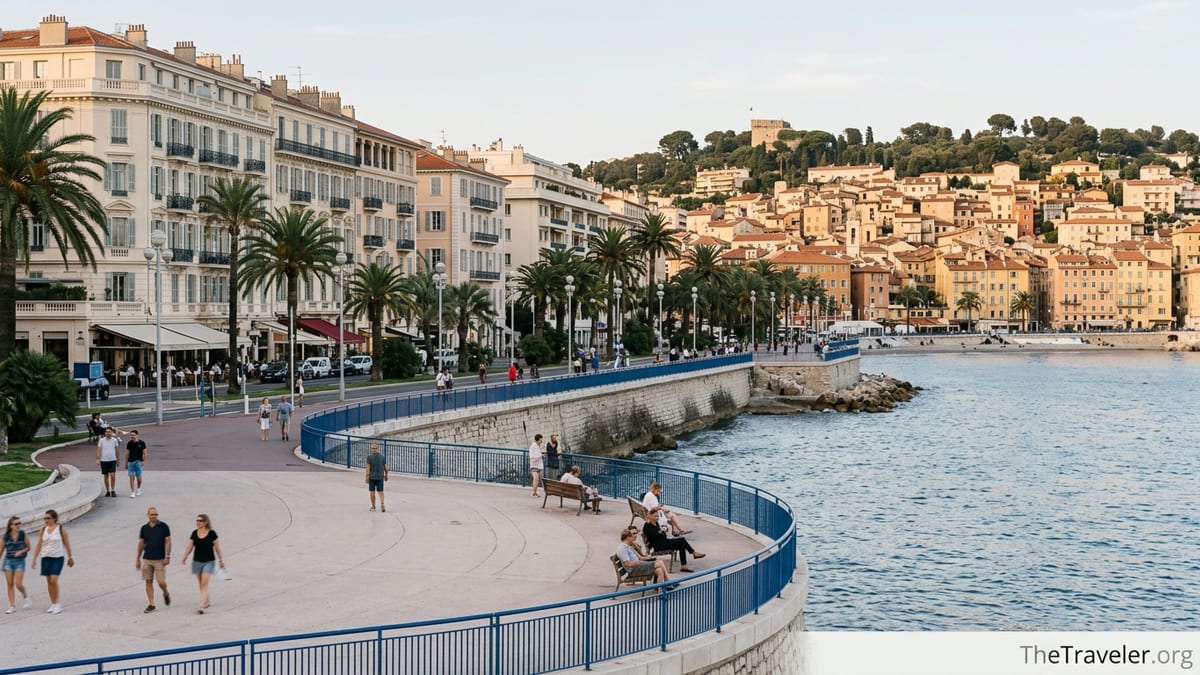
Getting Your Bearings: Where Carré d’Or and Old Town Actually Sit
On a map, Carré d’Or and Old Town are almost neighbors, separated by just a few minutes’ walk. Carré d’Or occupies a chic rectangle between the Promenade des Anglais and boulevard Victor Hugo, roughly framed by streets such as rue de France, rue Masséna, rue de la Buffa and avenue de Suède. It is central, flat and moments from the sea, with gardens like Jardin Albert 1er at its edge and the main shopping artery avenue Jean Médecin just behind.
Old Town spreads out on the eastern side of these gardens, squeezed between the foot of Colline du Château and the seafront. Here the streets narrow into a maze around Cours Saleya and baroque churches, with ochre and terracotta facades leaning in over tiny alleyways. The Promenade des Anglais is still only a short stroll away, but the character shifts immediately from Belle Époque boulevards to a medieval Mediterranean village feel.
In practical terms, Carré d’Or works like a classic city-center grid that makes orientation easy from day one. Old Town, by contrast, takes a day or two to mentally map: you will almost certainly get lost your first evening weaving between rue du Marché, rue Pairolière and the lanes around the cathedral. That can be part of the charm, but not everyone enjoys that at the end of a long travel day.
Transport connections are also slightly different. From Carré d’Or, you are a short walk to the Jean Médecin tram stop for the airport line and fast links across the city. From Old Town, the closest tram stops are around place Garibaldi or Opéra–Vieille Ville, which remain convenient but add a few minutes’ walk through busier, narrower streets.
Atmosphere and Street Life: Chic Boulevard vs Medieval Maze
Ask locals how Carré d’Or feels, and you will hear words like "elegant" and "prestigious." The streets are lined with Belle Époque and early 20th-century apartment buildings, Haussmann-style facades and upscale boutiques. The pedestrian part of rue Masséna, just behind the Promenade, is busy with shoppers and café terraces, especially in the evening when people stroll out for an aperitif. It feels like a small slice of Paris transplanted to the Riviera, with the sea at the end of the street.
Old Town is a sensory contrast. Here laundry hangs from shutters above narrow cobbled lanes, the smell of socca and pissaladière drifts from tiny bakeries, and baroque church towers suddenly appear as you turn a corner. The light is more filtered because the buildings stand close together, which can be welcome on hot summer afternoons. Street life centers on Cours Saleya, where the famous flower and produce markets fill the square most mornings, transitioning to restaurant terraces and bars as the day goes on.
For travelers who want a polished, contemporary city atmosphere, Carré d’Or delivers: think boutique perfumeries, international clothing brands and smart brasseries. For those craving a more historic, almost village-like immersion, Old Town is the clear winner. You might step out of a Carré d’Or hotel and instantly feel in “modern Europe.” In Old Town, you step into a tangle of streets that feels closer to Liguria or a Provençal hill village than to a big city.
Noise and energy are part of the equation. Carré d’Or’s main shopping streets can be lively until late, especially in peak season, but many side streets a block or two from rue Masséna are surprisingly quiet at night. Old Town’s nightlife is denser: bars and restaurants packed into small spaces mean sound can echo between the walls until the early hours, especially near Cours Saleya and the liveliest lanes off it.
Accommodation: What You Actually Get for Your Money
Both areas offer plenty of hotels and rentals, but the feel and price points differ. In Carré d’Or, midrange hotels with air conditioning and lifts are common, often in handsome early 20th-century buildings. Nightly rates in high season for a standard double might typically run from the lower mid-hundreds of euros for a simple three-star hotel to significantly higher for sea-view four- and five-star properties closer to the Promenade. Classic examples include older Riviera grand hotels fronting the water and modern chains along boulevard Victor Hugo or avenue de Suède.
In Old Town, there are fewer large hotels and more small guesthouses and holiday apartments carved out of centuries-old buildings. Character comes with quirks: staircases can be steep and narrow, lifts are rare, and layouts can be irregular. Prices can be slightly lower than similar-quality rooms in Carré d’Or, especially for apartments set deeper in the lanes away from the waterfront, but high demand in summer keeps rates elevated in both areas. A compact but atmospheric studio tucked behind Cours Saleya might cost roughly the same as a slightly larger, more conventional room a few blocks inland in Carré d’Or.
Comfort details matter on a real trip. In Carré d’Or, it is easier to find modern bathrooms, reliable air conditioning and good soundproofing, which makes a difference during July and August when temperatures are high and street life runs late. In Old Town, some rentals still rely on older air-conditioning units or ceiling fans, and thin walls can transmit noise from neighboring apartments and restaurants. Checking recent reviews carefully is essential before committing to a multi-night stay.
Accessibility is another key distinction. Travelers with heavy luggage, strollers or mobility issues usually find Carré d’Or more forgiving, thanks to wider pavements, elevators in many buildings and relatively flat streets. In Old Town, even getting from the tram to your accommodation can involve uneven paving stones, steps and occasional steep alleys. If climbing three flights of narrow stone stairs after a day out does not appeal, Carré d’Or is generally the safer bet.
Eating, Drinking and Shopping: Everyday Convenience vs Local Flavor
In Carré d’Or, everyday logistics are straightforward. Supermarkets, pharmacies and bakeries are sprinkled along streets like rue de la Buffa and rue de France, so grabbing water, snacks or a simple breakfast pastry is quick and easy. Rue Masséna and the surrounding pedestrian grid offer a mix of brasseries serving Niçoise dishes, Italian restaurants, gelato counters and casual cafés. Touristic places crowd the most visible corners, but with a short stroll you can find quieter bistros favored by locals, particularly just north of boulevard Victor Hugo and toward avenue Jean Médecin.
Shopping in Carré d’Or leans upmarket. International clothing brands, French chains and independent boutiques share space with perfume shops and gourmet food stores. A traveler staying in a rental with a kitchen can stock up at a modern supermarket and then supplement with cheese, wine and sweets from specialty shops within a ten-minute radius. It feels convenient and familiar, especially for visitors used to European city centers.
Old Town’s food scene is more compact but intensely atmospheric. Cours Saleya hosts the famous market most mornings, where stalls piled with tomatoes, olives, herbs and flowers draw crowds. Travelers renting an apartment nearby can shop for ingredients in the morning and cook at home in the evening. Around the market and in the adjacent lanes, restaurants pack in tightly, ranging from simple socca stands and pizzerias to more refined bistros experimenting with modern takes on Niçoise cuisine.
Shopping here is less about big brands and more about small artisan and souvenir stores: soap makers, olive oil shops, local art galleries and delicatessens. That can feel magical for a day or two of browsing, though it is less practical if you need a late-night pharmacy or a large supermarket. For nightlife, Old Town has a denser concentration of bars in a small area, which is ideal if you want to hop between wine bars and cocktail spots without walking far. Carré d’Or, by contrast, spreads its bars and lounges out over a wider area, including places on and just off the Promenade for a quieter drink with a sea view.
Beaches, Sights and Day Trips: Which Base Works Better
From Carré d’Or, the beach is effectively at the end of the street. Cross the Promenade des Anglais and you are on the pebbles at public stretches or in front of private beach clubs where a rented sun lounger and umbrella can easily cost several dozen euros for a day in peak summer. For travelers who expect to swim or sunbathe daily, this short, flat walk with no stairs is a major advantage. Many hotels in Carré d’Or also have partnerships with beach clubs, which can simplify reservations or occasionally shave a little off the price.
Old Town is also close to the seafront but in a slightly different way. From Cours Saleya, you climb a short ramp or stairs to the Promenade, and the nearest beaches are just east of the main gardens. It is an easy walk, though navigating the crowds pouring out of the lanes can take a little longer at busy times. On the plus side, staying here puts you right at the base of Colline du Château, whose park offers some of the best views over the Baie des Anges and the red-tiled roofs below.
For classic city sights, Old Town has a clear edge. You step outside into a ready-made walking tour: baroque churches, the cathedral, tiny squares and the daily market all cluster within minutes of one another. Evening strolls through these streets, with restaurants spilling out onto tiny plazas, are a highlight for many visitors. In Carré d’Or, sightseeing starts a block or two away, around the gardens and seafront, but you will likely walk into Old Town most days anyway for its atmosphere.
As a base for day trips along the Riviera, both areas work well, but Carré d’Or has a small practical advantage. The main train station is closer, and the tram line that runs to the airport passes through nearby stops. This can shave ten to fifteen minutes off your transit each way when heading to places like Antibes, Cannes or Monaco. If you are planning multiple day trips and value smoother logistics, Carré d’Or’s position between the Promenade and the main transport spine is hard to beat.
Safety, Noise and Practical Realities After Dark
Both Carré d’Or and Old Town are generally safe by big-city standards, and Nice has a visible police presence in central areas, especially during major events and summer evenings. That said, each district has its own feel at night. Carré d’Or’s broad, well-lit streets and wide pavements give it a comfortable atmosphere for most travelers walking back to their hotel after dinner or a concert, particularly along boulevard Victor Hugo and the streets parallel to the Promenade.
Old Town’s lanes are more intimate and can feel very dark and crowded, especially during peak season when visitors and bar-goers fill the narrow alleys. Many people love that buzzing, slightly chaotic energy and never feel unsafe, but some travelers, particularly solo visitors returning late at night, report preferring the more open, visible streets of Carré d’Or. In both areas, the usual city advice applies: keep valuables secure, be aware of your surroundings and avoid obviously intoxicated groups.
Noise is often the deciding factor. In Carré d’Or, noise tends to come from a single direction: busy restaurant streets like rue Masséna and the main promenade. Choosing a room one or two streets back, on a higher floor and with double glazing, often results in a surprisingly quiet night, even in August. In Old Town, noise can come from all sides, reverberating in the narrow canyons between buildings, and can continue well past midnight from bars, restaurants and people walking home.
Season matters as well. In the shoulder months of April, May, late September and October, both districts are calmer, and even Old Town’s busiest lanes feel more relaxed. In July and August, Old Town’s compactness amplifies crowds and sound, while Carré d’Or disperses visitors over a larger area. If your sleep is light and you are visiting in high season, Carré d’Or is usually the more restful choice unless you secure an Old Town accommodation specifically praised for its quiet in recent reviews.
Who Will Prefer Carré d’Or, and Who Belongs in Old Town
In practice, the question “Is Carré d’Or better than Old Town?” rarely has a universal answer. It is more helpful to match each neighborhood to traveler profiles. Carré d’Or tends to suit first-time visitors who want an easy, low-friction base: couples looking for a romantic yet comfortable stay, families who appreciate elevators, nearby supermarkets and flat walks with strollers, and business travelers tagging a leisure weekend onto a work trip. If you imagine mornings jogging along the Promenade, afternoons at the beach and evenings in polished brasseries, Carré d’Or aligns with that picture.
Old Town is a better fit for travelers who prioritize atmosphere above convenience. Solo travelers and couples who like wandering aimlessly through historic quarters, photographers chasing characterful scenes and food-focused visitors drawn to markets and tiny bistros often feel more inspired waking up inside the Vieille Ville. If your idea of the perfect morning is stepping out into a stone alley for espresso on a tiny square before heading to the flower market, Old Town will deliver that daily.
Budget also plays a role. While both areas see high rates in peak season, travelers on tighter budgets might find slightly better value in Old Town, particularly in apartments away from the noisiest lanes, or in small guesthouses that favor charm over amenities. Carré d’Or, with its concentration of high-end apartments and proximity to the most famous beachfront hotels, can feel more expensive for comparable space.
Trip length is another factor. For very short stays of one to two nights, Old Town’s immersion can be intoxicating yet intense, while Carré d’Or’s straightforward layout may make it easier to arrive, drop your bags and orient yourself quickly. For longer stays of a week or more, some travelers choose to split time, starting in Old Town for two nights to soak up the historic ambiance, then moving to Carré d’Or for a calmer, beach-focused finale.
The Takeaway
Choosing between Carré d’Or and Old Town in Nice is less about which area is objectively “better” and more about what kind of trip you want. Carré d’Or offers a refined, modern city experience with easy beach access, smoother logistics and broadly comfortable, contemporary accommodation. It suits travelers who value convenience, quieter nights and wide, well-lit streets at the end of an evening out.
Old Town, on the other hand, immerses you in the city’s historic core, where markets, churches and centuries-old lanes define daily life. It rewards travelers who are happy to trade some modern comforts and tranquility for atmosphere, proximity to traditional eateries and the pleasure of stepping straight into a lived-in, Mediterranean maze each morning.
For many visitors, the ideal solution is to spend most of the trip in Carré d’Or and plan to explore Old Town on foot, or to divide a longer stay between both districts. Whatever you choose, Nice’s compact size means you are never far from the other neighborhood, the seafront or the tram. As long as you align your base with your priorities for comfort, ambiance and budget, both Carré d’Or and Old Town can anchor a memorable Riviera stay.
FAQ
Q1. Is Carré d’Or or Old Town better for first-time visitors to Nice?
For most first-time visitors, Carré d’Or is slightly better because it combines easy beach access, straightforward streets and convenient transport links, while Old Town is ideal if you primarily want historic atmosphere and do not mind more noise and crowds.
Q2. Which area is closer to the beach, Carré d’Or or Old Town?
Carré d’Or is directly behind the Promenade des Anglais, so many streets lead straight to the pebbled shore, while Old Town is also close but involves walking from narrower lanes to the promenade, typically adding a few extra minutes.
Q3. Where will I find quieter accommodation, Carré d’Or or Old Town?
In general, Carré d’Or offers quieter accommodation, especially on side streets set back from the busiest restaurant areas, whereas Old Town’s compact lanes and dense nightlife can make rooms noisier late into the evening.
Q4. Is Old Town safe to walk around at night?
Old Town is generally safe, with many people out late into the evening, but its narrow, sometimes poorly lit alleys can feel more intense than the wide boulevards of Carré d’Or, so basic city precautions and situational awareness are recommended.
Q5. Which neighborhood is better for families with children?
Carré d’Or usually suits families better thanks to flatter, wider pavements for strollers, easier access to the beach and parks, and a larger choice of modern hotels with lifts, air conditioning and family-friendly room layouts.
Q6. Where will I get a more “authentic” Niçoise experience?
Old Town provides a more traditional Niçoise feel, with markets, narrow alleys, baroque churches and long-established eateries, while Carré d’Or feels more like a chic, contemporary city center with touches of local flavor.
Q7. Is accommodation cheaper in Carré d’Or or Old Town?
Prices fluctuate by season, but Carré d’Or tends to be slightly more expensive overall because of its prestige and proximity to the seafront, while Old Town can offer better-value apartments and guesthouses, particularly away from the busiest lanes.
Q8. Which area is more convenient for day trips along the French Riviera?
Carré d’Or is generally more convenient because it sits closer to the main tram and train connections, which can save time when traveling to destinations like Antibes, Cannes or Monaco for day trips.
Q9. Should light sleepers avoid Old Town?
Light sleepers may want to avoid staying on the busiest Old Town streets, especially near Cours Saleya, because nightlife and echoing alley noise can continue past midnight; in that case, a quiet side street in Carré d’Or is often a better choice.
Q10. Is it worth splitting my stay between Carré d’Or and Old Town?
Yes, many travelers enjoy spending a couple of nights in Old Town for its historic charm and the rest of their stay in Carré d’Or for comfort and easier beach time, which offers the best of both worlds in a single trip.