


Nice is compact enough that you can walk from the Old Town to the chic Carré d’Or in under 15 minutes, yet these neighboring districts feel like two different cities. One is all sunlit boulevards, designer boutiques, and pebble beaches. The other is a maze of ochre alleyways, bell towers, and late-night wine bars. If you are trying to decide where to stay, understanding the real-world differences between Carré d’Or and Old Town will help you book a neighborhood that genuinely fits your travel style.
Get the latest updates straight to your inbox!
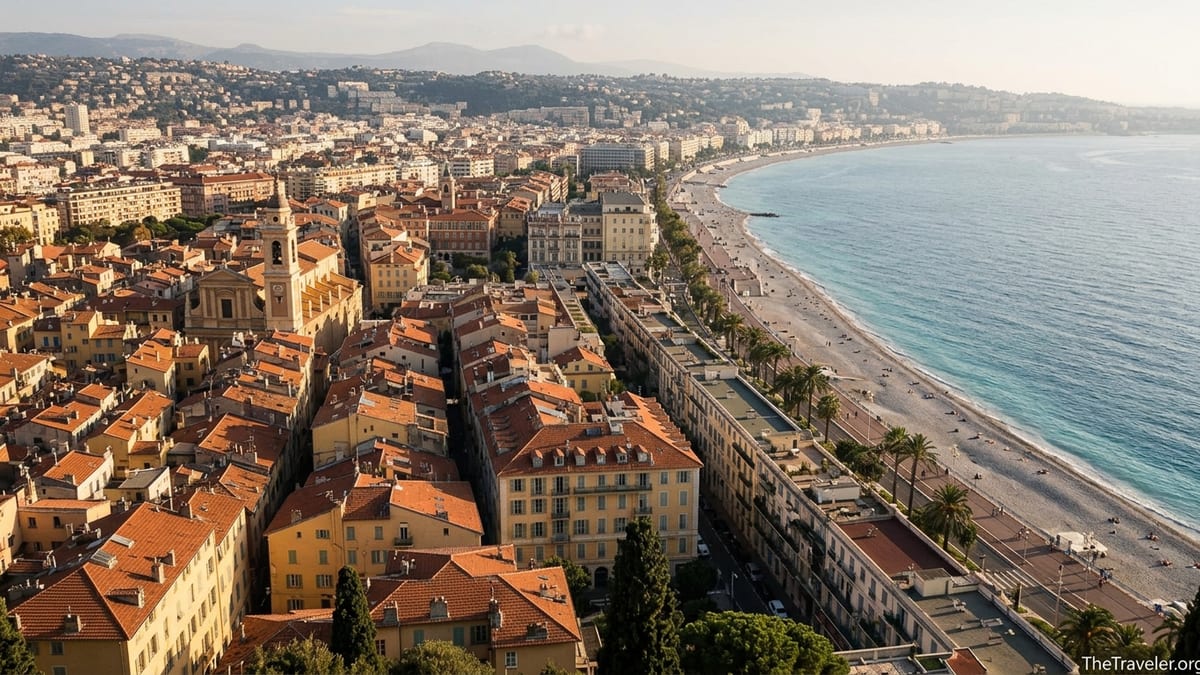
Getting Your Bearings: What and Where Are Carré d’Or and Old Town?
In Nice, “Carré d’Or” or Golden Square describes one of the city’s most prestigious central areas. Local real estate and tourism sites define it roughly as the grid between Boulevard Victor Hugo to the north and the Promenade des Anglais to the south, stretching between Rue Maccarani and Boulevard Gambetta. Many streets here, like Rue de France, Rue Paradis, and Rue du Congrès, are lined with Belle Époque facades, upscale boutiques, and café terraces set just a few minutes’ walk from the beach.
Old Town, known as Vieux Nice or Vieille Ville, sits immediately east of Carré d’Or, at the foot of Castle Hill and just below Place Masséna. This is the historic heart of the city, with narrow, shaded lanes, pastel buildings, and lively squares like Cours Saleya and Place Rossetti. It is pedestrian in feel and largely car-free inside the warren of streets, which creates a village atmosphere in the middle of a major Riviera city.
In practical terms, the two districts blend into each other. Place Masséna acts as a hinge: walk west and the streets open into the broader blocks of Carré d’Or; walk east under the arches and you are in the cool shadows of Old Town. Many travelers underestimate how close everything is. A typical walk from a hotel near Boulevard Victor Hugo in Carré d’Or to the Cours Saleya market in Old Town will take about 10 to 15 minutes at a relaxed pace.
Because both areas are central, well served by trams, and close to the seafront, there is no wrong answer for location. The better question is what kind of experience you want when you step out of your front door each morning, and what you are willing to trade off in terms of noise, budget, and atmosphere.
Atmosphere and Vibe: Elegant Riviera vs Lived-in Old City
Carré d’Or feels like the glossy Riviera of postcards and perfume ads. By day, the wide pavements of Avenue de Verdun and Rue Paradis fill with shoppers drifting in and out of stores like Galeries Lafayette, mid-range chains, and higher-end fashion brands. Cafés on Rue de France or the pedestrian Rue Masséna serve cappuccinos and tartines to a mix of locals and visitors, with palm trees and the blue strip of the Promenade des Anglais never far away. The mood is relaxed but polished, especially around the grand seafront hotels where guests cross the road in hotel slippers to claim a sunbed on a private beach.
Old Town, in contrast, is more textured and sensory. In the mornings, you might weave between market stalls in Cours Saleya selling tomatoes, peaches, and flowers, while locals haggle and restaurant staff wheel crates of produce back to their kitchens. At midday, when Carré d’Or streets can feel hot and exposed in high summer, Old Town’s alleyways stay a few degrees cooler thanks to their height and shade. Laundry hangs above you, scooters buzz down side passages, and baroque church facades appear suddenly around corners.
Evenings highlight the contrast further. In Carré d’Or, the atmosphere tilts toward aperitivo on terrace bars, lingering dinners on quiet side streets, and a stroll along the Promenade. Aside from the busier strips of the pedestrian zone and beach clubs in season, nights are comparatively calm and tidy. Old Town, especially around Cours Saleya and the lanes near Place Rossetti, can feel more boisterous. Many bars, gelaterias, and casual restaurants stay open late, attracting a mix of students, backpackers, and local regulars. Expect laughter and music floating through open windows until well after midnight in peak months.
If you picture yourself in linen and sunglasses, drifting between boutiques and an uncrowded wine bar before a sunset walk along the sea, Carré d’Or will fit easily. If you crave a more lived-in, slightly chaotic Mediterranean old city, where you pop downstairs for a slab of socca and can hear church bells and clinking glasses from your balcony, Old Town will feel like home.
Access, Transport, and Day-to-Day Convenience
Both Carré d’Or and Old Town are highly walkable and well connected, but the details matter depending on your plans. From Carré d’Or, the Jean Médecin and Alsace-Lorraine tram stops are usually 5 to 10 minutes on foot. Tram Line 2 runs straight to the airport in around 25 minutes, making an early flight less stressful if you are staying, for example, near Boulevard Victor Hugo or Rue de la Buffa. The main train station, Nice-Ville, is typically a 15 to 20 minute walk or a short tram ride, handy if you plan day trips to Antibes, Cannes, or Menton on multiple days.
Old Town is closer to some tram stops than many first-time visitors expect. The Opéra Vieille Ville and Cathédrale Vieille Ville stops on Line 1 sit right on its edge, and the Garibaldi stop is just a few minutes’ walk from the eastern lanes. For day trips, it is still easy to reach Nice-Ville by tram or on foot in about 20 minutes. However, reaching the airport will usually involve a change of lines or a longer walk to a Line 2 stop, which can add 10 to 15 minutes to your journey with luggage.
For everyday errands, Carré d’Or offers broad supermarkets and practical shops on and around Avenue Jean Médecin and Rue de la Liberté. You might buy breakfast pastries at a bakery on Rue de France, grab sunscreen from a pharmacy near Place Masséna, then walk three minutes to the beach. In Old Town, groceries and essentials are woven into the fabric of the quarter: small supermarkets on side streets, greengrocers near the market, and bakeries tucked under vaulted arches. Visitors often note that they end up doing more frequent, smaller shops simply because they pass so many food places on their way home.
If you will rely heavily on public transport, particularly the tram to the airport or trains for day trips, Carré d’Or has a slight edge for speed and simplicity. If your daily routine is more about wandering on foot, ducking into churches and artisan shops, and climbing Castle Hill in the late afternoon, Old Town’s compact, car-light layout can feel more convenient, even if it is technically a few minutes farther from some transit lines.
Beaches, Promenade, and Outdoor Time
One of Carré d’Or’s strongest advantages is sheer closeness to the sea. Streets like Rue de France and Rue Saint-François-de-Paule run parallel to the Promenade des Anglais, and many hotels here sit one or two blocks from the beach. It is realistic to leave your room in flip-flops, walk three minutes to a public stretch like Plage Beau Rivage or to a private beach club, and pop back up to your room to change before lunch. Some four and five star properties along the Promenade or just behind it offer reserved sunbeds at affiliated beach clubs, complete with waiter service and showers.
Old Town is not far from the water, but the experience is slightly different. From a rental near Place Rossetti, you might spend 7 to 10 minutes walking down gently sloping lanes and under the arches toward Cours Saleya, then cross the road to reach the sea. The beaches closest to Old Town tend to be busy public stretches, with pebbles, clear water, and a mix of locals and visitors. There are a couple of well-known beach clubs at this end of the bay, but they feel more integrated into the historic seafront than the long run of clubs further west.
If you see yourself swimming several times a day, running on the Promenade at sunrise, or spending half your trip lying on a lounger with bar service, Carré d’Or can make that effortless. You can also rent stand-up paddleboards and kayaks from operators along the Promenade, often just five minutes from central hotels. Conversely, if the sea is important but not the central focus, Old Town still offers easy access. An example day might be a morning wander through the flower market, an hour at the beach, then a climb up Castle Hill for a picnic with a panoramic view of the Baie des Anges.
Those traveling with young children or anyone who prefers minimizing hills will appreciate that Carré d’Or’s direct routes to the waterfront involve relatively gentle slopes and straightforward crossings. Old Town’s approach has more cobblestones and occasional inclines, though nothing extreme. Both areas can work well for stroller users, but Carré d’Or’s pavements are generally wider and simpler to navigate.
Budget, Accommodation Types, and Value for Money
Accommodation prices in Nice fluctuate by season, local events, and how close you are to the water, but some patterns hold. In general, expect Carré d’Or and the adjacent stretch of the Promenade des Anglais to command higher prices per night than Old Town, particularly for sea-view rooms. For example, a mid-range three star hotel a block behind the Promenade may start around the mid two hundreds of euros per night in high season for a standard double, while a stylish but smaller guesthouse room in Old Town might be closer to the low two hundreds for similar dates.
In Carré d’Or, the accommodation mix leans toward classic hotels and serviced apartments. You will find everything from large international chains with rooftop pools to boutique properties in Belle Époque buildings with wrought-iron balconies. Many of these emphasize amenities such as soundproofed rooms, elevators, on-site breakfast buffets, and 24-hour reception. For travelers who value predictable comfort over quirkiness, this part of town often feels like the safer bet.
Old Town has a more eclectic inventory. There are a few design-forward boutique hotels tucked into renovated convents or historic townhouses, alongside many independent guesthouses and short-term rentals. Apartments here might offer exposed beams, stone arches, and views over terracotta rooftops, but you should also check for practical details. Stairs are common, elevators are rare, and soundproofing can vary widely between lovingly restored properties and older rentals with thin windows above late-night bars.
In the shoulder seasons of April, May, late September, and October, Old Town can represent excellent value if you enjoy character and do not mind a bit of noise or uneven floors. Carré d’Or, by contrast, tends to maintain a price premium thanks to business travel and its enduring appeal for beach lovers. For anyone on a tighter budget, one compromise strategy is to stay in a slightly more affordable hotel just north of Carré d’Or near Avenue Jean Médecin and walk 10 minutes to both the beach and Old Town, essentially trading a few minutes of walking for savings.
Food, Nightlife, and Local Color
When it comes to eating and drinking, Old Town offers density and variety at your doorstep. Around Cours Saleya, you will find rows of restaurants serving Niçoise specialties, seafood platters, and pizzas, plus casual spots where you can grab socca or pissaladière to go. Side streets host tiny bistros with chalkboard menus, wine bars where you can sample glasses of Provençal rosé, and gelato shops that stay open late in summer. It is easy to spend a whole day grazing: coffee by the market in the morning, a pan bagnat sandwich for lunch, apéritif on Place Garibaldi, and dinner on a tucked-away terrace near Rue de la Préfecture.
Nightlife in Old Town is the liveliest in central Nice. Bars pour onto the pavement in peak months, with happy hour deals attracting a young crowd, and several spots host live music on weekends. This makes it ideal for travelers who want to walk home after midnight without needing taxis. The trade-off is that staying directly above busy streets may expose you to street noise until one or two in the morning, particularly on Friday and Saturday nights. Choosing an interior-facing room or accommodation on a less bar-heavy lane can make a big difference.
In Carré d’Or, the dining scene is more spread out, with a tilt toward slightly higher-end restaurants and relaxed brasseries. You will find plenty of bistros on the pedestrian section of Rue Masséna and along Rue de France, plus hidden gems on quieter parallel streets serving seasonal Mediterranean cuisine and good value set menus. Several hotels feature rooftop bars and panoramic restaurants, where you might pay a bit extra for cocktails or dinner but gain sweeping sunset views over the bay.
For nightlife, Carré d’Or tends to be more low-key. There are cocktail lounges, wine bars, and a few late-opening spots near the Promenade, but the area generally quiets earlier than Old Town, especially away from the pedestrian spine. This makes it appealing for couples or families who want atmospheric dinners and evening strolls without being in the middle of the late-night scene. You can always walk or take a short tram ride into Old Town for a louder night out, then retreat to a calmer street to sleep.
Which Area Fits Different Types of Travelers?
For first-time visitors focused on sightseeing and atmosphere, Old Town often edges ahead. You can wake up, step outside to buy fresh fruit at Cours Saleya, walk five minutes to climb Castle Hill for a morning view, then spend the afternoon ducking into churches and boutiques without ever using transport. If you only have two or three nights in Nice and want the most concentrated “sense of place,” staying in the maze of lanes can feel like living in a movie set, in the best way.
Beach lovers and travelers who prize comfort and quiet will likely be happier in or near Carré d’Or. If your ideal day includes multiple swims, naps on a sun lounger, and sundowners watching the light change over the water, the ability to be on the Promenade within minutes of leaving your lobby is invaluable. Families with small children, or anyone sensitive to noise, often prefer the broader streets and more residential feel a couple of blocks back from the seafront, where you can still reach Old Town on foot for dinner but sleep more peacefully.
City-hopping travelers using Nice as a hub for the wider Riviera and Italy might also lean toward Carré d’Or. Being an easy tram or walking distance from both the airport line and Nice-Ville station simplifies early trains to places like Ventimiglia market on Friday, or late returns from fireworks in Cannes. Business travelers, conference attendees, and those collecting hotel loyalty points will also find more familiar brands and business-oriented properties in and just north of the Golden Square.
On the other hand, food-focused travelers and nightlife fans often rank Old Town higher. If your must-do list in Nice includes trying multiple types of socca, scouting out natural wine bars, and listening to live jazz in intimate venues, there is a real advantage to staying amid the action. You can wander out after dinner to sample a second dessert from a different glacier, or join locals for a last drink on a tiny side square, knowing home is only a couple of turns away.
How to Decide: A Simple Framework and Real-World Scenarios
One practical way to decide is to sketch a sample day from your trip and note how often you picture yourself at the beach, in markets and alleys, or on trains and trams. If your mental image starts with laying out a towel on the pebbles before breakfast, heads to a late lunch on a terrace with sea views, and ends with a quiet glass of wine on a balcony, Carré d’Or is probably your best match. If instead you imagine starting at a local bakery, wandering through Old Town’s lanes with a camera, sampling snacks from different stalls, and finishing at a buzzing bistro, Old Town will align more closely with your style.
Consider, for example, a couple visiting in July for four nights. They plan one full beach day, one day trip to Èze and Monaco, and two days exploring Nice on foot. They enjoy early mornings, moderate nightlife, and comfortable hotels but are not chasing ultra-luxury. In this case, a hotel just behind the Promenade in Carré d’Or could offer the right balance: easy access to the beach and day-trip transport, with Old Town still within a 10 to 15 minute evening stroll.
Now imagine a group of friends in their twenties visiting in late May for a long weekend. Their priorities are food, nightlife, and photography, with only a couple of hours at the beach. They are happy to stay in a characterful apartment up a couple of flights of stairs, and noise does not worry them. For them, renting a two-bedroom flat near Place Rossetti or Rue de la Préfecture in Old Town makes more sense, even if they pay a little extra for air conditioning and do not have a lift.
Finally, think of a family with a toddler visiting in September, pushing a stroller and planning naps back at the room. They will spend early mornings at the beach before the sun is too strong, afternoons in the park around the Promenade du Paillon, and early dinners at kid-friendly restaurants. Here, staying in the quieter, residential streets of Carré d’Or a block or two north of Rue de France can be ideal. Supermarkets, pharmacies, and playgrounds are close by, and they can wheel the stroller along wide pavements to both the water and Old Town without negotiating too many cobblestones.
The Takeaway
Choosing between Carré d’Or and Old Town in Nice is less about right or wrong and more about matching a neighborhood to your rhythms. Both areas are central, beautiful, and practical, with beaches, trams, and major sights within comfortable walking distance. The real difference lies in what you experience when you step outside: Carré d’Or offers airy boulevards, proximity to the sea, and a calmer, more polished feel; Old Town immerses you in a historic, densely packed quarter where markets, churches, bars, and tiny shops spill into the lanes.
If this is your first visit and you want maximum atmosphere and easy access to the city’s most photogenic corners, consider Old Town, especially outside the busiest summer nights. If you are drawn to the waterfront, value sleep and modern comforts, or plan multiple day trips by tram and train, Carré d’Or is likely the better base. Many repeat visitors ultimately split their time between the two on different trips, discovering that Nice is small enough that you never really choose one over the other. Wherever you stay, the other district is only a short, sunlit walk away.
FAQ
Q1. Is Carré d’Or more expensive than Old Town for accommodation?
In general, yes. Hotels and apartments in Carré d’Or, especially those close to the Promenade des Anglais or with sea views, tend to cost more per night than comparable places in Old Town, though prices vary by season and individual property.
Q2. Which area is better for first-time visitors to Nice?
For a strong sense of history and atmosphere, Old Town often suits first-timers best; you are surrounded by markets, churches, and classic lanes, while the beach and Promenade remain an easy walk away.
Q3. Where should I stay if I plan to spend most of my time at the beach?
If beach time is your top priority, staying in or just behind Carré d’Or is usually more convenient, since many hotels and rentals are only a few minutes’ walk from the Promenade des Anglais and several beach clubs.
Q4. Which neighborhood is quieter at night, Carré d’Or or Old Town?
Carré d’Or is typically quieter, especially a block or two back from the seafront and away from the main pedestrian strip. Old Town can stay lively until late, particularly near Cours Saleya and the busiest bar streets in high season.
Q5. Is Old Town safe to walk around at night?
Old Town is generally considered safe to walk in the evening, with many people out at restaurants and bars. Normal city precautions apply: keep an eye on your belongings, avoid very dark side alleys, and be mindful of late-night crowds.
Q6. Which area has better access to public transport and the airport tram?
Carré d’Or has a slight edge for the airport tram and train station, thanks to its proximity to tram stops on Line 2 and a straightforward walk to Nice-Ville. Old Town is still well connected, but reaching the airport often takes a little longer.
Q7. What is better for food and nightlife, Carré d’Or or Old Town?
Old Town offers a denser concentration of restaurants, bars, and late-night spots, ideal for those who want to step out into the middle of the action. Carré d’Or has excellent dining too, but nightlife tends to be more low-key and spread out.
Q8. Are there good options for families in both neighborhoods?
Yes. Families often favor the quieter, residential streets of Carré d’Or for wider pavements and easy beach access, while some families enjoy Old Town’s character and markets. In both areas, checking for lift access, noise levels, and nearby playgrounds is important.
Q9. Is Old Town very noisy if I stay there in summer?
Parts of Old Town can be noisy on summer nights, especially accommodations directly above busy bars or near Cours Saleya. Choosing an interior-facing room or lodging on a calmer lane can significantly reduce nighttime noise.
Q10. If I cannot decide, is there a compromise location between Carré d’Or and Old Town?
Staying near Place Masséna or just north along Avenue Jean Médecin offers a good compromise, placing you within a short walk of both Carré d’Or’s beaches and Old Town’s historic lanes, with excellent tram connections in both directions.