


More news on this day
With summer air travel once again marked by delays, cancellations and shifting schedules, some Catholic travelers are turning to a much older source of guidance than real-time flight trackers: the spiritual tradition associated with Pope Leo XIII and classic Catholic teaching on patience, prudence and charity.
Get the latest news straight to your inbox!
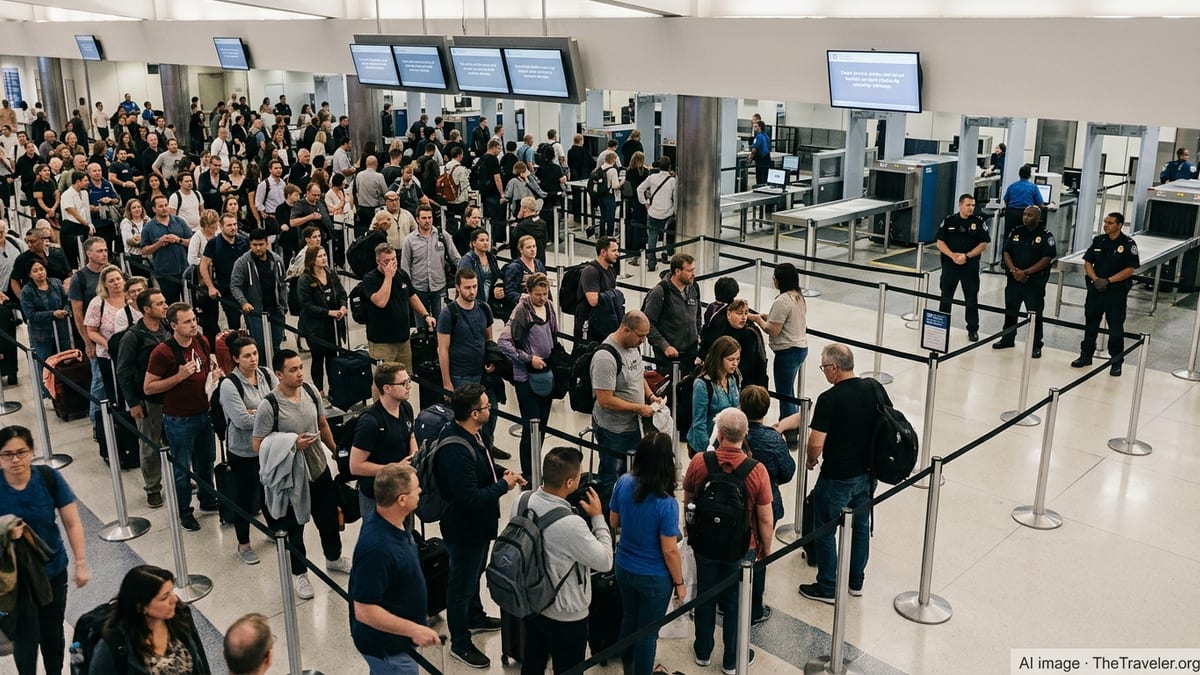
Modern flight disruption meets ancient virtues
Operational data from aviation analysts and network managers indicate that delays remain a persistent feature of peak-season flying, both in North America and across Europe. Staffing gaps, air-traffic control constraints and weather-related disruptions continue to ripple through major hubs, leaving passengers facing missed connections and long hours at the gate. For many travelers, the default response is frustration, social media complaints and tense exchanges at crowded service desks.
Within Catholic spiritual writing, however, delay and disruption are treated not primarily as logistical failures but as occasions to practice virtue. Pope Leo XIII, whose late‑19th‑century encyclicals engaged with the upheavals of modern industrial life and rapid advances in transport and communication, framed emerging technologies as tools that should serve the integral good of the human person. His approach invited believers to bring the church’s moral and spiritual framework into every arena shaped by modern progress, including travel.
Applied to today’s aviation landscape, that perspective suggests that flight delays are not simply obstacles to be endured or circumvented. They are also contexts in which patience, prudence and charity can be lived concretely, in cramped boarding areas and long security lines. For Catholic travelers, the question becomes less “How do I avoid delay at all costs?” and more “How do I remain faithful and reasonable when delay arrives?”
Current travel patterns, with growing passenger volumes and complex global routings, mean that even improved punctuality statistics still translate into millions of minutes of accumulated delay. In that environment, spiritual habits may be as essential to a smooth journey as mobile apps and flexible tickets.
Pope Leo’s realism about modern life on the move
Pope Leo XIII is often remembered for his social encyclical on labor and capital, but his broader teaching emphasized how industrialization, new communications and faster transport were reshaping everyday life. He called Catholics to remain fully engaged with these changes while resisting the tendency to treat efficiency and productivity as ultimate values. Human dignity, in his view, had to remain at the center of any assessment of progress.
Reading that vision into a crowded departure hall in 2026 offers a particular kind of realism. Air travel is a striking example of technological achievement, yet it remains vulnerable to human limits, weather and geopolitical shocks. A Catholic approach inspired by Leo does not romanticize these weaknesses or ignore genuine passenger rights. Instead, it acknowledges that complex systems fail and that such failure is precisely where character is revealed.
Pope Leo’s emphasis on the common good also translates naturally to the shared spaces of airports and cabins. Every delayed flight concentrates hundreds of individual plans and anxieties into one confined environment. The question of how each traveler speaks, queues, rebooks and negotiates compensation becomes a small but real test of social solidarity. The choices of one impatient customer can escalate tension for many; the choices of one courteous passenger can help defuse it.
For Catholics who draw on Leo’s teaching, travel is therefore not a neutral zone where ordinary moral commitments are temporarily suspended. It is one more setting in which responsibility to neighbor, concern for workers and respect for limits play out, whether in interactions with airline staff, other passengers or family members sharing the disruption.
Practical Catholic habits for the delayed traveler
Translated into day‑to‑day practice, Catholic spiritual tradition suggests several concrete habits for facing airport disruption. The first is intentional patience: choosing to pause before reacting, to breathe, and to recognize that anger rarely speeds up an overburdened system. Classical Catholic definitions of patience describe it as the strength to endure difficulties without interior rebellion, transforming unwanted waiting into an offering rather than a grievance.
A second habit is ordered prudence. In travel terms, that means making decisions that recognize both spiritual and practical realities: booking earlier departures when possible, allowing generous connection times, knowing one’s passenger rights, and carrying essentials in hand luggage. Such foresight does not eliminate every delay, but it can prevent foreseeable stress from becoming a spiritual crisis in the terminal.
A third habit is quiet charity. Catholic teaching places particular emphasis on the dignity of workers, a theme central to Pope Leo’s encyclicals. In an airport, that principle can be expressed in simple ways: addressing gate agents and crew with courtesy, acknowledging that they often have limited control over systemic breakdowns, and remembering that they may be working extended shifts under intense scrutiny. Acts of kindness toward fellow passengers, such as helping parents traveling with children or sharing basic information, become a lived expression of the command to love one’s neighbor.
For many Catholic travelers, these habits are sustained by short prayers, the quiet reading of Scripture or spiritual books, and the conscious decision to treat a delay as unplanned retreat time. A missed connection may not be welcome, but it can become an unexpected space for examination of conscience, gratitude or intercessory prayer for those whose journeys are far more precarious.
Integrating spiritual preparation into trip planning
If airline operational planning increasingly assumes a certain level of disruption, Catholic travelers can respond by integrating spiritual preparation into their own itineraries. That might begin before departure, with a deliberate resolve to accept the day’s events as they unfold, combined with practical planning for contingencies such as long queues, missed trains or overnight stays.
Families traveling with children may find it useful to frame potential delays in advance as part of the adventure, linking them to stories of saints and missionaries who faced far harsher journeys with courage and trust. Such framing can reduce anxiety when screens fill with red notices and boarding times slide by the minute.
Parishes and Catholic travel ministries have also begun, according to publicly available information, to offer resources on navigating modern travel with a Christian mindset. These include reflections on the virtues, guidance on maintaining Sunday observance when flights shift unexpectedly, and reminders to support local communities and workers in destination cities affected by tourism volatility and infrastructure strain.
This integration of logistics and spirituality reflects the broader Catholic conviction, articulated strongly in Pope Leo’s teaching, that faith is meant to shape every aspect of life in a technological age. Airports, in that sense, become contemporary mission fields and testing grounds for the integrity of one’s discipleship.
From inconvenience to witness in the terminal
The accumulation of small disruptions across today’s aviation network ensures that many travelers will eventually face an unexpected overnight stay, a rebooked connection or hours spent in a crowded lounge. For Catholic passengers drawing on the legacy of Pope Leo XIII, these experiences can be reframed from pure inconvenience to an opportunity for quiet witness.
That witness does not require overt preaching or ostentatious gestures. It may be as simple as declining to join in harsh criticism of staff, offering a seat to an older traveler, or calmly helping a confused passenger understand a rebooking notice. In environments where tempers often run high, such behavior can be striking in its simplicity.
As airlines, regulators and airports work to stabilize operations and reduce systemic delays, individual travelers will continue to face uncertainty on any given day. For Catholics inspired by the church’s social and spiritual tradition, including the teaching of Pope Leo XIII, the most reliable form of travel insurance may be a well‑formed character: patience that endures, prudence that prepares, and charity that turns a crowded gate into a place where faith is quietly lived.