


More news on this day
Delta Air Lines is facing renewed operational turmoil after canceling hundreds of flights in just 48 hours at its Atlanta mega hub, triggering intensified oversight from federal aviation regulators and leaving thousands of travelers scrambling for alternatives across the United States and beyond.
Get the latest news straight to your inbox!
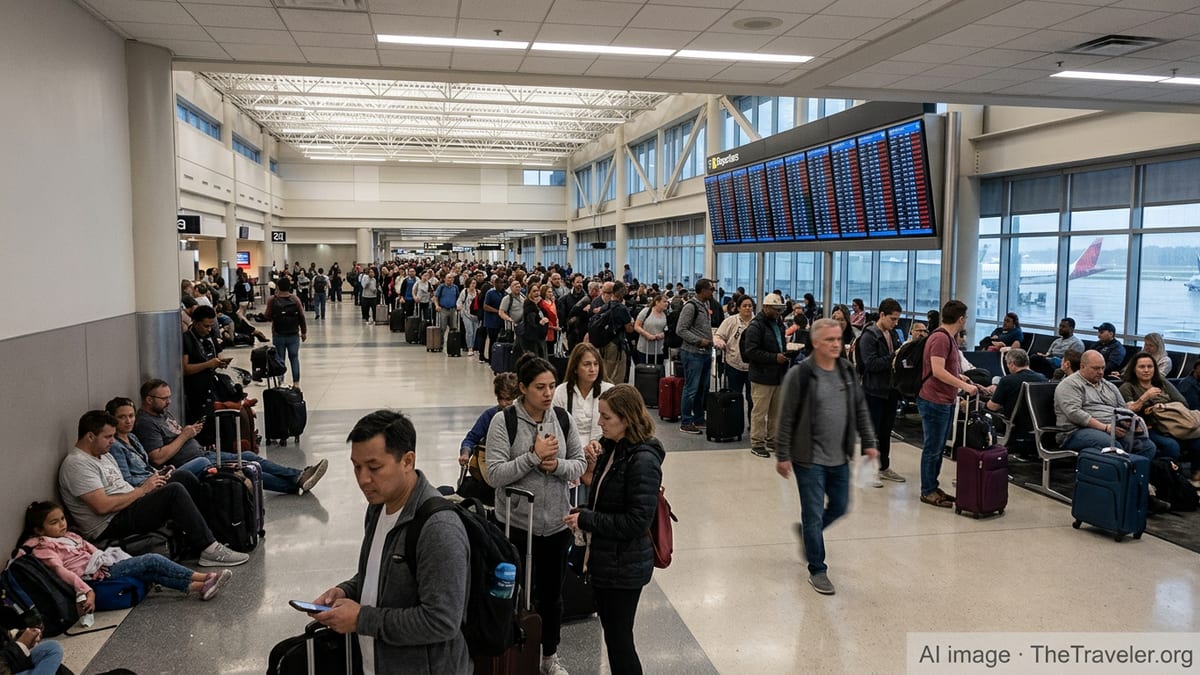
Wave of Cancellations Hits Delta’s Largest Hub
Publicly available flight tracking data and aviation industry reports indicate that Delta has scrubbed several hundred departures and arrivals in a two day span, with the heaviest concentration at Hartsfield Jackson Atlanta International Airport, the carrier’s primary hub and one of the world’s busiest airports. Atlanta sits at the center of Delta’s hub and spoke network, meaning disruptions there can ripple quickly throughout the system as aircraft and crews fail to arrive where they are needed for subsequent flights.
In recent days, cancellation rates on certain Delta banks have reached mid single digit percentages of the daily schedule, significantly higher than those of major competitors operating under similar weather conditions. Independent airline analysts note that when a carrier cancels even 4 to 6 percent of flights in a narrow window, it effectively dismantles normal connectivity for thousands of passengers, particularly those relying on tight connections through a mega hub like Atlanta.
The latest operational crunch comes on top of a challenging period for Delta. Federal summaries of the July 2024 CrowdStrike related technology outage show that the airline ultimately canceled thousands of flights and experienced one of the slowest recoveries among United States carriers, with Atlanta at the epicenter of the disruption. Since then, regulators have intensified their focus on how Delta manages large scale disruptions and protects passengers from cascading delays and cancellations.
Travel forums and social media posts from affected passengers describe long lines at customer service counters, rebookings pushed several days out, and difficulty securing hotel vouchers or meal assistance. While anecdotal, these accounts are broadly consistent with historical patterns seen during Delta’s previous operational meltdowns when strain on staffing and support systems has been acute.
FAA Tightens Oversight Of Atlanta Operations
According to aviation policy coverage and public statements cited in industry analyses, the Federal Aviation Administration has moved to more closely manage traffic flows into and out of Hartsfield Jackson as Delta’s operational challenges intensified. The agency’s real time traffic management advisories show that when arrival or departure demand begins to outstrip what controllers can safely handle, or when an airline is struggling to maintain its schedule, regulators may impose structured arrival programs, metering or ground delay initiatives to stabilize the operation.
The FAA’s published guidance stresses that it does not cancel commercial flights itself. Instead, it implements flow restrictions, ground stops or other air traffic controls, leaving airlines to decide whether to delay or cancel individual departures. For travelers, however, the practical effect is often the same: when limits tighten at a key hub such as Atlanta, carriers may preemptively cut dozens or even hundreds of flights to avoid aircraft and crews becoming hopelessly out of position.
Recent traffic management logs for Atlanta highlight periods in which arrivals were limited at the request of airlines coping with crew and gate constraints. Aviation observers note that these measures effectively function as a circuit breaker on an overloaded system, forcing Delta and other carriers to pull back schedules temporarily while operations reset. In this context, Delta’s decision to cancel hundreds of flights over a short window reflects both its internal resource pressures and the constraints imposed by a more assertive regulatory posture.
Regulators have also signaled heightened interest in how airlines communicate during such events. Past investigations into Delta’s disruption handling, including federal probes tied to the 2024 tech outage, have examined whether automated messages and rebooking tools provided passengers with accurate and timely information about their options. The latest wave of cancellations at Atlanta is expected to factor into that ongoing scrutiny.
Weather, Crewing And Tech Systems Under The Microscope
Explaining the cancellations, industry analysis points to a familiar mix of drivers: convective weather in the Southeast that periodically triggers ground stops at Atlanta, tight crew staffing that leaves little margin for schedule shocks, and legacy technology systems that struggle to recover when large segments of the network go out of sync. Even when storms are localized or short lived, the knock on effects on crew duty limits can force airlines to park aircraft if rested pilots or flight attendants are no longer legally available.
Delta’s experience during the July 2024 CrowdStrike outage remains a key reference point. Public reconstructions of that episode show that as other carriers gradually restored normal operations, Delta continued to cancel flights in large numbers, citing sustained issues with crew management tools. The airline later disclosed that it expected hundreds of millions of dollars in financial impact from that single event, underscoring how fragile complex operations can be when technology and staffing are misaligned.
In the current situation, aviation commentators tracking Delta’s performance say early indicators once again show elevated cancellation rates tied to what are described as crew restrictions. In effect, crews are timing out under federal duty rules more quickly than the airline can reposition replacements, especially when thunderstorms or air traffic controls compress schedules into narrower operational windows. This dynamic can lead to late night cancellations of flights that had already been delayed for hours.
At the same time, Delta’s extensive reliance on its Atlanta megahub amplifies any disturbance. When a bank of connecting flights fails to depart on time, incoming aircraft may have no gates available, outbound crews may miss legal rest opportunities, and aircraft can wind up overnight in secondary cities rather than being back at the hub to begin the next day’s flying. Once this misalignment crosses a certain threshold, airlines often find that mass cancellations over 24 to 48 hours are the only viable path to reset the system.
Impact On Travelers And What Passengers Can Expect
For travelers, the immediate effect of the latest cancellations is a higher risk of missed connections, forced overnight stays and lost vacation or business time, particularly for those whose itineraries rely on tight turns in Atlanta. Passenger accounts shared on social platforms describe missed cruises, weddings and key work events, highlighting the human stakes when a major carrier struggles to maintain its schedule at scale.
Consumer advocates note that federal rules do not require compensation for disruptions caused by weather or air traffic constraints, but carriers may still provide hotel rooms, meal vouchers or frequent flyer miles as a gesture of goodwill or when delays stem from controllable factors such as crew or maintenance issues. Delta’s own customer service commitments, outlined on its public facing channels, state that the airline will make reasonable efforts to rebook affected passengers and offer assistance where possible, though availability can be limited during major events.
Travel experts monitoring Delta’s performance recommend that passengers booked through Atlanta in the near term build extra buffer into tight connections, monitor their flight status frequently and consider rerouting through other hubs where possible. Some analysts also suggest that travelers explore protections such as credit card trip interruption benefits or independent travel insurance, which may offer partial reimbursement for hotels, meals or alternative transportation when delays extend overnight.
Despite the short term disruption, aviation consultants say Delta retains several structural strengths, including a deep route network, strong corporate demand and resilient loyalty from frequent flyers. How quickly it can translate these advantages into more reliable day to day operations, particularly at Atlanta, will likely determine whether the current wave of cancellations is remembered as a short lived stumble or another sign of deeper systemic strain.
Regulatory And Competitive Stakes For Delta
The concentration of cancellations at Atlanta during a period of intensified regulatory focus raises the stakes for Delta beyond immediate customer dissatisfaction. The Department of Transportation is already reviewing the airline’s handling of past large scale disruptions, and additional episodes of mass cancellations can feed into broader questions about whether consumer protections or reporting requirements should be strengthened.
Meanwhile, Delta’s rivals are closely watching the situation for competitive openings. When one major carrier repeatedly cancels significant portions of its schedule over short windows, corporate travel managers and high value frequent flyers may begin to diversify their bookings to competitors perceived as more reliable, especially on key business routes where on time performance is paramount. That shift can be gradual but persistent if operational problems become a recurring theme.
For now, industry observers expect both Delta and the FAA to focus on stabilizing day to day operations at Atlanta by more tightly coordinating schedules with weather forecasts and traffic management plans. Whether that approach is enough to prevent another burst of hundreds of cancellations in a matter of days remains an open question, particularly as the busy summer and holiday travel periods approach and demand for seats through the Atlanta hub climbs.