


More news on this day
San Antonio residents are facing another disruptive start to the week as a flash flood warning and a wider flood watch converge on the metro area Monday, with emergency alerts and regional weather coverage urging people to avoid nonessential travel.
Get the latest news straight to your inbox!
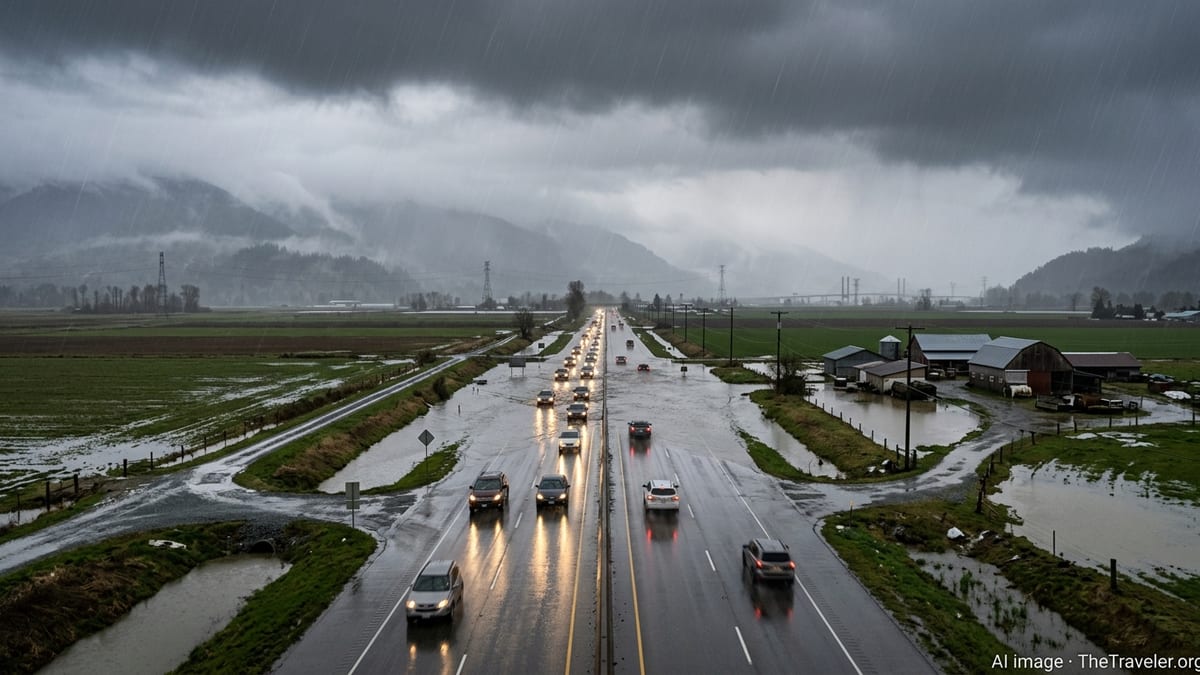
Warning in effect as Monday commute begins
A flash flood warning covering parts of the San Antonio region was issued overnight into Monday, layered on top of a broader flood watch that extends through Tuesday, according to regional weather alert summaries. The combination reflects a volatile setup of slow moving storms, saturated ground and periods of intense rain rates.
Publicly available alert bulletins describe the situation as high impact, with flash flooding already reported in parts of South and Central Texas since late Sunday. Heavy bands of rain have repeatedly trained over the Interstate 35 corridor, raising concern that additional downpours Monday could quickly overwhelm creeks, low water crossings and underpasses in and around San Antonio.
Travel impacts were highlighted in several updates, which note that life threatening flash flooding can develop rapidly along urban streets, highways and drainage channels. Local coverage of the region’s overnight storms indicates that water is already pooling on some secondary roads, with conditions expected to deteriorate quickly wherever thunderstorms stall.
The overnight timing of the initial warnings has meant that many residents woke to mobile phone alerts ahead of the morning commute. Social media posts and community reports early Monday described sirens sounding in some neighborhoods and urged neighbors to check routes before attempting to drive.
Why travel is strongly discouraged
Travel is not advised across affected parts of the San Antonio metro area Monday because flash flooding often turns dangerous long before water appears deep or fast moving. Flood safety guidance from local and federal agencies stresses that most flood related fatalities occur in vehicles when drivers attempt to cross water covered roads that may be washed out or far deeper than they appear.
Hydrologists describe the region surrounding San Antonio as part of what is often called “Flash Flood Alley,” where a mix of hilly terrain, thin soils and rapid urban development allows water to rise with little warning. Past incidents in the city have demonstrated how quickly normally passable crossings and frontage roads can become deadly when intense rain funnels into creeks and storm drains.
Recent municipal reports on last year’s deadly flood event in San Antonio highlight the vulnerability of low lying stretches of Loop 410 and other major arteries during high volume storms. Those findings emphasize that even well known commuter routes can be compromised within minutes once drainage systems are overwhelmed, leaving vehicles trapped by fast rising water.
With soils already saturated from earlier storms, meteorologists tracking this latest system warn that it will take less rain than usual to produce significant runoff and street flooding. That concern underpins the strong messaging against nonessential travel and the recommendation that residents work from home or delay trips where possible until the heaviest rainfall has ended.
Rainfall outlook and areas of greatest concern
Regional forecasts on Monday point to continued rounds of showers and thunderstorms across a wide swath of South and Central Texas, including San Antonio. Some outlooks indicate the potential for several more inches of rain in a short period, with isolated pockets of higher totals where storms repeatedly move over the same locations.
The highest risk period for additional flash flooding around San Antonio is expected from the early morning through at least the afternoon, as embedded thunderstorms within a slow moving disturbance track eastward. Forecasters note that the precise placement of the heaviest bands is uncertain, but that any area under prolonged downpours could see creeks and small rivers rise quickly.
Urban neighborhoods with older drainage infrastructure, low lying crossings near creeks such as Beitel and Salado, and heavily trafficked freeway access roads are among the locations historically prone to rapid flooding. Local analyses of previous events show that water can back up against clogged culverts and bridges, turning adjacent roads into swift channels.
While the core of the current flash flood warning focuses on specific parts of Bexar County and neighboring areas, the broader flood watch means that conditions are favorable for dangerous flooding across much of the metropolitan region. Residents are being urged through public advisories and local media to treat any flood prone area with extra caution throughout the day.
Guidance for residents, commuters and visitors
Flood preparedness materials from the City of San Antonio and state emergency programs recommend that residents avoid driving through any water that covers the full width of a roadway. Even a relatively shallow depth can disable a car or lift it off the pavement, particularly when combined with strong currents that are difficult to judge from behind the wheel.
Travelers already in the region are encouraged by publicly available guidance to postpone discretionary trips, monitor local broadcast or app based weather updates, and consider alternate plans if they must move through low lying areas. Those who rely on medical appointments or essential work shifts are advised to consult route maps for higher ground options and allow extra time, as detours around flooded segments can be lengthy.
Residents living near flood prone creeks or in neighborhoods with a history of drainage problems are urged to review their household readiness plans, keep phones charged, and ensure they can receive additional alerts if conditions worsen. Preparedness documents emphasize having a small go bag ready in case rapidly rising water forces a quick move to higher floors or alternative shelter.
Tourists staying in downtown hotels or near the River Walk are generally above the highest risk areas for swift water, but may still encounter impassable underpasses, closed frontage roads and delays on airport routes. Travelers are advised by local tourism and transportation updates to check airline status frequently and to build in extra time for any necessary transfers while the flash flood warning remains in effect.
Context in a year of repeated high water
The latest flash flood warning arrives in the wake of an unusually wet stretch for the San Antonio region after several years dominated by drought. Local reporting and community accounts describe a pattern of near weekly heavy rain events this spring, with soils now holding far more moisture than typical for mid June.
That backdrop is heightening concern among flood risk specialists, who note that the threshold for dangerous runoff drops sharply when ground saturation is high. In such conditions, even moderate additional rainfall can generate the kind of fast moving sheet flow that overwhelms storm drains and quickly submerges low points on roadways.
City level studies released over the past year have also drawn attention to gaps in signage and physical barriers at recurrent trouble spots, particularly along busy freeways and at certain low water crossings. Recommendations in those reports include improved warning systems and clearer detour information so that drivers have fewer incentives to test flooded routes.
For now, with Monday’s flash flood warning active and a larger flood watch still in place, the clearest guidance for San Antonio is to stay off the roads where possible and keep a close eye on evolving conditions. Additional updates are expected through the day as forecasters track new storm development and monitor how quickly water levels respond to the latest round of heavy rain.