


Laurel Falls is one of the most photographed spots in Great Smoky Mountains National Park, often topping lists of “must do” hikes near Gatlinburg. Yet many visitors arrive to find a packed parking area, a narrow paved trail choked with people, and a viewing area that can feel more like a theme park queue than a quiet mountain escape. With the trail currently closed for a long-term rehabilitation project, it is a good moment to ask a practical question: is Laurel Falls actually worth planning your trip around, or are there better waterfall options in the Smokies for the experience you want?
Get the latest updates straight to your inbox!
Current Status: Laurel Falls Trail Closures and What They Mean
Before you build an itinerary around Laurel Falls, you need to know its current status. As of early 2025, the National Park Service has closed the Laurel Falls Trail from the trailhead on Little River Road up to the junction with Little Greenbrier and Cove Mountain trails for an extensive rehabilitation project. Official park updates say this closure began on January 6, 2025 and is expected to last about 18 months, which means many visitors through at least mid-to-late 2026 will not be able to hike to the falls at all.
The work is not a simple short-term maintenance project. According to park planning documents and statements, crews are resurfacing and widening sections of the paved trail, stabilizing eroded slopes, replacing the aging footbridge at the falls, and redesigning the parking area to improve safety along busy Little River Road. Local lodging providers around Gatlinburg have echoed these details in their visitor information, noting that the closed segment covers the entire popular 2.6 mile round trip route most people associate with “hiking Laurel Falls.”
For travelers, this means that if you are visiting in 2025 and potentially into the 2026 busy season, you should not count on Laurel Falls as a guaranteed option. Park officials urge visitors to check the Great Smoky Mountains “Current Conditions” page shortly before their trip, but realistically, if your vacation dates fall squarely inside that 18-month window, you will need a plan B. Fortunately, the Smokies have no shortage of alternatives that can match or surpass Laurel Falls in scenery, while sometimes offering a calmer experience.
Even after the trail reopens, it is likely to remain one of the park’s most heavily visited hikes. The rehabilitation is designed to make the trail safer and more sustainable, not to transform it into a remote backcountry experience. If you dream of a quiet waterfall framed by rhododendron with just a handful of people around, you will probably want to look beyond Laurel Falls, whether it is temporarily closed or fully open.
Why Laurel Falls Became So Popular in the First Place
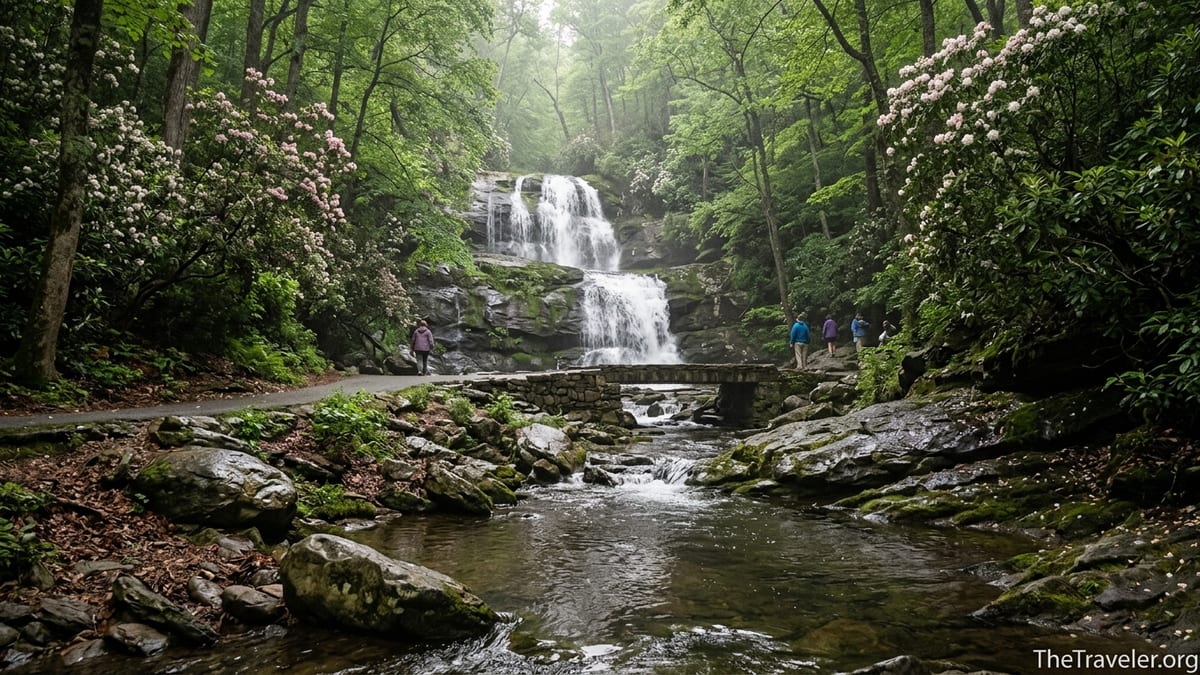
Part of deciding whether Laurel Falls is worth it is understanding why it draws such enormous crowds. The waterfall itself is objectively pretty: an 80 foot, two tier cascade split by a rock ledge and footbridge, surrounded by mountain laurel and hardwood forest. The classic photo shows water spilling over dark ledges, with a narrow paved path cutting directly in front of the upper drop. On a misty spring morning when rhododendrons are blooming and the trail is quiet, the setting can feel magical.
More important than its beauty, though, is its accessibility. The Laurel Falls Trail is only about 2.6 miles round trip with roughly 300 to 400 feet of elevation gain. The first 1.3 miles are paved, which has led many travel guides to describe it as “easy” and to recommend it for young children, grandparents, and anyone who is nervous about backcountry terrain. It is also just a short drive from Gatlinburg and the Sugarlands Visitor Center along Little River Road, so visitors can leave their hotel after breakfast, drive 10 to 15 minutes, and be at a trailhead that feels like the forest rather than a town sidewalk.
That combination of a short, mostly paved path, quick access from a major tourist town, and a photogenic 80 foot drop is rare in a national park that is otherwise known for steep, rocky hikes. Once social media and travel blogs started circulating images of people standing on the small bridge between the two tiers of the falls, Laurel quickly became a “checklist” item on Smokies itineraries, similar to Clingmans Dome or Cades Cove. For many first time visitors with only one or two days in the area, it seemed like the safest way to guarantee a waterfall experience without committing to a longer, more strenuous hike.
The downside of this success is heavy congestion. Even before the 2025 closure, the National Park Service documented chronic crowding along the trail and at the viewing area, with long lines of people waiting just to take a photo on the bridge. During busy weeks, parking spaces at the small trailhead lots could fill soon after sunrise, and visitors would circle or park illegally along Little River Road, creating traffic and safety hazards. The park even ran a temporary congestion management pilot in 2021 that experimented with reservations and reduced roadside parking, a clear sign that the experience was slipping away from the tranquil image many visitors had in mind.
The Real On-The-Ground Experience at Laurel Falls
When travel brochures show a lone hiker at Laurel Falls, they rarely tell you what it actually feels like to visit on a typical summer or October foliage day. Arrive mid-morning on a Saturday in peak season, and you may find rangers actively wave cars past a full parking area. Even when spots open, you are likely to compete with others circling for the same limited spaces, especially now that a daily parking tag is required for visitors who leave their vehicle for more than 15 minutes anywhere in the park. As of 2025, that tag costs around 5 dollars per day or 15 dollars for a week, which is reasonable but still another step to plan for.
On the trail itself, the “easy” label can be misleading. While the surface is paved, it is not a city sidewalk. Sections are cracked, steep in places, and bordered by sharp drop offs without handrails. The park’s planning documents specifically mention that the first part of the trail is not managed as wilderness, but it still has significant natural hazards. Families pushing strollers or those with limited mobility can find the grade challenging, especially on hot, humid days when temperatures and humidity in the low elevations spike.
By the time you reach the falls, you may find dozens of people clustered near the footbridge waiting for their turn at the classic photo spot. On multiple busy days in recent years, visitors have reported needing to wait 10 or more minutes in line to stand in the middle of the bridge. Children often dart on the narrow pavement, and wet rock surfaces near the water can be slick. Swimming or wading is not recommended due to strong currents and underwater hazards, yet you may still see people slipping into pools, which can be stressful if you are trying to keep your own group safe.
This is not to say Laurel Falls is never peaceful. On cool, rainy weekdays in shoulder seasons, or very early in the morning, it can feel much closer to the serene photos in guidebooks. But those quieter windows require careful timing and flexibility, especially in a park that hosted more than 12 million visitors in 2024. For many travelers who only have a weekend, the most realistic question is not whether Laurel Falls is beautiful, but whether that beauty is worth potential crowds, logistics and now a long term closure when other waterfalls can deliver a more relaxed experience.
How Laurel Falls Compares to Other Top Smokies Waterfalls
When people ask if Laurel Falls is “worth it,” they are usually comparing it to other famous Smokies waterfalls. The most commonly mentioned alternatives include Abrams Falls, Rainbow Falls, Grotto Falls, and Ramsey Cascades, along with easier roadside or short-walk falls like the Sinks or Meigs Falls. Each has its own personality, level of difficulty, and crowd pattern.
Abrams Falls, on the far side of Cades Cove, is a favorite for many repeat visitors. The waterfall itself is only about 20 feet tall, but it is wide and powerful, pouring into a deep pool. The round trip hike is about 5 miles with moderate elevation gain, and the trail has some rocky, rooty sections that feel more like a “real” backcountry walk than Laurel’s pavement. It is often busy, but the longer distance spreads people out more, and the creekside segments can feel delightfully remote compared to a congested paved path near Gatlinburg.
Rainbow Falls, accessed from the Roaring Fork Motor Nature Trail area above Gatlinburg, offers a very different experience. This 80 foot waterfall is named for the rainbow that can appear in the mist on sunny afternoons. The hike is steeper and more strenuous than Laurel, climbing over 1,500 feet in about 2.7 miles one way. While this keeps some casual visitors away, it also narrows the crowd to those ready for a more demanding trek. On summer weekends, you will still find plenty of company, but the feel is more like a classic mountain hike than a family stroll.
Grotto Falls is particularly appealing for families and photographers because the trail actually passes behind the waterfall. The round trip from the Trillium Gap trailhead is roughly 2.6 miles, similar to Laurel, but the path is unpaved and can be muddy and rocky. It draws a large crowd as well, especially since it shares the route used by llama trains that resupply LeConte Lodge. Yet even with the popularity, the ability to walk behind the curtain of water gives it a sense of novelty and adventure that some travelers find more rewarding than the front-on view at Laurel.
At the challenging end of the spectrum, Ramsey Cascades is widely considered the most impressive waterfall in the park. This eight mile round trip hike gains more than 2,000 feet of elevation and often takes most of a day for average hikers. In return, you reach the tallest waterfall in the Smokies, with water tumbling down multiple rock tiers surrounded by old growth forest. Crowds here tend to be far smaller simply because of the effort involved. For strong hikers who want a full day outing, Ramsey can feel dramatically “better” than Laurel, but it is not a reasonable substitute for someone looking for a short, paved walk from town.
Choosing the Best Smokies Waterfall for Your Travel Style
Once you understand the personality of Laurel Falls and its peers, the better question becomes: which waterfall is right for the kind of trip you are planning? Families with young children staying in Gatlinburg for a long weekend might prioritize short hikes close to town, while seasoned hikers driving in from North Carolina or Atlanta for several days may be willing to tackle longer, more rugged routes.
If you are traveling with small kids or grandparents and want something that feels comparably “easy” to Laurel, consider Grotto Falls, Cataract Falls behind Sugarlands Visitor Center, or the short path to the Sinks along Little River Road. Cataract Falls can be reached on a flat forest trail of less than a mile round trip from the visitor center parking area, and it gives a gentle introduction to the park’s creeks and trees. The Sinks is visible from a roadside pullout, so you can enjoy rushing whitewater without a committed hike, though you should never swim there because of dangerous currents.
For moderately fit travelers who do not mind a few hours on the trail, Abrams Falls and Rainbow Falls are often better bets than Laurel in terms of overall experience. These hikes take more time and effort, but you are more likely to feel like you have stepped into the mountains rather than onto a busy promenade. Plan to bring a daypack, water, snacks, and sturdy footwear rather than casual sandals or flip flops. Starting your hike early in the morning can help you secure parking and enjoy quieter conditions, just as it would at Laurel.
Strong hikers looking for a destination worthy of a dedicated day should think about Ramsey Cascades or linking waterfalls with other scenic routes like the Appalachian Trail near Newfound Gap. A full day outing to Ramsey, combined with a scenic drive back through Greenbrier and into Gatlinburg for dinner, often becomes a highlight of a Smokies trip. It provides something Laurel never truly can, even when the pavement is freshly rehabilitated: a sense of remoteness and immersion in mountain forest that feels far removed from the busy parkway lined with hotels and pancake houses.
Practical Logistics: Parking, Crowds, and Safety
Whether you ultimately decide to visit Laurel Falls after it reopens or focus on other waterfalls, a few practical issues should shape your expectations. First is parking. Since 2023, Great Smoky Mountains National Park requires nearly all visitors who park for more than 15 minutes to purchase a parking tag. As of 2025, daily tags are priced around 5 dollars, weekly tags around 15 dollars, and annual tags around 40 dollars. These can be bought at kiosks in and near the park or at some local vendors, but you should budget time and a small amount of cash or card for the process.
Second is congestion. The Smokies remain the most visited national park in the United States, with annual visitation in the 12 million range in recent years. That level of demand means that any named waterfall hike promoted in brochures will see substantial traffic during peak seasons. Arriving before 8 a.m., hiking on weekdays instead of weekends, and visiting in shoulder months like late April, early May, or November (outside holiday periods) can dramatically improve your experience at Laurel, Abrams, Rainbow, or Grotto Falls.
Safety is another key factor. Water recreation is generally not recommended in the park’s waterfalls and fast creeks because of slippery rocks, strong currents, and hidden hazards. Signage at Abrams, Laurel, and other sites warns against climbing on rocks or swimming near falls, yet rescues still occur every year. Even if you see others wading close to a cascade, it is smart to treat the waterfalls as scenic viewpoints rather than swimming holes. Good footwear, staying on trail, keeping children within arm’s reach near drop offs, and turning back if thunderstorms build are basic but essential habits here.
Finally, think about weather. The park is a temperate rainforest, and afternoon storms are common, particularly in summer. A paved trail like Laurel can feel deceptively safe, but wet pavement and steep grades can lead to falls, especially for those in casual shoes. On longer unpaved hikes like Rainbow or Ramsey, heavy rain can turn creeks muddy and make stream crossings more difficult. Always check the day’s forecast before leaving Gatlinburg or Townsend, carry a lightweight rain jacket, and remember that temperatures at higher elevations may be 10 to 15 degrees cooler than in town.
When Laurel Falls Might Still Be Worth Your Time
In spite of the caveats, there are scenarios where Laurel Falls may still be worth a place on your itinerary once the trail reopens. If you are traveling with a mix of ages and abilities, Laurel’s partly paved surface and relatively short distance remain appealing. A multigenerational group that includes one or two more fragile walkers might appreciate a trail where most of the footing is smooth, and where you can turn around at any point without feeling that you are giving up a major backcountry objective.
Laurel can also suit travelers who are short on time. If you are driving through the Smokies on a longer East Coast road trip and have only half a day to spare near Gatlinburg, the ability to combine a stop at Sugarlands Visitor Center with a quick waterfall hike is convenient. Once the rehabilitation is complete, you may find improved parking and trail conditions that make this combination even more straightforward, provided you visit early enough to avoid the main rush.
Photographers may still value Laurel for its iconic composition. The two-tier waterfall, framed by laurel and rhododendron, with a narrow bridge in the middle, remains one of the park’s most recognizable scenes. If capturing that specific image is important to you, plan to arrive at dawn on a weekday, with a parking tag already in your window. A tripod, neutral density filter, and a willingness to linger until the crowds thin can help you come away with a shot that feels less like a snapshot in a crowd and more like the timeless landscape so many people imagine when they first see the name “Great Smoky Mountains.”
That said, even in these best case scenarios, it is wise to pair Laurel with at least one less congested waterfall or streamside walk. Combining an early morning at Laurel with a quieter afternoon exploring Greenbrier, Tremont Road, or less celebrated cascades along side creeks will give you a more balanced sense of what the Smokies have to offer beyond the headline locations.
The Takeaway
Laurel Falls earned its reputation because it delivers a lot of scenery in a short distance, close to Gatlinburg, on a mostly paved path that feels approachable for wide ranges of visitors. Yet that same accessibility has turned it into one of the most crowded spots in a park already grappling with record visitation. With the trail closed for an extended rehabilitation project through at least mid-2026, and likely to remain busy whenever it reopens, it is no longer a simple, guaranteed waterfall outing that you can drop into any itinerary.
If you are willing to hike a bit farther or work slightly harder, other waterfalls in the Smokies often provide a richer experience. Abrams Falls offers a roaring creekside journey in Cades Cove, Rainbow Falls gives you a strenuous climb to a dramatic cascade high above Gatlinburg, Grotto Falls lets you walk behind a curtain of water, and Ramsey Cascades rewards strong hikers with the tallest waterfall in the park and a taste of old growth forest. For many travelers, any one of these can feel more “worth it” than standing in line for a photo on a narrow bridge.
The smartest approach is to match your choice of waterfall to your group’s abilities, season, and tolerance for crowds. For some families or time pressed visitors, a rehabilitated Laurel Falls may still be a good fit once it reopens, especially if visited early or in the off-season. For others, choosing a less famous trail or investing in a longer hike can turn a rushed stop into the highlight of an entire Smokies trip. Either way, remembering that Laurel is just one of many waterfalls in this temperate rainforest will free you to design a trip that feels like your own, rather than chasing a single popular spot.
FAQ
Q1. Is Laurel Falls currently open to visitors?
As of 2025, the Laurel Falls Trail is closed for an estimated 18 month rehabilitation project that began on January 6, 2025. Visitors during this period should plan on hiking alternative waterfall trails instead.
Q2. When is Laurel Falls expected to reopen?
The park has estimated about 18 months for the rehabilitation work, which points to a reopening sometime around mid to late 2026. Exact dates may shift with weather and construction progress, so travelers should check official National Park Service updates shortly before their trip.
Q3. How difficult is the Laurel Falls hike compared to other Smokies waterfalls?
Laurel Falls is considered one of the easier waterfall hikes because it is only about 2.6 miles round trip with a mostly paved surface and modest elevation gain. However, sections are still steep and can be slippery, and trails like Abrams Falls or Grotto Falls, while longer or rougher, often provide a more traditional backcountry feel for hikers comfortable on uneven terrain.
Q4. Do I need a reservation or permit to hike to Laurel Falls?
There is no general timed entry reservation system for Great Smoky Mountains National Park, and typically no special permit is required to hike Laurel Falls beyond the standard parking tag that most visitors need. In the future, the park may experiment again with timed parking or shuttle options at Laurel to manage congestion, so it is wise to review current rules before you go.
Q5. Which waterfalls are best if Laurel Falls is closed during my trip?
If Laurel is closed, good alternatives include Grotto Falls for a moderate, family friendly hike where you can walk behind the water, Abrams Falls in Cades Cove for a powerful creekside waterfall, Rainbow Falls for a more strenuous climb above Gatlinburg, and Ramsey Cascades for experienced hikers seeking the tallest waterfall in the Smokies.
Q6. Is Laurel Falls suitable for strollers, wheelchairs, or visitors with limited mobility?
Even though much of the path is paved, the grade and condition of the trail mean it is not truly accessible in the way a city sidewalk or dedicated accessible path would be. Strollers with large wheels may manage parts of it, but the steep segments and drop offs can be challenging and stressful. Visitors with limited mobility may be better served by very short, flatter walks like Cataract Falls near Sugarlands Visitor Center or roadside viewpoints such as the Sinks.
Q7. What is the best time of day to visit popular waterfalls like Laurel, Abrams, or Grotto Falls?
Early morning is generally best for all of the park’s popular waterfalls. Arriving at the trailhead near sunrise increases your chances of finding parking, enjoying cooler temperatures, and sharing the trail with fewer people. Late afternoon on weekdays can also be quieter, but you will need to watch sunset times and carry a headlamp if there is any risk of finishing in low light.
Q8. Are dogs allowed on the Laurel Falls Trail or other waterfall hikes?
In Great Smoky Mountains National Park, dogs are only allowed on two short, designated trails and in developed areas, not on most hiking trails. That means pets are not permitted on Laurel Falls, Abrams Falls, Rainbow Falls, Grotto Falls, or Ramsey Cascades trails. If you are traveling with a dog, you will need to plan activities around park rules or arrange pet care while you hike.
Q9. Is swimming allowed at Laurel Falls or other Smokies waterfalls?
Swimming or wading near waterfalls in the Smokies is strongly discouraged because of slippery rocks, hidden currents, and sudden drop offs. Places like Abrams Falls and the Sinks have a history of serious accidents involving strong swimmers. For safety, treat waterfall pools as scenic features to admire from shore rather than places to swim, and obey all posted warnings.
Q10. How should I prioritize waterfalls if I only have one full day in the Smokies?
If you have a single day, choose one major waterfall that matches your fitness level and combine it with scenic drives or short walks. For an easy outing, pair Cataract Falls and roadside stops along Little River Road. For a moderate day, pick either Grotto Falls or Abrams Falls, starting early to beat crowds. For strong hikers who want a big objective, focus the entire day on Ramsey Cascades, then enjoy an evening drive back through the valleys. Laurel Falls might fit a one day plan once it reopens, but only if you are comfortable with potential crowds and have a backup option in case parking is full.